.avif)
How to Use Youtube to Warm Up Sales Prospects
A YouTube warm up strategy uses videos to get prospects familiar with you before a sales call so they trust you, understand what you do, and show up ready to talk. Picture this: you finally land a 30 minute sales call with a prospect. You introduce yourself, start explaining what you do, and watch their eyes glaze over. They don't know you. They don't trust you. You're starting from zero. Now imagine the same call, but this time the prospect says, "I've watched a few of your videos. I get what you do. Let's talk about how this works for us." That's the difference a YouTube warm up strategy makes. When prospects watch your content before the call, they show up pre sold, not skeptical. You skip the trust building phase and jump straight to the part where they say yes.
Why YouTube Warm Up Strategy Works Better Than Cold Outreach Alone
Cold emails and LinkedIn messages get ignored. Not because the copy is bad, but because nobody wants to hear from a stranger selling something. The trust isn't there. A YouTube warm up strategy flips this. Instead of pitching cold, you let prospects discover you through videos that actually help them. They watch on their own time. No pressure. By the time you reach out, you're not a stranger anymore. You're the person who explained that thing they were struggling with.
Here's the thing: YouTube authority building for B2B companies isn't just for tech reviewers and productivity gurus anymore. Consulting firms, marketing agencies, and small sales teams are using YouTube to build authority before they ever send an outreach message. A prospect who's watched three of your videos doesn't need convincing that you know your stuff. They need to know if you're the right fit. That's a way easier conversation.
Pro Tip: You don't need a huge channel for this to work. Even 20 30 videos with 50 views each can warm up your exact target audience if the topics are right.
The Trust Gap Cold Outreach Can't Close
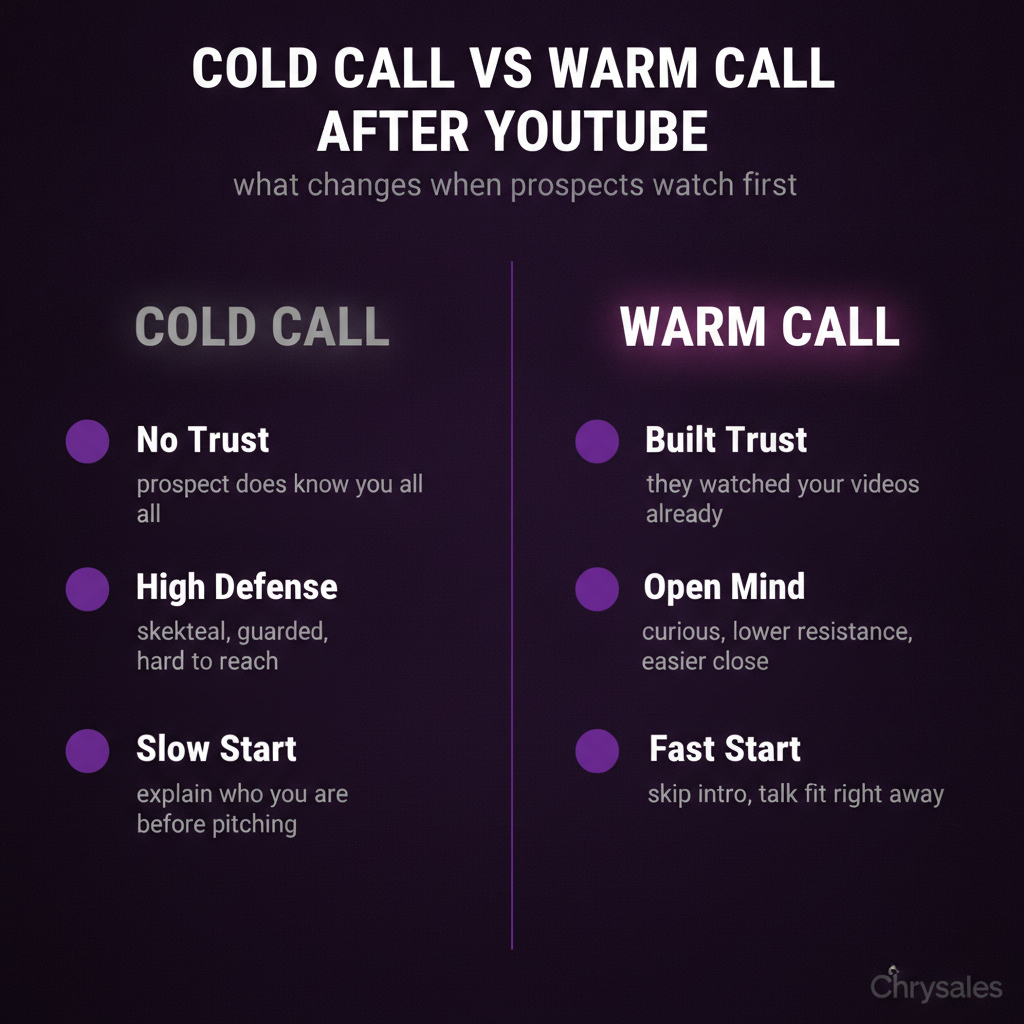
Most B2B lead generation starts with a cold message. The prospect has no idea who you are. They skim the email, see it's a sales pitch, and delete it. Even if your offer is perfect, trust is missing. A warm up YouTube channel closes that gap. When someone watches your content, their brain treats it like a one on one conversation. They hear your voice. They see your face. They follow your logic. By the end of a 10 minute video, they feel like they know you. That's not something a cold email can do.
How YouTube Changes the Sales Call Dynamic
When a prospect arrives on a call after watching your videos, the dynamic is different. They're not defensive. They're not wondering if you're legit. They're ready to talk details. We see this all the time with clients who build a YouTube presence before scaling outreach. Show rates go up. Objection handling gets easier. Close rates improve. Why? Because the hard part of sales training is teaching reps to build trust fast. YouTube does that work before the call even starts.
What It Means to Warm Up a Prospect with YouTube Content
Warming up a prospect means getting them familiar with you, your ideas, and your approach before you pitch anything. YouTube is perfect for this because people can watch at their own pace. No commitment. No sales pressure. They click a video because the title caught their attention. If it's good, they watch another. If it's really good, they start looking for your contact info.
A warm prospect isn't just someone who's heard of you. It's someone who's consumed enough of your content that they understand what you do, trust that you know your stuff, and are curious about working with you. That's the state you want prospects in before you ever hop on a call.
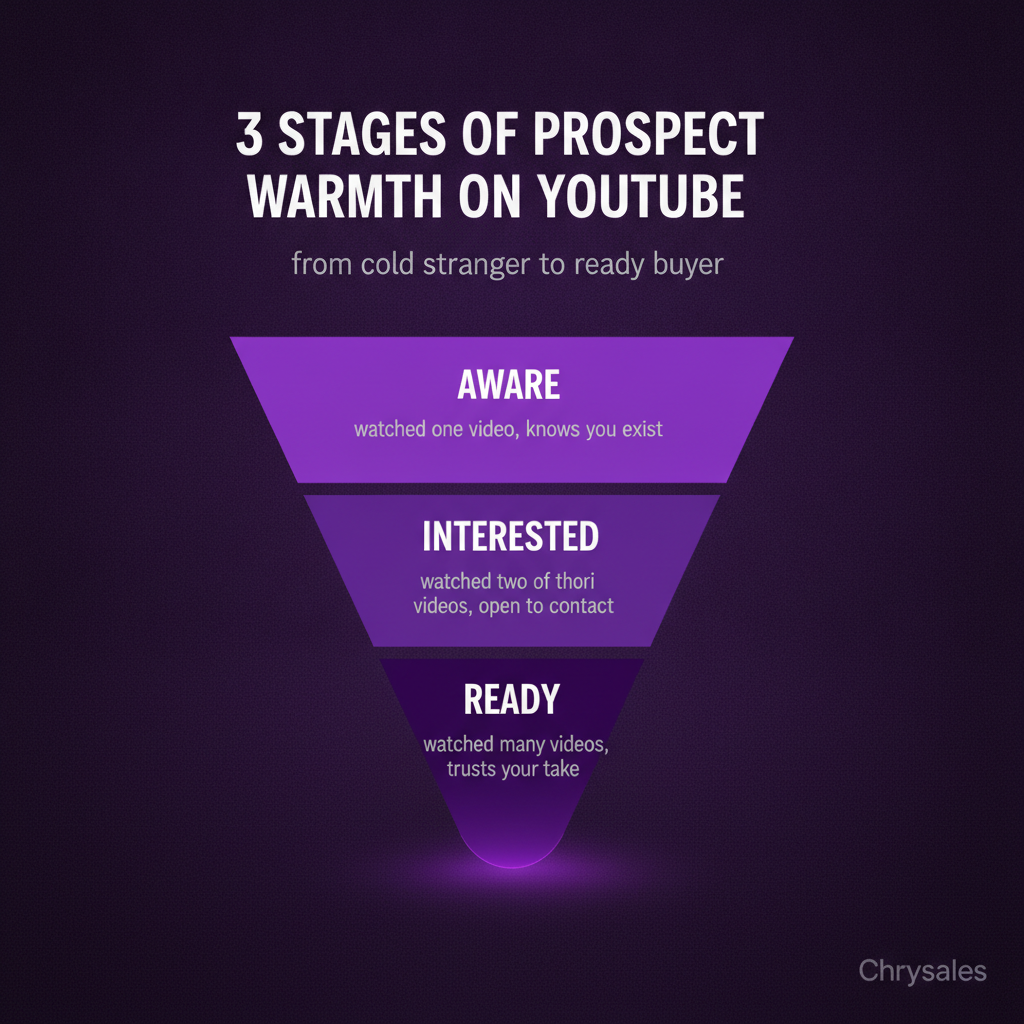
The Three Stages of Prospect Warmth
Stage 1: Aware They've seen one video. Maybe they clicked from a search or a suggested video. They know you exist, but they're not convinced yet. They might watch 30 seconds and bounce, or they might watch the whole thing. Either way, you're on their radar.
Stage 2: Interested They've watched two or three videos. They're starting to recognize your face and your voice. They understand your style. They've probably subscribed or saved a video to watch later. At this stage, they're open to hearing from you, but they're not reaching out yet.
Stage 3: Ready They've watched multiple videos, maybe over a few weeks. They've seen you explain their exact problem. They trust your take. If you reach out now, they're likely to respond. If you don't, they might reach out first. This is where the magic happens.
Watch out: Don't assume one video gets someone to Stage 3. Most prospects need 3 5 touchpoints before they're warm enough to book a call.
How to Build a YouTube Warm Up System for B2B Sales
Building a YouTube warm up strategy isn't about going viral. It's about creating a small library of videos that answer the exact questions your prospects are asking. When someone searches "how to fix our sales process" or "why our cold outreach isn't working," your video shows up. They watch. They trust you. Later, when you reach out, they remember.
Step 1: Pick 10 15 Topics Your Prospects Actually Search For
Start with the questions you hear on every discovery call. The objections that come up again and again. The problems your prospects complain about before they hire you. Those are your video topics. Write them down. Each one should be specific enough that someone could type it into YouTube and find your video.
Examples:
- "Why your sales team can't close deals (and how to fix it)"
- "How to hire a salesperson who actually performs"
- "Cold outreach templates that get replies"
- "What to say on a discovery call when the prospect ghosts you"
These aren't flashy. They're practical. That's the point. You're not trying to entertain. You're trying to help. When you help someone solve a problem, they remember you.
Step 2: Record One Video Per Week for Three Months
You don't need fancy equipment. A laptop webcam, a quiet room, and natural light are enough. Talk to the camera like you're explaining the topic to a client. Keep it simple. One video per week gets you 12 videos in three months. That's enough content to warm up a prospect who finds your channel. Consistency matters more than perfection. A video with okay lighting that actually teaches something beats a polished video that says nothing. Most people overthink this. Just hit record and explain the thing.
Common mistake: Waiting until you have 50 videos to start promoting your channel. Start telling people about it after video 5. The more people watch early videos, the faster YouTube pushes your content to new viewers.
Step 3: Optimize Every Video for Search and Suggested Views
YouTube is a search engine. People type in questions. Your video should answer one of those questions. That means your title, description, and first 10 seconds need to match what someone searched for. If your video is about cold outreach, say "cold outreach" in the title, the first sentence of the description, and out loud in the first 10 seconds of the video.
Thumbnails matter, but they don't need to be over designed. A clear image of your face, a few words that match the title, and a contrasting background color are enough. Keep it simple. The goal is for someone to see the thumbnail, read the title, and think, "That's exactly what I need to know."
Pro Tip: Look at the autocomplete suggestions when you type your topic into YouTube search. Those are real things people are searching for. Use those exact phrases in your titles.
Step 4: Mention Your Lead Generation System in Every Video
You're not making YouTube videos for fun. You're warming up prospects so they book calls. That means every video should include a soft call to action. At the end, say something like, "If you want help building a system like this, link's in the description." No hard sell. Just a mention. The people who are ready will click. The people who aren't will keep watching more videos until they are.
Don't bury the link. Put it at the top of the description. Make it clear what happens when someone clicks. "Book a free 30 minute call to see if we're a fit" works better than "Learn more here."
Using YouTube Content in Your Cold Outreach Sequence
Here's where a YouTube warm up strategy gets really powerful. Instead of sending a cold email to someone who's never heard of you, you send it to someone after they've watched one of your videos. Or better yet, you reference a video in the cold email itself. "Hey, I made a video about this exact problem. Here's the link. If it's useful, let's talk."
This isn't spam. You're sending them something helpful first. If they watch the video and like it, they're way more likely to respond. If they don't watch it, they weren't going to respond to a normal cold email anyway. You've lost nothing.
Linking to YouTube Videos in Cold Emails
When you mention a video in a cold email, keep it short. One sentence. "I made a 7 minute video on how to fix this. Here's the link if you want to check it out." Then move on. Don't oversell the video. Just offer it. The prospects who care will click. The ones who click and watch are now warm.
A 15 person consulting firm tried this last quarter. They sent 200 cold emails, each mentioning a relevant YouTube video. 18 people clicked the video link. 9 of those 18 booked a call. That's a way better return than standard cold outreach performance benchmarks.
Retargeting Prospects Who Watch Your Videos
If you're running ads or using any kind of tracking, you can retarget people who watch your YouTube content. Someone watches a video about sales training? Show them an ad for your lead generation service a week later. They've already heard you explain the problem. Now you're showing them the solution. This is how you turn YouTube authority building into actual client acquisition.
Watch out: Don't retarget someone after they watch one video. Wait until they've watched two or three. That way you're not being annoying. You're just staying top of mind.
What Types of Videos Warm Up B2B Prospects Best
Not all videos are equally good at warming up prospects. Some videos get views but don't build trust. Others don't get many views, but the people who watch them end up booking calls. The goal is to make videos that do both: answer real questions and position you as the person who can solve the problem.
Educational Breakdown Videos
These are the bread and butter of a content sales funnel for B2B lead generation. You pick a common problem and walk through how to solve it. Step by step. No fluff. These videos don't need to be long. 8 12 minutes is plenty. The key is specificity. "How to write a cold email" is too broad. "How to write the first line of a cold email so people actually read it" is way better.
Educational videos work because they give away real value. You're not holding back the good stuff. You're teaching the thing. Prospects watch and think, "If this is what they give away for free, imagine what they do when you pay them." That's the mindset you want.
Case Study and Results Videos
Show what happened when you worked with a client. "We helped a tech company go from 2 sales calls a week to 12. Here's what we changed." These don't need to be flashy. Just walk through the before, the problem, what you did, and the results. Numbers help. "We built a new cold outreach system and reply rates went from 1% to 5%" is concrete. People trust concrete.
One marketing agency we worked with posted a 6 minute case study video. It got 140 views. Three of those viewers reached out to book calls. That's not viral, but it's effective. That's the difference between YouTube for creators and YouTube for B2B lead generation. You don't need a million views. You need the right 100 people to watch.
Objection Handling and Q&A Videos
Record a video for every objection you hear on sales calls. "What if we don't have budget right now?" "How do we know this will work for our industry?" "Can't we just do this ourselves?" Answer each one honestly. These videos work as pre call sales training for your prospects. They hear the objection in their own head, watch your video, and get the answer before they ever talk to you.
This is personalized sales calls without needing to personalize every call. The video does the work. By the time someone books a call after watching your objection handling content, half the friction is already gone.
How Long It Takes for YouTube to Warm Up Prospects
Most people expect instant results. That's not how a YouTube sales funnel works. It takes time for videos to get discovered, for people to binge a few, and for them to decide they trust you enough to reach out. Plan for 3 6 months before you see consistent inbound leads from YouTube. But during that time, you can still use the content in outreach. You don't need to wait for organic traffic to kick in.
The First 90 Days: Building the Foundation
In the first three months, focus on getting 12 20 videos published. Don't worry about views yet. You're building a library. Share every video in your email list, on LinkedIn, in relevant groups. The goal is to start training YouTube's algorithm to understand who your content is for. The more people who watch and engage early, the faster the platform will start recommending your videos to new viewers.
Common mistake: Giving up after 10 videos because views are low. YouTube rewards consistency. Channels that post regularly get pushed harder than channels that post once and disappear for a month.
Months 4 6: Momentum Starts
By month four, if you've been consistent, you'll start seeing search traffic. A few videos will start ranking for specific keywords. People will find them, watch them, and then click through to watch more. This is where the YouTube warm up strategy starts to pay off. Prospects show up on calls saying, "I found your channel last week and watched a bunch of your stuff."
At this point, you can also start running ads to your best performing videos. A $10/day ad budget can get 500 1000 views on a good video. Even if only 2% of viewers click through to learn more, that's 10 20 warm leads from one video.
How to Know If Your YouTube Warm Up Strategy Is Working
You'll know it's working when prospects reference your videos on discovery calls. When people say, "I watched your video about X." When your cold emails start getting replies like, "Oh yeah, I've seen your stuff." Those are the signals. But there are also metrics you can track.
Watch Time and Average View Duration
If people are watching 50% or more of your videos, that's a good sign. It means the content is relevant and you're keeping their attention. If average view duration is under 30%, something's off. Either the topic isn't what people thought it would be, or the delivery is too slow. Fix the hook in the first 10 seconds.
Click Through Rate to Your Website or Booking Link
Check how many people click the link in your video description. YouTube shows you this in the analytics. If 5% of viewers are clicking through, your call to action is working. If it's under 1%, you need to mention the link more clearly in the video or make the offer more compelling.
Inbound Call Volume and Lead Quality
The best metric is simple: are more people reaching out? Are the people who reach out after watching videos better fits than cold leads? We've seen this with dozens of clients. Prospects who come in through YouTube content already understand the offer, trust the process, and close faster. That's the point of the whole system.
Pro Tip: Ask every new lead, "How'd you hear about us?" If they say YouTube, ask which video. Track which videos bring in the most leads. Make more content like those.
For a deeper look at building a system that brings prospects to you, watch how to build a sales system so powerful clients come to you for a complete walkthrough of the approach.
Frequently Asked Questions
Q: How many YouTube videos do I need before prospects start reaching out?
You don't need 100 videos. Most people start seeing inbound interest after 12 20 videos if the topics are right. The key is consistency and relevance. One video per week for three months gets you there. Focus on answering the exact questions your prospects are asking. Quality and topic choice matter way more than quantity.
Q: Do I need expensive equipment to make YouTube videos for B2B sales?
No. A laptop webcam, decent lighting, and a quiet room are enough. Nobody's judging you on production value if the content is useful. We've seen consultants close deals with videos shot on a phone. What matters is that you're clear, you're helpful, and you're consistent. Don't let gear be an excuse to delay.
Q: Should I run ads to my YouTube videos or just rely on organic traffic?
Start organic. Get 10 15 videos published first. Once you know which topics get the best response, run small ad campaigns to those videos. Even $5 $10 per day can push a good video to hundreds of new prospects. Ads speed things up, but they work best when you already have proof that the content resonates.
Q: How do I get prospects to watch my YouTube content before a sales call?
Mention it in your outreach. "I made a short video about this exact problem. Here's the link if it's helpful." Or send a follow up email after the first touchpoint with a relevant video. You can also add your best video to your email signature or LinkedIn profile. Make it easy for people to find and watch. The ones who are serious will click.
If you need help structuring your outreach, check out how to write cold emails that get responses and integrate video links naturally into your sequences.
Q: Can YouTube warm up strategy work for consulting firms and marketing agencies, not just tech companies?
Yes. Any B2B business where trust and expertise matter can use YouTube to warm up prospects. Consulting firms, agencies, sales training companies, and service providers all benefit. If your clients need to trust you before they hire you, YouTube helps build that trust before the first call. It's not about being a tech reviewer. It's about teaching your prospects something useful so they see you as the expert.
A YouTube warm up strategy uses videos to get prospects familiar with you before a sales call so they trust you, understand what you do, and show up ready to talk. Picture this: you finally land a 30 minute sales call with a prospect. You introduce yourself, start explaining what you do, and watch their eyes glaze over. They don't know you. They don't trust you. You're starting from zero. Now imagine the same call, but this time the prospect says, "I've watched a few of your videos. I get what you do. Let's talk about how this works for us." That's the difference a YouTube warm up strategy makes. When prospects watch your content before the call, they show up pre sold, not skeptical. You skip the trust building phase and jump straight to the part where they say yes.
Why YouTube Warm Up Strategy Works Better Than Cold Outreach Alone
Cold emails and LinkedIn messages get ignored. Not because the copy is bad, but because nobody wants to hear from a stranger selling something. The trust isn't there. A YouTube warm up strategy flips this. Instead of pitching cold, you let prospects discover you through videos that actually help them. They watch on their own time. No pressure. By the time you reach out, you're not a stranger anymore. You're the person who explained that thing they were struggling with.
Here's the thing: YouTube authority building for B2B companies isn't just for tech reviewers and productivity gurus anymore. Consulting firms, marketing agencies, and small sales teams are using YouTube to build authority before they ever send an outreach message. A prospect who's watched three of your videos doesn't need convincing that you know your stuff. They need to know if you're the right fit. That's a way easier conversation.
Pro Tip: You don't need a huge channel for this to work. Even 20 30 videos with 50 views each can warm up your exact target audience if the topics are right.
The Trust Gap Cold Outreach Can't Close
Most B2B lead generation starts with a cold message. The prospect has no idea who you are. They skim the email, see it's a sales pitch, and delete it. Even if your offer is perfect, trust is missing. A warm up YouTube channel closes that gap. When someone watches your content, their brain treats it like a one on one conversation. They hear your voice. They see your face. They follow your logic. By the end of a 10 minute video, they feel like they know you. That's not something a cold email can do.
How YouTube Changes the Sales Call Dynamic
When a prospect arrives on a call after watching your videos, the dynamic is different. They're not defensive. They're not wondering if you're legit. They're ready to talk details. We see this all the time with clients who build a YouTube presence before scaling outreach. Show rates go up. Objection handling gets easier. Close rates improve. Why? Because the hard part of sales training is teaching reps to build trust fast. YouTube does that work before the call even starts.
What It Means to Warm Up a Prospect with YouTube Content
Warming up a prospect means getting them familiar with you, your ideas, and your approach before you pitch anything. YouTube is perfect for this because people can watch at their own pace. No commitment. No sales pressure. They click a video because the title caught their attention. If it's good, they watch another. If it's really good, they start looking for your contact info.
A warm prospect isn't just someone who's heard of you. It's someone who's consumed enough of your content that they understand what you do, trust that you know your stuff, and are curious about working with you. That's the state you want prospects in before you ever hop on a call.
The Three Stages of Prospect Warmth
Stage 1: Aware They've seen one video. Maybe they clicked from a search or a suggested video. They know you exist, but they're not convinced yet. They might watch 30 seconds and bounce, or they might watch the whole thing. Either way, you're on their radar.
Stage 2: Interested They've watched two or three videos. They're starting to recognize your face and your voice. They understand your style. They've probably subscribed or saved a video to watch later. At this stage, they're open to hearing from you, but they're not reaching out yet.
Stage 3: Ready They've watched multiple videos, maybe over a few weeks. They've seen you explain their exact problem. They trust your take. If you reach out now, they're likely to respond. If you don't, they might reach out first. This is where the magic happens.
Watch out: Don't assume one video gets someone to Stage 3. Most prospects need 3 5 touchpoints before they're warm enough to book a call.
How to Build a YouTube Warm Up System for B2B Sales
Building a YouTube warm up strategy isn't about going viral. It's about creating a small library of videos that answer the exact questions your prospects are asking. When someone searches "how to fix our sales process" or "why our cold outreach isn't working," your video shows up. They watch. They trust you. Later, when you reach out, they remember.
Step 1: Pick 10 15 Topics Your Prospects Actually Search For
Start with the questions you hear on every discovery call. The objections that come up again and again. The problems your prospects complain about before they hire you. Those are your video topics. Write them down. Each one should be specific enough that someone could type it into YouTube and find your video.
Examples:
- "Why your sales team can't close deals (and how to fix it)"
- "How to hire a salesperson who actually performs"
- "Cold outreach templates that get replies"
- "What to say on a discovery call when the prospect ghosts you"
These aren't flashy. They're practical. That's the point. You're not trying to entertain. You're trying to help. When you help someone solve a problem, they remember you.
Step 2: Record One Video Per Week for Three Months
You don't need fancy equipment. A laptop webcam, a quiet room, and natural light are enough. Talk to the camera like you're explaining the topic to a client. Keep it simple. One video per week gets you 12 videos in three months. That's enough content to warm up a prospect who finds your channel. Consistency matters more than perfection. A video with okay lighting that actually teaches something beats a polished video that says nothing. Most people overthink this. Just hit record and explain the thing.
Common mistake: Waiting until you have 50 videos to start promoting your channel. Start telling people about it after video 5. The more people watch early videos, the faster YouTube pushes your content to new viewers.
Step 3: Optimize Every Video for Search and Suggested Views
YouTube is a search engine. People type in questions. Your video should answer one of those questions. That means your title, description, and first 10 seconds need to match what someone searched for. If your video is about cold outreach, say "cold outreach" in the title, the first sentence of the description, and out loud in the first 10 seconds of the video.
Thumbnails matter, but they don't need to be over designed. A clear image of your face, a few words that match the title, and a contrasting background color are enough. Keep it simple. The goal is for someone to see the thumbnail, read the title, and think, "That's exactly what I need to know."
Pro Tip: Look at the autocomplete suggestions when you type your topic into YouTube search. Those are real things people are searching for. Use those exact phrases in your titles.
Step 4: Mention Your Lead Generation System in Every Video
You're not making YouTube videos for fun. You're warming up prospects so they book calls. That means every video should include a soft call to action. At the end, say something like, "If you want help building a system like this, link's in the description." No hard sell. Just a mention. The people who are ready will click. The people who aren't will keep watching more videos until they are.
Don't bury the link. Put it at the top of the description. Make it clear what happens when someone clicks. "Book a free 30 minute call to see if we're a fit" works better than "Learn more here."
Using YouTube Content in Your Cold Outreach Sequence
Here's where a YouTube warm up strategy gets really powerful. Instead of sending a cold email to someone who's never heard of you, you send it to someone after they've watched one of your videos. Or better yet, you reference a video in the cold email itself. "Hey, I made a video about this exact problem. Here's the link. If it's useful, let's talk."
This isn't spam. You're sending them something helpful first. If they watch the video and like it, they're way more likely to respond. If they don't watch it, they weren't going to respond to a normal cold email anyway. You've lost nothing.
Linking to YouTube Videos in Cold Emails
When you mention a video in a cold email, keep it short. One sentence. "I made a 7 minute video on how to fix this. Here's the link if you want to check it out." Then move on. Don't oversell the video. Just offer it. The prospects who care will click. The ones who click and watch are now warm.
A 15 person consulting firm tried this last quarter. They sent 200 cold emails, each mentioning a relevant YouTube video. 18 people clicked the video link. 9 of those 18 booked a call. That's a way better return than standard cold outreach performance benchmarks.
Retargeting Prospects Who Watch Your Videos
If you're running ads or using any kind of tracking, you can retarget people who watch your YouTube content. Someone watches a video about sales training? Show them an ad for your lead generation service a week later. They've already heard you explain the problem. Now you're showing them the solution. This is how you turn YouTube authority building into actual client acquisition.
Watch out: Don't retarget someone after they watch one video. Wait until they've watched two or three. That way you're not being annoying. You're just staying top of mind.
What Types of Videos Warm Up B2B Prospects Best
Not all videos are equally good at warming up prospects. Some videos get views but don't build trust. Others don't get many views, but the people who watch them end up booking calls. The goal is to make videos that do both: answer real questions and position you as the person who can solve the problem.
Educational Breakdown Videos
These are the bread and butter of a content sales funnel for B2B lead generation. You pick a common problem and walk through how to solve it. Step by step. No fluff. These videos don't need to be long. 8 12 minutes is plenty. The key is specificity. "How to write a cold email" is too broad. "How to write the first line of a cold email so people actually read it" is way better.
Educational videos work because they give away real value. You're not holding back the good stuff. You're teaching the thing. Prospects watch and think, "If this is what they give away for free, imagine what they do when you pay them." That's the mindset you want.
Case Study and Results Videos
Show what happened when you worked with a client. "We helped a tech company go from 2 sales calls a week to 12. Here's what we changed." These don't need to be flashy. Just walk through the before, the problem, what you did, and the results. Numbers help. "We built a new cold outreach system and reply rates went from 1% to 5%" is concrete. People trust concrete.
One marketing agency we worked with posted a 6 minute case study video. It got 140 views. Three of those viewers reached out to book calls. That's not viral, but it's effective. That's the difference between YouTube for creators and YouTube for B2B lead generation. You don't need a million views. You need the right 100 people to watch.
Objection Handling and Q&A Videos
Record a video for every objection you hear on sales calls. "What if we don't have budget right now?" "How do we know this will work for our industry?" "Can't we just do this ourselves?" Answer each one honestly. These videos work as pre call sales training for your prospects. They hear the objection in their own head, watch your video, and get the answer before they ever talk to you.
This is personalized sales calls without needing to personalize every call. The video does the work. By the time someone books a call after watching your objection handling content, half the friction is already gone.
How Long It Takes for YouTube to Warm Up Prospects
Most people expect instant results. That's not how a YouTube sales funnel works. It takes time for videos to get discovered, for people to binge a few, and for them to decide they trust you enough to reach out. Plan for 3 6 months before you see consistent inbound leads from YouTube. But during that time, you can still use the content in outreach. You don't need to wait for organic traffic to kick in.
The First 90 Days: Building the Foundation
In the first three months, focus on getting 12 20 videos published. Don't worry about views yet. You're building a library. Share every video in your email list, on LinkedIn, in relevant groups. The goal is to start training YouTube's algorithm to understand who your content is for. The more people who watch and engage early, the faster the platform will start recommending your videos to new viewers.
Common mistake: Giving up after 10 videos because views are low. YouTube rewards consistency. Channels that post regularly get pushed harder than channels that post once and disappear for a month.
Months 4 6: Momentum Starts
By month four, if you've been consistent, you'll start seeing search traffic. A few videos will start ranking for specific keywords. People will find them, watch them, and then click through to watch more. This is where the YouTube warm up strategy starts to pay off. Prospects show up on calls saying, "I found your channel last week and watched a bunch of your stuff."
At this point, you can also start running ads to your best performing videos. A $10/day ad budget can get 500 1000 views on a good video. Even if only 2% of viewers click through to learn more, that's 10 20 warm leads from one video.
How to Know If Your YouTube Warm Up Strategy Is Working
You'll know it's working when prospects reference your videos on discovery calls. When people say, "I watched your video about X." When your cold emails start getting replies like, "Oh yeah, I've seen your stuff." Those are the signals. But there are also metrics you can track.
Watch Time and Average View Duration
If people are watching 50% or more of your videos, that's a good sign. It means the content is relevant and you're keeping their attention. If average view duration is under 30%, something's off. Either the topic isn't what people thought it would be, or the delivery is too slow. Fix the hook in the first 10 seconds.
Click Through Rate to Your Website or Booking Link
Check how many people click the link in your video description. YouTube shows you this in the analytics. If 5% of viewers are clicking through, your call to action is working. If it's under 1%, you need to mention the link more clearly in the video or make the offer more compelling.
Inbound Call Volume and Lead Quality
The best metric is simple: are more people reaching out? Are the people who reach out after watching videos better fits than cold leads? We've seen this with dozens of clients. Prospects who come in through YouTube content already understand the offer, trust the process, and close faster. That's the point of the whole system.
Pro Tip: Ask every new lead, "How'd you hear about us?" If they say YouTube, ask which video. Track which videos bring in the most leads. Make more content like those.
For a deeper look at building a system that brings prospects to you, watch how to build a sales system so powerful clients come to you for a complete walkthrough of the approach.
Frequently Asked Questions
Q: How many YouTube videos do I need before prospects start reaching out?
You don't need 100 videos. Most people start seeing inbound interest after 12 20 videos if the topics are right. The key is consistency and relevance. One video per week for three months gets you there. Focus on answering the exact questions your prospects are asking. Quality and topic choice matter way more than quantity.
Q: Do I need expensive equipment to make YouTube videos for B2B sales?
No. A laptop webcam, decent lighting, and a quiet room are enough. Nobody's judging you on production value if the content is useful. We've seen consultants close deals with videos shot on a phone. What matters is that you're clear, you're helpful, and you're consistent. Don't let gear be an excuse to delay.
Q: Should I run ads to my YouTube videos or just rely on organic traffic?
Start organic. Get 10 15 videos published first. Once you know which topics get the best response, run small ad campaigns to those videos. Even $5 $10 per day can push a good video to hundreds of new prospects. Ads speed things up, but they work best when you already have proof that the content resonates.
Q: How do I get prospects to watch my YouTube content before a sales call?
Mention it in your outreach. "I made a short video about this exact problem. Here's the link if it's helpful." Or send a follow up email after the first touchpoint with a relevant video. You can also add your best video to your email signature or LinkedIn profile. Make it easy for people to find and watch. The ones who are serious will click.
If you need help structuring your outreach, check out how to write cold emails that get responses and integrate video links naturally into your sequences.
Q: Can YouTube warm up strategy work for consulting firms and marketing agencies, not just tech companies?
Yes. Any B2B business where trust and expertise matter can use YouTube to warm up prospects. Consulting firms, agencies, sales training companies, and service providers all benefit. If your clients need to trust you before they hire you, YouTube helps build that trust before the first call. It's not about being a tech reviewer. It's about teaching your prospects something useful so they see you as the expert.
Scaling Is Not Hard If You Have The Right Systems
If you’re serious about leveling up your scaling game, you need the right system, the right training, and the right team behind you. We're here to give you the exact tools and strategies top entrepreneurs use to dominate.

Discover the latest tips
View All.avif)
Chrysales was formed from the words "chrysalis" the stage where a caterpillar transforms into a butterfly and "sales".
It stands for one thing: sales transformation.Because scaling doesn’t happen by doing more of the same. Scaling only happens when you go through real transformation in your systems, your offer, team and the way you sell.
.avif)


