.avif)
Why Youtube Is the Best Platform for High Ticket Offers

YouTube for high ticket offers is a strategy that uses long-form video content to build trust, prove expertise, and attract serious buyers for expensive B2B services. It works because video shows how you think, not just what you claim, making it the most effective platform for high-value deals.
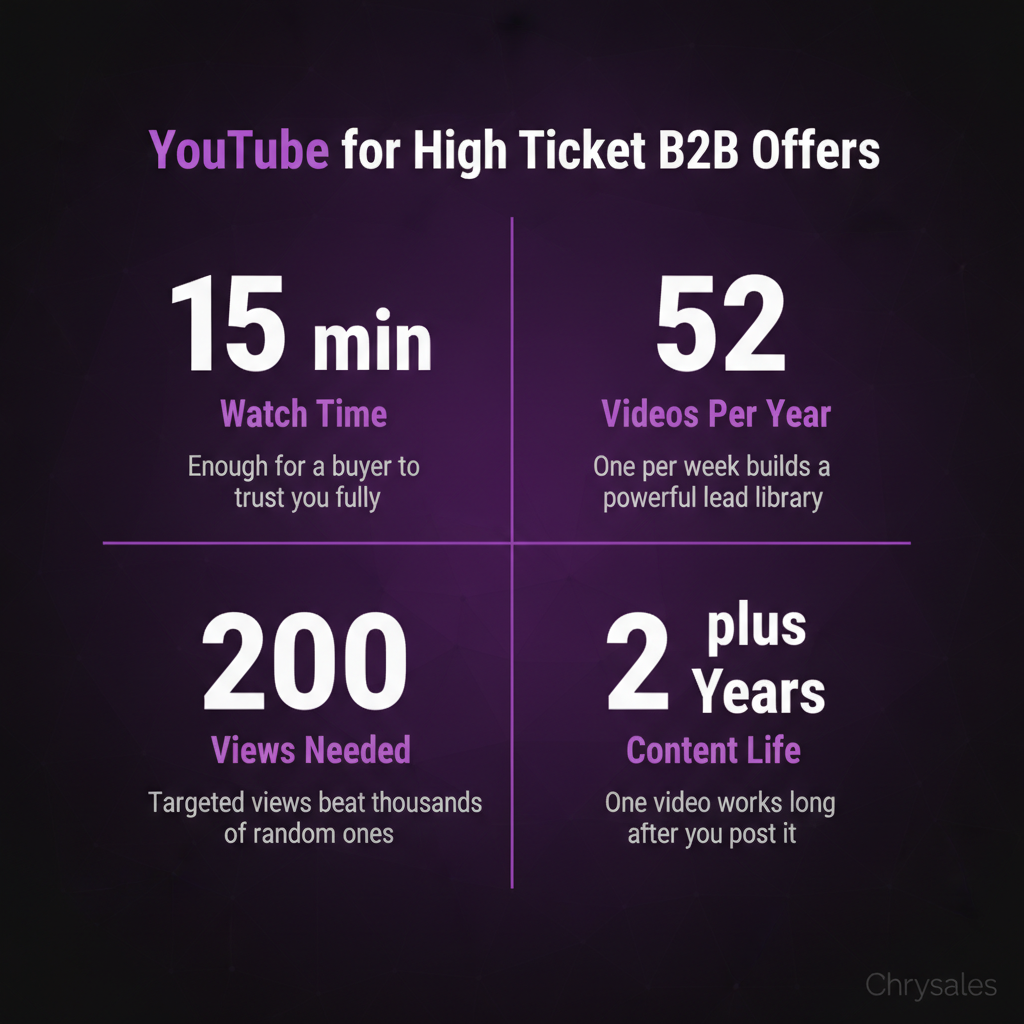
Here's something most people miss: the platform where you post your content matters just as much as what you say. A LinkedIn post might get views. A Twitter thread might go viral. But when someone is about to spend $10,000, $50,000, or more on a B2B offer, they don't trust a tweet. They trust video. And not just any video. YouTube video. It's the only place where a stranger can watch you explain something for 15 minutes, see how you think, and decide you're the real deal. That's why YouTube beats every other platform when it comes to high ticket B2B offers.
YouTube Lets Buyers See You Think, Not Just What You Think
Most sales content is text. A blog post. A LinkedIn article. An email. Text is fast to consume, but it's also easy to fake. Anyone can write smart-sounding sentences. Most people hire someone to do it for them.
YouTube is different. When you explain a concept on camera for 10 minutes, people see how your brain works. They notice if you pause to think. They hear how you break down a problem. They can tell if you actually know what you're talking about or if you're reading a script someone else wrote.
The Trust Gap in High Ticket Sales
High ticket B2B sales have a trust problem. The space is full of people selling expensive coaching programs, done-for-you services, and consulting packages. A lot of them overpromise and underdeliver. Buyers know this. They've been burned before or they've heard the stories.
When you're asking someone to spend serious money, they need proof you're different. A sales page won't do it. A testimonial might help, but it's still just text. A 20-minute YouTube video where you walk through a real client case study or explain your exact sales system? That builds trust faster than anything else. This is one of the core reasons video marketing is so effective for B2B companies.
Pro Tip: Post at least one long-form video per week that teaches something valuable without asking for anything in return. Buyers will watch it, see you know your stuff, and reach out when they're ready.
Long-Form Content Filters for Serious Buyers

YouTube rewards long videos. A 15-minute breakdown of how to build a predictable sales pipeline will reach more people than a 2-minute tip. But here's the hidden benefit: people who don't care won't watch a 15-minute video. They'll click away in 30 seconds.
The people who stay? Those are your buyers. They have the problem you solve. They're serious enough to invest time learning about it. They're the ones who might actually pay for your help.
How Watch Time Becomes Qualification
Think of your YouTube channel like a filter. Short, surface-level content attracts everyone. Long, detailed content attracts the right people. A 10-person tech company struggling with client acquisition will watch your entire video on building a B2B lead generation system. Someone just browsing won't.
By the time they finish watching three or four of your videos, they've spent an hour with you. They've heard your voice, learned your approach, and decided if they like how you work. That's more qualification than most sales calls provide.
A marketing agency we worked with started posting weekly 20-minute breakdowns of their client projects on YouTube. Within three months, they had inbound leads asking specifically for the systems they showed in the videos. No cold outreach. No paid ads. Just people who watched the content and wanted the same results. Long-form content strategy works especially well for B2B because it demonstrates deep expertise.
YouTube Authority Building Compounds Over Time
A LinkedIn post lives for 48 hours. A tweet dies in 6. A YouTube video keeps working for years. If you post a video today explaining how to handle objections in high ticket sales, it can still bring in leads in 2027.
This is what makes YouTube different from every other platform. It's a search engine, not a feed. People type in questions like "how to close high ticket B2B deals" or "best way to hire salespeople" and YouTube shows them videos that answer those questions. If your video is good, it shows up. Forever.
The Search Advantage
Most platforms are built for the feed. You post something, it gets shown to your followers for a day or two, then it disappears. YouTube works the opposite way. Your video gets shown to people searching for the topic, whether you posted it yesterday or three years ago.
This means every video you make is an asset. It works for you while you sleep. A single video on sales training for B2B teams could generate 10, 20, or 50 qualified leads over the next two years without you touching it again. That's the power of YouTube authority building for B2B.
Watch out: Don't chase trends or viral topics that have nothing to do with your offer. Stick to the core problems your buyers have. Those videos will keep working long after the trend dies.
Video Shows Proof, Not Just Claims
Anyone can claim they've trained 500+ sales teams or generated millions in client revenue. Writing it on a website is easy. Showing it on YouTube is different.
When you post a screen share walking through a real sales dashboard, or you interview a client about the results they got, or you show the before-and-after of a lead generation campaign, people believe it. They can see the numbers. They can hear the client's voice. They can watch you troubleshoot a problem in real time.
Real Examples Beat Generic Promises
Picture this: you're comparing two sales consultants. One has a sleek website with big promises and stock photos. The other has 50 YouTube videos showing real client work, walking through their exact sales system, and breaking down case studies with names and numbers. Who do you trust? The second one. Every time.
We see this all the time with new clients who come to Chrysales after watching our breakdowns of real sales systems, AI integration workflows, and hiring strategies. They've already seen how we think and what we build. The sales call is just logistics.
YouTube Audience Building Creates Warm Leads
Cold outreach works, but it's hard. You're reaching out to strangers who don't know you exist. Even with a great message and a clean list, most people ignore you.
YouTube flips this. Instead of chasing cold leads, you attract warm ones. People find your videos, watch a few, subscribe, and eventually reach out when they need help. By the time they message you, they've already decided they want to work with you. The conversation is about fit and timing, not convincing them you're legit.
How Subscribers Become Clients
Every subscriber is a potential buyer. They might not be ready today, but they will be at some point. Maybe their current sales system breaks. Maybe they hire their first salesperson and realize they don't know how to train them. Maybe they hit a revenue plateau and need a better client acquisition strategy.
When that moment comes, they remember your videos. They've already spent hours learning from you. You're the obvious choice. You can watch how to build a sales system so powerful clients come to you to see this principle in action.
A 30-person consulting firm subscribed to our channel eight months before they reached out. They watched every video on sales hiring and team scaling. When they finally needed help, they didn't shop around. They already knew we were the right fit.
YouTube Works Best for Complex, High-Value Offers
If you're selling a $99 product, YouTube might be overkill. A Facebook ad and a landing page will do the job. But if you're selling a $10,000 custom sales system, or a $50,000 consulting engagement, YouTube is the best platform.
Here's why: complex offers need explanation. You can't communicate the value of a full sales team buildout in a 30-second ad. You need time to walk through the process, show examples, explain the ROI, and answer objections before they come up.
Breaking Down Complexity Without Losing People
The trick is making complex topics feel simple. Use everyday comparisons. Break big ideas into small steps. Show the work, not just the result.
A good sales system is like a recipe. You need the right ingredients (a clean lead list, a strong offer, a trained team). You need the right steps (outreach, discovery calls, closing scripts). And you need to follow the process the same way every time.
When you explain your offer this way on YouTube, people get it. They see that what you do is valuable and repeatable. They understand why it costs what it costs. This is especially true when building a sales system that actually scales.
Common mistake: Trying to explain everything in one video. Break your offer into pieces. One video on lead generation. Another on closing strategies. Another on hiring closers. People will watch all of them and get the full picture over time.
You Don't Need Fancy Production to Build Trust
Most people think they need a studio, a camera crew, and professional editing to start a YouTube channel. That's not true. Some of the most trusted voices in B2B sales film on their laptop with decent lighting and a cheap microphone.
What matters is the content. Can you explain something useful? Can you show real examples? Can you teach someone how to solve a problem they actually have? If yes, hit record. Don't wait for perfect gear or a polished setup. Buyers care about what you know, not how many cameras you used.
Simple Setup That Works
Here's what you actually need:
- A laptop or phone with a decent camera
- A quiet room with natural light or a cheap ring light
- A $30 USB microphone (or just use your laptop mic if it's clear)
- Free editing software like DaVinci Resolve or even iMovie
That's it. Record a screen share of you walking through a real sales process. Or just talk to the camera explaining a concept. Edit out the long pauses. Add a simple intro and outro. Post it.
The tech barrier is lower than you think. The content barrier is what stops most people. They don't know what to say or they're afraid it won't be good enough. So they don't post anything. That's the real mistake.
How to Start Using YouTube for High Ticket B2B Offers
If you're not posting on YouTube yet, here's how to start without overthinking it.
Pick Your Core Topics
Write down the five questions your buyers ask most often. These become your first five videos. If you sell sales systems, your list might look like this:
- How do I build a predictable B2B lead generation system?
- What's the best way to train a new salesperson?
- How do I handle price objections on high ticket calls?
- Should I hire setters or closers first?
- How do I know if my offer is strong enough?
Each question is a video. Answer it the way you would on a sales call. Show examples. Walk through your process. Give away real value.
Post Consistently, Not Perfectly
One video per week is enough. It doesn't need to be perfect. It needs to be helpful and real. Film it Monday, edit it Tuesday, post it Wednesday. Repeat every week.
Over a year, that's 52 videos. That's 52 chances for someone to find you, trust you, and reach out. Most of your competitors won't post five. Video content consistently generates more leads and sales when you commit to regular publishing.
Pro Tip: Repurpose your sales calls. Record a screen share of you walking a prospect through your sales system. Edit out the personal details. Post it as a tutorial. You just turned a sales call into evergreen content.
Frequently Asked Questions
Q: How long should my YouTube videos be for B2B high ticket offers?
Aim for 10 to 20 minutes. That's long enough to explain something valuable without losing attention. Don't force it. If you cover the topic well in 8 minutes, post 8 minutes. If it takes 25, that's fine too. The key is depth. Surface-level tips don't build trust. Real breakdowns do.
Q: Do I need to show my face or can I just do screen shares?
You don't have to show your face, but it helps. People trust people, not screens. That said, screen shares where you walk through real systems, dashboards, or processes work great. Mix both if you can. Start with what feels comfortable and add face-to-camera videos later.
Q: How many views do I need before YouTube starts bringing in clients?
Views matter less than you think. A video with 200 views from the right people is better than 10,000 views from randos. Focus on topics your ideal buyers search for. Even a small channel with 20 videos and 500 subscribers can generate multiple high ticket clients if the content is targeted and valuable.
Q: Should I run YouTube ads or just rely on organic reach?
Start organic. Post weekly for three months before spending a dollar on ads. Organic reach teaches you what topics resonate and what your audience cares about. Once you have a few high-performing videos, you can run ads to those videos to reach more people faster. But ads without good content is just wasted money.
Q: What if my competitors are already posting on YouTube?
Good. That means it works. Your job isn't to do something completely new. It's to explain things in your voice, show your process, and share your perspective. Buyers don't just pick the first person they find. They watch multiple channels, compare approaches, and choose who they trust most. Be that person.
Q: How do I turn YouTube viewers into actual sales calls?
Put a clear call-to-action at the end of every video. Tell people what to do next. "If you want help building a system like this, book a call at [your link]." Pin a comment with the same link. Add it to your video description. Make it easy. Don't assume people will figure it out on their own. You can also direct them to learn four ways to find clients who need your services right now to help them take action immediately.
Q: Can YouTube really work for remote closing and commission-based sales models?
Yes, but you need to be clear and honest. The high ticket remote closing space has a bad reputation because of overhyped gurus and shady training programs. If your model is legit, show it. Walk through real close rates, real commissions, real training. Let people see what they're actually getting into. Transparency builds trust faster than big income claims ever will.
YouTube for high ticket offers is the best way to build trust, qualify buyers, and drive client acquisition in B2B sales. It combines lead generation, sales training, and gtm strategy into one powerful platform.
YouTube for high ticket offers is a strategy that uses long-form video content to build trust, prove expertise, and attract serious buyers for expensive B2B services. It works because video shows how you think, not just what you claim, making it the most effective platform for high-value deals.
Here's something most people miss: the platform where you post your content matters just as much as what you say. A LinkedIn post might get views. A Twitter thread might go viral. But when someone is about to spend $10,000, $50,000, or more on a B2B offer, they don't trust a tweet. They trust video. And not just any video. YouTube video. It's the only place where a stranger can watch you explain something for 15 minutes, see how you think, and decide you're the real deal. That's why YouTube beats every other platform when it comes to high ticket B2B offers.
YouTube Lets Buyers See You Think, Not Just What You Think
Most sales content is text. A blog post. A LinkedIn article. An email. Text is fast to consume, but it's also easy to fake. Anyone can write smart-sounding sentences. Most people hire someone to do it for them.
YouTube is different. When you explain a concept on camera for 10 minutes, people see how your brain works. They notice if you pause to think. They hear how you break down a problem. They can tell if you actually know what you're talking about or if you're reading a script someone else wrote.
The Trust Gap in High Ticket Sales
High ticket B2B sales have a trust problem. The space is full of people selling expensive coaching programs, done-for-you services, and consulting packages. A lot of them overpromise and underdeliver. Buyers know this. They've been burned before or they've heard the stories.
When you're asking someone to spend serious money, they need proof you're different. A sales page won't do it. A testimonial might help, but it's still just text. A 20-minute YouTube video where you walk through a real client case study or explain your exact sales system? That builds trust faster than anything else. This is one of the core reasons video marketing is so effective for B2B companies.
Pro Tip: Post at least one long-form video per week that teaches something valuable without asking for anything in return. Buyers will watch it, see you know your stuff, and reach out when they're ready.
Long-Form Content Filters for Serious Buyers
YouTube rewards long videos. A 15-minute breakdown of how to build a predictable sales pipeline will reach more people than a 2-minute tip. But here's the hidden benefit: people who don't care won't watch a 15-minute video. They'll click away in 30 seconds.
The people who stay? Those are your buyers. They have the problem you solve. They're serious enough to invest time learning about it. They're the ones who might actually pay for your help.
How Watch Time Becomes Qualification
Think of your YouTube channel like a filter. Short, surface-level content attracts everyone. Long, detailed content attracts the right people. A 10-person tech company struggling with client acquisition will watch your entire video on building a B2B lead generation system. Someone just browsing won't.
By the time they finish watching three or four of your videos, they've spent an hour with you. They've heard your voice, learned your approach, and decided if they like how you work. That's more qualification than most sales calls provide.
A marketing agency we worked with started posting weekly 20-minute breakdowns of their client projects on YouTube. Within three months, they had inbound leads asking specifically for the systems they showed in the videos. No cold outreach. No paid ads. Just people who watched the content and wanted the same results. Long-form content strategy works especially well for B2B because it demonstrates deep expertise.
YouTube Authority Building Compounds Over Time
A LinkedIn post lives for 48 hours. A tweet dies in 6. A YouTube video keeps working for years. If you post a video today explaining how to handle objections in high ticket sales, it can still bring in leads in 2027.
This is what makes YouTube different from every other platform. It's a search engine, not a feed. People type in questions like "how to close high ticket B2B deals" or "best way to hire salespeople" and YouTube shows them videos that answer those questions. If your video is good, it shows up. Forever.
The Search Advantage
Most platforms are built for the feed. You post something, it gets shown to your followers for a day or two, then it disappears. YouTube works the opposite way. Your video gets shown to people searching for the topic, whether you posted it yesterday or three years ago.
This means every video you make is an asset. It works for you while you sleep. A single video on sales training for B2B teams could generate 10, 20, or 50 qualified leads over the next two years without you touching it again. That's the power of YouTube authority building for B2B.
Watch out: Don't chase trends or viral topics that have nothing to do with your offer. Stick to the core problems your buyers have. Those videos will keep working long after the trend dies.
Video Shows Proof, Not Just Claims
Anyone can claim they've trained 500+ sales teams or generated millions in client revenue. Writing it on a website is easy. Showing it on YouTube is different.
When you post a screen share walking through a real sales dashboard, or you interview a client about the results they got, or you show the before-and-after of a lead generation campaign, people believe it. They can see the numbers. They can hear the client's voice. They can watch you troubleshoot a problem in real time.
Real Examples Beat Generic Promises
Picture this: you're comparing two sales consultants. One has a sleek website with big promises and stock photos. The other has 50 YouTube videos showing real client work, walking through their exact sales system, and breaking down case studies with names and numbers. Who do you trust? The second one. Every time.
We see this all the time with new clients who come to Chrysales after watching our breakdowns of real sales systems, AI integration workflows, and hiring strategies. They've already seen how we think and what we build. The sales call is just logistics.
YouTube Audience Building Creates Warm Leads
Cold outreach works, but it's hard. You're reaching out to strangers who don't know you exist. Even with a great message and a clean list, most people ignore you.
YouTube flips this. Instead of chasing cold leads, you attract warm ones. People find your videos, watch a few, subscribe, and eventually reach out when they need help. By the time they message you, they've already decided they want to work with you. The conversation is about fit and timing, not convincing them you're legit.
How Subscribers Become Clients
Every subscriber is a potential buyer. They might not be ready today, but they will be at some point. Maybe their current sales system breaks. Maybe they hire their first salesperson and realize they don't know how to train them. Maybe they hit a revenue plateau and need a better client acquisition strategy.
When that moment comes, they remember your videos. They've already spent hours learning from you. You're the obvious choice. You can watch how to build a sales system so powerful clients come to you to see this principle in action.
A 30-person consulting firm subscribed to our channel eight months before they reached out. They watched every video on sales hiring and team scaling. When they finally needed help, they didn't shop around. They already knew we were the right fit.
YouTube Works Best for Complex, High-Value Offers
If you're selling a $99 product, YouTube might be overkill. A Facebook ad and a landing page will do the job. But if you're selling a $10,000 custom sales system, or a $50,000 consulting engagement, YouTube is the best platform.
Here's why: complex offers need explanation. You can't communicate the value of a full sales team buildout in a 30-second ad. You need time to walk through the process, show examples, explain the ROI, and answer objections before they come up.
Breaking Down Complexity Without Losing People
The trick is making complex topics feel simple. Use everyday comparisons. Break big ideas into small steps. Show the work, not just the result.
A good sales system is like a recipe. You need the right ingredients (a clean lead list, a strong offer, a trained team). You need the right steps (outreach, discovery calls, closing scripts). And you need to follow the process the same way every time.
When you explain your offer this way on YouTube, people get it. They see that what you do is valuable and repeatable. They understand why it costs what it costs. This is especially true when building a sales system that actually scales.
Common mistake: Trying to explain everything in one video. Break your offer into pieces. One video on lead generation. Another on closing strategies. Another on hiring closers. People will watch all of them and get the full picture over time.
You Don't Need Fancy Production to Build Trust
Most people think they need a studio, a camera crew, and professional editing to start a YouTube channel. That's not true. Some of the most trusted voices in B2B sales film on their laptop with decent lighting and a cheap microphone.
What matters is the content. Can you explain something useful? Can you show real examples? Can you teach someone how to solve a problem they actually have? If yes, hit record. Don't wait for perfect gear or a polished setup. Buyers care about what you know, not how many cameras you used.
Simple Setup That Works
Here's what you actually need:
- A laptop or phone with a decent camera
- A quiet room with natural light or a cheap ring light
- A $30 USB microphone (or just use your laptop mic if it's clear)
- Free editing software like DaVinci Resolve or even iMovie
That's it. Record a screen share of you walking through a real sales process. Or just talk to the camera explaining a concept. Edit out the long pauses. Add a simple intro and outro. Post it.
The tech barrier is lower than you think. The content barrier is what stops most people. They don't know what to say or they're afraid it won't be good enough. So they don't post anything. That's the real mistake.
How to Start Using YouTube for High Ticket B2B Offers
If you're not posting on YouTube yet, here's how to start without overthinking it.
Pick Your Core Topics
Write down the five questions your buyers ask most often. These become your first five videos. If you sell sales systems, your list might look like this:
- How do I build a predictable B2B lead generation system?
- What's the best way to train a new salesperson?
- How do I handle price objections on high ticket calls?
- Should I hire setters or closers first?
- How do I know if my offer is strong enough?
Each question is a video. Answer it the way you would on a sales call. Show examples. Walk through your process. Give away real value.
Post Consistently, Not Perfectly
One video per week is enough. It doesn't need to be perfect. It needs to be helpful and real. Film it Monday, edit it Tuesday, post it Wednesday. Repeat every week.
Over a year, that's 52 videos. That's 52 chances for someone to find you, trust you, and reach out. Most of your competitors won't post five. Video content consistently generates more leads and sales when you commit to regular publishing.
Pro Tip: Repurpose your sales calls. Record a screen share of you walking a prospect through your sales system. Edit out the personal details. Post it as a tutorial. You just turned a sales call into evergreen content.
Frequently Asked Questions
Q: How long should my YouTube videos be for B2B high ticket offers?
Aim for 10 to 20 minutes. That's long enough to explain something valuable without losing attention. Don't force it. If you cover the topic well in 8 minutes, post 8 minutes. If it takes 25, that's fine too. The key is depth. Surface-level tips don't build trust. Real breakdowns do.
Q: Do I need to show my face or can I just do screen shares?
You don't have to show your face, but it helps. People trust people, not screens. That said, screen shares where you walk through real systems, dashboards, or processes work great. Mix both if you can. Start with what feels comfortable and add face-to-camera videos later.
Q: How many views do I need before YouTube starts bringing in clients?
Views matter less than you think. A video with 200 views from the right people is better than 10,000 views from randos. Focus on topics your ideal buyers search for. Even a small channel with 20 videos and 500 subscribers can generate multiple high ticket clients if the content is targeted and valuable.
Q: Should I run YouTube ads or just rely on organic reach?
Start organic. Post weekly for three months before spending a dollar on ads. Organic reach teaches you what topics resonate and what your audience cares about. Once you have a few high-performing videos, you can run ads to those videos to reach more people faster. But ads without good content is just wasted money.
Q: What if my competitors are already posting on YouTube?
Good. That means it works. Your job isn't to do something completely new. It's to explain things in your voice, show your process, and share your perspective. Buyers don't just pick the first person they find. They watch multiple channels, compare approaches, and choose who they trust most. Be that person.
Q: How do I turn YouTube viewers into actual sales calls?
Put a clear call-to-action at the end of every video. Tell people what to do next. "If you want help building a system like this, book a call at [your link]." Pin a comment with the same link. Add it to your video description. Make it easy. Don't assume people will figure it out on their own. You can also direct them to learn four ways to find clients who need your services right now to help them take action immediately.
Q: Can YouTube really work for remote closing and commission-based sales models?
Yes, but you need to be clear and honest. The high ticket remote closing space has a bad reputation because of overhyped gurus and shady training programs. If your model is legit, show it. Walk through real close rates, real commissions, real training. Let people see what they're actually getting into. Transparency builds trust faster than big income claims ever will.
YouTube for high ticket offers is the best way to build trust, qualify buyers, and drive client acquisition in B2B sales. It combines lead generation, sales training, and gtm strategy into one powerful platform.
Scaling Is Not Hard If You Have The Right Systems
If you’re serious about leveling up your scaling game, you need the right system, the right training, and the right team behind you. We're here to give you the exact tools and strategies top entrepreneurs use to dominate.

Discover the latest tips
View All.avif)
Chrysales was formed from the words "chrysalis" the stage where a caterpillar transforms into a butterfly and "sales".
It stands for one thing: sales transformation.Because scaling doesn’t happen by doing more of the same. Scaling only happens when you go through real transformation in your systems, your offer, team and the way you sell.
.avif)


