.avif)
What Is Lead Generation and How Does It Work?
Lead generation is the process of finding people who might buy from you and getting them interested enough to start a conversation. It helps turn strangers into real opportunities for b2b sales.
Picture this: you've built a great product, you've got a solid team, and you're ready to grow. But there's one problem. Nobody knows you exist. That's the lead generation problem in a nutshell.
What Lead Generation Actually Means (And Why Most People Get It Wrong)
Lead generation is the process of attracting and identifying potential customers for your business. That's the textbook answer. Here's the real one: it's finding people who have a problem you can solve, and making them aware you exist.
Most people confuse lead generation with marketing. They're not the same thing. Marketing builds awareness. Lead generation captures interest and turns it into something you can act on, like a name, email, or phone number.
A lead is someone who's shown interest in what you do. They visited your site. They filled out a form. They replied to an email. They're not a customer yet, but they're not a stranger either.
Here's where it gets messy. Not all leads are created equal. A person who downloaded your free guide might be a lead. So is someone who requested a demo. But those two people are in completely different places. One's just curious. The other's ready to buy.
That's why B2B lead generation needs structure. Without it, your sales team wastes time talking to people who will never buy.
The Two Types of Lead Generation
There are two ways to generate leads: inbound and outbound.
Inbound lead generation is when people come to you. They find your blog on Google. They see your LinkedIn post. They click your ad. You create content, optimize it, and wait for people to show up. It works, but it's slow. And it only works if you're good at SEO, content, or paid ads.
Outbound lead generation is when you go to them. Cold emails. Cold calls. LinkedIn messages. You build a list of people who fit your ideal customer profile, and you reach out. It's faster. It's more predictable. And it's how most B2B companies actually fill their pipelines.
Most businesses need both. Inbound builds trust over time. Outbound fills the pipeline right now.
Pro Tip: If you're just starting, focus on outbound first. You can't wait six months for SEO to kick in when you need clients today.
Why Lead Generation Matters More Than You Think
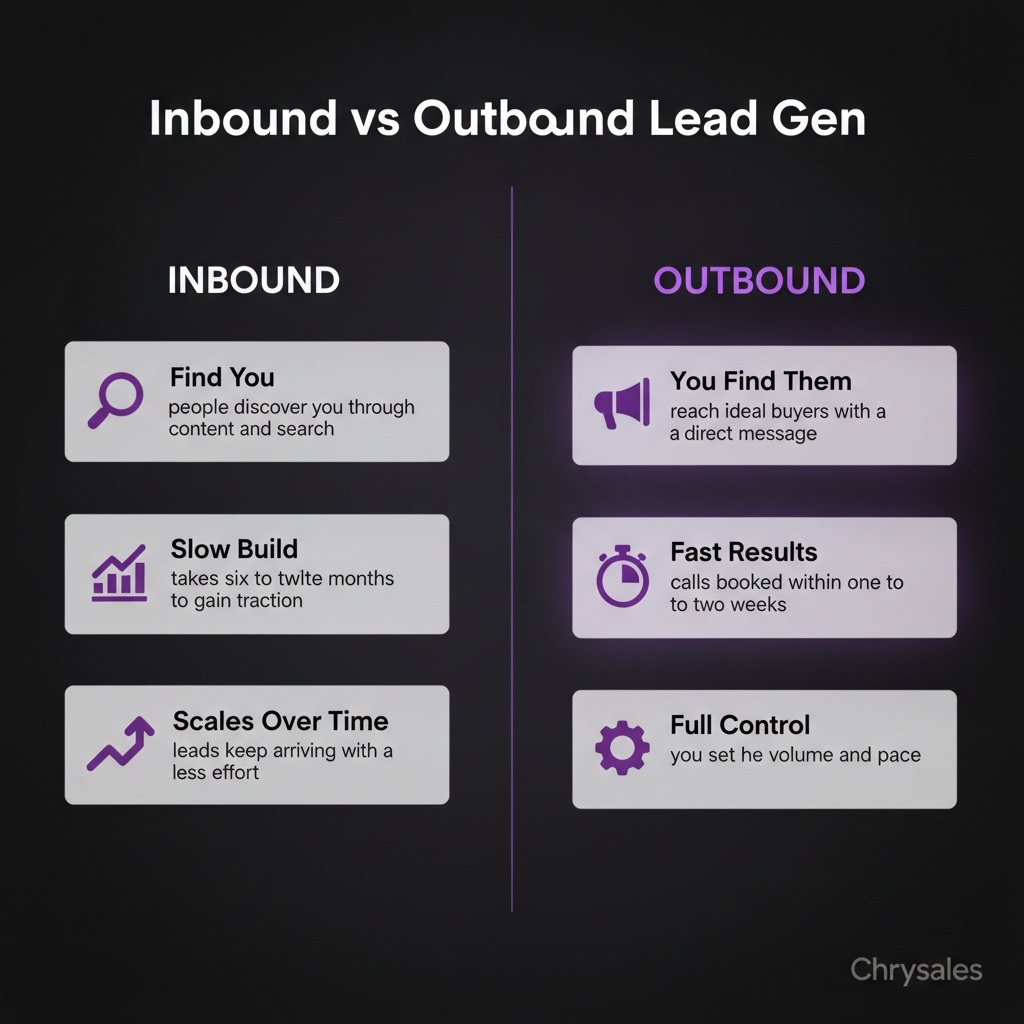
Without lead generation, you don't have a business. You have a hobby.
Revenue comes from customers. Customers come from leads. Leads come from a system that finds them and moves them toward a sale.
Here's the thing: most small sales teams don't fail because they can't close. They fail because they don't have enough conversations. You can be the best closer in the world, but if you're only talking to three people a month, you're not hitting your numbers.
Lead generation solves that. It fills your calendar with qualified conversations.
A 30-person consulting firm we worked with had this exact problem. They had great delivery. Happy clients. Strong referrals. But growth was stuck. Why? Because they were waiting for referrals instead of building a lead generation system. Once they set up a simple cold outreach process, they booked 12 new calls in three weeks. The problem wasn't the product. It was the pipeline.
Predictable Revenue Starts With Predictable Leads
Most businesses treat lead generation like a slot machine. Sometimes it works. Sometimes it doesn't. That's not a business. That's gambling.
The companies that grow predictably have systems. They know where their leads come from. They know how many leads turn into calls. They know how many calls turn into customers. They track it. They test it. They improve it.
That's what makes lead generation for B2B different from consumer marketing. In B2B sales, you're not chasing volume. You're chasing quality. A hundred random leads don't help. Ten perfect-fit leads who actually have budget and authority? That changes everything.
The Lead Generation Process (Step by Step)
Let's break down how a B2B lead generation system actually works. This isn't theory. This is the process we've built for 500+ sales teams over 12 years.
Step 1: Know Who You're Looking For
Most lead generation fails at step one. You can't generate good leads if you don't know who a good lead is.
Start by defining your ideal customer profile (ICP). Not "anyone who might buy." The specific type of company or person who gets the most value from what you sell.
Ask yourself:
- What industry do they work in?
- How big is their company?
- What role do they have?
- What problems are they dealing with right now?
A bad sales list is like inviting 1,000 random people to a birthday party. Most won't show up. The few who do don't even like cake. A good list is tight. Specific. Built around people who actually fit.
Step 2: Build or Buy Your List
Once you know who you're looking for, you need to find them. You've got two options: build the list yourself or buy it.
Building your list means using tools like LinkedIn Sales Navigator, Apollo.io, or Clay to find people who match your ICP. It takes time, but the data is usually better. You can filter by job title, company size, location, tech stack, and more.
Buying a list is faster, but riskier. Most purchased lists are full of bad data. Old emails. Wrong titles. People who left the company two years ago. If you go this route, scrub the list hard before you use it.
Watch out: A 200-person company that just did layoffs is not a "hot lead." It's a bad fit, full stop. Quality beats quantity every single time.
Step 3: Reach Out With a Message That Doesn't Suck
Now you've got a list. Time to reach out. This is where most outbound lead generation dies. The message is generic. It's all about you. It doesn't give the reader a reason to care.
Here's the formula that works:
- Show you did research (mention something specific about them or their company)
- Name the problem they probably have
- Hint at how you solve it
- Make the ask tiny (a 15 minute call, not a full demo)
Cold outreach without research is like texting an ex from high school asking if they want to buy something. Awkward and ignored. Personalization isn't optional. It's the whole game.
Step 4: Qualify the Lead
Not everyone who replies is worth your time. Some people are just curious. Some don't have budget. Some aren't the decision maker. You need to filter fast.
Use a simple qualification framework. The most common is BANT:
- Budget: Can they afford what you're selling?
- Authority: Are they the person who makes the decision?
- Need: Do they actually have the problem you solve?
- Timeline: Are they looking to buy soon, or just exploring?
If a lead doesn't check at least three of those boxes, they're not ready. Put them in a nurture sequence and move on to the next one.
Common mistake: Spending an hour on a discovery call with someone who has no budget and no authority. Qualify hard. Qualify early.
Step 5: Move Them Through the Pipeline
Once a lead is qualified, they move into your sales process. That might be a demo. A proposal. A follow up call. Whatever it is, the point is to keep them moving. A lead that sits still for two weeks goes cold.
Track every lead in a CRM. HubSpot, Pipedrive, whatever. Just use something. You need to know where every lead is, what the next step is, and when to follow up. Most deals die in the follow up. A simple reminder system fixes that.
Inbound vs Outbound: What's the Real Difference?
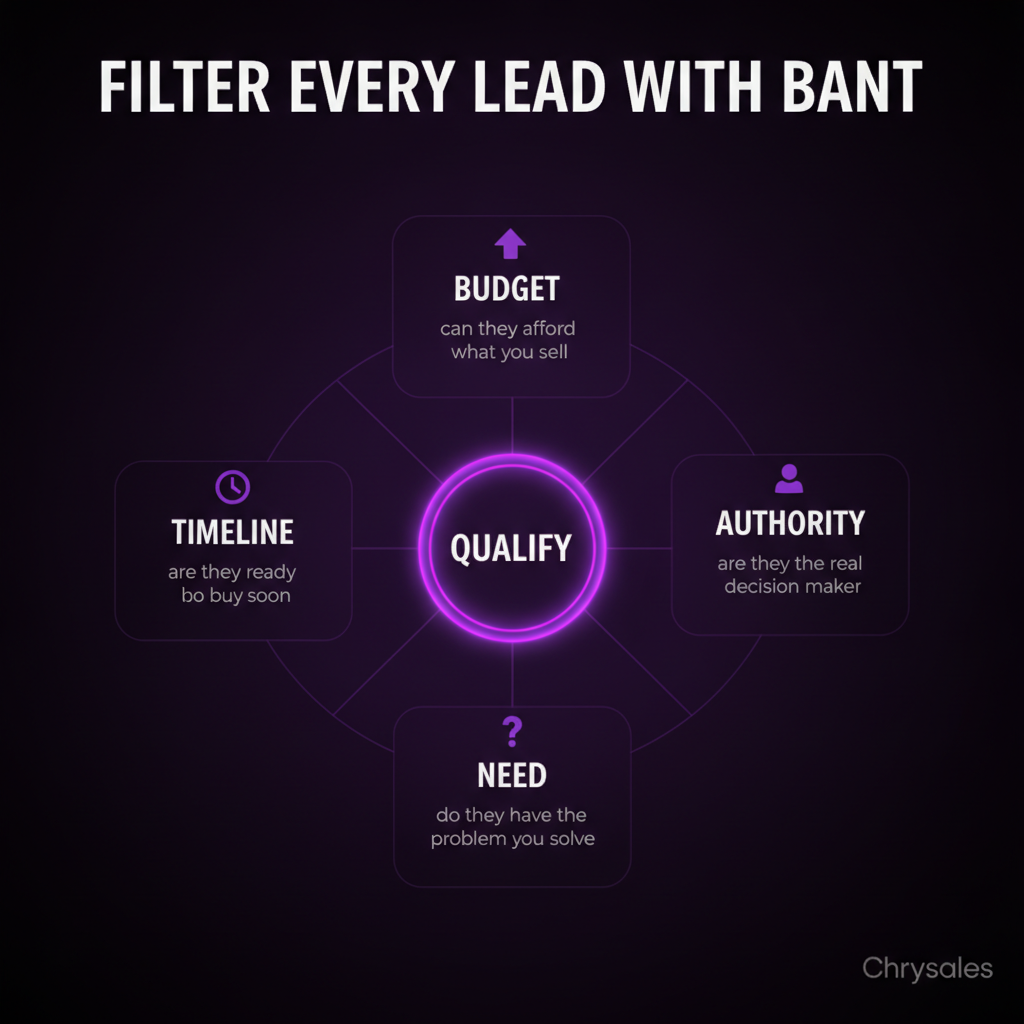
We touched on this earlier, but let's dig deeper. Inbound and outbound lead generation are two completely different games.
Inbound Lead Generation
Inbound is when prospects find you. You publish content. You optimize for SEO. You run ads. You post on LinkedIn. People discover you, click, and give you their info. It's called "inbound" because they come in on their own.
The upside? It scales. Once you rank for a keyword or build an audience, leads keep coming without much extra work.
The downside? It's slow. Building SEO traffic takes six to twelve months. Growing a LinkedIn audience takes even longer. And you're competing with everyone else doing the same thing.
Inbound works great if you've got time, budget, and a solid content engine. If you need leads this quarter, it's not the answer.
Outbound Lead Generation
Outbound is when you go find prospects. You build a list. You send cold emails. You message people on LinkedIn. You call them. You initiate the conversation. It's called "outbound" because you're reaching out.
The upside? Speed. You can start outbound today and have calls booked by next week. It's predictable. You control the volume.
The downside? It's manual. It takes work. And if your list or message is bad, you get ignored.
Outbound lead generation is how most B2B companies build pipeline when they're starting or scaling fast. It's direct. It's testable. And it doesn't depend on Google ranking you.
Pro Tip: Don't pick one or the other. Use outbound to fill your pipeline now. Use inbound to build long-term awareness. For a comprehensive comparison and strategy, see this breakdown of inbound and outbound B2B lead generation.
How to Build a Lead Generation System That Actually Works
Here's what separates companies that grow from companies that stall: systems. A lead generation system is a repeatable process that brings in qualified leads every single week. Not when you feel like it. Every week.
Step 1: Set a Weekly Lead Target
Start with a number. How many new leads do you need each week to hit your revenue goal? Work backwards. If you close 20% of qualified leads, and you want 10 new customers a month, you need 50 qualified leads. That's about 12 per week.
Once you have the target, you can reverse engineer the activities. How many cold emails do you need to send to get 12 replies? How many LinkedIn messages? How many calls? Track it. Measure it. Adjust.
Step 2: Build Your Lead Sources
Most companies rely on one channel. That's risky. If LinkedIn changes the algorithm, your pipeline dries up. Diversify. Pick two or three lead sources and run them consistently.
Good B2B pipeline generation channels:
- Cold email (still works if your list and message are good)
- LinkedIn outreach (great for high ticket B2B)
- Cold calling (underrated, especially in industries where email is crowded)
- Webinars or workshops (inbound, but faster than SEO)
- Referrals (automate the ask, don't just hope it happens)
Pick what fits your ICP. A 50 person tech company might love LinkedIn. A 500 person enterprise might need cold calling. To see concrete examples of finding clients in your ideal profile, watch this breakdown of 4 ways to find clients who need your services right now. Test and see what works.
Step 3: Automate the Repetitive Stuff
A good sales lead generation system has automation baked in. Not full autopilot. Smart automation that saves time without sounding robotic.
Examples:
- Use a tool like Instantly or Lemlist to send cold email sequences
- Set up LinkedIn automation (carefully) to send connection requests and follow ups
- Build email templates for common responses
- Use a CRM to trigger follow up reminders
- Score leads automatically based on behavior (opened three emails, visited pricing page, etc.)
We've seen teams cut their manual work in half by automating the stuff that doesn't need a human touch. That frees up time for the part that does: actual conversations.
Watch out: Don't automate the personal stuff. A generic automated message on LinkedIn gets ignored. A short personal note gets replies.
Step 4: Track What Matters
If you're not tracking your lead generation, you're flying blind. You need to know:
- How many leads came in this week
- Where they came from
- How many were qualified
- How many turned into calls
- How many turned into customers
Set a simple rule: if you can't measure it, don't do it. Most teams waste time on tactics that feel productive but don't move the needle. For specific metrics and benchmarks to track inside your CRM, explore these lead generation metrics b2b results. Data tells you what's working.
Common Lead Generation Mistakes (And How to Fix Them)
Most lead generation problems come from one of three mistakes. Let's fix them.
Mistake 1: Bad List Quality
The list does most of the heavy lifting. If your list is full of wrong titles, old emails, or bad fit companies, no message will save you. You'll send 500 emails and get two replies. That's not a messaging problem. That's a list problem.
Fix: Spend more time building your list. Use filters. Check LinkedIn profiles manually. Scrub old data. For a step-by-step approach to building high-quality B2B lead lists, read this guide to building B2B lead lists that convert. A tight list of 200 perfect fit leads beats a messy list of 2,000 any day.
Mistake 2: Messaging That's All About You
Nobody cares about your product. They care about their problem. Most cold outreach starts with "We help companies like yours..." or "I wanted to introduce our platform..." Instant delete.
Fix: Start with them. Mention something specific about their business. Name a problem they probably have. Show you did homework. Then, and only then, hint at what you do. For proven templates and messaging frameworks, check out our detailed tutorial on how to write cold emails that actually get replies.
Mistake 3: No Follow Up System
One email doesn't work. One LinkedIn message doesn't work. Most people need three to five touches before they respond. But most teams send one message and give up.
Fix: Build a follow up sequence. Email 1 on Monday. Follow up on Thursday. LinkedIn message the next week. Another email a week later. Don't be annoying, but don't disappear after one try.
A marketing agency we worked with had a 0.5% reply rate. After fixing their list and adding a three step follow up sequence, it jumped to 4%. Same offer. Same company. Better system.
How Chrysales Builds Lead Generation Systems for B2B Teams
At Chrysales, we've trained over 1,000 business owners and 500+ sales teams in 12+ years. We've helped generate over €10 million in client revenue. Our approach to predictable lead generation is simple: build a system, not a one off campaign.
We start by mapping your ideal customer profile. Not guesses. Real data from your best customers. Then we build a custom outbound system: the right channels, the right message, the right follow up cadence.
We automate what can be automated (using AI tools like Gemini for lead scoring and workflow triggers). And we coach your team on how to run it every single week.
We've worked with companies like Cloudification and others across consulting, tech, and agencies. The pattern is always the same: companies that build repeatable systems grow. Companies that wing it stay stuck.
Lead generation isn't magic. It's a process. And once the process is dialed in, it runs like a recipe. Follow the steps, get the same result every time.
Our 99.4% client satisfaction rate comes from one thing: we focus on outcomes, not activities. We don't just teach theory. We build the system with you, train your team on it, and help you scale it as you grow. To see how a complete sales system works from lead generation to close, watch how to build a sales system so powerful clients come to you.
Frequently Asked Questions
Q: What's the difference between a lead and a prospect?
A lead is someone who's shown interest but hasn't been qualified yet. A prospect is a qualified lead who fits your ideal customer profile and is worth pursuing. Think of it this way: a lead filled out a form. A prospect filled out the form, works at the right company, has budget, and actually needs what you sell. Not all leads become prospects. Your job is to filter fast and focus on the ones that do.
Q: How many leads do I need to hit my revenue goal?
Work backwards from your close rate. If you close 20% of qualified leads and your average deal is $10,000, you need 5 customers to hit $50,000 in revenue. That means 25 qualified leads. Track your numbers for a month or two and you'll see your patterns. Most B2B sales teams need 10 to 20 new qualified leads per week to keep the pipeline healthy. Adjust based on your close rate and deal size.
Q: Is cold email still effective for B2B lead generation?
Yes, if you do it right. The problem isn't cold email. The problem is bad lists and generic messages. If you send 500 emails to a messy list with a template that sounds like a robot, you'll get ignored. But if you build a tight list of 100 perfect fit leads, write a personal first line, and name a real problem, your reply rate will jump. We see clients go from 1% to 5% reply rates just by fixing those two things. For benchmarks and data on cold email performance, see this collection of B2B cold email statistics.
Q: How long does it take to see results from lead generation?
Outbound lead generation can show results in one to two weeks. Seriously. Build a list, send emails, book calls. Inbound takes longer. SEO might take six months. Content marketing takes three to six months to build traction. If you need leads now, start with outbound. Layer in inbound once you've got cash flow and time to invest. Most companies that grow fast do both, but they start with the one that works this quarter.
Q: What's the best tool for B2B lead generation?
There's no single best tool. It depends on your process. LinkedIn Sales Navigator is great for finding leads. Apollo.io and Clay are solid for building and enriching lists. Instantly and Lemlist work well for cold email sequences. HubSpot or Pipedrive help you track everything in a CRM. The tool doesn't matter as much as the system. A great tool with a bad process still fails. A basic tool with a solid process wins every time.
Lead generation is the process of finding people who might buy from you and getting them interested enough to start a conversation. It helps turn strangers into real opportunities for b2b sales.
Picture this: you've built a great product, you've got a solid team, and you're ready to grow. But there's one problem. Nobody knows you exist. That's the lead generation problem in a nutshell.
What Lead Generation Actually Means (And Why Most People Get It Wrong)
Lead generation is the process of attracting and identifying potential customers for your business. That's the textbook answer. Here's the real one: it's finding people who have a problem you can solve, and making them aware you exist.
Most people confuse lead generation with marketing. They're not the same thing. Marketing builds awareness. Lead generation captures interest and turns it into something you can act on, like a name, email, or phone number.
A lead is someone who's shown interest in what you do. They visited your site. They filled out a form. They replied to an email. They're not a customer yet, but they're not a stranger either.
Here's where it gets messy. Not all leads are created equal. A person who downloaded your free guide might be a lead. So is someone who requested a demo. But those two people are in completely different places. One's just curious. The other's ready to buy.
That's why B2B lead generation needs structure. Without it, your sales team wastes time talking to people who will never buy.
The Two Types of Lead Generation
There are two ways to generate leads: inbound and outbound.
Inbound lead generation is when people come to you. They find your blog on Google. They see your LinkedIn post. They click your ad. You create content, optimize it, and wait for people to show up. It works, but it's slow. And it only works if you're good at SEO, content, or paid ads.
Outbound lead generation is when you go to them. Cold emails. Cold calls. LinkedIn messages. You build a list of people who fit your ideal customer profile, and you reach out. It's faster. It's more predictable. And it's how most B2B companies actually fill their pipelines.
Most businesses need both. Inbound builds trust over time. Outbound fills the pipeline right now.
Pro Tip: If you're just starting, focus on outbound first. You can't wait six months for SEO to kick in when you need clients today.
Why Lead Generation Matters More Than You Think
Without lead generation, you don't have a business. You have a hobby.
Revenue comes from customers. Customers come from leads. Leads come from a system that finds them and moves them toward a sale.
Here's the thing: most small sales teams don't fail because they can't close. They fail because they don't have enough conversations. You can be the best closer in the world, but if you're only talking to three people a month, you're not hitting your numbers.
Lead generation solves that. It fills your calendar with qualified conversations.
A 30-person consulting firm we worked with had this exact problem. They had great delivery. Happy clients. Strong referrals. But growth was stuck. Why? Because they were waiting for referrals instead of building a lead generation system. Once they set up a simple cold outreach process, they booked 12 new calls in three weeks. The problem wasn't the product. It was the pipeline.
Predictable Revenue Starts With Predictable Leads
Most businesses treat lead generation like a slot machine. Sometimes it works. Sometimes it doesn't. That's not a business. That's gambling.
The companies that grow predictably have systems. They know where their leads come from. They know how many leads turn into calls. They know how many calls turn into customers. They track it. They test it. They improve it.
That's what makes lead generation for B2B different from consumer marketing. In B2B sales, you're not chasing volume. You're chasing quality. A hundred random leads don't help. Ten perfect-fit leads who actually have budget and authority? That changes everything.
The Lead Generation Process (Step by Step)
Let's break down how a B2B lead generation system actually works. This isn't theory. This is the process we've built for 500+ sales teams over 12 years.
Step 1: Know Who You're Looking For
Most lead generation fails at step one. You can't generate good leads if you don't know who a good lead is.
Start by defining your ideal customer profile (ICP). Not "anyone who might buy." The specific type of company or person who gets the most value from what you sell.
Ask yourself:
- What industry do they work in?
- How big is their company?
- What role do they have?
- What problems are they dealing with right now?
A bad sales list is like inviting 1,000 random people to a birthday party. Most won't show up. The few who do don't even like cake. A good list is tight. Specific. Built around people who actually fit.
Step 2: Build or Buy Your List
Once you know who you're looking for, you need to find them. You've got two options: build the list yourself or buy it.
Building your list means using tools like LinkedIn Sales Navigator, Apollo.io, or Clay to find people who match your ICP. It takes time, but the data is usually better. You can filter by job title, company size, location, tech stack, and more.
Buying a list is faster, but riskier. Most purchased lists are full of bad data. Old emails. Wrong titles. People who left the company two years ago. If you go this route, scrub the list hard before you use it.
Watch out: A 200-person company that just did layoffs is not a "hot lead." It's a bad fit, full stop. Quality beats quantity every single time.
Step 3: Reach Out With a Message That Doesn't Suck
Now you've got a list. Time to reach out. This is where most outbound lead generation dies. The message is generic. It's all about you. It doesn't give the reader a reason to care.
Here's the formula that works:
- Show you did research (mention something specific about them or their company)
- Name the problem they probably have
- Hint at how you solve it
- Make the ask tiny (a 15 minute call, not a full demo)
Cold outreach without research is like texting an ex from high school asking if they want to buy something. Awkward and ignored. Personalization isn't optional. It's the whole game.
Step 4: Qualify the Lead
Not everyone who replies is worth your time. Some people are just curious. Some don't have budget. Some aren't the decision maker. You need to filter fast.
Use a simple qualification framework. The most common is BANT:
- Budget: Can they afford what you're selling?
- Authority: Are they the person who makes the decision?
- Need: Do they actually have the problem you solve?
- Timeline: Are they looking to buy soon, or just exploring?
If a lead doesn't check at least three of those boxes, they're not ready. Put them in a nurture sequence and move on to the next one.
Common mistake: Spending an hour on a discovery call with someone who has no budget and no authority. Qualify hard. Qualify early.
Step 5: Move Them Through the Pipeline
Once a lead is qualified, they move into your sales process. That might be a demo. A proposal. A follow up call. Whatever it is, the point is to keep them moving. A lead that sits still for two weeks goes cold.
Track every lead in a CRM. HubSpot, Pipedrive, whatever. Just use something. You need to know where every lead is, what the next step is, and when to follow up. Most deals die in the follow up. A simple reminder system fixes that.
Inbound vs Outbound: What's the Real Difference?
We touched on this earlier, but let's dig deeper. Inbound and outbound lead generation are two completely different games.
Inbound Lead Generation
Inbound is when prospects find you. You publish content. You optimize for SEO. You run ads. You post on LinkedIn. People discover you, click, and give you their info. It's called "inbound" because they come in on their own.
The upside? It scales. Once you rank for a keyword or build an audience, leads keep coming without much extra work.
The downside? It's slow. Building SEO traffic takes six to twelve months. Growing a LinkedIn audience takes even longer. And you're competing with everyone else doing the same thing.
Inbound works great if you've got time, budget, and a solid content engine. If you need leads this quarter, it's not the answer.
Outbound Lead Generation
Outbound is when you go find prospects. You build a list. You send cold emails. You message people on LinkedIn. You call them. You initiate the conversation. It's called "outbound" because you're reaching out.
The upside? Speed. You can start outbound today and have calls booked by next week. It's predictable. You control the volume.
The downside? It's manual. It takes work. And if your list or message is bad, you get ignored.
Outbound lead generation is how most B2B companies build pipeline when they're starting or scaling fast. It's direct. It's testable. And it doesn't depend on Google ranking you.
Pro Tip: Don't pick one or the other. Use outbound to fill your pipeline now. Use inbound to build long-term awareness. For a comprehensive comparison and strategy, see this breakdown of inbound and outbound B2B lead generation.
How to Build a Lead Generation System That Actually Works
Here's what separates companies that grow from companies that stall: systems. A lead generation system is a repeatable process that brings in qualified leads every single week. Not when you feel like it. Every week.
Step 1: Set a Weekly Lead Target
Start with a number. How many new leads do you need each week to hit your revenue goal? Work backwards. If you close 20% of qualified leads, and you want 10 new customers a month, you need 50 qualified leads. That's about 12 per week.
Once you have the target, you can reverse engineer the activities. How many cold emails do you need to send to get 12 replies? How many LinkedIn messages? How many calls? Track it. Measure it. Adjust.
Step 2: Build Your Lead Sources
Most companies rely on one channel. That's risky. If LinkedIn changes the algorithm, your pipeline dries up. Diversify. Pick two or three lead sources and run them consistently.
Good B2B pipeline generation channels:
- Cold email (still works if your list and message are good)
- LinkedIn outreach (great for high ticket B2B)
- Cold calling (underrated, especially in industries where email is crowded)
- Webinars or workshops (inbound, but faster than SEO)
- Referrals (automate the ask, don't just hope it happens)
Pick what fits your ICP. A 50 person tech company might love LinkedIn. A 500 person enterprise might need cold calling. To see concrete examples of finding clients in your ideal profile, watch this breakdown of 4 ways to find clients who need your services right now. Test and see what works.
Step 3: Automate the Repetitive Stuff
A good sales lead generation system has automation baked in. Not full autopilot. Smart automation that saves time without sounding robotic.
Examples:
- Use a tool like Instantly or Lemlist to send cold email sequences
- Set up LinkedIn automation (carefully) to send connection requests and follow ups
- Build email templates for common responses
- Use a CRM to trigger follow up reminders
- Score leads automatically based on behavior (opened three emails, visited pricing page, etc.)
We've seen teams cut their manual work in half by automating the stuff that doesn't need a human touch. That frees up time for the part that does: actual conversations.
Watch out: Don't automate the personal stuff. A generic automated message on LinkedIn gets ignored. A short personal note gets replies.
Step 4: Track What Matters
If you're not tracking your lead generation, you're flying blind. You need to know:
- How many leads came in this week
- Where they came from
- How many were qualified
- How many turned into calls
- How many turned into customers
Set a simple rule: if you can't measure it, don't do it. Most teams waste time on tactics that feel productive but don't move the needle. For specific metrics and benchmarks to track inside your CRM, explore these lead generation metrics b2b results. Data tells you what's working.
Common Lead Generation Mistakes (And How to Fix Them)
Most lead generation problems come from one of three mistakes. Let's fix them.
Mistake 1: Bad List Quality
The list does most of the heavy lifting. If your list is full of wrong titles, old emails, or bad fit companies, no message will save you. You'll send 500 emails and get two replies. That's not a messaging problem. That's a list problem.
Fix: Spend more time building your list. Use filters. Check LinkedIn profiles manually. Scrub old data. For a step-by-step approach to building high-quality B2B lead lists, read this guide to building B2B lead lists that convert. A tight list of 200 perfect fit leads beats a messy list of 2,000 any day.
Mistake 2: Messaging That's All About You
Nobody cares about your product. They care about their problem. Most cold outreach starts with "We help companies like yours..." or "I wanted to introduce our platform..." Instant delete.
Fix: Start with them. Mention something specific about their business. Name a problem they probably have. Show you did homework. Then, and only then, hint at what you do. For proven templates and messaging frameworks, check out our detailed tutorial on how to write cold emails that actually get replies.
Mistake 3: No Follow Up System
One email doesn't work. One LinkedIn message doesn't work. Most people need three to five touches before they respond. But most teams send one message and give up.
Fix: Build a follow up sequence. Email 1 on Monday. Follow up on Thursday. LinkedIn message the next week. Another email a week later. Don't be annoying, but don't disappear after one try.
A marketing agency we worked with had a 0.5% reply rate. After fixing their list and adding a three step follow up sequence, it jumped to 4%. Same offer. Same company. Better system.
How Chrysales Builds Lead Generation Systems for B2B Teams
At Chrysales, we've trained over 1,000 business owners and 500+ sales teams in 12+ years. We've helped generate over €10 million in client revenue. Our approach to predictable lead generation is simple: build a system, not a one off campaign.
We start by mapping your ideal customer profile. Not guesses. Real data from your best customers. Then we build a custom outbound system: the right channels, the right message, the right follow up cadence.
We automate what can be automated (using AI tools like Gemini for lead scoring and workflow triggers). And we coach your team on how to run it every single week.
We've worked with companies like Cloudification and others across consulting, tech, and agencies. The pattern is always the same: companies that build repeatable systems grow. Companies that wing it stay stuck.
Lead generation isn't magic. It's a process. And once the process is dialed in, it runs like a recipe. Follow the steps, get the same result every time.
Our 99.4% client satisfaction rate comes from one thing: we focus on outcomes, not activities. We don't just teach theory. We build the system with you, train your team on it, and help you scale it as you grow. To see how a complete sales system works from lead generation to close, watch how to build a sales system so powerful clients come to you.
Frequently Asked Questions
Q: What's the difference between a lead and a prospect?
A lead is someone who's shown interest but hasn't been qualified yet. A prospect is a qualified lead who fits your ideal customer profile and is worth pursuing. Think of it this way: a lead filled out a form. A prospect filled out the form, works at the right company, has budget, and actually needs what you sell. Not all leads become prospects. Your job is to filter fast and focus on the ones that do.
Q: How many leads do I need to hit my revenue goal?
Work backwards from your close rate. If you close 20% of qualified leads and your average deal is $10,000, you need 5 customers to hit $50,000 in revenue. That means 25 qualified leads. Track your numbers for a month or two and you'll see your patterns. Most B2B sales teams need 10 to 20 new qualified leads per week to keep the pipeline healthy. Adjust based on your close rate and deal size.
Q: Is cold email still effective for B2B lead generation?
Yes, if you do it right. The problem isn't cold email. The problem is bad lists and generic messages. If you send 500 emails to a messy list with a template that sounds like a robot, you'll get ignored. But if you build a tight list of 100 perfect fit leads, write a personal first line, and name a real problem, your reply rate will jump. We see clients go from 1% to 5% reply rates just by fixing those two things. For benchmarks and data on cold email performance, see this collection of B2B cold email statistics.
Q: How long does it take to see results from lead generation?
Outbound lead generation can show results in one to two weeks. Seriously. Build a list, send emails, book calls. Inbound takes longer. SEO might take six months. Content marketing takes three to six months to build traction. If you need leads now, start with outbound. Layer in inbound once you've got cash flow and time to invest. Most companies that grow fast do both, but they start with the one that works this quarter.
Q: What's the best tool for B2B lead generation?
There's no single best tool. It depends on your process. LinkedIn Sales Navigator is great for finding leads. Apollo.io and Clay are solid for building and enriching lists. Instantly and Lemlist work well for cold email sequences. HubSpot or Pipedrive help you track everything in a CRM. The tool doesn't matter as much as the system. A great tool with a bad process still fails. A basic tool with a solid process wins every time.
Scaling Is Not Hard If You Have The Right Systems
If you’re serious about leveling up your scaling game, you need the right system, the right training, and the right team behind you. We're here to give you the exact tools and strategies top entrepreneurs use to dominate.

Discover the latest tips
View All.avif)
Chrysales was formed from the words "chrysalis" the stage where a caterpillar transforms into a butterfly and "sales".
It stands for one thing: sales transformation.Because scaling doesn’t happen by doing more of the same. Scaling only happens when you go through real transformation in your systems, your offer, team and the way you sell.
.avif)


