.avif)
Why Reels for B2B Build Trust Faster Than Email
Reels for B2B are short videos that help buyers trust you faster by teaching something useful, showing clear expertise, and starting real conversations before a sales call. Quick question: how do you prove you know what you're talking about in less than 60 seconds? That's the game with reels for B2B in 2026. Most B2B companies still think Instagram is just for skincare ads and dance trends. But short-form video on platforms like Instagram Reels is turning into one of the fastest ways to build trust before a sales call even happens. The catch? You have to actually teach something, not just talk about yourself. Let's break down why this works and how to make it happen.
Reels for B2B Actually Work Because Buyers Are Humans First
Here's the thing: your ideal client scrolls Instagram just like everyone else. They're not in "business mode" 24/7. They're watching cooking videos, checking sports updates, and yes, consuming content from people who solve problems they have at work. The mistake most B2B companies make is thinking they need to sound "professional" on Instagram. That's backwards. People don't trust corporate speak. They trust other people who clearly know their stuff and explain it in plain words.
Why Video Builds Trust Faster Than Text
Think about it like this. Reading a blog post is like getting an email from someone. Watching a reel is like meeting them face to face for 30 seconds. You hear their voice. You see how they explain things. You get a vibe check instantly. B2B lead generation used to mean cold emails and LinkedIn InMails. Those still work, but everyone's inbox is a warzone now. Video content cuts through because it's harder to ignore and easier to remember.
Pro Tip: If someone watches three of your reels and then sees your name in their inbox, your cold email just became warm.
Attention Is Where the Deals Start
Most B2B sales training focuses on what to say on a call. But what about getting the call in the first place? That's where content comes in. Reels for B2B give you a way to show up in front of potential clients before they even know they need you. We see this all the time with new clients at Chrysales. A consulting firm posts one reel breaking down how to fix a stalled sales pipeline. It gets 2,000 views. Three people book calls that week. Not because the reel was viral. Because the right 10 people saw it and thought, "This person gets it."
What Makes a B2B Reel Actually Useful
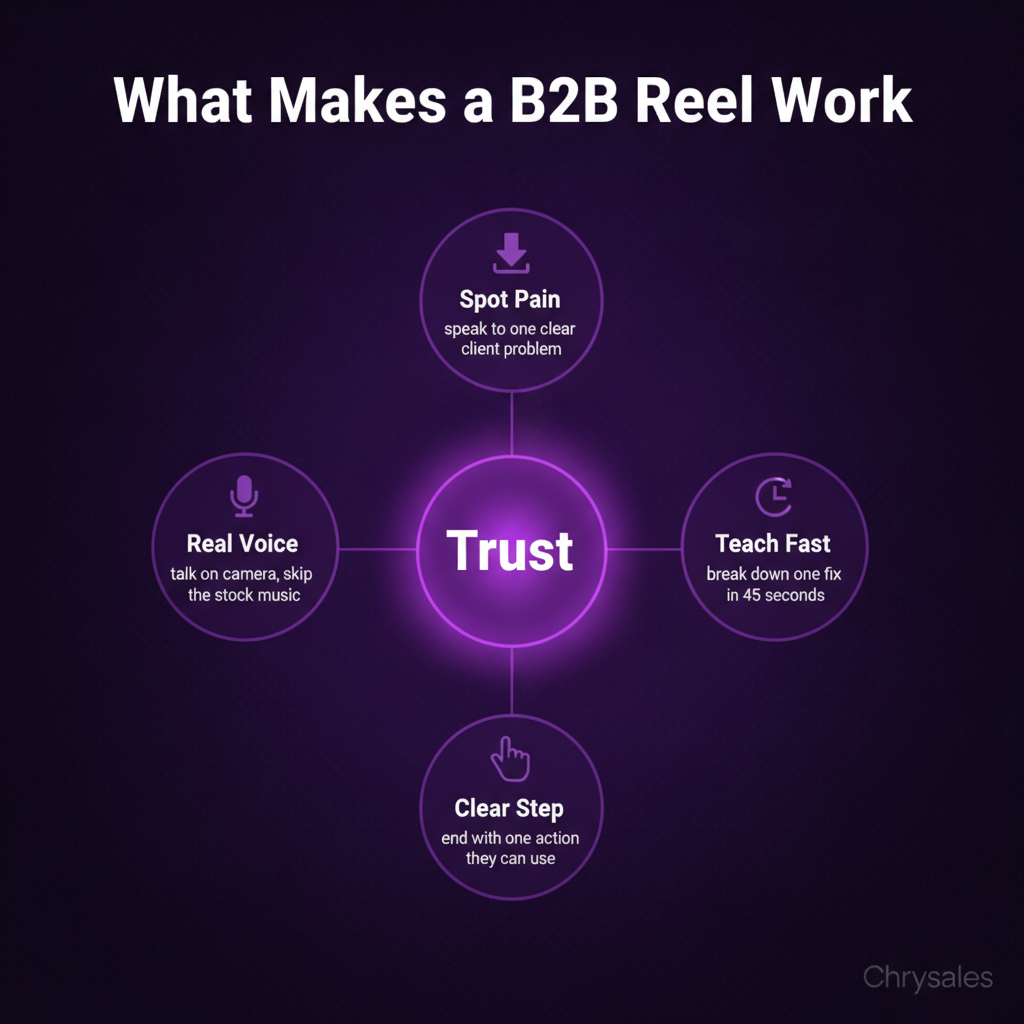
So what should you actually post? Not product demos. Not "here's our office" tours. Content that teaches something small and specific.
The Formula That Works
Good B2B Instagram Reels follow a simple pattern:
- Start with a problem your ideal client has right now
- Break down one specific mistake or fix in 30 to 45 seconds
- End with a clear next step or takeaway they can use today
That's it. No fancy editing. No trending audio. Just you explaining something useful.
Topics That Get Attention in B2B Lead Generation
Here are examples of reels that work for B2B sales:
- "Why your cold emails get ignored (and the one line fix)"
- "How to spot a bad fit lead in 10 seconds"
- "The discovery question that closes more deals than any pitch"
- "What to do when a prospect ghosts you after saying yes"
Notice the pattern? Each one speaks to a specific pain point. Each one promises a quick, clear answer. That's the sweet spot.
Watch out: Don't make reels that are just text on screen with stock music. If you're not on camera explaining the idea in your own voice, you're leaving half the trust building on the table.
How to Use Reels as a Client Acquisition Tool
Let's get practical. Reels aren't just for engagement. They're the top of your funnel. Here's how to connect them to actual client acquisition.
Step 1: Pick One Problem You Solve Really Well
Don't try to be everything to everyone. If you help companies close more deals, every reel should touch on some part of that. If you help with sales hiring, talk about hiring mistakes, interview red flags, onboarding systems. One marketing agency we worked with posted only about fixing low reply rates on cold outreach. Within 60 days, they had 40 qualified leads in their DMs. Not because they had a million followers. They had 800. But those 800 were the right people.
Step 2: Post 3 to 5 Times Per Week
Consistency beats perfection here. You don't need a film crew. Record on your phone. Natural light. Simple background. Just talk like you're explaining the idea to a friend. Three reels per week for three months gives you 36 pieces of content. That's 36 chances to show up in front of someone who needs your help. The Instagram algorithm rewards consistency, and so do buyers.
Step 3: Turn Viewers Into Conversations
End every reel with a soft call to action. "Drop a comment if you've seen this happen." "DM me if you want the full breakdown." "Check the link in bio for the free guide." Don't hard sell in the reel itself. The reel builds trust. The follow up turns that trust into a conversation. And conversations turn into calls.
Common mistake: Posting great reels but never checking your DMs. If someone reaches out, reply within 24 hours. That's a warm lead handing themselves to you.
Why Founder Led Content Beats Polished Brand Content Every Time
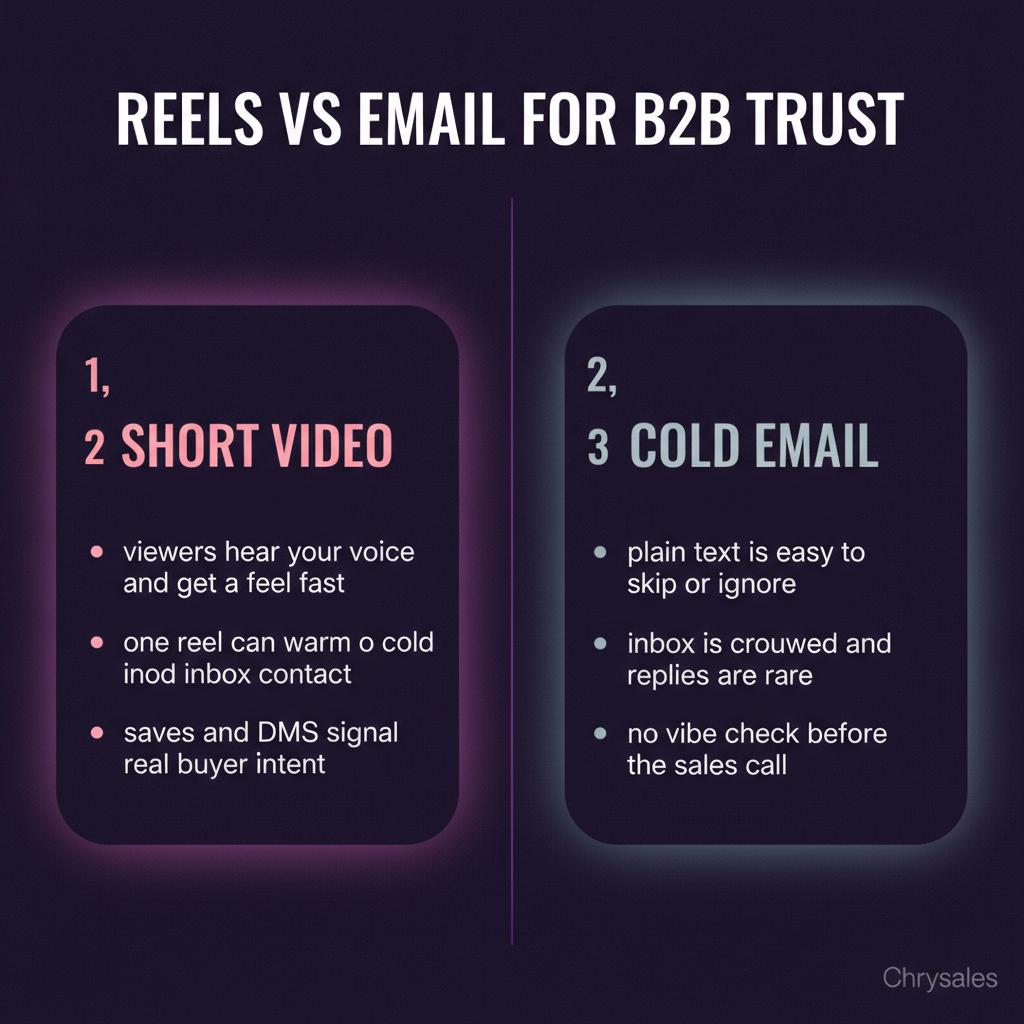
Here's where B2B content marketing gets interesting. The best performing reels aren't the ones with perfect graphics. They're the ones where a real person talks about something they actually know.
People Buy from People, Not Logos
Your ideal client doesn't want to hire your company. They want to hire you (or someone on your team who clearly knows their stuff). When you show your face and explain how you think, you're giving them a preview of what working with you feels like. A 15 person consulting firm doesn't need a branding agency to make reels. They need their smartest person to hit record and teach something for 45 seconds. That's it.
What to Actually Say on Camera
You don't need a script. You need clarity. Before you record, answer these three questions:
- What's the one thing I want them to learn?
- Why does it matter to them right now?
- What's the simplest way to explain it?
Then just talk it through. If you mess up, start again. Most reels take 3 to 5 takes. The ones that feel natural usually are.
Pro Tip: Write your opening line before you record. "Most sales teams make this mistake" or "Here's what nobody tells you about hiring closers" or "Quick breakdown of why your outreach isn't working." A strong first sentence makes the rest easier.
Short Form Video B2B Marketing Is Just Starting
Right now, most B2B companies still ignore Instagram. They think it's not "serious" enough. That's the opportunity. Early movers win here.
The Shift Happening Right Now
Five years ago, LinkedIn was underpriced attention for B2B. Everyone's there now, so it's louder and harder to stand out. Instagram Reels for B2B lead generation is where LinkedIn was in 2019. Not crowded yet. High attention. Low competition. Research from 2025 shows that decision makers spend significant time on social media outside of work hours. They're consuming content in all the same places as everyone else. If you're not showing up there, someone else is.
Video Content for B2B Brands Works Because It's Specific
Generic content dies in the algorithm. Specific content finds its people. A reel titled "How to hire a salesperson" will get ignored. A reel titled "Why hiring salespeople from big companies usually fails for small teams" will get watched by exactly the people who need to hear it. The magic of reels for B2B is that you can go narrow. You're not trying to get a million views. You're trying to get 50 views from the right 50 people.
How to Measure If Your Reels Are Actually Working
Vanity metrics don't pay the bills. Here's what actually matters.
Metrics That Mean Something
Forget likes. Watch these instead:
- Saves and shares: If someone saves your reel, they think it's useful. That's gold.
- Profile visits after posting: Did people click through to see who you are?
- DMs and comments with real questions: That's engagement that can turn into a lead.
- Link clicks in bio: If your call to action is working, this number goes up.
One tech company tracked this carefully for 90 days. They posted 40 reels. 12 of them got under 500 views. But those 12 generated 8 inbound leads because the right people saw them.
Connect Your Content to Your Sales Process
Don't just post reels into the void. Connect them to a system. Someone watches your reels. They visit your profile. They click your link. They land on a page that books a call or downloads a guide. That's B2B lead generation in 2026. At Chrysales, we help clients build this exact flow. The reel gets attention. The profile builds credibility. The landing page books the appointment. Then the sales call closes the deal. It's a system, not random content.
Watch out: If your Instagram bio link goes to your homepage with 15 different options, you're losing people. One clear offer. One clear next step.
You Don't Need to Be Viral, You Need to Be Consistent and Clear
Most people give up on reels after two weeks because they don't go viral. That's like quitting cold email after sending 10. The results come from volume and consistency, not luck.
What a Realistic Timeline Looks Like
Month 1: You're figuring out your format, learning what to say, getting comfortable on camera. Views are low. That's normal. Month 2: You start seeing which topics get more attention. A few reels outperform the rest. You double down on those topics. Month 3: People start recognizing you. DMs pick up. A few calls book. The system starts working. By month six, you have 70+ reels. Your back catalog is doing work while you sleep. New people find you every day. That's how short-form video strategy for B2B leads pays off.
The Biggest Mistake We See
Posting once. Getting 200 views. Thinking it didn't work. Stopping. Picture this: you send one cold email. Nobody replies. Do you quit outbound forever? No. You send 100 more. Same with reels. The first 20 reels are your learning curve. The next 50 are where the results show up.
Use Reels to Feed Your Sales System, Not Replace It
Quick reality check. Reels are the top of the funnel. They're not the whole funnel.
How Reels Fit Into a Sales Training System
At Chrysales, we've trained over 500 sales teams. The ones that grow fastest combine inbound content like reels with outbound systems like cold outreach and structured sales calls. Reels get people to know you. Outbound gets you in front of people who don't know you yet. Sales calls close the deal. Reels shouldn't replace your lead generation system. They should make it easier. When you cold email someone who's already watched three of your reels, your close rate skyrockets. You can also watch how to build a sales system that brings clients to you for a deeper walkthrough of connecting content to conversions.
Build a System That Scales
Here's a simple system that works:
- Post 3 to 5 reels per week on a specific topic
- Track who engages and visits your profile
- Add engaged followers to your outreach list with a personalized note
- Use a clear offer that solves one specific problem
- Book calls with people who respond
This isn't complicated. It's just connecting the dots between content and client acquisition. Most companies skip step 3 and 4. Don't. If you need help identifying and finding clients who need your services right now, this approach pairs perfectly with a structured reels strategy.
Pro Tip: If someone comments on your reel with a real question, reply and then send them a DM. "Saw your comment, happy to break this down more if it's useful." That's a warm introduction you didn't have to pay for.
Frequently Asked Questions
Q: Do reels actually work for B2B companies, or is this just a trend?
They work, but only if you post content that teaches something specific to your ideal client. Reels aren't magic. They're just a faster way to show expertise than a blog post or cold email. If you're solving real problems on camera, people will watch and reach out. We've seen consulting firms and agencies book 10 to 15 calls per month directly from Instagram. It's not a trend. According to LinkedIn's 2025 B2B marketing research on video influence and trust, video is becoming essential for building buyer confidence early in the decision process.
Q: How many reels do I need to post before I see results?
Most people start seeing real traction around 20 to 30 reels. That's when you figure out what topics land, how to talk on camera, and which calls to action work. The first 10 reels are your practice reps. The next 20 are where the leads start showing up. Posting 3 to 5 times per week means you hit that mark in about two months.
Q: What if I don't want to be on camera?
You can still make reels work without showing your face, but it's harder to build trust. Try screen recordings where you walk through something visual, like a spreadsheet or a process doc, and narrate over it. Or use B roll with text overlays and a voiceover. Just don't do silent text on screen reels. Your voice matters. People connect to voices, even if they don't see your face. Research from HubSpot's short-form video trends analysis shows that authenticity and voice drive higher engagement than polished, faceless content.
Q: Should I post the same content on LinkedIn and Instagram?
Yes, but tweak the format. LinkedIn likes longer captions and slightly longer videos. Instagram rewards quick, punchy delivery. Take the same core idea and adjust the packaging. One video idea can become two posts. Most B2B companies underproduce content. You're not going to burn people out by posting the same topic twice on different platforms.
Q: How do I turn reel views into actual sales calls?
End every reel with a soft next step. "Comment 'yes' if you want the full breakdown" or "Link in bio for the free guide" or "DM me if this sounds familiar." When someone engages, reply fast and offer something useful, not a sales pitch. A helpful reply turns into a conversation. A conversation turns into a call. Building a B2B reels strategy for the sales pipeline means tracking these micro-conversions and connecting them to your CRM. The fastest way to kill a warm lead is to ignore them or pitch too hard in the DMs.
Reels for B2B are short videos that help buyers trust you faster by teaching something useful, showing clear expertise, and starting real conversations before a sales call. Quick question: how do you prove you know what you're talking about in less than 60 seconds? That's the game with reels for B2B in 2026. Most B2B companies still think Instagram is just for skincare ads and dance trends. But short-form video on platforms like Instagram Reels is turning into one of the fastest ways to build trust before a sales call even happens. The catch? You have to actually teach something, not just talk about yourself. Let's break down why this works and how to make it happen.
Reels for B2B Actually Work Because Buyers Are Humans First
Here's the thing: your ideal client scrolls Instagram just like everyone else. They're not in "business mode" 24/7. They're watching cooking videos, checking sports updates, and yes, consuming content from people who solve problems they have at work. The mistake most B2B companies make is thinking they need to sound "professional" on Instagram. That's backwards. People don't trust corporate speak. They trust other people who clearly know their stuff and explain it in plain words.
Why Video Builds Trust Faster Than Text
Think about it like this. Reading a blog post is like getting an email from someone. Watching a reel is like meeting them face to face for 30 seconds. You hear their voice. You see how they explain things. You get a vibe check instantly. B2B lead generation used to mean cold emails and LinkedIn InMails. Those still work, but everyone's inbox is a warzone now. Video content cuts through because it's harder to ignore and easier to remember.
Pro Tip: If someone watches three of your reels and then sees your name in their inbox, your cold email just became warm.
Attention Is Where the Deals Start
Most B2B sales training focuses on what to say on a call. But what about getting the call in the first place? That's where content comes in. Reels for B2B give you a way to show up in front of potential clients before they even know they need you. We see this all the time with new clients at Chrysales. A consulting firm posts one reel breaking down how to fix a stalled sales pipeline. It gets 2,000 views. Three people book calls that week. Not because the reel was viral. Because the right 10 people saw it and thought, "This person gets it."
What Makes a B2B Reel Actually Useful
So what should you actually post? Not product demos. Not "here's our office" tours. Content that teaches something small and specific.
The Formula That Works
Good B2B Instagram Reels follow a simple pattern:
- Start with a problem your ideal client has right now
- Break down one specific mistake or fix in 30 to 45 seconds
- End with a clear next step or takeaway they can use today
That's it. No fancy editing. No trending audio. Just you explaining something useful.
Topics That Get Attention in B2B Lead Generation
Here are examples of reels that work for B2B sales:
- "Why your cold emails get ignored (and the one line fix)"
- "How to spot a bad fit lead in 10 seconds"
- "The discovery question that closes more deals than any pitch"
- "What to do when a prospect ghosts you after saying yes"
Notice the pattern? Each one speaks to a specific pain point. Each one promises a quick, clear answer. That's the sweet spot.
Watch out: Don't make reels that are just text on screen with stock music. If you're not on camera explaining the idea in your own voice, you're leaving half the trust building on the table.
How to Use Reels as a Client Acquisition Tool
Let's get practical. Reels aren't just for engagement. They're the top of your funnel. Here's how to connect them to actual client acquisition.
Step 1: Pick One Problem You Solve Really Well
Don't try to be everything to everyone. If you help companies close more deals, every reel should touch on some part of that. If you help with sales hiring, talk about hiring mistakes, interview red flags, onboarding systems. One marketing agency we worked with posted only about fixing low reply rates on cold outreach. Within 60 days, they had 40 qualified leads in their DMs. Not because they had a million followers. They had 800. But those 800 were the right people.
Step 2: Post 3 to 5 Times Per Week
Consistency beats perfection here. You don't need a film crew. Record on your phone. Natural light. Simple background. Just talk like you're explaining the idea to a friend. Three reels per week for three months gives you 36 pieces of content. That's 36 chances to show up in front of someone who needs your help. The Instagram algorithm rewards consistency, and so do buyers.
Step 3: Turn Viewers Into Conversations
End every reel with a soft call to action. "Drop a comment if you've seen this happen." "DM me if you want the full breakdown." "Check the link in bio for the free guide." Don't hard sell in the reel itself. The reel builds trust. The follow up turns that trust into a conversation. And conversations turn into calls.
Common mistake: Posting great reels but never checking your DMs. If someone reaches out, reply within 24 hours. That's a warm lead handing themselves to you.
Why Founder Led Content Beats Polished Brand Content Every Time
Here's where B2B content marketing gets interesting. The best performing reels aren't the ones with perfect graphics. They're the ones where a real person talks about something they actually know.
People Buy from People, Not Logos
Your ideal client doesn't want to hire your company. They want to hire you (or someone on your team who clearly knows their stuff). When you show your face and explain how you think, you're giving them a preview of what working with you feels like. A 15 person consulting firm doesn't need a branding agency to make reels. They need their smartest person to hit record and teach something for 45 seconds. That's it.
What to Actually Say on Camera
You don't need a script. You need clarity. Before you record, answer these three questions:
- What's the one thing I want them to learn?
- Why does it matter to them right now?
- What's the simplest way to explain it?
Then just talk it through. If you mess up, start again. Most reels take 3 to 5 takes. The ones that feel natural usually are.
Pro Tip: Write your opening line before you record. "Most sales teams make this mistake" or "Here's what nobody tells you about hiring closers" or "Quick breakdown of why your outreach isn't working." A strong first sentence makes the rest easier.
Short Form Video B2B Marketing Is Just Starting
Right now, most B2B companies still ignore Instagram. They think it's not "serious" enough. That's the opportunity. Early movers win here.
The Shift Happening Right Now
Five years ago, LinkedIn was underpriced attention for B2B. Everyone's there now, so it's louder and harder to stand out. Instagram Reels for B2B lead generation is where LinkedIn was in 2019. Not crowded yet. High attention. Low competition. Research from 2025 shows that decision makers spend significant time on social media outside of work hours. They're consuming content in all the same places as everyone else. If you're not showing up there, someone else is.
Video Content for B2B Brands Works Because It's Specific
Generic content dies in the algorithm. Specific content finds its people. A reel titled "How to hire a salesperson" will get ignored. A reel titled "Why hiring salespeople from big companies usually fails for small teams" will get watched by exactly the people who need to hear it. The magic of reels for B2B is that you can go narrow. You're not trying to get a million views. You're trying to get 50 views from the right 50 people.
How to Measure If Your Reels Are Actually Working
Vanity metrics don't pay the bills. Here's what actually matters.
Metrics That Mean Something
Forget likes. Watch these instead:
- Saves and shares: If someone saves your reel, they think it's useful. That's gold.
- Profile visits after posting: Did people click through to see who you are?
- DMs and comments with real questions: That's engagement that can turn into a lead.
- Link clicks in bio: If your call to action is working, this number goes up.
One tech company tracked this carefully for 90 days. They posted 40 reels. 12 of them got under 500 views. But those 12 generated 8 inbound leads because the right people saw them.
Connect Your Content to Your Sales Process
Don't just post reels into the void. Connect them to a system. Someone watches your reels. They visit your profile. They click your link. They land on a page that books a call or downloads a guide. That's B2B lead generation in 2026. At Chrysales, we help clients build this exact flow. The reel gets attention. The profile builds credibility. The landing page books the appointment. Then the sales call closes the deal. It's a system, not random content.
Watch out: If your Instagram bio link goes to your homepage with 15 different options, you're losing people. One clear offer. One clear next step.
You Don't Need to Be Viral, You Need to Be Consistent and Clear
Most people give up on reels after two weeks because they don't go viral. That's like quitting cold email after sending 10. The results come from volume and consistency, not luck.
What a Realistic Timeline Looks Like
Month 1: You're figuring out your format, learning what to say, getting comfortable on camera. Views are low. That's normal. Month 2: You start seeing which topics get more attention. A few reels outperform the rest. You double down on those topics. Month 3: People start recognizing you. DMs pick up. A few calls book. The system starts working. By month six, you have 70+ reels. Your back catalog is doing work while you sleep. New people find you every day. That's how short-form video strategy for B2B leads pays off.
The Biggest Mistake We See
Posting once. Getting 200 views. Thinking it didn't work. Stopping. Picture this: you send one cold email. Nobody replies. Do you quit outbound forever? No. You send 100 more. Same with reels. The first 20 reels are your learning curve. The next 50 are where the results show up.
Use Reels to Feed Your Sales System, Not Replace It
Quick reality check. Reels are the top of the funnel. They're not the whole funnel.
How Reels Fit Into a Sales Training System
At Chrysales, we've trained over 500 sales teams. The ones that grow fastest combine inbound content like reels with outbound systems like cold outreach and structured sales calls. Reels get people to know you. Outbound gets you in front of people who don't know you yet. Sales calls close the deal. Reels shouldn't replace your lead generation system. They should make it easier. When you cold email someone who's already watched three of your reels, your close rate skyrockets. You can also watch how to build a sales system that brings clients to you for a deeper walkthrough of connecting content to conversions.
Build a System That Scales
Here's a simple system that works:
- Post 3 to 5 reels per week on a specific topic
- Track who engages and visits your profile
- Add engaged followers to your outreach list with a personalized note
- Use a clear offer that solves one specific problem
- Book calls with people who respond
This isn't complicated. It's just connecting the dots between content and client acquisition. Most companies skip step 3 and 4. Don't. If you need help identifying and finding clients who need your services right now, this approach pairs perfectly with a structured reels strategy.
Pro Tip: If someone comments on your reel with a real question, reply and then send them a DM. "Saw your comment, happy to break this down more if it's useful." That's a warm introduction you didn't have to pay for.
Frequently Asked Questions
Q: Do reels actually work for B2B companies, or is this just a trend?
They work, but only if you post content that teaches something specific to your ideal client. Reels aren't magic. They're just a faster way to show expertise than a blog post or cold email. If you're solving real problems on camera, people will watch and reach out. We've seen consulting firms and agencies book 10 to 15 calls per month directly from Instagram. It's not a trend. According to LinkedIn's 2025 B2B marketing research on video influence and trust, video is becoming essential for building buyer confidence early in the decision process.
Q: How many reels do I need to post before I see results?
Most people start seeing real traction around 20 to 30 reels. That's when you figure out what topics land, how to talk on camera, and which calls to action work. The first 10 reels are your practice reps. The next 20 are where the leads start showing up. Posting 3 to 5 times per week means you hit that mark in about two months.
Q: What if I don't want to be on camera?
You can still make reels work without showing your face, but it's harder to build trust. Try screen recordings where you walk through something visual, like a spreadsheet or a process doc, and narrate over it. Or use B roll with text overlays and a voiceover. Just don't do silent text on screen reels. Your voice matters. People connect to voices, even if they don't see your face. Research from HubSpot's short-form video trends analysis shows that authenticity and voice drive higher engagement than polished, faceless content.
Q: Should I post the same content on LinkedIn and Instagram?
Yes, but tweak the format. LinkedIn likes longer captions and slightly longer videos. Instagram rewards quick, punchy delivery. Take the same core idea and adjust the packaging. One video idea can become two posts. Most B2B companies underproduce content. You're not going to burn people out by posting the same topic twice on different platforms.
Q: How do I turn reel views into actual sales calls?
End every reel with a soft next step. "Comment 'yes' if you want the full breakdown" or "Link in bio for the free guide" or "DM me if this sounds familiar." When someone engages, reply fast and offer something useful, not a sales pitch. A helpful reply turns into a conversation. A conversation turns into a call. Building a B2B reels strategy for the sales pipeline means tracking these micro-conversions and connecting them to your CRM. The fastest way to kill a warm lead is to ignore them or pitch too hard in the DMs.
Scaling Is Not Hard If You Have The Right Systems
If you’re serious about leveling up your scaling game, you need the right system, the right training, and the right team behind you. We're here to give you the exact tools and strategies top entrepreneurs use to dominate.

Discover the latest tips
View All.avif)
Chrysales was formed from the words "chrysalis" the stage where a caterpillar transforms into a butterfly and "sales".
It stands for one thing: sales transformation.Because scaling doesn’t happen by doing more of the same. Scaling only happens when you go through real transformation in your systems, your offer, team and the way you sell.
.avif)


