.avif)
How Daily Linkedin Posts Built a Real B2B Pipeline
LinkedIn B2B marketing is posting useful content on LinkedIn to build trust, start conversations, and turn attention into lead generation and client acquisition. Picture this: you block out 20 minutes every morning, write a post about what you're learning in sales, hit publish, and watch your pipeline fill up with qualified leads. Sounds too simple, right? That's what I thought before I committed to posting on LinkedIn every single day for 90 days straight. The results weren't what I expected, but they taught me more about LinkedIn B2B marketing than any course ever could. Here's what actually happened when I treated LinkedIn like a sales tool instead of a social network.
Why I Started Posting Every Day (And What I Got Wrong)
Most people jump into daily LinkedIn posting with the wrong goal. They want followers, likes, and comments. They think engagement equals success. I started the same way. Day one, I posted about cold email tactics. Got 47 likes and felt great. Day two, another post about sales scripts. 31 likes. Day three, a story about losing a deal. 89 likes and 12 comments. I thought I was crushing it. But after two weeks, something weird happened. My calendar was empty. Zero new discovery calls booked. Plenty of engagement, but nobody reaching out to work together.
Common mistake: Treating LinkedIn like Instagram. Likes don't pay the bills. Booked calls do.
The Shift That Changed Everything
Around day 20, I changed my approach completely. Instead of posting random sales tips, I started writing about specific problems I solved for real companies. A 15-person consulting firm doubled their close rate. A marketing agency cut their sales cycle from 90 days to 45. Small tech companies that couldn't hire salespeople without them quitting in 60 days. The engagement dropped. Likes went from 50-80 per post down to 20-30. But here's what happened: my DMs filled up with people asking how we did it. And those conversations turned into discovery calls.
Content That Builds Pipeline vs Content That Gets Likes
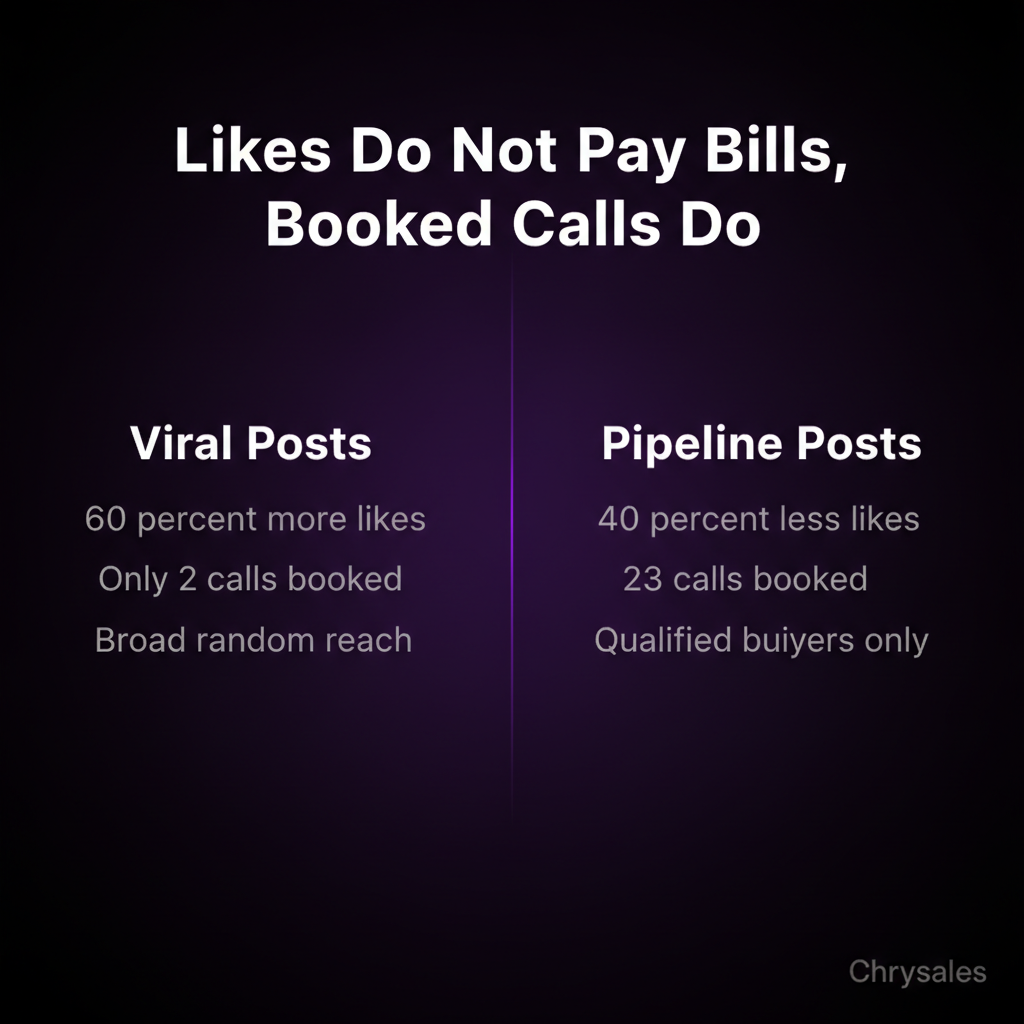
There's a huge gap between viral posts and posts that generate B2B lead generation. Viral posts get shared because they're funny, relatable, or contrarian. Pipeline posts get saved and forwarded to decision makers because they solve a painful problem. After 90 days, I tracked the numbers: Posts about general sales advice got 60% more engagement but only 2 booked calls total, while posts about specific client wins with real numbers had 40% less engagement but 23 booked calls total. The stuff that felt too specific, too niche, too boring actually worked. The crowd-pleasers didn't.
What Actually Happened to My Pipeline
Let's talk real numbers. Before I started posting daily, I was booking 4-6 discovery calls per month through cold outreach and referrals. After 90 days of daily posting on LinkedIn, that number jumped to 15-18 calls per month. Not all from LinkedIn directly, but the content created three pipeline effects I didn't expect.
Direct Inbound Leads
About 40% of new calls came straight from LinkedIn. Someone read a post, checked out my profile, and messaged me or booked a call. These weren't random tire-kickers. They were qualified leads who already understood what we do at Chrysales and had a problem we could solve. One software company reached out after reading a post about why most B2B sales training fails. They had just hired two closers who weren't hitting quota. We built them a custom sales system, trained the team, and they closed €180K in new deals within 90 days.
Warm Outreach Got Warmer
The other 60% didn't come directly from posting, but the content made everything else easier. When I sent cold outreach messages, people already recognized my name. They'd seen a post or two. The reply rate on LinkedIn outreach strategy to book more meetings went from around 8% to 22%.
Pro Tip: If someone engaged with your post in the last 30 days, they're 3x more likely to reply to your outreach. LinkedIn shows you who viewed your profile and liked your content. Use that list.
Referrals Started Mentioning the Posts
This was the weirdest part. Existing clients started forwarding my posts to their networks. A consulting firm we worked with sent one of my posts about hiring salespeople to three other consulting firms. Two of them booked calls. Referrals always worked, but now they came with context. Instead of "talk to this sales coach," it was "read this post, then talk to this sales coach." The discovery calls were shorter and closed faster because they already trusted the advice.
The Daily Posting System That Actually Works
Here's the thing nobody tells you: posting every day sounds hard, but it's easier than posting twice a week if you have a system. Most people fail because they treat every post like a blank page. That's exhausting. I built a simple content system that took 15-20 minutes per post. No fancy tools. No ghostwriters. Just a repeatable process.
The Four Post Types I Rotated
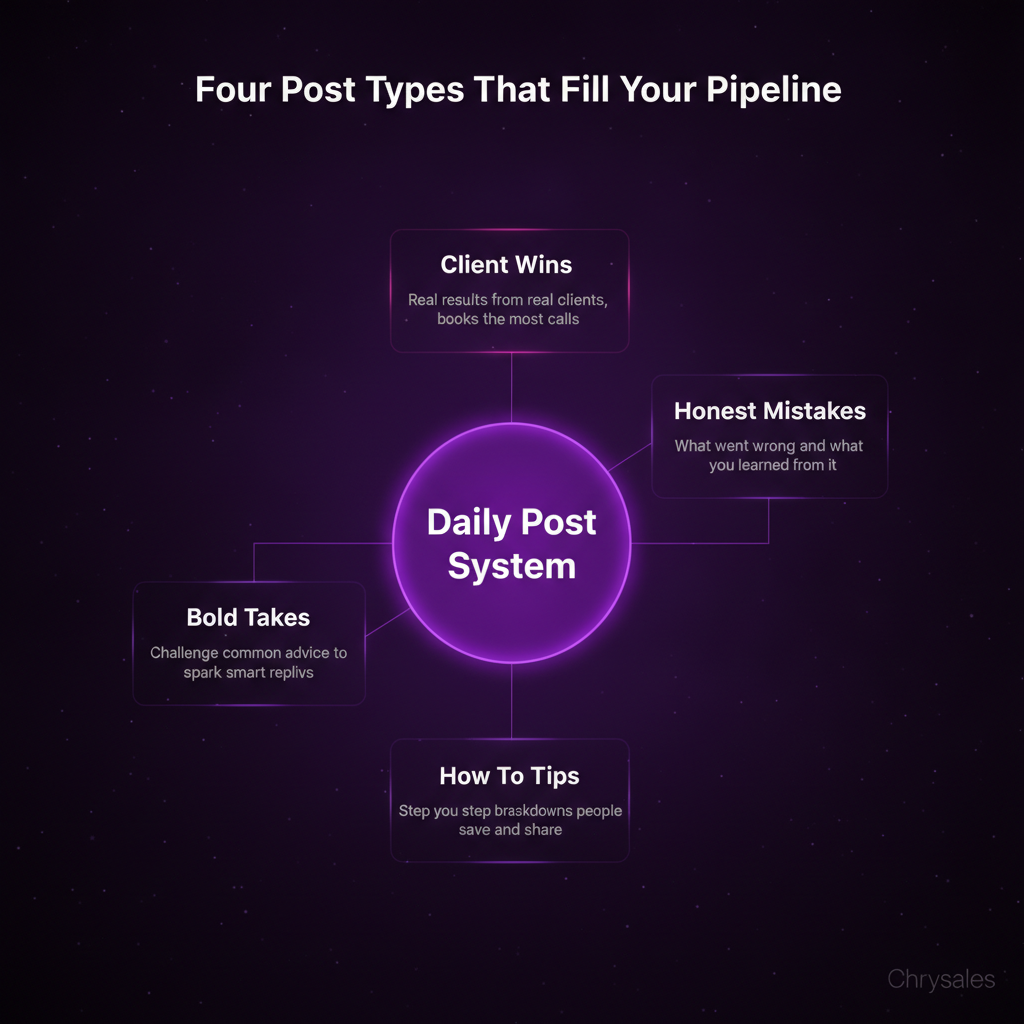
I didn't reinvent the wheel every day. I rotated four types of posts and never ran out of ideas:
Client win posts: Share a specific result from a real client. "A 30-person marketing agency was stuck at €500K annual revenue. We rebuilt their offer and trained their sales team. They hit €1.2M this year." These posts booked the most calls.
Mistakes I made posts: Talk about something I got wrong and what I learned. "I once hired three salespeople in two weeks. All three quit within 60 days. Here's what I missed." People love honesty. It builds trust faster than success stories.
How-to breakdowns: Pick one thing you do well and explain it step by step. "Here's how to run a discovery call that actually uncovers pain." These get saved and shared.
Contrarian takes: Challenge common advice in your industry. "Most sales coaches tell you to handle objections better. I think objections mean you're talking to the right people." These start conversations in the comments.
The 15-Minute Writing Process
Every morning, same routine. Pick a post type. Write 3-5 short paragraphs. One idea per paragraph. Read it out loud. If it sounds like a corporate report, rewrite it. If it sounds like I'm talking to a friend, hit publish. Most posts were 150-250 words. Short enough that people actually read them. Long enough to say something useful.
Watch out: Long posts (500+ words) got way less engagement. People scroll LinkedIn fast. If your post looks like an essay, they skip it.
What Didn't Work (And What I Stopped Doing)
I wasted the first 30 days doing things that felt productive but didn't move the needle. If you're starting a LinkedIn B2B marketing plan, skip these.
Posting at "Optimal Times"
Everyone says post between 8-10 AM on weekdays. I tested it. Posted at 8 AM for two weeks, then switched to random times, early afternoon, evenings, weekends. The difference in engagement was maybe 10%. Not worth stressing over. LinkedIn's algorithm cares more about how fast people engage in the first hour than what time you post. A great post at 2 PM beats a weak post at 8 AM every time.
Using Hashtags Like Instagram
I started every post with 5-10 hashtags. #Sales #B2B #LeadGeneration #SalesTraining. Felt like I was doing SEO. Turns out LinkedIn's algorithm doesn't care much about hashtags anymore. After day 40, I dropped to 2-3 relevant hashtags max, sometimes zero. Engagement stayed the same. Saves time and looks cleaner.
Engaging With Random Posts to "Build Network"
Some LinkedIn advice tells you to comment on 20 posts a day to get noticed. I tried it. Spent an hour every morning leaving thoughtful comments on random sales and marketing content. Did it grow my network? A little. Did it book calls? Zero. It was a time suck. I cut it completely and focused that hour on client work instead.
How to Turn LinkedIn Activity Into Actual Client Acquisition
This is where most people mess up. They post great content, get engagement, and then nothing. No system to turn viewers into leads. No follow-up. No clear next step. LinkedIn B2B marketing only works if you treat it like the top of a sales funnel, not a trophy case for likes.
Make Your Profile a Landing Page
Your profile is the first thing people check after reading a post. If it's generic, you lose them. I rewrote mine to focus on one clear outcome: helping B2B companies build predictable sales systems. Three changes that mattered:
- Headline: Not "Sales Coach" but "I help B2B companies build repeatable sales systems | 1,000+ businesses trained | €10M+ in client revenue generated"
- About section: Three short paragraphs explaining who I help, what results they get, and how to book a call
- Featured section: Pinned my best posts and a link to book a discovery call
Think of your profile like a landing page. Someone lands there, they should know exactly what you do and how to work with you in 10 seconds. For more on LinkedIn content and profile setup for lead generation, we cover the exact formula for turning profiles into conversion machines.
Use the DMs Like a Sales Tool, Not a Networking Event
When someone likes or comments on your posts repeatedly, send them a message. Not a pitch. Just a conversation starter. Bad: "Hey, saw you liked my post. Want to hop on a call?" Good: "Hey, noticed you've been engaging with my content on sales systems. Are you dealing with any of these challenges on your team right now?" About 30% reply. Of those, maybe half turn into discovery calls. That's fine. You're not trying to close everyone. You're looking for people with the right problem at the right time.
Build a Simple Lead Scoring System
Not everyone who engages is a fit. I learned this the hard way. Spent hours on calls with people who weren't ready to buy, didn't have budget, or wanted free advice. After day 50, I built a simple scoring system. If someone engaged with 3+ posts, viewed my profile, and worked at a B2B company with 10+ employees, they got a DM. Everyone else got ignored (politely).
Pro Tip: LinkedIn shows you who viewed your profile in the last 90 days. Filter that list by job title and company size. Those are your warmest leads.
The Biggest Surprise: LinkedIn as a Sales System, Not a Marketing Channel
Here's what I didn't expect. LinkedIn isn't just a place to build brand awareness or share thought leadership. For B2B sales, it's a full sales system if you use it right.
It Replaces Cold Email (Kind of)
By day 60, I cut my cold email volume in half. Why? Because LinkedIn outreach was closing faster. When you send a connection request or DM to someone who's already seen your content, the trust is there. They're not cold anymore. We saw this with clients too. A tech company came to us with a 0.8% reply rate on cold email. We built them a LinkedIn content plan, posted 4x per week for 60 days, and switched their outreach to LinkedIn DMs. Reply rate jumped to 6%. Cold email still works. But warm LinkedIn messages work better if you put in the content work first.
It's a Filter for Bad-Fit Leads
When you post specific content about the type of clients you work with and the problems you solve, you naturally filter out bad fits. If your posts talk about helping B2B companies with 10-50 employees, solo freelancers won't reach out. If you post about high-ticket sales, people looking for cheap courses self-select out. One marketing agency we worked with was drowning in unqualified leads. Everyone wanted their services, but most couldn't afford them. We helped them post content focused on one niche: SaaS companies spending at least €10K/month on paid ads. Lead volume dropped 40%. Close rate tripled.
It Builds Your Sales Team's Pipeline Too
This one surprised me most. After 90 days, other people on small sales teams started asking if they should post too. I told one client to have their whole sales team post twice a week using the same system. Three months later, their pipeline grew 60%. Not just from the founder's content. Every salesperson's network became a lead source. Multiply that across a team of five, and you've got serious reach. To see how a structured approach can build a sales system so powerful clients come to you, watch this breakdown of the full framework.
Mistakes That Cost Me the First 30 Days
If I started over, I'd skip these completely. They cost time and killed momentum.
Overthinking Every Post
I spent 45 minutes writing my first few posts. Rewrote sentences five times. Stressed about sounding smart. The posts were fine, but that's not sustainable for 90 days. Around day 15, I set a timer for 20 minutes. Write, edit once, publish. The quality stayed the same. The speed doubled.
Watch out: Perfect posts don't exist. Done is better than perfect when you're posting daily.
Trying to Go Viral
I saw other people's posts blow up with 10K+ likes and thought that's what success looked like. So I tried writing "viral" content. Inspirational stories. Hot takes. Stuff designed to get shared. It worked once. Got 3,000 likes on a post about resilience. Felt amazing. Booked zero calls. Waste of time. Viral content reaches people outside your ideal audience. A post with 50 likes from the right 50 people beats a post with 5,000 likes from random people every time.
Ignoring the Data
LinkedIn gives you analytics on every post. I ignored them for the first month. Big mistake. After day 30, I started tracking which posts got the most profile views, not just likes. Profile views equal interest. Likes equal passive scrolling. The posts that drove profile views were the ones booking calls. I doubled down on those topics and stopped writing the stuff that got likes but no action. If you want to track content impact on your sales funnel with a repeatable system, this guide walks through the exact metrics and dashboards we use with clients.
Frequently Asked Questions
Q: Do I really need to post every single day to see results on LinkedIn?
No. Daily posting worked for me because I was testing what content drove pipeline, and I needed volume to figure it out fast. But once you know what works, 3-4 posts per week is plenty. Consistency beats frequency. Posting twice a week for six months will outperform posting daily for three weeks and then stopping. The key is showing up regularly and giving people a reason to pay attention. If you can only commit to twice a week, do that and stick to it.
Q: How long does it take to actually book calls from LinkedIn content?
Most people see traction around the 30-60 day mark if they're posting consistently and messaging engaged viewers. The first two weeks, you're mostly building visibility. Weeks 3-6, people start recognizing your name and engaging more. After that, the DMs and profile views pick up. One client we worked with posted 3x per week and booked their first call on day 42. By day 90, they were booking 6-8 calls per month. It's not instant, but it's predictable if you show up and follow the system.
Q: What if I don't have client results to share yet?
Share what you're learning, mistakes you've made, or frameworks you use in your own work. You don't need a portfolio of client wins to post valuable content. A 20-person consulting firm can post about how they structure their discovery calls. A marketing agency can share their process for qualifying leads. Small sales teams can talk about what's working and what's not in their outreach. People care more about useful insights than perfect case studies. Just be honest and specific. To find clients who need your services right now, watch this tactical video that shows exactly how to identify in-market prospects on LinkedIn.
Q: Should I focus on LinkedIn or cold email for B2B lead generation?
Both. They work better together than alone. Use LinkedIn content to warm up your list, then follow up with outreach. If someone engaged with your post, send them a message or email referencing it. Cold email still works for reaching people outside your network, but LinkedIn outreach closes faster when there's existing trust. We usually tell clients to split their time 60/40: 60% on LinkedIn content and warm outreach, 40% on cold email to new lists. Test both and double down on what books more calls for your business. For detailed LinkedIn reply rate benchmarks for cold outreach, this post shows the exact numbers and conversion rates you should expect at each stage.
Q: How do I know if my LinkedIn content is actually working or just getting vanity engagement?
Track profile views and DMs, not likes. Go to your LinkedIn analytics and look at how many people visited your profile after seeing a post. Then check your messages. If a post gets 100 likes but only 3 profile views, it's vanity engagement. If a post gets 20 likes and 15 profile views, that's working. Set a simple rule: any post that drives 10+ profile views is a winner. Write more content on that topic. Anything under 5 profile views, skip that topic next time. Real engagement moves people from your post to your profile to your DMs.
LinkedIn B2B marketing is posting useful content on LinkedIn to build trust, start conversations, and turn attention into lead generation and client acquisition. Picture this: you block out 20 minutes every morning, write a post about what you're learning in sales, hit publish, and watch your pipeline fill up with qualified leads. Sounds too simple, right? That's what I thought before I committed to posting on LinkedIn every single day for 90 days straight. The results weren't what I expected, but they taught me more about LinkedIn B2B marketing than any course ever could. Here's what actually happened when I treated LinkedIn like a sales tool instead of a social network.
Why I Started Posting Every Day (And What I Got Wrong)
Most people jump into daily LinkedIn posting with the wrong goal. They want followers, likes, and comments. They think engagement equals success. I started the same way. Day one, I posted about cold email tactics. Got 47 likes and felt great. Day two, another post about sales scripts. 31 likes. Day three, a story about losing a deal. 89 likes and 12 comments. I thought I was crushing it. But after two weeks, something weird happened. My calendar was empty. Zero new discovery calls booked. Plenty of engagement, but nobody reaching out to work together.
Common mistake: Treating LinkedIn like Instagram. Likes don't pay the bills. Booked calls do.
The Shift That Changed Everything
Around day 20, I changed my approach completely. Instead of posting random sales tips, I started writing about specific problems I solved for real companies. A 15-person consulting firm doubled their close rate. A marketing agency cut their sales cycle from 90 days to 45. Small tech companies that couldn't hire salespeople without them quitting in 60 days. The engagement dropped. Likes went from 50-80 per post down to 20-30. But here's what happened: my DMs filled up with people asking how we did it. And those conversations turned into discovery calls.
Content That Builds Pipeline vs Content That Gets Likes
There's a huge gap between viral posts and posts that generate B2B lead generation. Viral posts get shared because they're funny, relatable, or contrarian. Pipeline posts get saved and forwarded to decision makers because they solve a painful problem. After 90 days, I tracked the numbers: Posts about general sales advice got 60% more engagement but only 2 booked calls total, while posts about specific client wins with real numbers had 40% less engagement but 23 booked calls total. The stuff that felt too specific, too niche, too boring actually worked. The crowd-pleasers didn't.
What Actually Happened to My Pipeline
Let's talk real numbers. Before I started posting daily, I was booking 4-6 discovery calls per month through cold outreach and referrals. After 90 days of daily posting on LinkedIn, that number jumped to 15-18 calls per month. Not all from LinkedIn directly, but the content created three pipeline effects I didn't expect.
Direct Inbound Leads
About 40% of new calls came straight from LinkedIn. Someone read a post, checked out my profile, and messaged me or booked a call. These weren't random tire-kickers. They were qualified leads who already understood what we do at Chrysales and had a problem we could solve. One software company reached out after reading a post about why most B2B sales training fails. They had just hired two closers who weren't hitting quota. We built them a custom sales system, trained the team, and they closed €180K in new deals within 90 days.
Warm Outreach Got Warmer
The other 60% didn't come directly from posting, but the content made everything else easier. When I sent cold outreach messages, people already recognized my name. They'd seen a post or two. The reply rate on LinkedIn outreach strategy to book more meetings went from around 8% to 22%.
Pro Tip: If someone engaged with your post in the last 30 days, they're 3x more likely to reply to your outreach. LinkedIn shows you who viewed your profile and liked your content. Use that list.
Referrals Started Mentioning the Posts
This was the weirdest part. Existing clients started forwarding my posts to their networks. A consulting firm we worked with sent one of my posts about hiring salespeople to three other consulting firms. Two of them booked calls. Referrals always worked, but now they came with context. Instead of "talk to this sales coach," it was "read this post, then talk to this sales coach." The discovery calls were shorter and closed faster because they already trusted the advice.
The Daily Posting System That Actually Works
Here's the thing nobody tells you: posting every day sounds hard, but it's easier than posting twice a week if you have a system. Most people fail because they treat every post like a blank page. That's exhausting. I built a simple content system that took 15-20 minutes per post. No fancy tools. No ghostwriters. Just a repeatable process.
The Four Post Types I Rotated
I didn't reinvent the wheel every day. I rotated four types of posts and never ran out of ideas:
Client win posts: Share a specific result from a real client. "A 30-person marketing agency was stuck at €500K annual revenue. We rebuilt their offer and trained their sales team. They hit €1.2M this year." These posts booked the most calls.
Mistakes I made posts: Talk about something I got wrong and what I learned. "I once hired three salespeople in two weeks. All three quit within 60 days. Here's what I missed." People love honesty. It builds trust faster than success stories.
How-to breakdowns: Pick one thing you do well and explain it step by step. "Here's how to run a discovery call that actually uncovers pain." These get saved and shared.
Contrarian takes: Challenge common advice in your industry. "Most sales coaches tell you to handle objections better. I think objections mean you're talking to the right people." These start conversations in the comments.
The 15-Minute Writing Process
Every morning, same routine. Pick a post type. Write 3-5 short paragraphs. One idea per paragraph. Read it out loud. If it sounds like a corporate report, rewrite it. If it sounds like I'm talking to a friend, hit publish. Most posts were 150-250 words. Short enough that people actually read them. Long enough to say something useful.
Watch out: Long posts (500+ words) got way less engagement. People scroll LinkedIn fast. If your post looks like an essay, they skip it.
What Didn't Work (And What I Stopped Doing)
I wasted the first 30 days doing things that felt productive but didn't move the needle. If you're starting a LinkedIn B2B marketing plan, skip these.
Posting at "Optimal Times"
Everyone says post between 8-10 AM on weekdays. I tested it. Posted at 8 AM for two weeks, then switched to random times, early afternoon, evenings, weekends. The difference in engagement was maybe 10%. Not worth stressing over. LinkedIn's algorithm cares more about how fast people engage in the first hour than what time you post. A great post at 2 PM beats a weak post at 8 AM every time.
Using Hashtags Like Instagram
I started every post with 5-10 hashtags. #Sales #B2B #LeadGeneration #SalesTraining. Felt like I was doing SEO. Turns out LinkedIn's algorithm doesn't care much about hashtags anymore. After day 40, I dropped to 2-3 relevant hashtags max, sometimes zero. Engagement stayed the same. Saves time and looks cleaner.
Engaging With Random Posts to "Build Network"
Some LinkedIn advice tells you to comment on 20 posts a day to get noticed. I tried it. Spent an hour every morning leaving thoughtful comments on random sales and marketing content. Did it grow my network? A little. Did it book calls? Zero. It was a time suck. I cut it completely and focused that hour on client work instead.
How to Turn LinkedIn Activity Into Actual Client Acquisition
This is where most people mess up. They post great content, get engagement, and then nothing. No system to turn viewers into leads. No follow-up. No clear next step. LinkedIn B2B marketing only works if you treat it like the top of a sales funnel, not a trophy case for likes.
Make Your Profile a Landing Page
Your profile is the first thing people check after reading a post. If it's generic, you lose them. I rewrote mine to focus on one clear outcome: helping B2B companies build predictable sales systems. Three changes that mattered:
- Headline: Not "Sales Coach" but "I help B2B companies build repeatable sales systems | 1,000+ businesses trained | €10M+ in client revenue generated"
- About section: Three short paragraphs explaining who I help, what results they get, and how to book a call
- Featured section: Pinned my best posts and a link to book a discovery call
Think of your profile like a landing page. Someone lands there, they should know exactly what you do and how to work with you in 10 seconds. For more on LinkedIn content and profile setup for lead generation, we cover the exact formula for turning profiles into conversion machines.
Use the DMs Like a Sales Tool, Not a Networking Event
When someone likes or comments on your posts repeatedly, send them a message. Not a pitch. Just a conversation starter. Bad: "Hey, saw you liked my post. Want to hop on a call?" Good: "Hey, noticed you've been engaging with my content on sales systems. Are you dealing with any of these challenges on your team right now?" About 30% reply. Of those, maybe half turn into discovery calls. That's fine. You're not trying to close everyone. You're looking for people with the right problem at the right time.
Build a Simple Lead Scoring System
Not everyone who engages is a fit. I learned this the hard way. Spent hours on calls with people who weren't ready to buy, didn't have budget, or wanted free advice. After day 50, I built a simple scoring system. If someone engaged with 3+ posts, viewed my profile, and worked at a B2B company with 10+ employees, they got a DM. Everyone else got ignored (politely).
Pro Tip: LinkedIn shows you who viewed your profile in the last 90 days. Filter that list by job title and company size. Those are your warmest leads.
The Biggest Surprise: LinkedIn as a Sales System, Not a Marketing Channel
Here's what I didn't expect. LinkedIn isn't just a place to build brand awareness or share thought leadership. For B2B sales, it's a full sales system if you use it right.
It Replaces Cold Email (Kind of)
By day 60, I cut my cold email volume in half. Why? Because LinkedIn outreach was closing faster. When you send a connection request or DM to someone who's already seen your content, the trust is there. They're not cold anymore. We saw this with clients too. A tech company came to us with a 0.8% reply rate on cold email. We built them a LinkedIn content plan, posted 4x per week for 60 days, and switched their outreach to LinkedIn DMs. Reply rate jumped to 6%. Cold email still works. But warm LinkedIn messages work better if you put in the content work first.
It's a Filter for Bad-Fit Leads
When you post specific content about the type of clients you work with and the problems you solve, you naturally filter out bad fits. If your posts talk about helping B2B companies with 10-50 employees, solo freelancers won't reach out. If you post about high-ticket sales, people looking for cheap courses self-select out. One marketing agency we worked with was drowning in unqualified leads. Everyone wanted their services, but most couldn't afford them. We helped them post content focused on one niche: SaaS companies spending at least €10K/month on paid ads. Lead volume dropped 40%. Close rate tripled.
It Builds Your Sales Team's Pipeline Too
This one surprised me most. After 90 days, other people on small sales teams started asking if they should post too. I told one client to have their whole sales team post twice a week using the same system. Three months later, their pipeline grew 60%. Not just from the founder's content. Every salesperson's network became a lead source. Multiply that across a team of five, and you've got serious reach. To see how a structured approach can build a sales system so powerful clients come to you, watch this breakdown of the full framework.
Mistakes That Cost Me the First 30 Days
If I started over, I'd skip these completely. They cost time and killed momentum.
Overthinking Every Post
I spent 45 minutes writing my first few posts. Rewrote sentences five times. Stressed about sounding smart. The posts were fine, but that's not sustainable for 90 days. Around day 15, I set a timer for 20 minutes. Write, edit once, publish. The quality stayed the same. The speed doubled.
Watch out: Perfect posts don't exist. Done is better than perfect when you're posting daily.
Trying to Go Viral
I saw other people's posts blow up with 10K+ likes and thought that's what success looked like. So I tried writing "viral" content. Inspirational stories. Hot takes. Stuff designed to get shared. It worked once. Got 3,000 likes on a post about resilience. Felt amazing. Booked zero calls. Waste of time. Viral content reaches people outside your ideal audience. A post with 50 likes from the right 50 people beats a post with 5,000 likes from random people every time.
Ignoring the Data
LinkedIn gives you analytics on every post. I ignored them for the first month. Big mistake. After day 30, I started tracking which posts got the most profile views, not just likes. Profile views equal interest. Likes equal passive scrolling. The posts that drove profile views were the ones booking calls. I doubled down on those topics and stopped writing the stuff that got likes but no action. If you want to track content impact on your sales funnel with a repeatable system, this guide walks through the exact metrics and dashboards we use with clients.
Frequently Asked Questions
Q: Do I really need to post every single day to see results on LinkedIn?
No. Daily posting worked for me because I was testing what content drove pipeline, and I needed volume to figure it out fast. But once you know what works, 3-4 posts per week is plenty. Consistency beats frequency. Posting twice a week for six months will outperform posting daily for three weeks and then stopping. The key is showing up regularly and giving people a reason to pay attention. If you can only commit to twice a week, do that and stick to it.
Q: How long does it take to actually book calls from LinkedIn content?
Most people see traction around the 30-60 day mark if they're posting consistently and messaging engaged viewers. The first two weeks, you're mostly building visibility. Weeks 3-6, people start recognizing your name and engaging more. After that, the DMs and profile views pick up. One client we worked with posted 3x per week and booked their first call on day 42. By day 90, they were booking 6-8 calls per month. It's not instant, but it's predictable if you show up and follow the system.
Q: What if I don't have client results to share yet?
Share what you're learning, mistakes you've made, or frameworks you use in your own work. You don't need a portfolio of client wins to post valuable content. A 20-person consulting firm can post about how they structure their discovery calls. A marketing agency can share their process for qualifying leads. Small sales teams can talk about what's working and what's not in their outreach. People care more about useful insights than perfect case studies. Just be honest and specific. To find clients who need your services right now, watch this tactical video that shows exactly how to identify in-market prospects on LinkedIn.
Q: Should I focus on LinkedIn or cold email for B2B lead generation?
Both. They work better together than alone. Use LinkedIn content to warm up your list, then follow up with outreach. If someone engaged with your post, send them a message or email referencing it. Cold email still works for reaching people outside your network, but LinkedIn outreach closes faster when there's existing trust. We usually tell clients to split their time 60/40: 60% on LinkedIn content and warm outreach, 40% on cold email to new lists. Test both and double down on what books more calls for your business. For detailed LinkedIn reply rate benchmarks for cold outreach, this post shows the exact numbers and conversion rates you should expect at each stage.
Q: How do I know if my LinkedIn content is actually working or just getting vanity engagement?
Track profile views and DMs, not likes. Go to your LinkedIn analytics and look at how many people visited your profile after seeing a post. Then check your messages. If a post gets 100 likes but only 3 profile views, it's vanity engagement. If a post gets 20 likes and 15 profile views, that's working. Set a simple rule: any post that drives 10+ profile views is a winner. Write more content on that topic. Anything under 5 profile views, skip that topic next time. Real engagement moves people from your post to your profile to your DMs.
Scaling Is Not Hard If You Have The Right Systems
If you’re serious about leveling up your scaling game, you need the right system, the right training, and the right team behind you. We're here to give you the exact tools and strategies top entrepreneurs use to dominate.

Discover the latest tips
View All.avif)
Chrysales was formed from the words "chrysalis" the stage where a caterpillar transforms into a butterfly and "sales".
It stands for one thing: sales transformation.Because scaling doesn’t happen by doing more of the same. Scaling only happens when you go through real transformation in your systems, your offer, team and the way you sell.
.avif)


