.avif)
How to Generate Leads with Tactics That Actually Work
How to generate leads means using simple tactics that bring in the right contacts and turn them into real sales opportunities. It ties lead generation, b2b sales, b2b lead generation, sales training, client acquisition, and gtm into one system that works.
Here's the thing nobody tells you: most lead generation problems aren't about the tactics. They're about the system behind them. You can send 1,000 cold emails or run LinkedIn ads all day, but if the list is bad, the offer is confusing, or you don't know what to do when someone replies, none of it matters.
Think of lead generation like building a contact list for a party. If half the numbers don't work and the other half don't even like the kind of party you're throwing, no invitation gets through.
This guide covers 10 tactics that work in 2026, but also shows you how to build a sales system that actually scales and fills your pipeline.
Build a Lead List That Does Half the Work
Most teams start backwards. They write perfect emails, build beautiful landing pages, and then realize their list is full of people who aren't even buyers. A bad list kills everything downstream.
Picture this: you spend two weeks writing outreach messages, but your list is packed with job titles that don't make decisions, companies that just laid off staff, or industries you don't even serve. That's the trap.
Start with Your Best Fit Profile
Look at your last 10 best clients. What do they have in common? Company size, industry, recent growth signals, tech stack? Write down 5-7 hard filters. A 200-person company that just did layoffs is not a hot lead. It's a bad fit, full stop.
Use Data Tools That Actually Enrich
Tools like Apollo, ZoomInfo, and Clay let you filter by revenue, headcount, tech signals, and hiring trends. The goal isn't a huge list. It's a clean one.
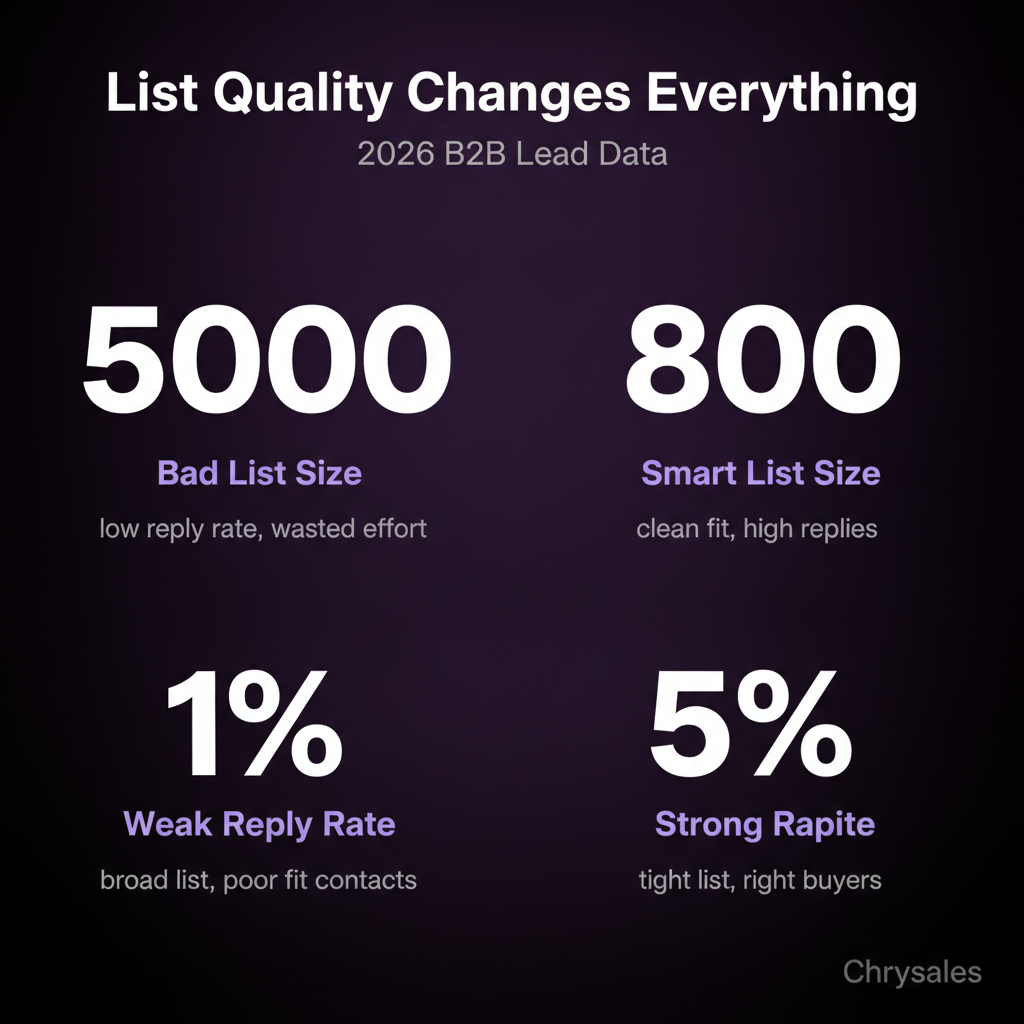
We see this all the time with new clients: they come in with 5,000-contact lists and 0.3% reply rates. After cutting it down to 800 high-fit contacts, reply rates jump to 3-5%.
Score Your Leads Before You Touch Them
Set a simple rule: anything scoring above 70 goes to the top of your call list. Score based on fit signals like recent funding, job postings in sales or marketing, tech stack match, and company growth.
One consulting firm we worked with scored leads on 5 criteria. The top 20% booked meetings at 4x the rate of the bottom half.
Pro Tip: Build your list in batches of 100-200. Test, measure reply rates, then scale what works. You can also watch 4 Ways To Find Clients Who Need Your Services Right Now for a deeper walkthrough on building tight ICP-driven lead lists.
Cold Email Outreach That Gets Replies
Cold email still works in 2026, but only if you stop sounding like a robot. Most cold emails flop because they're written for everyone, so they connect with no one.
Your subject line should sound like something a coworker would write, not a marketing campaign.
Personalize the First Line
Skip the "I saw your company does X" template. Reference something real: a LinkedIn post they wrote, a recent company announcement, a mutual connection, or a specific problem their industry is facing right now.
One sentence. Make it obvious you didn't copy-paste.
Lead with the Problem, Not Your Product
Nobody cares what you do in the first 10 seconds. They care if you understand their world. Open with the pain point: "Most consulting firms we talk to are booked out but still can't predictably fill next quarter's pipeline." Then show how you solve it.
Keep It Under 100 Words
If your email takes two scrolls to read, it's getting deleted. Write like you're texting a smart friend. Three short paragraphs max. End with one clear ask: book a call, reply with a question, or check out a 2-minute example.
For a deeper tactical breakdown on writing short, high-performing messages, read our complete guide on how to write cold emails that actually get replies.
Watch out: Avoid attachments, heavy images, and 5+ links. They tank deliverability and look spammy.
LinkedIn Outreach for B2B Sales
LinkedIn is where your buyers actually hang out, but most outreach there is embarrassingly bad. Connection requests with a pitch in the note. Generic "just checking in" messages. Long sales spiels that no one asked for.
Treat LinkedIn like networking at a conference, not cold calling a phone book.
Personalized Connection Requests Win
Send a request with a short, real reason. "Saw your post on sales hiring. We help B2B companies build systems around that. Worth connecting?" No pitch. No link. Just a reason that makes sense.
Engage Before You Pitch
Comment on their posts. Like their updates. Send a quick voice note about something they shared. Build a tiny bit of recognition before you ask for time.
One marketing agency did this with 50 target accounts. After two weeks of low-key engagement, their reply rate went from 8% to 22%. Learn the full framework for LinkedIn outreach that books meetings in our step-by-step guide.
Use Video Messages
Loom or LinkedIn native video messages stand out. Record a 30-second video mentioning their company by name, showing your face, and offering something specific. It feels personal because it is.
We've seen video outreach book meetings at nearly double the rate of text-only.
Content Marketing That Pulls Leads In
Outbound is great, but inbound is what lets you scale without burning out your team. Content marketing means writing blogs, posting on LinkedIn, recording short videos, and sharing real advice that makes people think "this person gets it."
Write About Real Problems You Solve
Skip the fluff. Write how-to guides, frameworks, and breakdowns of what actually works. A 15-person consulting firm started posting one LinkedIn article a week about sales systems. In 90 days, they got 12 inbound leads from people who read their stuff and reached out cold.
SEO Still Drives Consistent Lead Generation
Ranking for terms like "B2B lead generation," "how to generate leads," or "client acquisition for agencies" means people find you when they're actively searching. Write blogs that answer real questions. Keep them simple, clear, and useful.
Repurpose Everything
Turn one blog into a LinkedIn post, a Twitter thread, and a YouTube script. A 10-minute call recording becomes a case study, a testimonial clip, and three tips. Most teams create once and post once. That's leaving 80% of the value on the table.
Common mistake: Writing content for other marketers instead of your actual buyers. If your client is a sales leader at a tech company, write for them, not for someone who already does what you do.
Paid Ads for Targeted Outreach
Google Ads and LinkedIn Ads work if you're specific. Throwing $2,000 at a broad audience and hoping for leads is a waste. Paid ads are best when you already know your offer works and you want to speed up the top of funnel.
LinkedIn Ads for High-Ticket B2B
LinkedIn lets you target by job title, company size, industry, and seniority. If your ideal client is a VP of Sales at a 50-200 person SaaS company, you can serve them an ad directly.
We've seen LinkedIn ads drive leads at $80-$150 per qualified meeting when the targeting is tight.
Google Ads for High-Intent Searches
When someone Googles "sales coaching for B2B," they're not browsing. They're looking for help. Bid on high-intent keywords, send them to a landing page with one clear offer, and follow up fast.
Speed matters. According to speed-to-lead statistics, leads that get a reply in under 5 minutes convert at 5x the rate of those that wait an hour.
Retargeting Keeps You Top of Mind
Most people don't buy the first time they see you. Retargeting shows ads to people who visited your site, watched a video, or engaged with content. It's a reminder, not a cold pitch.
One agency retargeted LinkedIn post engagers with a case study ad. Conversion rate doubled.
Referral Programs That Turn Clients into Lead Sources
Your best leads come from people who already trust you. A warm intro from a current client is worth 10 cold emails. Most companies don't ask for referrals because they think it's awkward. It's only awkward if you make it transactional.
Ask at the Right Time
The best time to ask for a referral is right after you deliver a win. A client just closed three deals using your system? That's when you say, "Glad this is working. Know anyone else dealing with the same stuff?" Keep it casual.
Make It Easy
Don't ask clients to "send people your way" with no context. Give them a one-liner they can copy-paste: "We work with [your company] to build repeatable sales systems. If you know a B2B team struggling with lead gen or deal closing, happy to intro." Simple. Clear. No heavy lift.
Incentivize Without Being Weird
Some companies offer a referral bonus. Others just send a thank-you gift. The key is making the client feel appreciated, not like they're working a side hustle.
A $200 gift card for a referral that turns into a $15,000 client is a no-brainer.
Pro Tip: Track where every lead comes from. If 30% of your best clients come from referrals, double down. Build a system around it.
Webinars and Live Events That Build Trust
Webinars aren't dead. Bad webinars are dead. A 60-minute pitch disguised as a training session gets ignored. A 30-minute session that teaches one useful thing and ends with a soft offer? That works.
Pick One Specific Topic
"How to Build a Sales System" is too broad. "How to Write a Cold Email That Books Meetings" is specific and useful. People sign up when they know exactly what they're getting.
Deliver Real Value, Then Offer Help
Teach something actionable in the first 20 minutes. Show a framework, walk through an example, give a template. At the end, say "If you want help doing this for your business, here's how we work." No hard pitch. Just an offer.
Follow Up with Attendees Fast
Send the replay and a one-question survey within an hour. "What's your biggest challenge with [topic]?" The replies become warm leads.
One tech company ran a webinar on sales hiring and got 40 attendees. Eight replied to the follow-up. Four booked calls. Two became clients.
Lead Magnets That Qualify and Capture
A lead magnet is a free resource you give in exchange for an email. But most lead magnets are garbage. A 40-page PDF no one reads doesn't help. A 2-page checklist, a 10-minute video walkthrough, or a simple calculator? Those get used.
Make It Solve One Problem
"The Complete Guide to Sales" sounds impressive but no one downloads it. "The 5-Question Discovery Call Script" is specific and immediately useful. Pick one pain point and solve it fast.
Gate It Smart
Ask for just an email and first name. The more fields you add, the fewer people convert. You can qualify them later. Get them into your world first.
Follow Up with a Sequence
The magnet is the start, not the end. Set up a 5-email sequence that delivers more value and invites a conversation.
Email 1: deliver the magnet. Email 2: a quick win related to the topic. Email 3: a case study. Email 4: an invite to book a call. Email 5: a last-chance soft close. For detailed guidance on structuring nurture sequences, see lead nurture email sequence best practices.
Watch out: Don't bait-and-switch. If the magnet promises a template, deliver the template. If it's fluff, people unsubscribe and you lose trust.
Social Media Engagement That Builds Pipeline
Social media isn't just for posting. It's for conversations. Commenting on posts, replying to DMs, engaging in niche communities, and showing up consistently is how you get noticed without paying for ads.
Show Up Where Your Buyers Hang Out
If your clients are on LinkedIn, be on LinkedIn. If they're in Slack communities or niche Facebook groups, go there.
One sales consultant joined three industry-specific Slack groups, answered questions for free, and booked six leads in a month without a single ad.
Comment More Than You Post
Posting is great. Commenting is underrated. When you leave smart, helpful comments on posts from people in your target market, their followers see you. Do it 10 times a day for a month and watch what happens.
DM with Value, Not a Pitch
If someone posts about a problem you solve, DM them something useful. A link to a free resource, a quick tip, or a genuine compliment. Not a pitch. Build the relationship first.
One marketing agency grew 40% of their pipeline by DMing helpful resources to people posting about sales problems.
CRM Follow-Up Sequences That Don't Let Leads Die
Here's a stat that should scare you: 80% of leads never get followed up with after the first touchpoint. Most companies generate leads and then let them sit in a spreadsheet or CRM with no system to move them forward.
Set Up Automated Follow-Up Flows
If someone downloads a lead magnet, books a call, or replies to an email, they should enter a follow-up sequence. Email 1 after 1 day, Email 2 after 3 days, Email 3 after 7 days. Keep it simple and conversational.
Use Multi-Channel Follow-Up
Don't just email. Follow up via LinkedIn message, a quick Loom video, or a text if you have their number. People check different channels at different times. One message might get buried, but three across different platforms gets seen.
Track What Moves Leads Forward
Not all follow-ups are equal. Track reply rates, meeting book rates, and which messages get responses. If "checking in" emails get zero replies but case study links get 15% replies, do more of the second one.
Common mistake: Following up too much or too little. Three touches in three days is aggressive. One touch in three weeks is forgettable. Aim for 5-7 touches over 2-3 weeks, then pause.
AI and Automation to Scale Lead Generation
AI tools in 2026 make it possible to do what used to take a full team with just one or two people. We're talking AI lead scoring, personalized email generation, and workflow automation that saves 10+ hours a week.
AI Lead Scoring Ranks Your Best Prospects
Tools like Clay and Gemini-based workflows can score thousands of leads based on fit signals, engagement history, and intent data. Set the rules once, and the system ranks your list every week. The top 10% get personal outreach. The rest get nurture sequences.
AI Email Personalization at Scale
AI can write the first line of your cold emails by pulling real data: a recent LinkedIn post, a company news mention, or a job change. It's not perfect, but it's 80% there. You tweak the last 20% and send.
One sales team used AI to personalize 500 emails a week. Reply rate jumped from 1.8% to 4.2%. Research shows that AI-personalized cold emails achieve 32% reply rate, nearly 2-3x the industry average.
Automate Repetitive Follow-Ups
Zapier, Make, and HubSpot workflows can send follow-up emails, update your CRM, notify your team when a lead replies, and move contacts between lists based on behavior. Build it once, and it runs forever.
Most teams waste 15 hours a week on manual CRM tasks. Automate that, and you free up time for actual selling. Learn how to structure an AI outbound automation system that scales your lead generation without adding headcount.
Pro Tip: Don't automate everything. Automate the repetitive stuff so you can spend more time on high-value conversations. Watch AI Sales System Get You Record Revenue (Unlimited Demand) to see a visual, practical example of AI-driven lead generation systems in action.
Frequently Asked Questions
Q: What's the fastest way to generate leads in 2026?
Cold outreach on LinkedIn and email still delivers the fastest results if your list is tight and your message is personalized. Paid LinkedIn ads work too, but they cost more upfront. For immediate wins, pick 100 high-fit contacts, write a short personalized message, and send it this week. Track replies and double down on what works.
Q: How many lead generation tactics should I use at once?
Start with two or three max. Trying to do cold email, LinkedIn, content, ads, and webinars all at once spreads you too thin. Pick one outbound channel and one inbound channel. Get good at those, then add more. Most small sales teams win by doing two things really well, not ten things poorly.
Q: What's the difference between inbound and outbound lead generation?
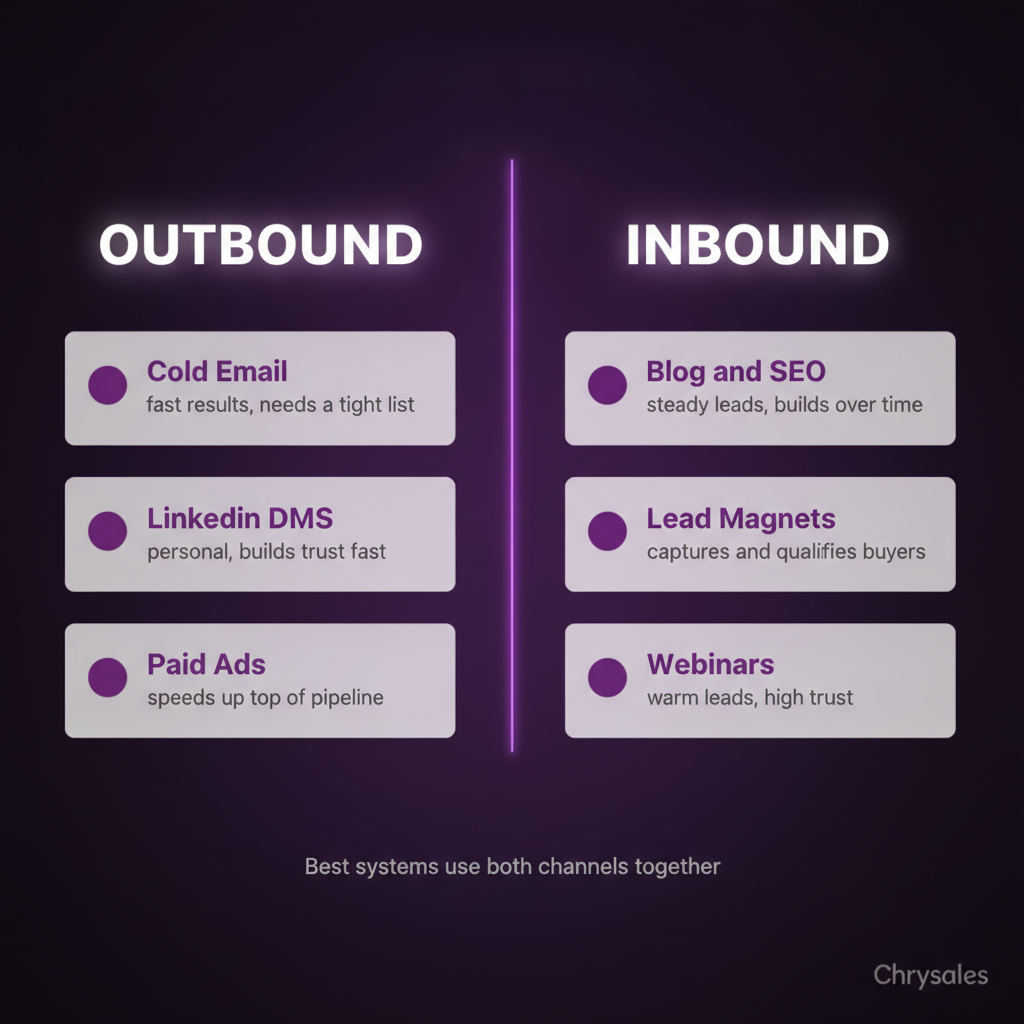
Outbound means you reach out first with cold emails, LinkedIn messages, or calls. Inbound means people come to you through content, SEO, referrals, or ads. Outbound is faster but requires more effort per lead. Inbound takes longer to build but scales better over time. The best systems use both.
Q: How do I know if my lead generation system is working?
Track three numbers: leads generated per week, reply or engagement rate, and meetings booked. If you're generating 50 leads a week but zero meetings, the quality or follow-up is broken. If you're booking meetings but no one closes, the lead fit or offer is off. Good lead generation fills your calendar with qualified calls, not just contact records.
Q: Can I generate leads without a big budget?
Yes. Cold email and LinkedIn outreach cost almost nothing except time. Writing helpful content on LinkedIn or starting a blog is free. Referrals cost zero dollars. You don't need a $5,000 ad budget to start. You need a tight list, a clear message, and consistent follow-up. One client generated 15 qualified leads in their first month using only LinkedIn DMs and a simple follow-up sequence.
How to generate leads means using simple tactics that bring in the right contacts and turn them into real sales opportunities. It ties lead generation, b2b sales, b2b lead generation, sales training, client acquisition, and gtm into one system that works.
Here's the thing nobody tells you: most lead generation problems aren't about the tactics. They're about the system behind them. You can send 1,000 cold emails or run LinkedIn ads all day, but if the list is bad, the offer is confusing, or you don't know what to do when someone replies, none of it matters.
Think of lead generation like building a contact list for a party. If half the numbers don't work and the other half don't even like the kind of party you're throwing, no invitation gets through.
This guide covers 10 tactics that work in 2026, but also shows you how to build a sales system that actually scales and fills your pipeline.
Build a Lead List That Does Half the Work
Most teams start backwards. They write perfect emails, build beautiful landing pages, and then realize their list is full of people who aren't even buyers. A bad list kills everything downstream.
Picture this: you spend two weeks writing outreach messages, but your list is packed with job titles that don't make decisions, companies that just laid off staff, or industries you don't even serve. That's the trap.
Start with Your Best Fit Profile
Look at your last 10 best clients. What do they have in common? Company size, industry, recent growth signals, tech stack? Write down 5-7 hard filters. A 200-person company that just did layoffs is not a hot lead. It's a bad fit, full stop.
Use Data Tools That Actually Enrich
Tools like Apollo, ZoomInfo, and Clay let you filter by revenue, headcount, tech signals, and hiring trends. The goal isn't a huge list. It's a clean one.
We see this all the time with new clients: they come in with 5,000-contact lists and 0.3% reply rates. After cutting it down to 800 high-fit contacts, reply rates jump to 3-5%.
Score Your Leads Before You Touch Them
Set a simple rule: anything scoring above 70 goes to the top of your call list. Score based on fit signals like recent funding, job postings in sales or marketing, tech stack match, and company growth.
One consulting firm we worked with scored leads on 5 criteria. The top 20% booked meetings at 4x the rate of the bottom half.
Pro Tip: Build your list in batches of 100-200. Test, measure reply rates, then scale what works. You can also watch 4 Ways To Find Clients Who Need Your Services Right Now for a deeper walkthrough on building tight ICP-driven lead lists.
Cold Email Outreach That Gets Replies
Cold email still works in 2026, but only if you stop sounding like a robot. Most cold emails flop because they're written for everyone, so they connect with no one.
Your subject line should sound like something a coworker would write, not a marketing campaign.
Personalize the First Line
Skip the "I saw your company does X" template. Reference something real: a LinkedIn post they wrote, a recent company announcement, a mutual connection, or a specific problem their industry is facing right now.
One sentence. Make it obvious you didn't copy-paste.
Lead with the Problem, Not Your Product
Nobody cares what you do in the first 10 seconds. They care if you understand their world. Open with the pain point: "Most consulting firms we talk to are booked out but still can't predictably fill next quarter's pipeline." Then show how you solve it.
Keep It Under 100 Words
If your email takes two scrolls to read, it's getting deleted. Write like you're texting a smart friend. Three short paragraphs max. End with one clear ask: book a call, reply with a question, or check out a 2-minute example.
For a deeper tactical breakdown on writing short, high-performing messages, read our complete guide on how to write cold emails that actually get replies.
Watch out: Avoid attachments, heavy images, and 5+ links. They tank deliverability and look spammy.
LinkedIn Outreach for B2B Sales
LinkedIn is where your buyers actually hang out, but most outreach there is embarrassingly bad. Connection requests with a pitch in the note. Generic "just checking in" messages. Long sales spiels that no one asked for.
Treat LinkedIn like networking at a conference, not cold calling a phone book.
Personalized Connection Requests Win
Send a request with a short, real reason. "Saw your post on sales hiring. We help B2B companies build systems around that. Worth connecting?" No pitch. No link. Just a reason that makes sense.
Engage Before You Pitch
Comment on their posts. Like their updates. Send a quick voice note about something they shared. Build a tiny bit of recognition before you ask for time.
One marketing agency did this with 50 target accounts. After two weeks of low-key engagement, their reply rate went from 8% to 22%. Learn the full framework for LinkedIn outreach that books meetings in our step-by-step guide.
Use Video Messages
Loom or LinkedIn native video messages stand out. Record a 30-second video mentioning their company by name, showing your face, and offering something specific. It feels personal because it is.
We've seen video outreach book meetings at nearly double the rate of text-only.
Content Marketing That Pulls Leads In
Outbound is great, but inbound is what lets you scale without burning out your team. Content marketing means writing blogs, posting on LinkedIn, recording short videos, and sharing real advice that makes people think "this person gets it."
Write About Real Problems You Solve
Skip the fluff. Write how-to guides, frameworks, and breakdowns of what actually works. A 15-person consulting firm started posting one LinkedIn article a week about sales systems. In 90 days, they got 12 inbound leads from people who read their stuff and reached out cold.
SEO Still Drives Consistent Lead Generation
Ranking for terms like "B2B lead generation," "how to generate leads," or "client acquisition for agencies" means people find you when they're actively searching. Write blogs that answer real questions. Keep them simple, clear, and useful.
Repurpose Everything
Turn one blog into a LinkedIn post, a Twitter thread, and a YouTube script. A 10-minute call recording becomes a case study, a testimonial clip, and three tips. Most teams create once and post once. That's leaving 80% of the value on the table.
Common mistake: Writing content for other marketers instead of your actual buyers. If your client is a sales leader at a tech company, write for them, not for someone who already does what you do.
Paid Ads for Targeted Outreach
Google Ads and LinkedIn Ads work if you're specific. Throwing $2,000 at a broad audience and hoping for leads is a waste. Paid ads are best when you already know your offer works and you want to speed up the top of funnel.
LinkedIn Ads for High-Ticket B2B
LinkedIn lets you target by job title, company size, industry, and seniority. If your ideal client is a VP of Sales at a 50-200 person SaaS company, you can serve them an ad directly.
We've seen LinkedIn ads drive leads at $80-$150 per qualified meeting when the targeting is tight.
Google Ads for High-Intent Searches
When someone Googles "sales coaching for B2B," they're not browsing. They're looking for help. Bid on high-intent keywords, send them to a landing page with one clear offer, and follow up fast.
Speed matters. According to speed-to-lead statistics, leads that get a reply in under 5 minutes convert at 5x the rate of those that wait an hour.
Retargeting Keeps You Top of Mind
Most people don't buy the first time they see you. Retargeting shows ads to people who visited your site, watched a video, or engaged with content. It's a reminder, not a cold pitch.
One agency retargeted LinkedIn post engagers with a case study ad. Conversion rate doubled.
Referral Programs That Turn Clients into Lead Sources
Your best leads come from people who already trust you. A warm intro from a current client is worth 10 cold emails. Most companies don't ask for referrals because they think it's awkward. It's only awkward if you make it transactional.
Ask at the Right Time
The best time to ask for a referral is right after you deliver a win. A client just closed three deals using your system? That's when you say, "Glad this is working. Know anyone else dealing with the same stuff?" Keep it casual.
Make It Easy
Don't ask clients to "send people your way" with no context. Give them a one-liner they can copy-paste: "We work with [your company] to build repeatable sales systems. If you know a B2B team struggling with lead gen or deal closing, happy to intro." Simple. Clear. No heavy lift.
Incentivize Without Being Weird
Some companies offer a referral bonus. Others just send a thank-you gift. The key is making the client feel appreciated, not like they're working a side hustle.
A $200 gift card for a referral that turns into a $15,000 client is a no-brainer.
Pro Tip: Track where every lead comes from. If 30% of your best clients come from referrals, double down. Build a system around it.
Webinars and Live Events That Build Trust
Webinars aren't dead. Bad webinars are dead. A 60-minute pitch disguised as a training session gets ignored. A 30-minute session that teaches one useful thing and ends with a soft offer? That works.
Pick One Specific Topic
"How to Build a Sales System" is too broad. "How to Write a Cold Email That Books Meetings" is specific and useful. People sign up when they know exactly what they're getting.
Deliver Real Value, Then Offer Help
Teach something actionable in the first 20 minutes. Show a framework, walk through an example, give a template. At the end, say "If you want help doing this for your business, here's how we work." No hard pitch. Just an offer.
Follow Up with Attendees Fast
Send the replay and a one-question survey within an hour. "What's your biggest challenge with [topic]?" The replies become warm leads.
One tech company ran a webinar on sales hiring and got 40 attendees. Eight replied to the follow-up. Four booked calls. Two became clients.
Lead Magnets That Qualify and Capture
A lead magnet is a free resource you give in exchange for an email. But most lead magnets are garbage. A 40-page PDF no one reads doesn't help. A 2-page checklist, a 10-minute video walkthrough, or a simple calculator? Those get used.
Make It Solve One Problem
"The Complete Guide to Sales" sounds impressive but no one downloads it. "The 5-Question Discovery Call Script" is specific and immediately useful. Pick one pain point and solve it fast.
Gate It Smart
Ask for just an email and first name. The more fields you add, the fewer people convert. You can qualify them later. Get them into your world first.
Follow Up with a Sequence
The magnet is the start, not the end. Set up a 5-email sequence that delivers more value and invites a conversation.
Email 1: deliver the magnet. Email 2: a quick win related to the topic. Email 3: a case study. Email 4: an invite to book a call. Email 5: a last-chance soft close. For detailed guidance on structuring nurture sequences, see lead nurture email sequence best practices.
Watch out: Don't bait-and-switch. If the magnet promises a template, deliver the template. If it's fluff, people unsubscribe and you lose trust.
Social Media Engagement That Builds Pipeline
Social media isn't just for posting. It's for conversations. Commenting on posts, replying to DMs, engaging in niche communities, and showing up consistently is how you get noticed without paying for ads.
Show Up Where Your Buyers Hang Out
If your clients are on LinkedIn, be on LinkedIn. If they're in Slack communities or niche Facebook groups, go there.
One sales consultant joined three industry-specific Slack groups, answered questions for free, and booked six leads in a month without a single ad.
Comment More Than You Post
Posting is great. Commenting is underrated. When you leave smart, helpful comments on posts from people in your target market, their followers see you. Do it 10 times a day for a month and watch what happens.
DM with Value, Not a Pitch
If someone posts about a problem you solve, DM them something useful. A link to a free resource, a quick tip, or a genuine compliment. Not a pitch. Build the relationship first.
One marketing agency grew 40% of their pipeline by DMing helpful resources to people posting about sales problems.
CRM Follow-Up Sequences That Don't Let Leads Die
Here's a stat that should scare you: 80% of leads never get followed up with after the first touchpoint. Most companies generate leads and then let them sit in a spreadsheet or CRM with no system to move them forward.
Set Up Automated Follow-Up Flows
If someone downloads a lead magnet, books a call, or replies to an email, they should enter a follow-up sequence. Email 1 after 1 day, Email 2 after 3 days, Email 3 after 7 days. Keep it simple and conversational.
Use Multi-Channel Follow-Up
Don't just email. Follow up via LinkedIn message, a quick Loom video, or a text if you have their number. People check different channels at different times. One message might get buried, but three across different platforms gets seen.
Track What Moves Leads Forward
Not all follow-ups are equal. Track reply rates, meeting book rates, and which messages get responses. If "checking in" emails get zero replies but case study links get 15% replies, do more of the second one.
Common mistake: Following up too much or too little. Three touches in three days is aggressive. One touch in three weeks is forgettable. Aim for 5-7 touches over 2-3 weeks, then pause.
AI and Automation to Scale Lead Generation
AI tools in 2026 make it possible to do what used to take a full team with just one or two people. We're talking AI lead scoring, personalized email generation, and workflow automation that saves 10+ hours a week.
AI Lead Scoring Ranks Your Best Prospects
Tools like Clay and Gemini-based workflows can score thousands of leads based on fit signals, engagement history, and intent data. Set the rules once, and the system ranks your list every week. The top 10% get personal outreach. The rest get nurture sequences.
AI Email Personalization at Scale
AI can write the first line of your cold emails by pulling real data: a recent LinkedIn post, a company news mention, or a job change. It's not perfect, but it's 80% there. You tweak the last 20% and send.
One sales team used AI to personalize 500 emails a week. Reply rate jumped from 1.8% to 4.2%. Research shows that AI-personalized cold emails achieve 32% reply rate, nearly 2-3x the industry average.
Automate Repetitive Follow-Ups
Zapier, Make, and HubSpot workflows can send follow-up emails, update your CRM, notify your team when a lead replies, and move contacts between lists based on behavior. Build it once, and it runs forever.
Most teams waste 15 hours a week on manual CRM tasks. Automate that, and you free up time for actual selling. Learn how to structure an AI outbound automation system that scales your lead generation without adding headcount.
Pro Tip: Don't automate everything. Automate the repetitive stuff so you can spend more time on high-value conversations. Watch AI Sales System Get You Record Revenue (Unlimited Demand) to see a visual, practical example of AI-driven lead generation systems in action.
Frequently Asked Questions
Q: What's the fastest way to generate leads in 2026?
Cold outreach on LinkedIn and email still delivers the fastest results if your list is tight and your message is personalized. Paid LinkedIn ads work too, but they cost more upfront. For immediate wins, pick 100 high-fit contacts, write a short personalized message, and send it this week. Track replies and double down on what works.
Q: How many lead generation tactics should I use at once?
Start with two or three max. Trying to do cold email, LinkedIn, content, ads, and webinars all at once spreads you too thin. Pick one outbound channel and one inbound channel. Get good at those, then add more. Most small sales teams win by doing two things really well, not ten things poorly.
Q: What's the difference between inbound and outbound lead generation?
Outbound means you reach out first with cold emails, LinkedIn messages, or calls. Inbound means people come to you through content, SEO, referrals, or ads. Outbound is faster but requires more effort per lead. Inbound takes longer to build but scales better over time. The best systems use both.
Q: How do I know if my lead generation system is working?
Track three numbers: leads generated per week, reply or engagement rate, and meetings booked. If you're generating 50 leads a week but zero meetings, the quality or follow-up is broken. If you're booking meetings but no one closes, the lead fit or offer is off. Good lead generation fills your calendar with qualified calls, not just contact records.
Q: Can I generate leads without a big budget?
Yes. Cold email and LinkedIn outreach cost almost nothing except time. Writing helpful content on LinkedIn or starting a blog is free. Referrals cost zero dollars. You don't need a $5,000 ad budget to start. You need a tight list, a clear message, and consistent follow-up. One client generated 15 qualified leads in their first month using only LinkedIn DMs and a simple follow-up sequence.
Scaling Is Not Hard If You Have The Right Systems
If you’re serious about leveling up your scaling game, you need the right system, the right training, and the right team behind you. We're here to give you the exact tools and strategies top entrepreneurs use to dominate.

Discover the latest tips
View All.avif)
Chrysales was formed from the words "chrysalis" the stage where a caterpillar transforms into a butterfly and "sales".
It stands for one thing: sales transformation.Because scaling doesn’t happen by doing more of the same. Scaling only happens when you go through real transformation in your systems, your offer, team and the way you sell.
.avif)


