.avif)
How to Use Youtube to Build Authority in B2B
YouTube authority building is using video to show expertise, build trust, and support lead generation before a prospect ever talks to you. YouTube authority building isn't about going viral or chasing subscriber counts. It's about showing up in search results when a potential client is deciding whether to trust you. Most B2B sales conversations start before the call even gets booked. A prospect watches a few videos, reads your titles, and decides if you know your stuff. By the time they reach out, the sale is already 60% done. The question is whether your YouTube presence is helping close deals or letting competitors win by default.
Why YouTube Authority Works Better Than Every Other Content Channel for B2B Sales
Most sales training focuses on what to say during the call. But the real work happens before the conversation starts. YouTube lets prospects see how you think, hear how you explain complex ideas, and decide if they want to work with you without any pressure.
The Trust Gap That Video Fills
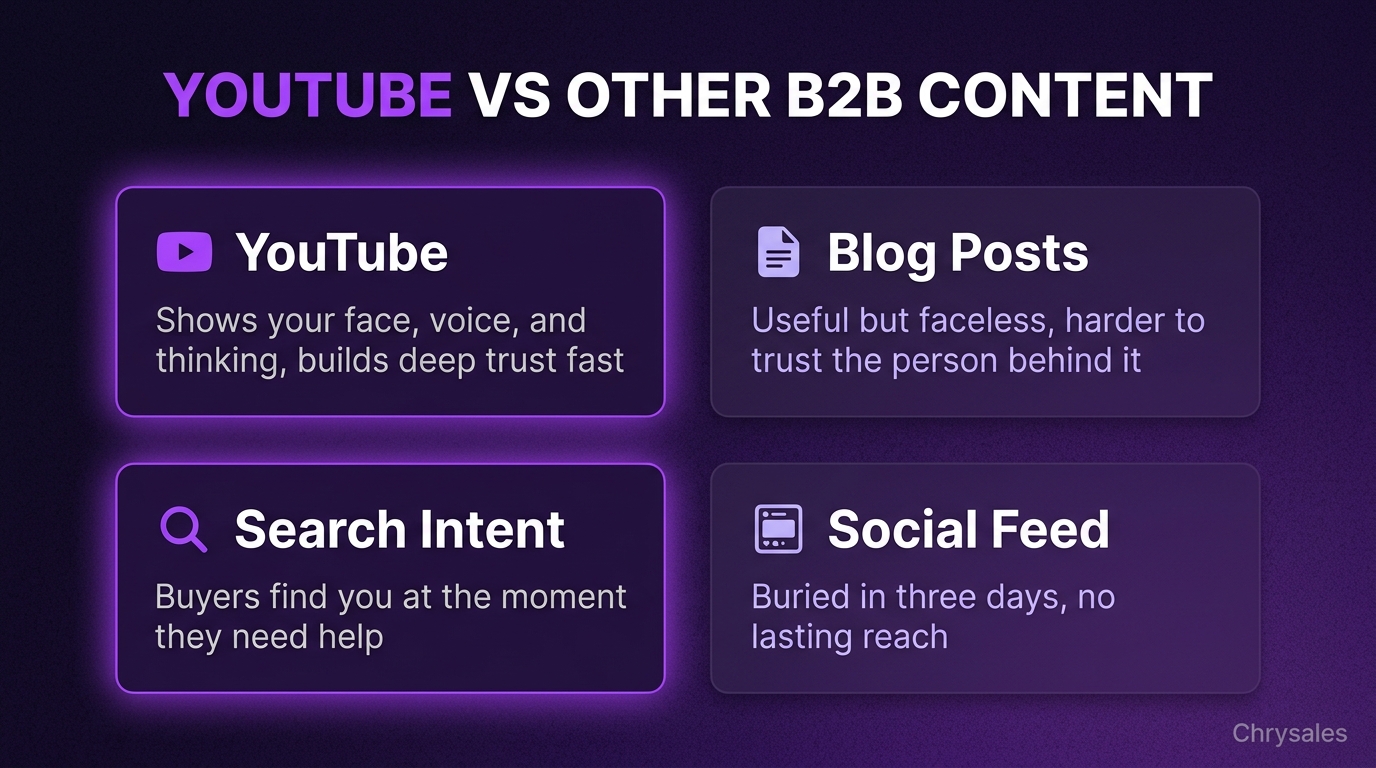
Written content is good. LinkedIn posts get seen. But video shows your face, your voice, and your thinking process in real time. A 10-minute YouTube video where you walk through a sales framework does more to build trust than 20 blog posts. Why? Because people buy from people. They want to know who's on the other side before they hand over money.
Watch out: Most people assume YouTube is only for consumer brands or entertainers. The reality is B2B buyers watch more YouTube than you think. They just don't comment or like videos. They watch, take notes, and reach out when they're ready.
Search Intent Meets Sales Intent
Google owns YouTube. When someone searches "how to hire a salesperson" or "b2b lead generation strategy," YouTube videos rank near the top. If your video is there, you're in front of buyers at the exact moment they're looking for help. That's not content marketing. That's client acquisition.
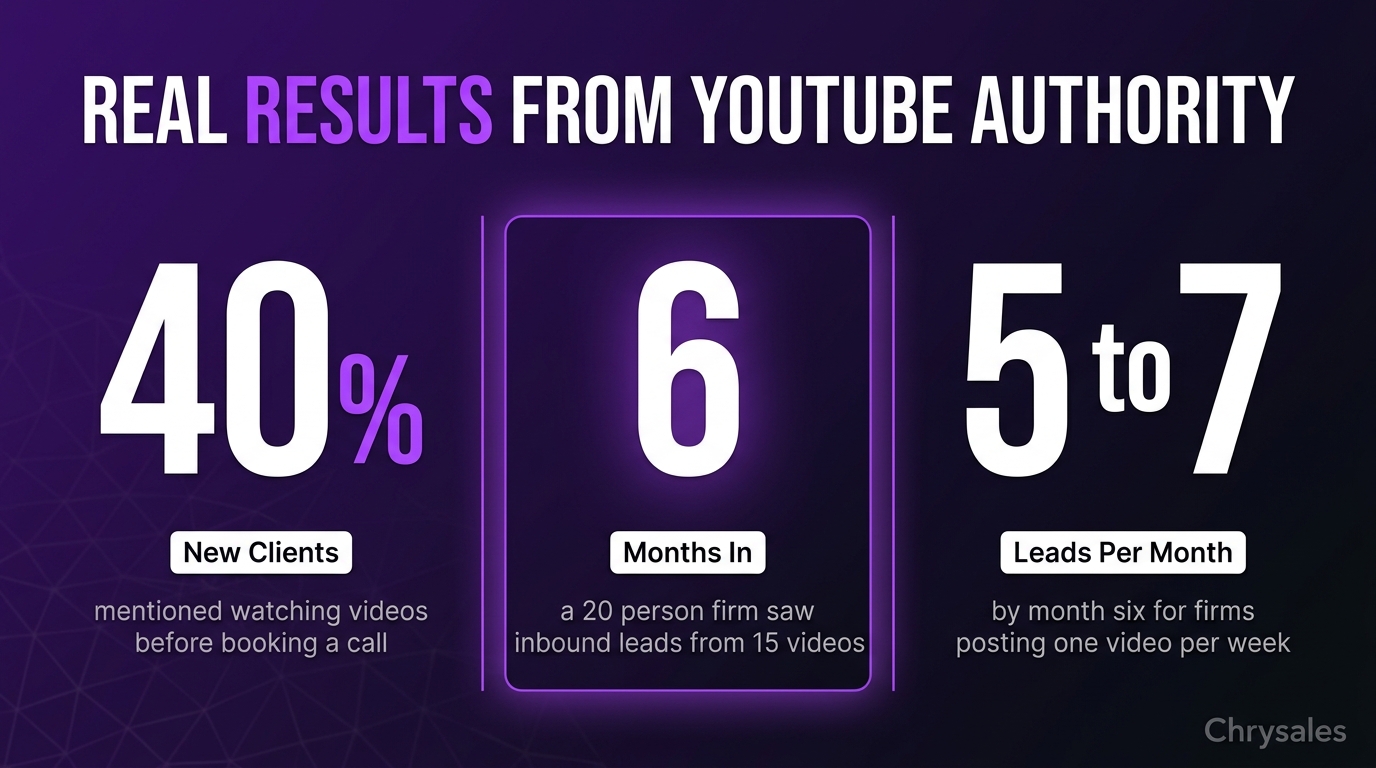
A 20-person tech consulting firm tried this last year. They posted 15 videos explaining their sales process. Six months later, 40% of new clients mentioned watching their videos before booking a call. No ads. No fancy production. Just consistent helpful content that showed they knew what they were doing.
What Makes a YouTube Channel an Authority-Building Machine Instead of a Hobby
The difference between a YouTube channel that brings in clients and one that sits empty comes down to how you think about the content. Most people post random tips and hope something sticks. That's a hobby. Authority building is intentional.
Pick a Lane and Stay in It
Your channel should answer one question: what do you want to be known for? If you coach sales teams, every video should relate to sales systems, lead generation, closing deals, or hiring salespeople. Don't post about productivity hacks one week and morning routines the next. Stick to your expertise.
Think of it like a restaurant menu. If a place serves sushi, pizza, and tacos, you trust none of it. If they only serve sushi, you assume they're good at it. Same logic applies to your channel.
Structure Your Videos Like Sales Calls
Good sales calls follow a structure. Discovery questions, problem identification, solution, next steps. Your videos should do the same thing. Open with the problem your viewer has. Explain why it's happening. Walk through the fix. End with what to do next.
Most people ramble for 15 minutes with no clear point. That doesn't build authority. It wastes time. A structured video shows you think clearly and know how to solve problems step by step.
Pro Tip: Write a 5-point outline before you hit record. One point per 2-3 minutes. Stick to it. Your videos will feel tighter and more valuable.
The Content Strategy That Turns Views Into Booked Calls
YouTube authority building works when your content does two things: teaches something useful and filters for the right clients. You're not trying to get millions of views. You're trying to get the right 500 people to watch and think "this person gets it."
Answer the Questions Prospects Ask Before They Buy
Every industry has 10 to 15 questions that prospects ask during sales calls. Turn each one into a video. For B2B sales coaching, that might be:
- How do I build a sales system that works without me?
- What's the difference between a setter and a closer?
- How do I know if my offer is good enough?
- What should I look for when hiring a salesperson?
- How do I automate lead generation without losing quality?
These aren't random topics. They're objection-handling in video form. When a prospect books a call after watching these videos, half the objections are already handled.
Use Titles That Match Actual Search Terms
Your video title should sound like something a person would type into Google. "5 Steps to Build a B2B Lead Generation System That Books Calls Every Week" is better than "My Lead Gen Secrets." The first one matches search intent. The second one is vague. Simple rule: if you wouldn't search for it, don't use it as a title.
Common mistake: Trying to be clever or mysterious with titles. YouTube isn't Instagram. People search with clear intent. Match that intent or they won't click.
Batch Record to Stay Consistent
Consistency beats perfection. One video per week for a year is better than five videos in a month and then nothing for six months. The way to stay consistent without burning out is to batch record. Set aside one day every month. Record four to six videos. Schedule them out.
A marketing agency we worked with last year did this. They recorded 12 videos in two days. Posted one per week for three months. By month two, they were getting inbound leads who mentioned specific videos. That's predictable client acquisition, not luck.
How to Show Expertise Without Giving Away Everything for Free
This is the biggest fear people have about YouTube. "If I teach everything I know, why would anyone pay me?" Here's the thing: knowing what to do and actually doing it are two different things. Your videos teach the what and the why. Your service is the how and the done-for-you.
Teach Frameworks, Sell Implementation
A good YouTube video explains a framework. "Here's how to score leads so you call the best ones first." That's valuable. But building the scoring system, integrating it with your CRM, training your team to use it, and adjusting it over time? That's what people pay for.
Picture this: you watch a video on how to change your car's oil. You learn the steps. Do you do it yourself or take it to a mechanic? Most people still go to the mechanic because doing it right takes time and tools they don't have. Same with B2B sales systems.
Share Real Numbers and Examples
Authority comes from proof. When you share real numbers, case studies, or specific examples, people believe you've done the work. "We helped a 15-person consulting firm go from 2 sales calls per week to 12 by fixing their outbound list" is way more convincing than "we help companies get more leads."
Pro Tip: You don't need to share client names if that's an issue. Just share the industry, team size, and results. That's enough to show you know what you're talking about.
The Technical Setup That Makes You Look Professional Without a Full Production Team
You don't need a studio or a video editor to build YouTube authority. You need clean audio, decent lighting, and a simple background. That's it. Most people overthink this part and never start.
Good Enough Is Good Enough
Here's what you actually need:
- A smartphone camera or basic webcam
- A $30 lapel mic or USB microphone
- Natural light from a window or a $40 ring light
- A clean wall or simple background
That setup works for years. A 50-person tech company posted 30 videos with just a webcam and a decent mic. They closed multiple six-figure deals from clients who found them on YouTube. The content mattered more than the production quality.
Edit for Clarity, Not Perfection
Cut out long pauses and mistakes. Keep the rest. You don't need jump cuts every three seconds or fancy graphics. Just make it easy to follow. Most editing software has a simple cut tool. Use it to trim the start, remove awkward pauses, and cut the end. That's 90% of what you need.
If you really hate editing, hire someone on Upwork for $15 to $30 per video. But honestly, basic editing takes 20 minutes once you've done it a few times.
Thumbnails That Get Clicks
Your thumbnail should have three things: your face, a few words that explain the topic, and high contrast so it stands out. That's it. Use Canva or any free tool. Keep it simple. Most people make thumbnails too busy. A clean face shot with bold text works better than a collage of random images.
Watch out: Clickbait thumbnails might get views, but they won't get clients. If your thumbnail promises "The Secret to 10x Sales" and your video is just general tips, people click away and YouTube stops showing your content.
How to Use AI to Speed Up Your YouTube Authority Strategy Without Losing Your Voice
Sales automation isn't just for emails and CRM workflows. AI tools can help you research topics, write scripts, and even analyze which videos perform best. The key is using AI to save time, not replace your thinking.
AI for Topic Research and Script Outlines
You can ask an AI tool to list the top 20 questions prospects ask about B2B lead generation or sales training. Then turn each one into a video. That's your content calendar for five months. You still record the video in your own words, but the research part takes 10 minutes instead of two hours.
AI Lead Scoring for YouTube Traffic
If you're running a serious YouTube authority strategy, you can connect your channel to a CRM and score leads based on which videos they watch. Someone who watches a video on hiring salespeople and another on sales team scaling is a hotter lead than someone who watched one random video.
We use Gemini-based sales workflows for this kind of thing with clients. The AI flags high-intent viewers so you know who to reach out to first. Most teams don't think about YouTube this way. They post videos and hope for the best. Smart teams track who's watching and follow up when the timing is right, and the only AI sales system you need in 2026 shows exactly how to automate this process end to end.
Pro Tip: Add a simple call-to-action at the end of every video. "If you want help building a custom sales system for your team, link in the description." Most people skip this step and leave leads on the table.
Common Mistakes That Kill YouTube Authority Before It Builds
Even good content fails if you make these mistakes. Most are easy to avoid once you know what to look for.
Posting Once and Disappearing
One video won't build authority. Neither will five videos spread across two years. YouTube rewards consistency. The algorithm shows your content to more people when you post regularly. More importantly, prospects trust people who show up week after week.
A 12-person consulting firm posted three videos and gave up because they didn't see results. Another similar-sized firm posted one video per week for six months. By month four, they were getting two to three inbound leads per month. By month six, it was five to seven. The difference wasn't the content quality. It was showing up consistently, and if you want to understand how to build a sales system that actually scales, this kind of consistency is foundational.
Ignoring the First 30 Seconds
If your intro is slow or vague, people click away. The first 30 seconds should tell the viewer exactly what they're going to learn and why it matters. No long story. No "hey guys, welcome back." Just dive in.
Common mistake: Starting with "In this video, I'm going to talk about..." Instead, open with the problem or a quick scenario. "Most cold emails get ignored because the list is bad, not the words. Here's how to fix that in three steps."
Not Linking Content to Your Sales Process
Your YouTube channel should feed your sales pipeline. Every video should have a clear next step. That might be a link to book a call, download a resource, or join an email list. If you're just posting content with no way for people to take action, you're building an audience, not a business, and you can learn how to build sales pipeline that converts YouTube viewers into qualified sales opportunities.
Frequently Asked Questions
Q: How long does it take to see results from YouTube authority building?
Most people start seeing traction around the 15 to 20 video mark if they're posting consistently. That's about three to five months at one video per week. The first few videos rarely perform well because the algorithm doesn't know who to show them to yet. Stick with it. By month four or five, older videos start getting views as the algorithm figures out your niche.
Q: Do I need to be on camera or can I just do screen recordings?
Being on camera builds more trust, but screen recordings work if you're teaching something technical or walking through a process. Mix both. Use on-camera videos for topics like "how to think about sales systems" and screen recordings for "how to set up a lead scoring system in your CRM." Variety keeps your channel interesting and covers different learning styles.
Q: What if I'm not comfortable on camera?
You get comfortable by doing it. The first five videos feel awkward for everyone. By video 10, it's normal. By video 20, you forget the camera is there. Start by practicing without recording. Talk through your outline a few times. Then hit record and accept that the first few won't be perfect. No one's watching your first videos anyway. By the time people find your channel, you'll have 20 videos up and the newer ones will be much better.
Q: How do I know which topics to cover first?
Start with the questions prospects ask most often during sales calls. If you don't have a list, think about the three biggest objections or confusion points you hear. Turn each one into a video. Then move to the questions they ask before they book a call. Your email inbox and past sales conversations are your content calendar, and reading through 11 insanely useful sales tips that every business needs can help you identify common themes to turn into video content.
Q: Should I focus on YouTube or LinkedIn for B2B authority?
Both work, but they do different things. LinkedIn is great for short-form content and starting conversations. YouTube is better for deep-dive content that builds long-term authority. If you have to pick one, YouTube has more staying power. A video you post today can bring in leads two years from now. A LinkedIn post is buried in three days. Ideally, do both. Post a video on YouTube and share clips or key points on LinkedIn to drive traffic.
Q: Can YouTube authority building work for niche industries?
Yes. Actually, niche industries often do better on YouTube because there's less competition. If you're one of five people making videos about sales coaching for IT consulting firms, you'll dominate that space fast. Broad topics like "business tips" are overcrowded. Narrow topics like "hiring closers for B2B sales teams" have way less competition and attract exactly the clients you want, and building unshakable credibility in a focused niche is one of the most powerful B2B sales strategies you can deploy.
Q: How do I turn YouTube viewers into paying clients?
Add a clear call-to-action in every video and in the description. "If you want help building a sales system like this, book a free 30-minute call" with a link. Track which videos get the most clicks on that link. Those are your best-performing topics. Make more videos like them. Also, reply to comments. A quick back-and-forth in the comments can turn a viewer into a lead. People remember when you actually engage, and you can watch how to build a sales system so powerful clients come to you to see the full framework in action.
YouTube authority building is using video to show expertise, build trust, and support lead generation before a prospect ever talks to you. YouTube authority building isn't about going viral or chasing subscriber counts. It's about showing up in search results when a potential client is deciding whether to trust you. Most B2B sales conversations start before the call even gets booked. A prospect watches a few videos, reads your titles, and decides if you know your stuff. By the time they reach out, the sale is already 60% done. The question is whether your YouTube presence is helping close deals or letting competitors win by default.
Why YouTube Authority Works Better Than Every Other Content Channel for B2B Sales
Most sales training focuses on what to say during the call. But the real work happens before the conversation starts. YouTube lets prospects see how you think, hear how you explain complex ideas, and decide if they want to work with you without any pressure.
The Trust Gap That Video Fills
Written content is good. LinkedIn posts get seen. But video shows your face, your voice, and your thinking process in real time. A 10-minute YouTube video where you walk through a sales framework does more to build trust than 20 blog posts. Why? Because people buy from people. They want to know who's on the other side before they hand over money.
Watch out: Most people assume YouTube is only for consumer brands or entertainers. The reality is B2B buyers watch more YouTube than you think. They just don't comment or like videos. They watch, take notes, and reach out when they're ready.
Search Intent Meets Sales Intent
Google owns YouTube. When someone searches "how to hire a salesperson" or "b2b lead generation strategy," YouTube videos rank near the top. If your video is there, you're in front of buyers at the exact moment they're looking for help. That's not content marketing. That's client acquisition.
A 20-person tech consulting firm tried this last year. They posted 15 videos explaining their sales process. Six months later, 40% of new clients mentioned watching their videos before booking a call. No ads. No fancy production. Just consistent helpful content that showed they knew what they were doing.
What Makes a YouTube Channel an Authority-Building Machine Instead of a Hobby
The difference between a YouTube channel that brings in clients and one that sits empty comes down to how you think about the content. Most people post random tips and hope something sticks. That's a hobby. Authority building is intentional.
Pick a Lane and Stay in It
Your channel should answer one question: what do you want to be known for? If you coach sales teams, every video should relate to sales systems, lead generation, closing deals, or hiring salespeople. Don't post about productivity hacks one week and morning routines the next. Stick to your expertise.
Think of it like a restaurant menu. If a place serves sushi, pizza, and tacos, you trust none of it. If they only serve sushi, you assume they're good at it. Same logic applies to your channel.
Structure Your Videos Like Sales Calls
Good sales calls follow a structure. Discovery questions, problem identification, solution, next steps. Your videos should do the same thing. Open with the problem your viewer has. Explain why it's happening. Walk through the fix. End with what to do next.
Most people ramble for 15 minutes with no clear point. That doesn't build authority. It wastes time. A structured video shows you think clearly and know how to solve problems step by step.
Pro Tip: Write a 5-point outline before you hit record. One point per 2-3 minutes. Stick to it. Your videos will feel tighter and more valuable.
The Content Strategy That Turns Views Into Booked Calls
YouTube authority building works when your content does two things: teaches something useful and filters for the right clients. You're not trying to get millions of views. You're trying to get the right 500 people to watch and think "this person gets it."
Answer the Questions Prospects Ask Before They Buy
Every industry has 10 to 15 questions that prospects ask during sales calls. Turn each one into a video. For B2B sales coaching, that might be:
- How do I build a sales system that works without me?
- What's the difference between a setter and a closer?
- How do I know if my offer is good enough?
- What should I look for when hiring a salesperson?
- How do I automate lead generation without losing quality?
These aren't random topics. They're objection-handling in video form. When a prospect books a call after watching these videos, half the objections are already handled.
Use Titles That Match Actual Search Terms
Your video title should sound like something a person would type into Google. "5 Steps to Build a B2B Lead Generation System That Books Calls Every Week" is better than "My Lead Gen Secrets." The first one matches search intent. The second one is vague. Simple rule: if you wouldn't search for it, don't use it as a title.
Common mistake: Trying to be clever or mysterious with titles. YouTube isn't Instagram. People search with clear intent. Match that intent or they won't click.
Batch Record to Stay Consistent
Consistency beats perfection. One video per week for a year is better than five videos in a month and then nothing for six months. The way to stay consistent without burning out is to batch record. Set aside one day every month. Record four to six videos. Schedule them out.
A marketing agency we worked with last year did this. They recorded 12 videos in two days. Posted one per week for three months. By month two, they were getting inbound leads who mentioned specific videos. That's predictable client acquisition, not luck.
How to Show Expertise Without Giving Away Everything for Free
This is the biggest fear people have about YouTube. "If I teach everything I know, why would anyone pay me?" Here's the thing: knowing what to do and actually doing it are two different things. Your videos teach the what and the why. Your service is the how and the done-for-you.
Teach Frameworks, Sell Implementation
A good YouTube video explains a framework. "Here's how to score leads so you call the best ones first." That's valuable. But building the scoring system, integrating it with your CRM, training your team to use it, and adjusting it over time? That's what people pay for.
Picture this: you watch a video on how to change your car's oil. You learn the steps. Do you do it yourself or take it to a mechanic? Most people still go to the mechanic because doing it right takes time and tools they don't have. Same with B2B sales systems.
Share Real Numbers and Examples
Authority comes from proof. When you share real numbers, case studies, or specific examples, people believe you've done the work. "We helped a 15-person consulting firm go from 2 sales calls per week to 12 by fixing their outbound list" is way more convincing than "we help companies get more leads."
Pro Tip: You don't need to share client names if that's an issue. Just share the industry, team size, and results. That's enough to show you know what you're talking about.
The Technical Setup That Makes You Look Professional Without a Full Production Team
You don't need a studio or a video editor to build YouTube authority. You need clean audio, decent lighting, and a simple background. That's it. Most people overthink this part and never start.
Good Enough Is Good Enough
Here's what you actually need:
- A smartphone camera or basic webcam
- A $30 lapel mic or USB microphone
- Natural light from a window or a $40 ring light
- A clean wall or simple background
That setup works for years. A 50-person tech company posted 30 videos with just a webcam and a decent mic. They closed multiple six-figure deals from clients who found them on YouTube. The content mattered more than the production quality.
Edit for Clarity, Not Perfection
Cut out long pauses and mistakes. Keep the rest. You don't need jump cuts every three seconds or fancy graphics. Just make it easy to follow. Most editing software has a simple cut tool. Use it to trim the start, remove awkward pauses, and cut the end. That's 90% of what you need.
If you really hate editing, hire someone on Upwork for $15 to $30 per video. But honestly, basic editing takes 20 minutes once you've done it a few times.
Thumbnails That Get Clicks
Your thumbnail should have three things: your face, a few words that explain the topic, and high contrast so it stands out. That's it. Use Canva or any free tool. Keep it simple. Most people make thumbnails too busy. A clean face shot with bold text works better than a collage of random images.
Watch out: Clickbait thumbnails might get views, but they won't get clients. If your thumbnail promises "The Secret to 10x Sales" and your video is just general tips, people click away and YouTube stops showing your content.
How to Use AI to Speed Up Your YouTube Authority Strategy Without Losing Your Voice
Sales automation isn't just for emails and CRM workflows. AI tools can help you research topics, write scripts, and even analyze which videos perform best. The key is using AI to save time, not replace your thinking.
AI for Topic Research and Script Outlines
You can ask an AI tool to list the top 20 questions prospects ask about B2B lead generation or sales training. Then turn each one into a video. That's your content calendar for five months. You still record the video in your own words, but the research part takes 10 minutes instead of two hours.
AI Lead Scoring for YouTube Traffic
If you're running a serious YouTube authority strategy, you can connect your channel to a CRM and score leads based on which videos they watch. Someone who watches a video on hiring salespeople and another on sales team scaling is a hotter lead than someone who watched one random video.
We use Gemini-based sales workflows for this kind of thing with clients. The AI flags high-intent viewers so you know who to reach out to first. Most teams don't think about YouTube this way. They post videos and hope for the best. Smart teams track who's watching and follow up when the timing is right, and the only AI sales system you need in 2026 shows exactly how to automate this process end to end.
Pro Tip: Add a simple call-to-action at the end of every video. "If you want help building a custom sales system for your team, link in the description." Most people skip this step and leave leads on the table.
Common Mistakes That Kill YouTube Authority Before It Builds
Even good content fails if you make these mistakes. Most are easy to avoid once you know what to look for.
Posting Once and Disappearing
One video won't build authority. Neither will five videos spread across two years. YouTube rewards consistency. The algorithm shows your content to more people when you post regularly. More importantly, prospects trust people who show up week after week.
A 12-person consulting firm posted three videos and gave up because they didn't see results. Another similar-sized firm posted one video per week for six months. By month four, they were getting two to three inbound leads per month. By month six, it was five to seven. The difference wasn't the content quality. It was showing up consistently, and if you want to understand how to build a sales system that actually scales, this kind of consistency is foundational.
Ignoring the First 30 Seconds
If your intro is slow or vague, people click away. The first 30 seconds should tell the viewer exactly what they're going to learn and why it matters. No long story. No "hey guys, welcome back." Just dive in.
Common mistake: Starting with "In this video, I'm going to talk about..." Instead, open with the problem or a quick scenario. "Most cold emails get ignored because the list is bad, not the words. Here's how to fix that in three steps."
Not Linking Content to Your Sales Process
Your YouTube channel should feed your sales pipeline. Every video should have a clear next step. That might be a link to book a call, download a resource, or join an email list. If you're just posting content with no way for people to take action, you're building an audience, not a business, and you can learn how to build sales pipeline that converts YouTube viewers into qualified sales opportunities.
Frequently Asked Questions
Q: How long does it take to see results from YouTube authority building?
Most people start seeing traction around the 15 to 20 video mark if they're posting consistently. That's about three to five months at one video per week. The first few videos rarely perform well because the algorithm doesn't know who to show them to yet. Stick with it. By month four or five, older videos start getting views as the algorithm figures out your niche.
Q: Do I need to be on camera or can I just do screen recordings?
Being on camera builds more trust, but screen recordings work if you're teaching something technical or walking through a process. Mix both. Use on-camera videos for topics like "how to think about sales systems" and screen recordings for "how to set up a lead scoring system in your CRM." Variety keeps your channel interesting and covers different learning styles.
Q: What if I'm not comfortable on camera?
You get comfortable by doing it. The first five videos feel awkward for everyone. By video 10, it's normal. By video 20, you forget the camera is there. Start by practicing without recording. Talk through your outline a few times. Then hit record and accept that the first few won't be perfect. No one's watching your first videos anyway. By the time people find your channel, you'll have 20 videos up and the newer ones will be much better.
Q: How do I know which topics to cover first?
Start with the questions prospects ask most often during sales calls. If you don't have a list, think about the three biggest objections or confusion points you hear. Turn each one into a video. Then move to the questions they ask before they book a call. Your email inbox and past sales conversations are your content calendar, and reading through 11 insanely useful sales tips that every business needs can help you identify common themes to turn into video content.
Q: Should I focus on YouTube or LinkedIn for B2B authority?
Both work, but they do different things. LinkedIn is great for short-form content and starting conversations. YouTube is better for deep-dive content that builds long-term authority. If you have to pick one, YouTube has more staying power. A video you post today can bring in leads two years from now. A LinkedIn post is buried in three days. Ideally, do both. Post a video on YouTube and share clips or key points on LinkedIn to drive traffic.
Q: Can YouTube authority building work for niche industries?
Yes. Actually, niche industries often do better on YouTube because there's less competition. If you're one of five people making videos about sales coaching for IT consulting firms, you'll dominate that space fast. Broad topics like "business tips" are overcrowded. Narrow topics like "hiring closers for B2B sales teams" have way less competition and attract exactly the clients you want, and building unshakable credibility in a focused niche is one of the most powerful B2B sales strategies you can deploy.
Q: How do I turn YouTube viewers into paying clients?
Add a clear call-to-action in every video and in the description. "If you want help building a sales system like this, book a free 30-minute call" with a link. Track which videos get the most clicks on that link. Those are your best-performing topics. Make more videos like them. Also, reply to comments. A quick back-and-forth in the comments can turn a viewer into a lead. People remember when you actually engage, and you can watch how to build a sales system so powerful clients come to you to see the full framework in action.
Scaling Is Not Hard If You Have The Right Systems
If you’re serious about leveling up your scaling game, you need the right system, the right training, and the right team behind you. We're here to give you the exact tools and strategies top entrepreneurs use to dominate.

Discover the latest tips
View All.avif)
Chrysales was formed from the words "chrysalis" the stage where a caterpillar transforms into a butterfly and "sales".
It stands for one thing: sales transformation.Because scaling doesn’t happen by doing more of the same. Scaling only happens when you go through real transformation in your systems, your offer, team and the way you sell.
.avif)


