.avif)
How to Hire Professional Appointment Setters That Book
Professional appointment setters are people who reach out to potential clients, qualify interest, and book sales calls for a team. Most B2B sales teams have the same problem. They hire someone to book meetings, hand them a list and a script, and hope for the best. Three weeks later, the calendar is still empty. The issue isn't the person. It's that booking meetings isn't a task you outsource. It's a system you build first, then plug people into.
What Professional Appointment Setters Actually Do
Professional appointment setters are people whose only job is to reach out to potential clients and get them on a sales call. They don't close deals. They don't manage accounts. They just book the meeting and hand it off. Think of them like a restaurant host. They greet people, check if there's a table available, and walk them to their seat. The waiter takes over from there. Good hosts know the menu, understand who's waiting, and can handle basic questions. They're not cooking the food or taking the order.
The Real Job Description
Here's what a good appointment setter does every day:
- Cold calling or emailing prospects from a target list
- Qualifying leads based on fit (budget, need, authority, timing)
- Handling initial objections without a full sales pitch
- Scheduling calls directly into a closer's calendar
- Taking notes and passing context to the sales team
- Following up with prospects who went cold
Watch out: Most businesses skip the "qualifying" part and just book any meeting. That floods your calendar with bad fits. A 200 person company that just did layoffs is not a hot lead. It's a bad fit, full stop.
Where They Fit in the Sales Pipeline
Your sales pipeline has stages. At the top, you have cold prospects. At the bottom, you have closed deals. Professional appointment setters live at the very top. Their job is to move people from "never heard of us" to "booked a 30 minute call." They don't move people from call to close. That's a different skill. Mixing the two is like asking your cashier to also cook the burgers. Possible, but messy. To learn more about how appointment setters fit into the overall process, read our guide on B2B sales pipeline management.
Why Teams Use Outsourced Appointment Setting
Most small sales teams don't have time to make 100 cold calls a day. The closer is already on calls. The founder is running the business. So they look for help. Outsourced appointment setting means hiring someone else to do the outreach, either as a freelancer, contractor, or through an agency.
The Main Reasons Teams Outsource
Time. Cold outreach takes hours. If you're already closing deals, you don't want to spend half your day dialing. A professional appointment setter frees up your calendar.
Volume. One person can only make so many calls. If you need 50 conversations a week to hit your goal, you need someone whose full focus is outreach.
Cost. Hiring a full time salesperson in house costs $60k to $80k a year, plus benefits. A contract appointment setter might cost $3k to $5k a month, or work per meeting booked.
Speed. You can test outsourced appointment setting in 30 days. Hiring in house takes 60 to 90 days, plus onboarding.
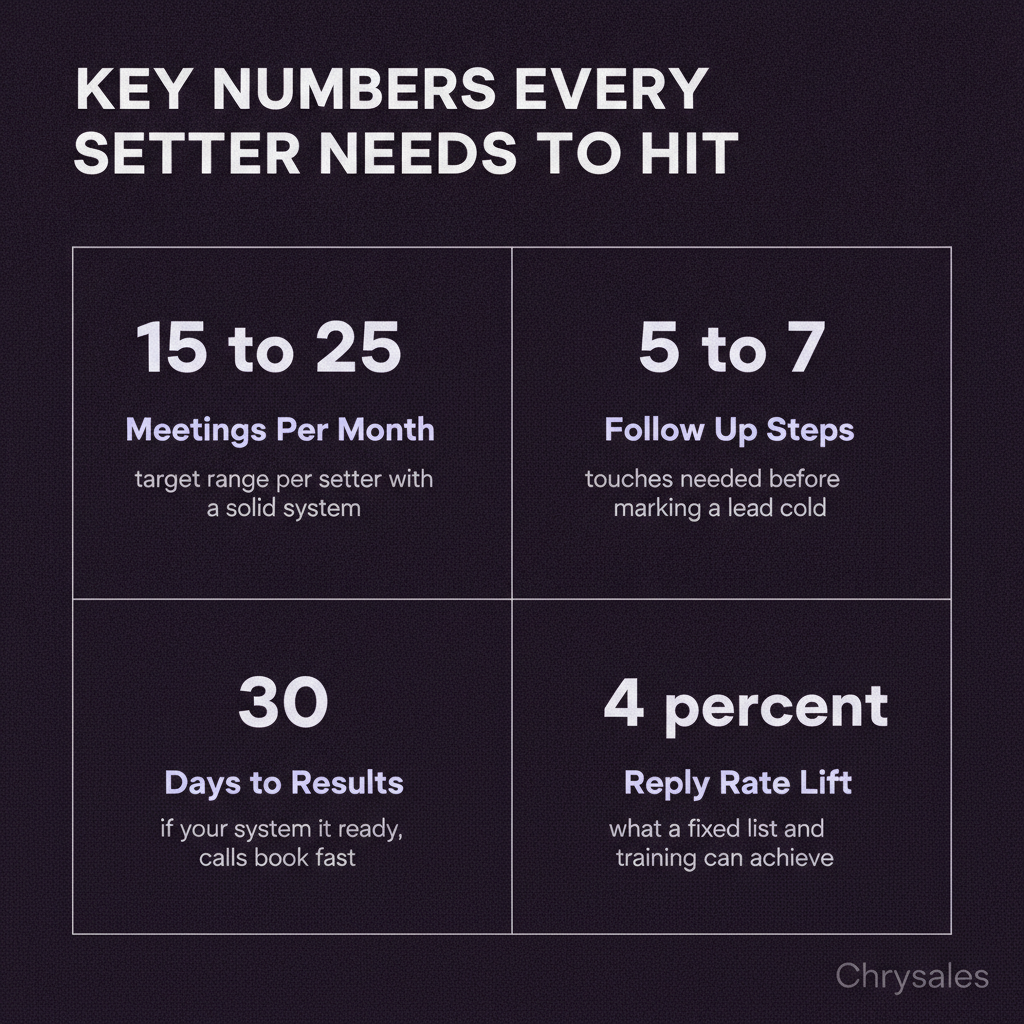
One marketing agency we worked with had a 0.5% reply rate on cold emails. After fixing their list and training their setter, it jumped to 4%. Same person. Different system.
How to Build a Sales System Before You Hire
Here's the thing nobody tells you: hiring an appointment setter without a system is like giving someone car keys and saying "figure out how to drive." They'll try. It won't go well. A sales system is the step by step process your setter follows to book a meeting. It includes the list, the message, the qualification rules, the follow up sequence, and the handoff to the closer. Without it, your setter is guessing. You can watch how to build a sales system so powerful clients come to you for a deeper walkthrough of this approach.
Step 1: Build Your Target List
Your list does most of the heavy lifting. A great message sent to the wrong people gets ignored. A decent message sent to the right people gets replies. Start with who you've closed before. Look for patterns. Industry, company size, job title, recent funding, tech stack. Then build a list of 500 to 1,000 people who match.
Pro Tip: Score your list before you start outreach. Give each lead a number based on fit. Anything scoring above 70 goes to the top of your call list. Anything under 50 gets a different message or skipped entirely.
Step 2: Write the Outreach Script
Your setter needs a script for cold calls and a template for emails. Not word for word robots, but a structure they can follow. Good scripts include:
- A short intro (who you are, why you're calling)
- A hook (the problem you solve or result you deliver)
- A qualifying question (to confirm they're a fit)
- A meeting ask (specific day and time, not "are you interested?")
Common mistake: Writing a script that sounds like a sales pitch. Appointment setters aren't closing. They're just getting the prospect curious enough to take a call.
Step 3: Define What Qualifies as a Good Lead
Not every reply should turn into a meeting. Your setter needs a filter. We call this the qualification checklist. It's a short list of yes or no questions:
- Do they fit the target profile? (industry, size, role)
- Do they have the problem you solve?
- Do they have budget or authority to buy?
- Is timing realistic? (not "maybe next year")
If the answer to two or more is no, don't book the meeting. Thank them and move on. A bad meeting wastes an hour of your closer's time and kills morale. Many teams use frameworks like BANT to qualify leads effectively during the initial conversation.
Step 4: Set Up the Follow Up Sequence
Most prospects don't reply to the first message. Or the second. A good sales system includes a follow up sequence. Five to seven touchpoints over two weeks. Your appointment setter should know:
- When to send follow up 1, 2, 3
- What to say in each one (different angle each time)
- When to stop (after touchpoint 7, mark as cold and move on)
A 30 person consulting firm we worked with tried this last quarter. They booked 12 new calls in 3 weeks just by adding a proper follow up sequence. Before that, they sent one email and gave up. For proven templates and timing strategies, check out our cold email follow-up templates.
Hiring Professional Appointment Setters: What to Look For
Once your system is ready, you can hire. Not before. Hiring first and building the system later is backwards. You end up with a person sitting around asking what to do.
Key Skills That Matter
Look for people who have done B2B sales before, even if it was setting appointments for another company. Cold calling experience matters. So does familiarity with CRMs like HubSpot or Salesforce. Good appointment setters are:
- Comfortable on the phone (not everyone is)
- Quick to handle objections without getting defensive
- Organized enough to manage 100+ leads at once
- Coachable (they'll need feedback and adjustments)
Watch out: Don't hire based on resume alone. Give them a role play. Have them call you as a prospect. See how they handle a basic objection. If they freeze or go into pitch mode, keep looking.
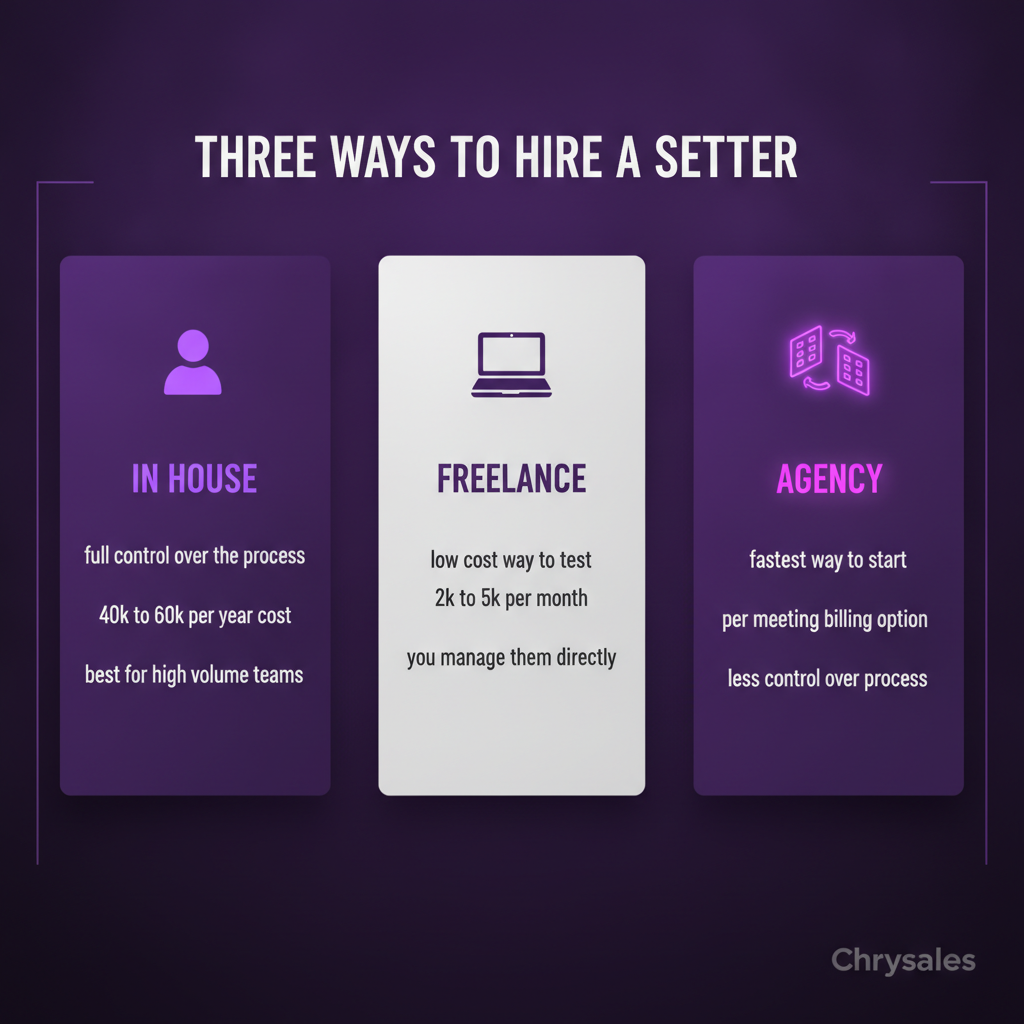
In House vs. Freelance vs. Agency
You have three options. Each one fits a different situation.
In house: You hire someone full time. Best if you need 40+ hours a week of outreach and want full control. Costs more, but they're part of your team.
Freelance: You hire a contractor on Upwork or Fiverr. Cheapest option, good for testing, but quality is hit or miss. You manage them directly.
Agency: You pay an appointment setter company to handle it. They provide the person and the management. Fastest to start, but expensive and less control over the process.
For most growing B2B companies, starting with a freelancer or contractor while you test the system makes sense. Once it works, move in house. To understand the different service models better, explore this overview of appointment setter hiring options.
Training Your Appointment Setters to Follow the System
Hiring is step one. Training is step two. Even experienced setters need to learn your system, your offer, and your buyer.
Week 1: System and Offer Training
Walk them through the full sales system. Show them the list, the script, the CRM, the qualification rules, and the calendar tool. Explain the offer. What problem do you solve? Who do you solve it for? What result do you deliver? Record a few sample calls so they can hear what good outreach sounds like. Let them listen to objections and how you handle them.
Week 2: Live Practice with Feedback
Have them start making calls or sending emails. Review the first 20 to 30. Listen to calls. Read email replies. Give feedback on what worked and what didn't.
Pro Tip: Use a simple scorecard. Rate each call or email on a scale of 1 to 5. Look at opener, qualification, objection handling, and meeting ask. Anything scoring below 3 needs a redo.
Ongoing: Weekly Check Ins and Coaching
Set a weekly call to review numbers. How many calls? How many replies? How many meetings booked? How many showed up? If the numbers drop, dig into why. Is the list bad? Is the script off? Are they skipping follow ups? Most problems are system problems, not people problems.
Common Mistakes That Kill Appointment Setting Results
We see the same mistakes over and over. Most are easy to fix once you know what to look for.
Mistake 1: No Clear Offer
Your setter can't book meetings if they don't know what they're offering. "We help companies grow" is not an offer. "We build custom lead generation systems for IT consulting firms that want 10+ qualified sales calls a month" is an offer. If your setter can't explain your offer in one sentence, the prospect definitely won't understand it.
Mistake 2: Bad List Quality
Picture this: you spend two weeks writing perfect emails, but your list is full of people who aren't even buyers. That's the trap. Most teams focus on the message and ignore the list. Fix the list first. Then worry about the words.
Mistake 3: Not Measuring the Right Metrics
Tracking "meetings booked" sounds good until you realize half of them are no shows or bad fits. The real metrics are:
- Qualified meetings booked (not just any meeting)
- Show rate (how many actually join the call)
- Close rate from those meetings (did they turn into deals?)
If you're booking 20 meetings a month but only 5 show up and 1 closes, the problem isn't volume. It's qualification or follow up. Research shows that effective cold email outreach sequences drive higher show rates when paired with proper qualification.
How Chrysales Builds Appointment Setting Systems That Scale
Most sales training teaches people what to say. We build the system they say it inside. That's the difference. We've trained over 500 sales teams and helped generate more than €10M in client revenue. Our approach doesn't start with hiring setters. It starts with building the sales system: the list, the offer, the script, the qualification rules, the CRM setup, the follow up sequences.
Then we train your appointment setters to use it. We score their calls, give feedback, and adjust the system based on what's working. Once it's running, we help you automate the parts that don't need a human and hire more setters to scale. Our clients include companies like Amazon, Vodafone, and Cloudification. We don't sell a course or a software tool. We build the system with you, 1 on 1, so it fits your business. Learn more about our complete approach to building a sales system that actually scales.
Common mistake: Thinking you can copy someone else's system. A system that works for a SaaS company won't work for a consulting firm. The list is different. The buyer is different. The message is different. Custom beats template every time.
Frequently Asked Questions
Q: How much does it cost to hire a professional appointment setter?
Freelance appointment setters cost $15 to $40 an hour, or $2,000 to $5,000 a month for contract work. Full time in house setters cost $40k to $60k a year plus benefits. Some agencies charge per meeting booked, usually $100 to $300 per qualified meeting. The real cost isn't the person, it's the time wasted if you hire before your system is ready.
Q: How many meetings should one appointment setter book per month?
A good benchmark is 15 to 25 qualified meetings per month per setter, assuming a solid list and a working system. If your setter is booking 5 or fewer, the problem is usually the list quality or the offer positioning, not the person. If they're booking 30+ but none of them close, the qualification process needs fixing.
Q: What's the difference between appointment setting and lead generation?
Lead generation is finding potential buyers and getting their contact info. Appointment setting is reaching out to those people and booking a call. Lead generation fills the top of your funnel. Appointment setting moves people from the funnel into your calendar. You need both, but they're different skills. You can compare cold email vs cold calling to see which outreach method books meetings faster for your business model.
Q: How long does it take to see results from outsourced appointment setting?
If your system is ready, you should see booked meetings in the first two to three weeks. If nothing happens in 30 days, something in the system is broken. Either the list is wrong, the message isn't landing, or the setter needs more training. Don't wait 90 days hoping it gets better. Fix it fast.
Q: Can appointment setters work for B2B companies in any industry?
Yes, but they need training on your specific buyer. A setter who worked in SaaS can learn consulting or marketing agencies, but they need to understand the industry language, common objections, and what matters to your buyer. The system handles most of this. A good setter can adapt to any B2B market if the training is clear.
Professional appointment setters are people who reach out to potential clients, qualify interest, and book sales calls for a team. Most B2B sales teams have the same problem. They hire someone to book meetings, hand them a list and a script, and hope for the best. Three weeks later, the calendar is still empty. The issue isn't the person. It's that booking meetings isn't a task you outsource. It's a system you build first, then plug people into.
What Professional Appointment Setters Actually Do
Professional appointment setters are people whose only job is to reach out to potential clients and get them on a sales call. They don't close deals. They don't manage accounts. They just book the meeting and hand it off. Think of them like a restaurant host. They greet people, check if there's a table available, and walk them to their seat. The waiter takes over from there. Good hosts know the menu, understand who's waiting, and can handle basic questions. They're not cooking the food or taking the order.
The Real Job Description
Here's what a good appointment setter does every day:
- Cold calling or emailing prospects from a target list
- Qualifying leads based on fit (budget, need, authority, timing)
- Handling initial objections without a full sales pitch
- Scheduling calls directly into a closer's calendar
- Taking notes and passing context to the sales team
- Following up with prospects who went cold
Watch out: Most businesses skip the "qualifying" part and just book any meeting. That floods your calendar with bad fits. A 200 person company that just did layoffs is not a hot lead. It's a bad fit, full stop.
Where They Fit in the Sales Pipeline
Your sales pipeline has stages. At the top, you have cold prospects. At the bottom, you have closed deals. Professional appointment setters live at the very top. Their job is to move people from "never heard of us" to "booked a 30 minute call." They don't move people from call to close. That's a different skill. Mixing the two is like asking your cashier to also cook the burgers. Possible, but messy. To learn more about how appointment setters fit into the overall process, read our guide on B2B sales pipeline management.
Why Teams Use Outsourced Appointment Setting
Most small sales teams don't have time to make 100 cold calls a day. The closer is already on calls. The founder is running the business. So they look for help. Outsourced appointment setting means hiring someone else to do the outreach, either as a freelancer, contractor, or through an agency.
The Main Reasons Teams Outsource
Time. Cold outreach takes hours. If you're already closing deals, you don't want to spend half your day dialing. A professional appointment setter frees up your calendar.
Volume. One person can only make so many calls. If you need 50 conversations a week to hit your goal, you need someone whose full focus is outreach.
Cost. Hiring a full time salesperson in house costs $60k to $80k a year, plus benefits. A contract appointment setter might cost $3k to $5k a month, or work per meeting booked.
Speed. You can test outsourced appointment setting in 30 days. Hiring in house takes 60 to 90 days, plus onboarding.
One marketing agency we worked with had a 0.5% reply rate on cold emails. After fixing their list and training their setter, it jumped to 4%. Same person. Different system.
How to Build a Sales System Before You Hire
Here's the thing nobody tells you: hiring an appointment setter without a system is like giving someone car keys and saying "figure out how to drive." They'll try. It won't go well. A sales system is the step by step process your setter follows to book a meeting. It includes the list, the message, the qualification rules, the follow up sequence, and the handoff to the closer. Without it, your setter is guessing. You can watch how to build a sales system so powerful clients come to you for a deeper walkthrough of this approach.
Step 1: Build Your Target List
Your list does most of the heavy lifting. A great message sent to the wrong people gets ignored. A decent message sent to the right people gets replies. Start with who you've closed before. Look for patterns. Industry, company size, job title, recent funding, tech stack. Then build a list of 500 to 1,000 people who match.
Pro Tip: Score your list before you start outreach. Give each lead a number based on fit. Anything scoring above 70 goes to the top of your call list. Anything under 50 gets a different message or skipped entirely.
Step 2: Write the Outreach Script
Your setter needs a script for cold calls and a template for emails. Not word for word robots, but a structure they can follow. Good scripts include:
- A short intro (who you are, why you're calling)
- A hook (the problem you solve or result you deliver)
- A qualifying question (to confirm they're a fit)
- A meeting ask (specific day and time, not "are you interested?")
Common mistake: Writing a script that sounds like a sales pitch. Appointment setters aren't closing. They're just getting the prospect curious enough to take a call.
Step 3: Define What Qualifies as a Good Lead
Not every reply should turn into a meeting. Your setter needs a filter. We call this the qualification checklist. It's a short list of yes or no questions:
- Do they fit the target profile? (industry, size, role)
- Do they have the problem you solve?
- Do they have budget or authority to buy?
- Is timing realistic? (not "maybe next year")
If the answer to two or more is no, don't book the meeting. Thank them and move on. A bad meeting wastes an hour of your closer's time and kills morale. Many teams use frameworks like BANT to qualify leads effectively during the initial conversation.
Step 4: Set Up the Follow Up Sequence
Most prospects don't reply to the first message. Or the second. A good sales system includes a follow up sequence. Five to seven touchpoints over two weeks. Your appointment setter should know:
- When to send follow up 1, 2, 3
- What to say in each one (different angle each time)
- When to stop (after touchpoint 7, mark as cold and move on)
A 30 person consulting firm we worked with tried this last quarter. They booked 12 new calls in 3 weeks just by adding a proper follow up sequence. Before that, they sent one email and gave up. For proven templates and timing strategies, check out our cold email follow-up templates.
Hiring Professional Appointment Setters: What to Look For
Once your system is ready, you can hire. Not before. Hiring first and building the system later is backwards. You end up with a person sitting around asking what to do.
Key Skills That Matter
Look for people who have done B2B sales before, even if it was setting appointments for another company. Cold calling experience matters. So does familiarity with CRMs like HubSpot or Salesforce. Good appointment setters are:
- Comfortable on the phone (not everyone is)
- Quick to handle objections without getting defensive
- Organized enough to manage 100+ leads at once
- Coachable (they'll need feedback and adjustments)
Watch out: Don't hire based on resume alone. Give them a role play. Have them call you as a prospect. See how they handle a basic objection. If they freeze or go into pitch mode, keep looking.
In House vs. Freelance vs. Agency
You have three options. Each one fits a different situation.
In house: You hire someone full time. Best if you need 40+ hours a week of outreach and want full control. Costs more, but they're part of your team.
Freelance: You hire a contractor on Upwork or Fiverr. Cheapest option, good for testing, but quality is hit or miss. You manage them directly.
Agency: You pay an appointment setter company to handle it. They provide the person and the management. Fastest to start, but expensive and less control over the process.
For most growing B2B companies, starting with a freelancer or contractor while you test the system makes sense. Once it works, move in house. To understand the different service models better, explore this overview of appointment setter hiring options.
Training Your Appointment Setters to Follow the System
Hiring is step one. Training is step two. Even experienced setters need to learn your system, your offer, and your buyer.
Week 1: System and Offer Training
Walk them through the full sales system. Show them the list, the script, the CRM, the qualification rules, and the calendar tool. Explain the offer. What problem do you solve? Who do you solve it for? What result do you deliver? Record a few sample calls so they can hear what good outreach sounds like. Let them listen to objections and how you handle them.
Week 2: Live Practice with Feedback
Have them start making calls or sending emails. Review the first 20 to 30. Listen to calls. Read email replies. Give feedback on what worked and what didn't.
Pro Tip: Use a simple scorecard. Rate each call or email on a scale of 1 to 5. Look at opener, qualification, objection handling, and meeting ask. Anything scoring below 3 needs a redo.
Ongoing: Weekly Check Ins and Coaching
Set a weekly call to review numbers. How many calls? How many replies? How many meetings booked? How many showed up? If the numbers drop, dig into why. Is the list bad? Is the script off? Are they skipping follow ups? Most problems are system problems, not people problems.
Common Mistakes That Kill Appointment Setting Results
We see the same mistakes over and over. Most are easy to fix once you know what to look for.
Mistake 1: No Clear Offer
Your setter can't book meetings if they don't know what they're offering. "We help companies grow" is not an offer. "We build custom lead generation systems for IT consulting firms that want 10+ qualified sales calls a month" is an offer. If your setter can't explain your offer in one sentence, the prospect definitely won't understand it.
Mistake 2: Bad List Quality
Picture this: you spend two weeks writing perfect emails, but your list is full of people who aren't even buyers. That's the trap. Most teams focus on the message and ignore the list. Fix the list first. Then worry about the words.
Mistake 3: Not Measuring the Right Metrics
Tracking "meetings booked" sounds good until you realize half of them are no shows or bad fits. The real metrics are:
- Qualified meetings booked (not just any meeting)
- Show rate (how many actually join the call)
- Close rate from those meetings (did they turn into deals?)
If you're booking 20 meetings a month but only 5 show up and 1 closes, the problem isn't volume. It's qualification or follow up. Research shows that effective cold email outreach sequences drive higher show rates when paired with proper qualification.
How Chrysales Builds Appointment Setting Systems That Scale
Most sales training teaches people what to say. We build the system they say it inside. That's the difference. We've trained over 500 sales teams and helped generate more than €10M in client revenue. Our approach doesn't start with hiring setters. It starts with building the sales system: the list, the offer, the script, the qualification rules, the CRM setup, the follow up sequences.
Then we train your appointment setters to use it. We score their calls, give feedback, and adjust the system based on what's working. Once it's running, we help you automate the parts that don't need a human and hire more setters to scale. Our clients include companies like Amazon, Vodafone, and Cloudification. We don't sell a course or a software tool. We build the system with you, 1 on 1, so it fits your business. Learn more about our complete approach to building a sales system that actually scales.
Common mistake: Thinking you can copy someone else's system. A system that works for a SaaS company won't work for a consulting firm. The list is different. The buyer is different. The message is different. Custom beats template every time.
Frequently Asked Questions
Q: How much does it cost to hire a professional appointment setter?
Freelance appointment setters cost $15 to $40 an hour, or $2,000 to $5,000 a month for contract work. Full time in house setters cost $40k to $60k a year plus benefits. Some agencies charge per meeting booked, usually $100 to $300 per qualified meeting. The real cost isn't the person, it's the time wasted if you hire before your system is ready.
Q: How many meetings should one appointment setter book per month?
A good benchmark is 15 to 25 qualified meetings per month per setter, assuming a solid list and a working system. If your setter is booking 5 or fewer, the problem is usually the list quality or the offer positioning, not the person. If they're booking 30+ but none of them close, the qualification process needs fixing.
Q: What's the difference between appointment setting and lead generation?
Lead generation is finding potential buyers and getting their contact info. Appointment setting is reaching out to those people and booking a call. Lead generation fills the top of your funnel. Appointment setting moves people from the funnel into your calendar. You need both, but they're different skills. You can compare cold email vs cold calling to see which outreach method books meetings faster for your business model.
Q: How long does it take to see results from outsourced appointment setting?
If your system is ready, you should see booked meetings in the first two to three weeks. If nothing happens in 30 days, something in the system is broken. Either the list is wrong, the message isn't landing, or the setter needs more training. Don't wait 90 days hoping it gets better. Fix it fast.
Q: Can appointment setters work for B2B companies in any industry?
Yes, but they need training on your specific buyer. A setter who worked in SaaS can learn consulting or marketing agencies, but they need to understand the industry language, common objections, and what matters to your buyer. The system handles most of this. A good setter can adapt to any B2B market if the training is clear.
Scaling Is Not Hard If You Have The Right Systems
If you’re serious about leveling up your scaling game, you need the right system, the right training, and the right team behind you. We're here to give you the exact tools and strategies top entrepreneurs use to dominate.

Discover the latest tips
View All.avif)
Chrysales was formed from the words "chrysalis" the stage where a caterpillar transforms into a butterfly and "sales".
It stands for one thing: sales transformation.Because scaling doesn’t happen by doing more of the same. Scaling only happens when you go through real transformation in your systems, your offer, team and the way you sell.
.avif)


