.avif)
Why Your Linkedin Outreach for B2B Gets Ignored
LinkedIn outreach for B2B is direct messaging on LinkedIn that starts conversations with the right people, supports lead generation, and helps b2b sales without sounding pushy. Most LinkedIn outreach messages get ignored. Not because people are rude. Because 90% of messages sound exactly the same. They start with a fake compliment, pitch a service nobody asked for, and end with "let's hop on a quick call." That's spam. If your reply rate is under 5%, the problem isn't LinkedIn. It's your message. The good news? You can fix this without spending more time writing. You just need to stop doing what everyone else does.
The Real Problem: Your Outreach Looks Like Everyone Else's
Here's the thing: LinkedIn users get 10 to 20 cold messages per week. Most are templates. Most pitch immediately. Most use the same format. When your message looks like everyone else's, it gets deleted like everyone else's. The issue isn't that cold outreach is dead. It's that lazy outreach is dead. If you're copying templates from a blog post or using the same opener for 200 people, your reply rate will stay low. LinkedIn outreach for B2B works when it's personal, short, and clear. It fails when it sounds automated.
What Spam Looks Like on LinkedIn
Spot the pattern:
- "Hi [Name], I came across your profile and was really impressed by your work in [industry]."
- "We help companies like yours get more leads/sales/growth."
- "Would you be open to a quick 15-minute call to explore how we can help?"
That's the template everyone uses. It's vague. It's generic. It doesn't say why you're reaching out to this specific person. A 200-person company that just posted about layoffs doesn't want a sales pitch. They want to be left alone. Watch out: If you can swap the recipient's name and company without changing anything else in your message, it's spam.
Why This Still Happens
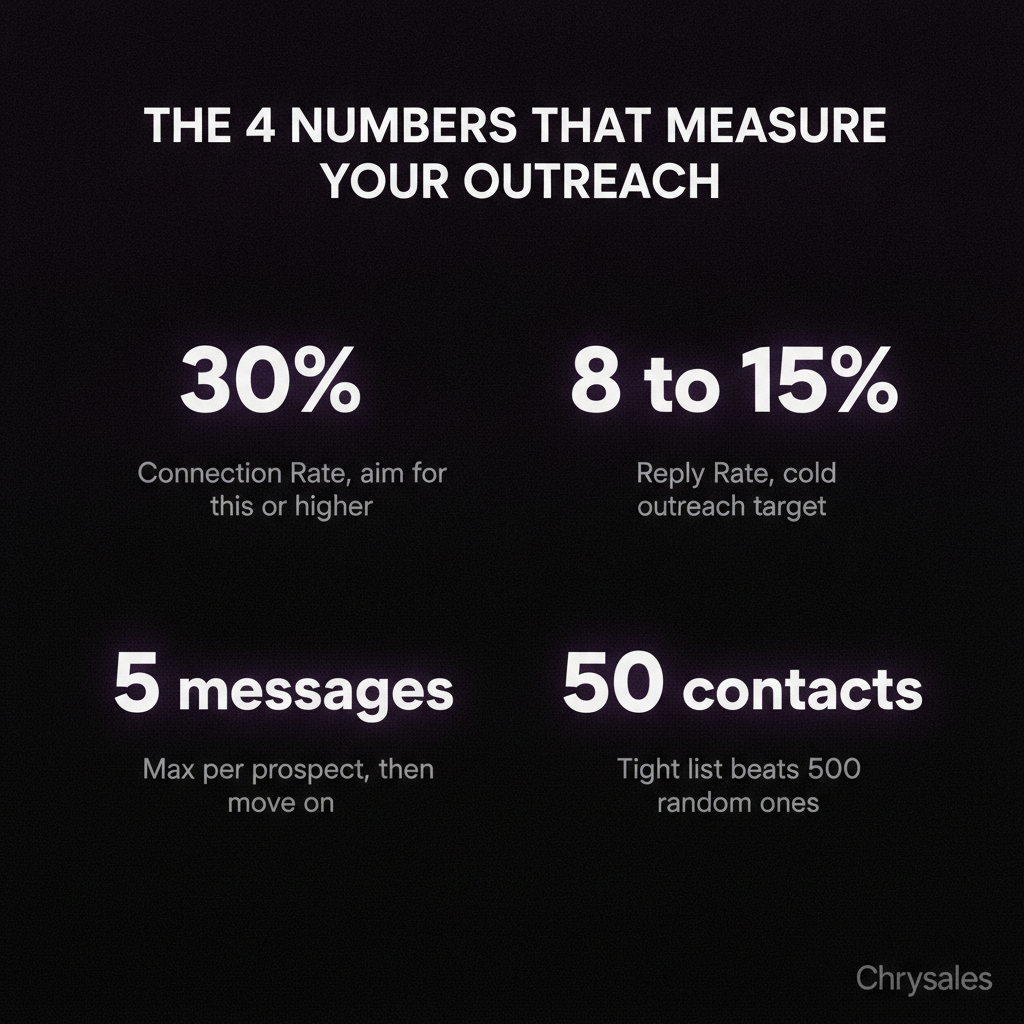
Most teams think volume solves the problem. Send 500 messages, get 10 replies, book 2 calls. But that math only works if your list is good and your message doesn't burn your reputation. Spray-and-pray outreach might get you a few responses, but it also gets you flagged, ignored, and blocked. The better approach: send 50 personalized messages instead of 500 generic ones. Your reply rate jumps from 2% to 10% or more. You book the same number of calls. You don't look like a bot.
How to Write LinkedIn Outreach That Actually Gets Replies
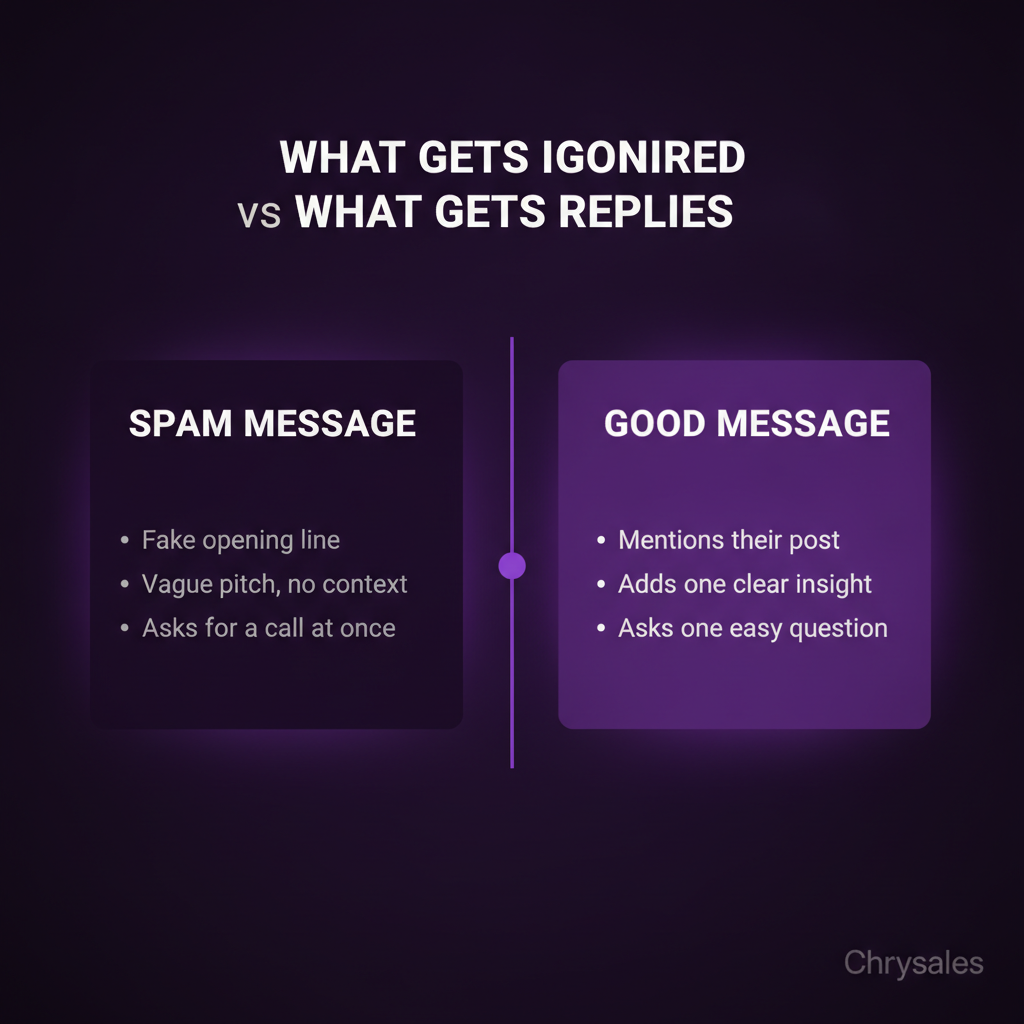
Good LinkedIn outreach follows a simple rule: give people a reason to respond. That means no pitching in the first message. No asking for a call before you've said anything useful. No generic compliments that could apply to anyone.
Start With Research, Not a Template
Before you write a single message, spend two minutes on their profile. Look for:
- A recent post they shared
- A company milestone (funding, new hire, product launch)
- A mutual connection or shared group
- A specific problem they mentioned publicly
If you can't find anything worth mentioning, they're probably not a good fit. Move on. Pro Tip: If someone posted about a challenge in the last 30 days, reference it in your first line. Reply rates double when you mention something specific.
Keep Your First Message Under 75 Words
Long messages don't get read. They get skimmed and ignored. Your first message should do one thing: start a conversation. Not close a deal. Not pitch your service. Just get them to reply. Here's a structure that works:
- Reference something specific (their post, company news, mutual connection)
- Add one line of value or insight
- Ask a short, easy question
Example: "Saw your post on scaling outbound without burning out your team. We've been testing a similar approach with small sales teams and found that most struggle with list quality, not message copy. Curious if that's been your experience too?" That's it. No pitch. No call request. Just a real question tied to something they care about.
Personalized LinkedIn Messaging Beats Templates Every Time
One marketing agency switched from templates to personalized messages. Their connection acceptance rate went from 18% to 42%. Reply rate jumped from 3% to 11%. Same list. Same offer. Different message. Personalization doesn't mean writing a novel. It means showing you did 60 seconds of research. Mention a post. Reference a shared connection. Comment on a company update. That's enough to stand out. Common mistake: Using merge tags like {company_name} or {job_title} and calling it personalized. Real personalization is noticing something specific and mentioning it naturally.
Fix Your LinkedIn Connection Request Strategy
Most people skip the connection request and go straight to InMail or open profiles. That's fine if your profile is strong. But if your connection request is generic, you're losing 60% of potential replies before you even send a message.
Your Profile Has to Back Up Your Outreach
Think of your LinkedIn profile like a storefront. If someone gets your message and checks your profile, what do they see? A blank headline? No posts? A summary that says "helping companies grow"? That's a red flag. Before you start any LinkedIn outreach for B2B, clean up your profile:
- Headline: make it specific (not "Sales Expert" but "Helping 20+ consulting firms build repeatable sales systems")
- About section: focus on results, not buzzwords
- Recent activity: post once or twice a week so your profile looks active
A 15-person consulting firm is more likely to accept your request if your profile shows you work with similar companies and know what you're talking about.
Don't Pitch in the Connection Request
The connection request is not a sales message. It's an introduction. Keep it short. One to two sentences max. Good: "Hey [Name], I've been following your posts on B2B lead generation and wanted to connect. No pitch, just think your content is solid." Bad: "Hi [Name], I help companies like yours get more clients through proven sales systems. Let's connect and chat about how we can help you scale." The first one gets accepted. The second one gets ignored. Pro Tip: If you have a mutual connection, mention them. Acceptance rates go up 30% when you reference someone they know, as detailed in LinkedIn connection acceptance benchmarks.
Build a LinkedIn DM Sequence That Doesn't Feel Pushy
One message usually isn't enough. Most people don't reply to the first message, even if it's good. That doesn't mean they're not interested. It means they're busy. A LinkedIn DM sequence gives you more chances to start a conversation without sounding desperate. But most sequences fail because they push too hard, too fast.
How a Good Sequence Works
Here's a simple three-message sequence:
Message 1 (Day 1): Reference something specific, add value, ask an easy question.
Message 2 (Day 4 5): If no reply, send a short follow-up with a different angle. Share a quick insight, a relevant article, or a case example.
Message 3 (Day 8 10): If still no reply, send a low-pressure check-in. "No worries if this isn't a priority right now. Let me know if you'd ever want to chat about [topic]."
Stop after three messages. If they haven't replied, they're not interested right now. Move on. Watch out: Sending a follow-up every day makes you look desperate. Space them out. Give people time to respond.
Add Value Before Asking for Anything
The best LinkedIn DM sequences don't ask for a call until message three or later. Messages one and two focus on giving value. Share an insight. Point out a trend. Offer a quick tip. Example follow-up: "Quick thought on the outbound challenge you posted about last week: we've seen small sales teams double reply rates by tightening their ICP and cutting list size by half. Counterintuitive, but it works. Happy to share what we've learned if it's useful." No ask. Just value. If they're interested, they'll reply.
Use Sales Navigator Prospecting to Target the Right People
Bad lists kill good outreach. If you're messaging the wrong people, no amount of personalization will save you. Sales Navigator lets you filter by company size, industry, job title, and activity. That means you can build a list of people who actually match your offer.
Filter for Fit, Not Just Title
Most people search by job title and call it done. That's a start, but it's not enough. Add filters:
- Company headcount (if you work with 20 to 100 person companies, filter for that range)
- Posted on LinkedIn in the last 30 days (means they're active and more likely to see your message)
- Geography, industry, or tech stack (if relevant to your offer)
A tighter list gets better results. Messaging 100 perfect fit prospects beats messaging 500 random ones, as shown in research on building an ideal customer profile. Pro Tip: Save your searches in Sales Navigator. Run them weekly. New prospects show up as companies grow and people change roles.
Track Your Cold Outreach Reply Rate
If you're not tracking metrics, you're guessing. The three numbers that matter for LinkedIn outreach:
- Connection acceptance rate: how many people accept your request (aim for 30% or higher)
- Reply rate: how many people respond to your first message (aim for 8% to 15%)
- Meeting booked rate: how many conversations turn into calls (aim for 20% to 30% of replies)
If your reply rate is under 5%, your message is the problem. If your meeting booked rate is low, your offer or call to action needs work. For detailed benchmarks on what good and bad LinkedIn reply rates look like, see our guide to LinkedIn outreach reply rate benchmarks. We worked with a tech company whose reply rate sat at 2%. After tightening their list and rewriting their first message, it jumped to 9%. Same time investment. Better results.
Engage With Their Content Before You Reach Out
Here's a move most people skip: comment on a prospect's post before you send a message. It's simple. It works. And it makes your outreach feel less random. When someone sees you liked or commented on their post, then gets a message from you two days later, it doesn't feel cold. It feels like a natural follow-up.
How to Do This Without Being Weird
Don't leave a generic comment like "Great post!" or "Thanks for sharing!" Add a real thought. Agree, disagree, or share a quick example. If they posted about hiring challenges: "We've seen this too. Most small sales teams hire fast and onboard slow. Flipping that order cuts turnover by half." That's a useful comment. It shows you read the post. It adds value. And when you message them later, they'll remember your name. To learn more about when to comment versus when to connect first, check out this breakdown of comment-first versus connect-first strategies. Common mistake: Commenting on 10 posts in a row from the same person. That's stalker behavior. One thoughtful comment is enough.
Stop Using the Same Message for Everyone
Templates save time. But they also tank reply rates. If you're serious about LinkedIn outreach that converts, you need to personalize at least the first two sentences of every message. That doesn't mean starting from scratch every time. Build a message structure. Keep the middle and end consistent. Swap the opening based on research.
A Structure You Can Reuse
Here's a format that works:
Line 1: Personalized reference (their post, company news, mutual connection)
Line 2 3: Value or insight tied to their situation
Line 4: Easy question or low-pressure next step
The first line changes for every person. The rest stays mostly the same. That's how you personalize at scale without spending an hour per message. Pro Tip: Keep a swipe file of good opening lines. When you find something that works, save it. Adapt it for similar prospects.
Multi-Channel Outreach Strategy: Don't Rely on LinkedIn Alone
LinkedIn works. But it works better when it's part of a bigger system. If you only reach out on LinkedIn, you're missing people who check email more than DMs. If you only send emails, you're missing people who live on LinkedIn. The best approach: combine both. Send a LinkedIn connection request. A few days later, send an email. A week after that, comment on a post. You're not spamming. You're showing up in different places at different times.
How to Sequence LinkedIn and Email
Here's a simple multi channel outreach strategy:
Day 1: Send LinkedIn connection request (short, no pitch)
Day 3: If accepted, send first LinkedIn message (personalized, value focused)
Day 5: Send email (different angle, not a copy of the LinkedIn message)
Day 8: If no reply, follow up on LinkedIn with a quick insight
Day 12: Final email or LinkedIn check in
Stop after that. If they haven't responded across two channels, they're not interested right now. One consulting firm used this approach and booked 18 calls in a month from a list of 120 prospects. Reply rate across both channels: 12%. They weren't doing anything fancy. Just showing up consistently without being annoying. To understand how combining LinkedIn with email dramatically improves results, you can watch how multichannel outreach delivers 10x different results using the same channels.
What Chrysales Clients Do Differently
Most small sales teams treat LinkedIn outreach like a side project. They send a few messages when they have time. They don't track results. They don't test what works. That's why their reply rates stay low. The teams we work with build LinkedIn outreach into a repeatable B2B sales system. They define their ICP. They write message templates with room for personalization. They track reply rates and meeting booked rates. They tweak what doesn't work. That's the difference between outreach that gets 2% replies and outreach that gets 10%. It's not magic. It's a system.
Building a Sales System Around LinkedIn Outreach
A good sales system doesn't stop at sending messages. It includes:
- A clean list of target prospects (filtered by fit, not just title)
- Personalized message templates (with research based openers)
- A follow up sequence (spaced out, value first, no more than three messages)
- Tracking and tweaking (reply rate, acceptance rate, meeting booked rate)
- A next step after the reply (discovery call structure, objection handling, clear offer)
We've trained 500+ sales teams and helped generate €10M+ in client revenue. The teams that win long term don't rely on one tactic. They build a system that works whether the founder is sending messages or a hired setter is running the outreach. If you want a step-by-step system for turning LinkedIn conversations into booked meetings, see our complete guide to LinkedIn outreach strategy for booking meetings. If you're spending hours on LinkedIn outreach and not seeing results, the problem usually isn't effort. It's the system.
Frequently Asked Questions
Q: How many LinkedIn messages should I send per day?
Send 20 to 30 personalized messages per day if you're doing it manually. Quality beats quantity. If you're using automation tools, LinkedIn's limits allow around 100 connection requests per week and 150 to 200 messages per week, but going slower looks more human. Sending 500 messages in a day gets you flagged. Sending 25 well researched messages gets you replies.
Q: Should I use LinkedIn automation tools for outreach?
Automation tools can save time, but they come with risks. LinkedIn cracks down on bots, and over automation makes your outreach feel robotic. If you use automation, keep it light. Automate connection requests and basic sequences, but personalize the first line manually. Never automate everything. A hybrid approach works best: tools for scheduling, humans for personalization.
Q: What's a good reply rate for B2B LinkedIn outreach?
Aim for 8% to 15% on cold outreach, according to LinkedIn outreach benchmarks data. If you're getting under 5%, your message or list needs work. If you're above 20%, you're either targeting a very tight ICP or your message is exceptionally good. Most teams we work with start around 3% to 5% and climb to 10% to 12% after tightening their list and fixing their opening lines.
Q: How long should I wait between LinkedIn follow-up messages?
Wait at least four to five days between messages. Sending a follow-up the next day looks desperate. Three messages spaced over 10 to 12 days is the sweet spot. If someone hasn't replied after three messages, stop. Continuing past that point moves from persistent to annoying. Respect their inbox and move on to the next prospect.
Q: Can LinkedIn outreach work for client acquisition without paid ads?
Yes. LinkedIn outreach is one of the best organic channels for B2B lead generation. It's slower than paid ads, but the leads are often warmer and more qualified. Small sales teams and growing B2B companies use LinkedIn as their primary client acquisition channel and book 10 to 20 calls per month without spending on ads. The key is consistency, personalization, and a clear follow up system.
LinkedIn outreach for B2B is direct messaging on LinkedIn that starts conversations with the right people, supports lead generation, and helps b2b sales without sounding pushy. Most LinkedIn outreach messages get ignored. Not because people are rude. Because 90% of messages sound exactly the same. They start with a fake compliment, pitch a service nobody asked for, and end with "let's hop on a quick call." That's spam. If your reply rate is under 5%, the problem isn't LinkedIn. It's your message. The good news? You can fix this without spending more time writing. You just need to stop doing what everyone else does.
The Real Problem: Your Outreach Looks Like Everyone Else's
Here's the thing: LinkedIn users get 10 to 20 cold messages per week. Most are templates. Most pitch immediately. Most use the same format. When your message looks like everyone else's, it gets deleted like everyone else's. The issue isn't that cold outreach is dead. It's that lazy outreach is dead. If you're copying templates from a blog post or using the same opener for 200 people, your reply rate will stay low. LinkedIn outreach for B2B works when it's personal, short, and clear. It fails when it sounds automated.
What Spam Looks Like on LinkedIn
Spot the pattern:
- "Hi [Name], I came across your profile and was really impressed by your work in [industry]."
- "We help companies like yours get more leads/sales/growth."
- "Would you be open to a quick 15-minute call to explore how we can help?"
That's the template everyone uses. It's vague. It's generic. It doesn't say why you're reaching out to this specific person. A 200-person company that just posted about layoffs doesn't want a sales pitch. They want to be left alone. Watch out: If you can swap the recipient's name and company without changing anything else in your message, it's spam.
Why This Still Happens
Most teams think volume solves the problem. Send 500 messages, get 10 replies, book 2 calls. But that math only works if your list is good and your message doesn't burn your reputation. Spray-and-pray outreach might get you a few responses, but it also gets you flagged, ignored, and blocked. The better approach: send 50 personalized messages instead of 500 generic ones. Your reply rate jumps from 2% to 10% or more. You book the same number of calls. You don't look like a bot.
How to Write LinkedIn Outreach That Actually Gets Replies
Good LinkedIn outreach follows a simple rule: give people a reason to respond. That means no pitching in the first message. No asking for a call before you've said anything useful. No generic compliments that could apply to anyone.
Start With Research, Not a Template
Before you write a single message, spend two minutes on their profile. Look for:
- A recent post they shared
- A company milestone (funding, new hire, product launch)
- A mutual connection or shared group
- A specific problem they mentioned publicly
If you can't find anything worth mentioning, they're probably not a good fit. Move on. Pro Tip: If someone posted about a challenge in the last 30 days, reference it in your first line. Reply rates double when you mention something specific.
Keep Your First Message Under 75 Words
Long messages don't get read. They get skimmed and ignored. Your first message should do one thing: start a conversation. Not close a deal. Not pitch your service. Just get them to reply. Here's a structure that works:
- Reference something specific (their post, company news, mutual connection)
- Add one line of value or insight
- Ask a short, easy question
Example: "Saw your post on scaling outbound without burning out your team. We've been testing a similar approach with small sales teams and found that most struggle with list quality, not message copy. Curious if that's been your experience too?" That's it. No pitch. No call request. Just a real question tied to something they care about.
Personalized LinkedIn Messaging Beats Templates Every Time
One marketing agency switched from templates to personalized messages. Their connection acceptance rate went from 18% to 42%. Reply rate jumped from 3% to 11%. Same list. Same offer. Different message. Personalization doesn't mean writing a novel. It means showing you did 60 seconds of research. Mention a post. Reference a shared connection. Comment on a company update. That's enough to stand out. Common mistake: Using merge tags like {company_name} or {job_title} and calling it personalized. Real personalization is noticing something specific and mentioning it naturally.
Fix Your LinkedIn Connection Request Strategy
Most people skip the connection request and go straight to InMail or open profiles. That's fine if your profile is strong. But if your connection request is generic, you're losing 60% of potential replies before you even send a message.
Your Profile Has to Back Up Your Outreach
Think of your LinkedIn profile like a storefront. If someone gets your message and checks your profile, what do they see? A blank headline? No posts? A summary that says "helping companies grow"? That's a red flag. Before you start any LinkedIn outreach for B2B, clean up your profile:
- Headline: make it specific (not "Sales Expert" but "Helping 20+ consulting firms build repeatable sales systems")
- About section: focus on results, not buzzwords
- Recent activity: post once or twice a week so your profile looks active
A 15-person consulting firm is more likely to accept your request if your profile shows you work with similar companies and know what you're talking about.
Don't Pitch in the Connection Request
The connection request is not a sales message. It's an introduction. Keep it short. One to two sentences max. Good: "Hey [Name], I've been following your posts on B2B lead generation and wanted to connect. No pitch, just think your content is solid." Bad: "Hi [Name], I help companies like yours get more clients through proven sales systems. Let's connect and chat about how we can help you scale." The first one gets accepted. The second one gets ignored. Pro Tip: If you have a mutual connection, mention them. Acceptance rates go up 30% when you reference someone they know, as detailed in LinkedIn connection acceptance benchmarks.
Build a LinkedIn DM Sequence That Doesn't Feel Pushy
One message usually isn't enough. Most people don't reply to the first message, even if it's good. That doesn't mean they're not interested. It means they're busy. A LinkedIn DM sequence gives you more chances to start a conversation without sounding desperate. But most sequences fail because they push too hard, too fast.
How a Good Sequence Works
Here's a simple three-message sequence:
Message 1 (Day 1): Reference something specific, add value, ask an easy question.
Message 2 (Day 4 5): If no reply, send a short follow-up with a different angle. Share a quick insight, a relevant article, or a case example.
Message 3 (Day 8 10): If still no reply, send a low-pressure check-in. "No worries if this isn't a priority right now. Let me know if you'd ever want to chat about [topic]."
Stop after three messages. If they haven't replied, they're not interested right now. Move on. Watch out: Sending a follow-up every day makes you look desperate. Space them out. Give people time to respond.
Add Value Before Asking for Anything
The best LinkedIn DM sequences don't ask for a call until message three or later. Messages one and two focus on giving value. Share an insight. Point out a trend. Offer a quick tip. Example follow-up: "Quick thought on the outbound challenge you posted about last week: we've seen small sales teams double reply rates by tightening their ICP and cutting list size by half. Counterintuitive, but it works. Happy to share what we've learned if it's useful." No ask. Just value. If they're interested, they'll reply.
Use Sales Navigator Prospecting to Target the Right People
Bad lists kill good outreach. If you're messaging the wrong people, no amount of personalization will save you. Sales Navigator lets you filter by company size, industry, job title, and activity. That means you can build a list of people who actually match your offer.
Filter for Fit, Not Just Title
Most people search by job title and call it done. That's a start, but it's not enough. Add filters:
- Company headcount (if you work with 20 to 100 person companies, filter for that range)
- Posted on LinkedIn in the last 30 days (means they're active and more likely to see your message)
- Geography, industry, or tech stack (if relevant to your offer)
A tighter list gets better results. Messaging 100 perfect fit prospects beats messaging 500 random ones, as shown in research on building an ideal customer profile. Pro Tip: Save your searches in Sales Navigator. Run them weekly. New prospects show up as companies grow and people change roles.
Track Your Cold Outreach Reply Rate
If you're not tracking metrics, you're guessing. The three numbers that matter for LinkedIn outreach:
- Connection acceptance rate: how many people accept your request (aim for 30% or higher)
- Reply rate: how many people respond to your first message (aim for 8% to 15%)
- Meeting booked rate: how many conversations turn into calls (aim for 20% to 30% of replies)
If your reply rate is under 5%, your message is the problem. If your meeting booked rate is low, your offer or call to action needs work. For detailed benchmarks on what good and bad LinkedIn reply rates look like, see our guide to LinkedIn outreach reply rate benchmarks. We worked with a tech company whose reply rate sat at 2%. After tightening their list and rewriting their first message, it jumped to 9%. Same time investment. Better results.
Engage With Their Content Before You Reach Out
Here's a move most people skip: comment on a prospect's post before you send a message. It's simple. It works. And it makes your outreach feel less random. When someone sees you liked or commented on their post, then gets a message from you two days later, it doesn't feel cold. It feels like a natural follow-up.
How to Do This Without Being Weird
Don't leave a generic comment like "Great post!" or "Thanks for sharing!" Add a real thought. Agree, disagree, or share a quick example. If they posted about hiring challenges: "We've seen this too. Most small sales teams hire fast and onboard slow. Flipping that order cuts turnover by half." That's a useful comment. It shows you read the post. It adds value. And when you message them later, they'll remember your name. To learn more about when to comment versus when to connect first, check out this breakdown of comment-first versus connect-first strategies. Common mistake: Commenting on 10 posts in a row from the same person. That's stalker behavior. One thoughtful comment is enough.
Stop Using the Same Message for Everyone
Templates save time. But they also tank reply rates. If you're serious about LinkedIn outreach that converts, you need to personalize at least the first two sentences of every message. That doesn't mean starting from scratch every time. Build a message structure. Keep the middle and end consistent. Swap the opening based on research.
A Structure You Can Reuse
Here's a format that works:
Line 1: Personalized reference (their post, company news, mutual connection)
Line 2 3: Value or insight tied to their situation
Line 4: Easy question or low-pressure next step
The first line changes for every person. The rest stays mostly the same. That's how you personalize at scale without spending an hour per message. Pro Tip: Keep a swipe file of good opening lines. When you find something that works, save it. Adapt it for similar prospects.
Multi-Channel Outreach Strategy: Don't Rely on LinkedIn Alone
LinkedIn works. But it works better when it's part of a bigger system. If you only reach out on LinkedIn, you're missing people who check email more than DMs. If you only send emails, you're missing people who live on LinkedIn. The best approach: combine both. Send a LinkedIn connection request. A few days later, send an email. A week after that, comment on a post. You're not spamming. You're showing up in different places at different times.
How to Sequence LinkedIn and Email
Here's a simple multi channel outreach strategy:
Day 1: Send LinkedIn connection request (short, no pitch)
Day 3: If accepted, send first LinkedIn message (personalized, value focused)
Day 5: Send email (different angle, not a copy of the LinkedIn message)
Day 8: If no reply, follow up on LinkedIn with a quick insight
Day 12: Final email or LinkedIn check in
Stop after that. If they haven't responded across two channels, they're not interested right now. One consulting firm used this approach and booked 18 calls in a month from a list of 120 prospects. Reply rate across both channels: 12%. They weren't doing anything fancy. Just showing up consistently without being annoying. To understand how combining LinkedIn with email dramatically improves results, you can watch how multichannel outreach delivers 10x different results using the same channels.
What Chrysales Clients Do Differently
Most small sales teams treat LinkedIn outreach like a side project. They send a few messages when they have time. They don't track results. They don't test what works. That's why their reply rates stay low. The teams we work with build LinkedIn outreach into a repeatable B2B sales system. They define their ICP. They write message templates with room for personalization. They track reply rates and meeting booked rates. They tweak what doesn't work. That's the difference between outreach that gets 2% replies and outreach that gets 10%. It's not magic. It's a system.
Building a Sales System Around LinkedIn Outreach
A good sales system doesn't stop at sending messages. It includes:
- A clean list of target prospects (filtered by fit, not just title)
- Personalized message templates (with research based openers)
- A follow up sequence (spaced out, value first, no more than three messages)
- Tracking and tweaking (reply rate, acceptance rate, meeting booked rate)
- A next step after the reply (discovery call structure, objection handling, clear offer)
We've trained 500+ sales teams and helped generate €10M+ in client revenue. The teams that win long term don't rely on one tactic. They build a system that works whether the founder is sending messages or a hired setter is running the outreach. If you want a step-by-step system for turning LinkedIn conversations into booked meetings, see our complete guide to LinkedIn outreach strategy for booking meetings. If you're spending hours on LinkedIn outreach and not seeing results, the problem usually isn't effort. It's the system.
Frequently Asked Questions
Q: How many LinkedIn messages should I send per day?
Send 20 to 30 personalized messages per day if you're doing it manually. Quality beats quantity. If you're using automation tools, LinkedIn's limits allow around 100 connection requests per week and 150 to 200 messages per week, but going slower looks more human. Sending 500 messages in a day gets you flagged. Sending 25 well researched messages gets you replies.
Q: Should I use LinkedIn automation tools for outreach?
Automation tools can save time, but they come with risks. LinkedIn cracks down on bots, and over automation makes your outreach feel robotic. If you use automation, keep it light. Automate connection requests and basic sequences, but personalize the first line manually. Never automate everything. A hybrid approach works best: tools for scheduling, humans for personalization.
Q: What's a good reply rate for B2B LinkedIn outreach?
Aim for 8% to 15% on cold outreach, according to LinkedIn outreach benchmarks data. If you're getting under 5%, your message or list needs work. If you're above 20%, you're either targeting a very tight ICP or your message is exceptionally good. Most teams we work with start around 3% to 5% and climb to 10% to 12% after tightening their list and fixing their opening lines.
Q: How long should I wait between LinkedIn follow-up messages?
Wait at least four to five days between messages. Sending a follow-up the next day looks desperate. Three messages spaced over 10 to 12 days is the sweet spot. If someone hasn't replied after three messages, stop. Continuing past that point moves from persistent to annoying. Respect their inbox and move on to the next prospect.
Q: Can LinkedIn outreach work for client acquisition without paid ads?
Yes. LinkedIn outreach is one of the best organic channels for B2B lead generation. It's slower than paid ads, but the leads are often warmer and more qualified. Small sales teams and growing B2B companies use LinkedIn as their primary client acquisition channel and book 10 to 20 calls per month without spending on ads. The key is consistency, personalization, and a clear follow up system.
Scaling Is Not Hard If You Have The Right Systems
If you’re serious about leveling up your scaling game, you need the right system, the right training, and the right team behind you. We're here to give you the exact tools and strategies top entrepreneurs use to dominate.

Discover the latest tips
View All.avif)
Chrysales was formed from the words "chrysalis" the stage where a caterpillar transforms into a butterfly and "sales".
It stands for one thing: sales transformation.Because scaling doesn’t happen by doing more of the same. Scaling only happens when you go through real transformation in your systems, your offer, team and the way you sell.
.avif)


