.avif)
How to Generate Sales Qualified Leads Without Paid Ads
Sales qualified leads are prospects who have been reviewed by a salesperson and meet clear buying criteria: they have a real problem, budget to solve it, and authority to decide. Generating them without paid ads is possible through cold outreach, referral systems, and optimized inbound processes.
A marketing agency in Berlin went from 12 inbound inquiries per month to 89 in four weeks. They didn't run Facebook ads or hire a lead generation agency. Instead, they built a lean system that attracted qualified leads through three channels. The difference was not effort. It was focus.
Most B2B companies chase any contact that shows interest. But when you shift to targeting sales qualified leads from day one, your pipeline fills with people who actually want to buy.
What Makes a Lead Sales-Ready
Most leads are not ready to buy. They downloaded a guide. They visited a pricing page. They opened an email. These actions show interest, but not intent. A sales qualified lead is different. This is someone who has been reviewed by a salesperson and meets clear criteria: they have a real problem, the budget to solve it, and the authority to make a decision. They are ready for a sales conversation, not more nurturing.
The gap between a marketing qualified lead and a sales qualified lead is where most revenue gets lost. Marketing sends over 100 contacts. Sales calls them all. Only eight turn into meetings. The rest were never ready. This wastes time and creates friction between teams. When you build a system that filters for qualified leads before the first call, your close rate jumps and your sales cycle shrinks, helping you close more deals with qualified leads.
The BANT Framework for Lead Qualification
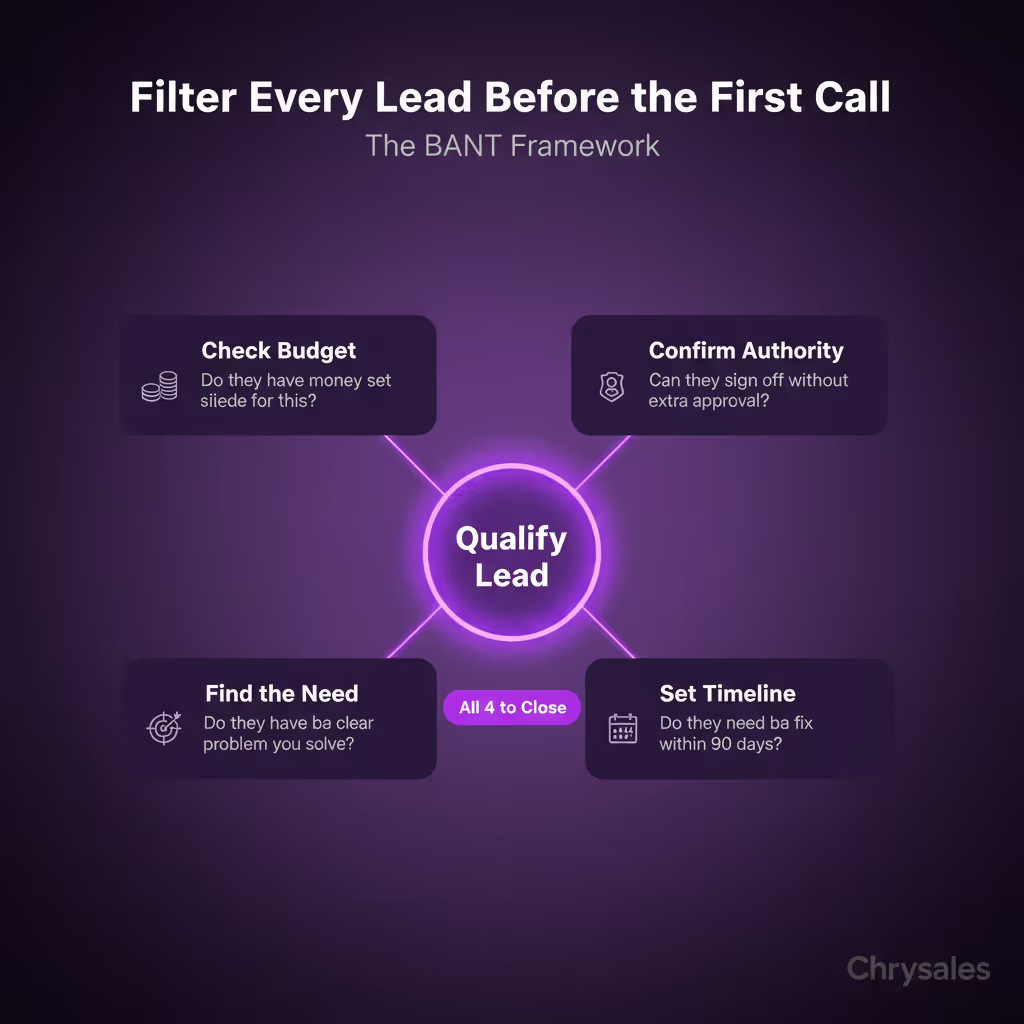
BANT is the simplest way to sort leads. It stands for Budget, Authority, Need, and Timeline. Does the contact have money allocated for this solution? Are they the person who signs off on purchases, or do they need three approvals? Do they have a specific problem your product or service solves? Do they need it solved in the next 90 days, or are they researching for next year?
A 30-person consulting firm used this framework to cut their discovery call volume in half and double their close rate. They added four questions to their contact form. Leads who could not answer yes to at least three of the four questions were sent to a nurture sequence instead of a sales call. The result was fewer calls, but more deals.
Behavioral Signals That Indicate Sales Readiness
Some actions matter more than others. A lead who visits your pricing page three times in one week is hotter than someone who read a blog post once. A lead who replies to a cold email asking for a demo is more qualified than someone who clicked a link but did not respond. Tracking these signals helps you prioritize.
Set up a simple scoring system. Assign points to high-intent actions: replied to outreach (10 points), visited pricing page (8 points), watched a demo video (7 points), downloaded a case study (5 points), opened an email (2 points). Anything scoring above 70 goes to the priority queue. This is not complex marketing automation. You can track this in a spreadsheet or a basic CRM.
Building a Cold Outreach System That Attracts Qualified Leads
Cold outreach works when the list is right and the message is specific. Most campaigns fail because they target too wide. A generic email to 1,000 contacts will get five replies. A specific email to 100 handpicked contacts will get 18. The secret is not the copy. It is the targeting.
Start by defining your ideal customer profile. What industry are they in? How many employees do they have? What problem are they trying to solve right now? A software consulting firm that works with healthcare companies should not email retail businesses. Narrow the list until every contact looks like your best current client. You can also watch this breakdown of how to find clients who need your services for practical prospecting tactics across LinkedIn, email, and referrals.
How to Build a High-Quality Lead List
Use LinkedIn Sales Navigator, Apollo, or Cognism to pull contact lists. Filter by job title, company size, industry, and location. Then review the list manually. Remove companies that just announced layoffs. Remove companies that are too small to afford your service. Remove contacts whose LinkedIn profile shows they joined the company last month. They are not ready to buy yet.
A 15-person consulting firm cut their list from 800 to 220 contacts using this process. Their reply rate went from 3% to 14%. The leads who responded were already familiar with the type of problem the firm solves. Half of them booked a call on the first reply.
Writing Cold Emails That Filter for Intent
Your email should not try to sell. It should try to start a conversation with someone who has the problem you solve. Open with a specific observation about their business. Mention a challenge you know their industry faces. Ask one question that only a qualified lead would answer yes to.
Here is a simple structure: one sentence about them, one sentence about the problem, one sentence about what you do, one question. Keep it under 80 words. No fluff. No generic praise. No long case studies. Just enough to get a reply from someone who is already thinking about this problem.
Pro Tip: Send your cold emails between Tuesday and Thursday, 8 to 10 AM in the recipient's time zone. Response rates drop 40% for emails sent on Mondays or after 3 PM, a pattern echoed in B2B sales statistics from HubSpot.
Setting Up a Referral System That Runs on Autopilot
Referrals are the highest-quality sales qualified leads. They come pre-warmed. They trust you before the first call. But most businesses wait for referrals to happen by accident. The companies that generate 20 to 30 referrals per quarter build a system that asks at the right moment.
The right moment is not after the project is finished. It is when the client gets their first result. A sales training company asks for referrals two weeks after a client closes their first deal using the new system. A consulting firm asks after the client's team completes the first sprint using the new process. This is when excitement is highest.
The Three-Step Referral Request
First, remind the client of the result they just achieved. Second, ask if they know one or two people facing a similar challenge. Third, offer to send them a short message they can forward. Do not ask them to write the introduction. Make it easy. Send a two-sentence blurb they can copy and paste.
A marketing agency used this exact process and generated 47 referrals in six months. Nineteen became clients. The key was timing and friction. They asked within 72 hours of a visible win, and they wrote the message for the client. Most referral systems fail because they ask too late or make the client do too much work.
Incentivizing Referrals Without Discounting Your Service
Some businesses offer a discount or a gift card for referrals. This works in consumer markets, but it can cheapen your brand in B2B sales. A better approach is to offer something valuable that does not lower your perceived price. Give them early access to a new service. Give them a free audit of their sales process. Give them a training session for their team.
A 20-person consulting firm offered a free half-day workshop to any client who referred a qualified lead that booked a discovery call. They ran eight workshops in one year and closed six of the referred companies. The cost was time, not money, and the referrals felt like true partnerships.
Optimizing Inbound Channels for Sales Qualified Leads
Inbound traffic is wasted if it is not filtered. A website that gets 2,000 visitors per month but only generates five qualified leads has a conversion problem. The solution is not more traffic. It is better qualification at every step.
Add friction where it helps. A long contact form scares away tire kickers, but attracts serious buyers. Ask for company size, current revenue, and the specific problem they want to solve. Leads who fill out a seven-field form are more qualified than leads who only submit an email address.
Using Lead Magnets That Attract Buyers, Not Browsers
Most lead magnets attract people who want free content, not people who want to buy. A generic ebook on sales tips will get 100 downloads, but zero sales calls. A case study on how a similar company grew revenue by 40% in six months will get 15 downloads, but five of those will book a call.
Create lead magnets that only appeal to someone with the problem you solve. A sales training company created a "Sales Hiring Scorecard" that helped B2B companies evaluate their current sales team. Only people who were actively thinking about hiring or training their sales team downloaded it. Forty percent of those downloads turned into discovery calls within two weeks.
Building a Contact Form That Qualifies Leads Automatically
Your contact form should do half the qualification work before a human ever sees the lead. Add dropdown fields for budget range, timeline, and company size. Add a text field that asks, "What is the specific challenge you want to solve?" Leads who cannot answer that question clearly are not ready yet.
A consulting firm added these fields and saw their contact form submissions drop by 60%. But their discovery call booking rate went from 12% to 48%. They were talking to fewer people, but closing more deals. The form did the filtering work so the sales team did not have to.
Automating Lead Scoring and Prioritization
Manual lead review does not scale past 50 leads per month. At that point, you need a simple scoring system that sorts leads by priority. This does not require expensive software. A spreadsheet with a scoring column works fine for most lean sales teams.
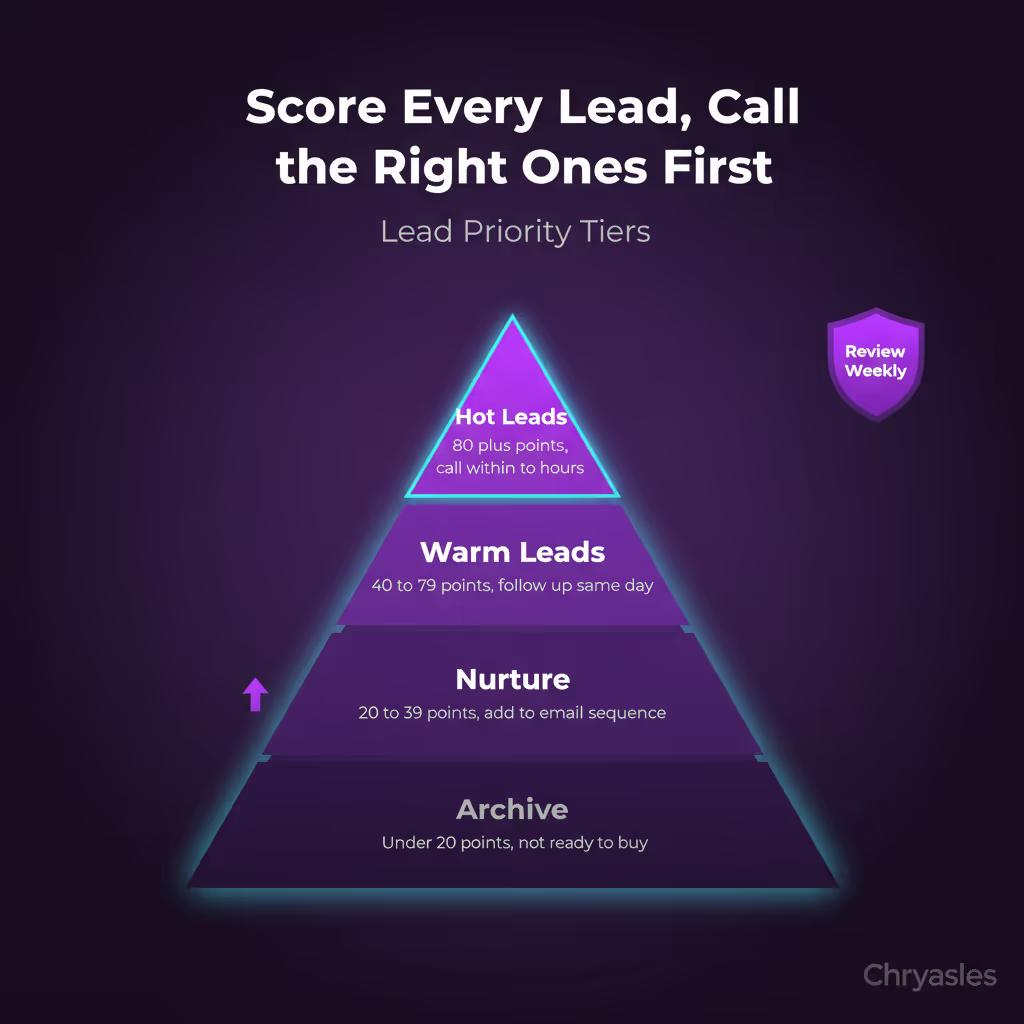
Assign point values to qualification criteria. Company size over 10 employees: 10 points. Replied to outreach or filled out contact form: 15 points. Visited pricing page: 8 points. Opened three or more emails: 5 points. Mentioned a specific problem: 12 points. Add up the points. Anything over 40 goes to the top of the list. Anything under 20 goes to nurture or gets disqualified.
Using AI to Enrich and Score Leads Faster
AI tools like Clay, Instantly, or Gemini-based workflows can pull in company data, check for recent funding rounds, scan LinkedIn activity, and score leads in seconds. A 25-person agency used Gemini to scan inbound leads and flag anyone who mentioned competitors, pricing, or implementation timelines in their form responses. These leads got called within two hours. The rest got an email sequence.
This is not about replacing humans. It is about giving your sales team the best leads first. A salesperson who spends their first hour of the day calling warm, high-scoring leads will close more than someone who calls a random list. For more practical execution guidance, review these sales tips for handling qualified leads.
Weekly Lead Review to Keep the System Sharp
Run a quick check at the end of each week. Look at which lead sources brought in the most qualified leads. Look at which scoring criteria correlate with actual closed deals. Adjust the point values or cut a lead source that is not working. Most systems drift after a few months if no one is reviewing the data.
A consulting firm found that leads from LinkedIn outreach closed at 28%, but leads from webinar signups closed at only 6%. They cut the webinars and doubled down on LinkedIn. This saved 10 hours per week and increased their monthly recurring revenue by 22% in three months. Industry benchmarks compiled in HubSpot's sales statistics roundup reinforce the importance of focusing on the highest-converting channels.
Aligning Sales and Marketing on Lead Definitions
Most pipeline problems start with misalignment. Marketing thinks a lead is anyone who downloaded a guide. Sales thinks a lead is someone who asked for a quote. Neither side is wrong, but the gap wastes time and creates bad blood. The fix is a shared definition, written down, and reviewed every quarter.
Sit down with both teams and define three categories: marketing qualified lead, sales qualified lead, and opportunity. A marketing qualified lead showed interest but has not been contacted yet. One that is sales qualified has been reviewed and meets BANT criteria. An opportunity is someone in active negotiation. Everyone uses the same labels. Everyone moves leads through the same stages.
Creating a Lead Handoff Process That Actually Works
Marketing should not just dump leads into a CRM and hope sales follows up. Sales should not ignore leads because they do not trust the quality. Build a handoff process with clear steps. Marketing scores the lead and adds notes about what the person downloaded or which email they replied to. Sales reviews the lead within 24 hours and either accepts it, rejects it with a reason, or sends it to nurture.
A 40-person marketing agency built this process and cut their lead response time from three days to four hours. Their lead-to-opportunity conversion rate went from 9% to 21% in one quarter. The key was accountability. Every rejected lead required a reason, and marketing reviewed those reasons monthly to improve targeting.
Watch out: If sales rejects more than 40% of leads, your qualification criteria are too loose. If sales accepts everything but only converts 5%, your criteria are too tight. Aim for a 15% to 25% reject rate and a 20% to 35% lead-to-opportunity rate.
Scaling Lead Generation Without Adding Headcount
Most companies think more leads require more people. They hire SDRs, account executives, and lead gen specialists. But a lean sales team can handle 200 to 300 qualified leads per month if the system is tight. The key is not more hands. It is better filters, better follow-up sequences, and better prioritization. If you want to build a sales system that actually scales, focus on the system before you focus on headcount.
Automate the low-value tasks. Use email sequences to nurture leads who are not ready yet. Use scheduling tools to let leads book calls without back-and-forth emails. Use templates for discovery questions, objection responses, and follow-up messages. Save the human time for high-value conversations with leads who are ready to buy. For a deeper walkthrough, see how to build a sales system that attracts qualified leads directly to your calendar.
Building Email Sequences That Nurture Until Leads Are Ready
Not every lead is ready today. Some need three months. Some need six. Instead of letting them disappear, build a nurture sequence that keeps you top of mind. Send one valuable email every two weeks. Share a case study. Share a tip. Share a relevant article. No hard sell. Just stay present.
A consulting firm built a six-month nurture sequence for leads who were not ready yet. Eighteen percent of those leads eventually booked a call. The sequence cost zero dollars to run and brought in six new clients in one year. The key was patience and consistency.
When to Hire Your First Sales Development Rep
Hire when your calendar is full and you are turning down qualified leads. If you are the person doing outreach, taking discovery calls, and closing deals, and you are booked four weeks out, it is time. The first hire should be a sales development rep who books meetings. They do not close. They qualify and schedule. This frees you to focus on closing the deals that matter.
A 12-person consulting firm hired their first SDR when the founder was spending 20 hours per week on outreach and qualification. The SDR took over outreach and first-call qualification. The founder focused on closing. Revenue grew 35% in the next quarter, and the SDR paid for themselves in six weeks.
Frequently Asked Questions
Q: What is the difference between a marketing qualified lead and a sales qualified lead?
A marketing qualified lead has shown interest through actions like downloading content, visiting your website, or opening emails. One that is sales qualified has been reviewed by sales and meets specific criteria: budget, authority, need, and timeline. The MQL is still in the research phase. The SQL is ready for a direct sales conversation. Mixing the two causes wasted time and lower close rates.
Q: How many touchpoints does it take to convert a cold lead into a sales qualified lead?
Most B2B sales require between five and eight touchpoints before a lead responds. This can include cold emails, LinkedIn messages, follow-up emails, and phone calls. The key is spacing those touchpoints over two to three weeks, not cramming them into three days. Persistence matters, but so does patience. Track which touchpoint gets the most replies and double down on that channel.
Q: Can you generate sales qualified leads without a large marketing budget?
Yes. Cold outreach, referral systems, and optimized inbound processes all work without paid ads. A lean sales team can generate 100 to 250 qualified leads per month using LinkedIn outreach, email sequences, and a tight contact form. The cost is time and focus, not ad spend. Most companies waste money on ads before they build a system that converts the leads they already have.
Q: What tools do I need to track and score sales qualified leads?
You can start with a spreadsheet. Add columns for lead source, company size, budget, authority, need, timeline, and total score. As volume grows, move to a simple CRM like HubSpot, Pipedrive, or Close. Add lead scoring rules inside the CRM so high-priority leads get flagged automatically. You do not need expensive marketing automation software. You need a clear scoring system and the discipline to review it weekly.
Q: How do I know if my lead qualification criteria are too strict or too loose?
Track two numbers: reject rate and conversion rate. If sales rejects more than 40% of leads, your criteria are too loose. If sales accepts almost everything but only converts 5% to 10%, your criteria are too tight. Aim for a reject rate between 15% and 25%, and a lead-to-opportunity conversion rate between 20% and 35%. Review these numbers monthly and adjust your scoring system.
Q: What is the fastest way to improve the quality of inbound leads?
Add more fields to your contact form. Ask for company size, current revenue, budget range, timeline, and the specific problem they want to solve. Leads who fill out a longer form are more serious. You will get fewer submissions, but the ones you get will be higher quality. A consulting firm added four questions to their form and saw their contact-to-call booking rate jump from 12% to 48% in one month.
Q: How can I get my sales and marketing teams to agree on what counts as a qualified lead?
Sit down and write a shared definition. Define what a marketing qualified lead is, what a sales qualified lead is, and what an opportunity is. Use BANT or a similar framework so the criteria are objective, not subjective. Review the definition every quarter and adjust based on what actually closes. Most alignment problems come from never writing the definition down in the first place.
Sales qualified leads are prospects who have been reviewed by a salesperson and meet clear buying criteria: they have a real problem, budget to solve it, and authority to decide. Generating them without paid ads is possible through cold outreach, referral systems, and optimized inbound processes.
A marketing agency in Berlin went from 12 inbound inquiries per month to 89 in four weeks. They didn't run Facebook ads or hire a lead generation agency. Instead, they built a lean system that attracted qualified leads through three channels. The difference was not effort. It was focus.
Most B2B companies chase any contact that shows interest. But when you shift to targeting sales qualified leads from day one, your pipeline fills with people who actually want to buy.
What Makes a Lead Sales-Ready
Most leads are not ready to buy. They downloaded a guide. They visited a pricing page. They opened an email. These actions show interest, but not intent. A sales qualified lead is different. This is someone who has been reviewed by a salesperson and meets clear criteria: they have a real problem, the budget to solve it, and the authority to make a decision. They are ready for a sales conversation, not more nurturing.
The gap between a marketing qualified lead and a sales qualified lead is where most revenue gets lost. Marketing sends over 100 contacts. Sales calls them all. Only eight turn into meetings. The rest were never ready. This wastes time and creates friction between teams. When you build a system that filters for qualified leads before the first call, your close rate jumps and your sales cycle shrinks, helping you close more deals with qualified leads.
The BANT Framework for Lead Qualification
BANT is the simplest way to sort leads. It stands for Budget, Authority, Need, and Timeline. Does the contact have money allocated for this solution? Are they the person who signs off on purchases, or do they need three approvals? Do they have a specific problem your product or service solves? Do they need it solved in the next 90 days, or are they researching for next year?
A 30-person consulting firm used this framework to cut their discovery call volume in half and double their close rate. They added four questions to their contact form. Leads who could not answer yes to at least three of the four questions were sent to a nurture sequence instead of a sales call. The result was fewer calls, but more deals.
Behavioral Signals That Indicate Sales Readiness
Some actions matter more than others. A lead who visits your pricing page three times in one week is hotter than someone who read a blog post once. A lead who replies to a cold email asking for a demo is more qualified than someone who clicked a link but did not respond. Tracking these signals helps you prioritize.
Set up a simple scoring system. Assign points to high-intent actions: replied to outreach (10 points), visited pricing page (8 points), watched a demo video (7 points), downloaded a case study (5 points), opened an email (2 points). Anything scoring above 70 goes to the priority queue. This is not complex marketing automation. You can track this in a spreadsheet or a basic CRM.
Building a Cold Outreach System That Attracts Qualified Leads
Cold outreach works when the list is right and the message is specific. Most campaigns fail because they target too wide. A generic email to 1,000 contacts will get five replies. A specific email to 100 handpicked contacts will get 18. The secret is not the copy. It is the targeting.
Start by defining your ideal customer profile. What industry are they in? How many employees do they have? What problem are they trying to solve right now? A software consulting firm that works with healthcare companies should not email retail businesses. Narrow the list until every contact looks like your best current client. You can also watch this breakdown of how to find clients who need your services for practical prospecting tactics across LinkedIn, email, and referrals.
How to Build a High-Quality Lead List
Use LinkedIn Sales Navigator, Apollo, or Cognism to pull contact lists. Filter by job title, company size, industry, and location. Then review the list manually. Remove companies that just announced layoffs. Remove companies that are too small to afford your service. Remove contacts whose LinkedIn profile shows they joined the company last month. They are not ready to buy yet.
A 15-person consulting firm cut their list from 800 to 220 contacts using this process. Their reply rate went from 3% to 14%. The leads who responded were already familiar with the type of problem the firm solves. Half of them booked a call on the first reply.
Writing Cold Emails That Filter for Intent
Your email should not try to sell. It should try to start a conversation with someone who has the problem you solve. Open with a specific observation about their business. Mention a challenge you know their industry faces. Ask one question that only a qualified lead would answer yes to.
Here is a simple structure: one sentence about them, one sentence about the problem, one sentence about what you do, one question. Keep it under 80 words. No fluff. No generic praise. No long case studies. Just enough to get a reply from someone who is already thinking about this problem.
Pro Tip: Send your cold emails between Tuesday and Thursday, 8 to 10 AM in the recipient's time zone. Response rates drop 40% for emails sent on Mondays or after 3 PM, a pattern echoed in B2B sales statistics from HubSpot.
Setting Up a Referral System That Runs on Autopilot
Referrals are the highest-quality sales qualified leads. They come pre-warmed. They trust you before the first call. But most businesses wait for referrals to happen by accident. The companies that generate 20 to 30 referrals per quarter build a system that asks at the right moment.
The right moment is not after the project is finished. It is when the client gets their first result. A sales training company asks for referrals two weeks after a client closes their first deal using the new system. A consulting firm asks after the client's team completes the first sprint using the new process. This is when excitement is highest.
The Three-Step Referral Request
First, remind the client of the result they just achieved. Second, ask if they know one or two people facing a similar challenge. Third, offer to send them a short message they can forward. Do not ask them to write the introduction. Make it easy. Send a two-sentence blurb they can copy and paste.
A marketing agency used this exact process and generated 47 referrals in six months. Nineteen became clients. The key was timing and friction. They asked within 72 hours of a visible win, and they wrote the message for the client. Most referral systems fail because they ask too late or make the client do too much work.
Incentivizing Referrals Without Discounting Your Service
Some businesses offer a discount or a gift card for referrals. This works in consumer markets, but it can cheapen your brand in B2B sales. A better approach is to offer something valuable that does not lower your perceived price. Give them early access to a new service. Give them a free audit of their sales process. Give them a training session for their team.
A 20-person consulting firm offered a free half-day workshop to any client who referred a qualified lead that booked a discovery call. They ran eight workshops in one year and closed six of the referred companies. The cost was time, not money, and the referrals felt like true partnerships.
Optimizing Inbound Channels for Sales Qualified Leads
Inbound traffic is wasted if it is not filtered. A website that gets 2,000 visitors per month but only generates five qualified leads has a conversion problem. The solution is not more traffic. It is better qualification at every step.
Add friction where it helps. A long contact form scares away tire kickers, but attracts serious buyers. Ask for company size, current revenue, and the specific problem they want to solve. Leads who fill out a seven-field form are more qualified than leads who only submit an email address.
Using Lead Magnets That Attract Buyers, Not Browsers
Most lead magnets attract people who want free content, not people who want to buy. A generic ebook on sales tips will get 100 downloads, but zero sales calls. A case study on how a similar company grew revenue by 40% in six months will get 15 downloads, but five of those will book a call.
Create lead magnets that only appeal to someone with the problem you solve. A sales training company created a "Sales Hiring Scorecard" that helped B2B companies evaluate their current sales team. Only people who were actively thinking about hiring or training their sales team downloaded it. Forty percent of those downloads turned into discovery calls within two weeks.
Building a Contact Form That Qualifies Leads Automatically
Your contact form should do half the qualification work before a human ever sees the lead. Add dropdown fields for budget range, timeline, and company size. Add a text field that asks, "What is the specific challenge you want to solve?" Leads who cannot answer that question clearly are not ready yet.
A consulting firm added these fields and saw their contact form submissions drop by 60%. But their discovery call booking rate went from 12% to 48%. They were talking to fewer people, but closing more deals. The form did the filtering work so the sales team did not have to.
Automating Lead Scoring and Prioritization
Manual lead review does not scale past 50 leads per month. At that point, you need a simple scoring system that sorts leads by priority. This does not require expensive software. A spreadsheet with a scoring column works fine for most lean sales teams.
Assign point values to qualification criteria. Company size over 10 employees: 10 points. Replied to outreach or filled out contact form: 15 points. Visited pricing page: 8 points. Opened three or more emails: 5 points. Mentioned a specific problem: 12 points. Add up the points. Anything over 40 goes to the top of the list. Anything under 20 goes to nurture or gets disqualified.
Using AI to Enrich and Score Leads Faster
AI tools like Clay, Instantly, or Gemini-based workflows can pull in company data, check for recent funding rounds, scan LinkedIn activity, and score leads in seconds. A 25-person agency used Gemini to scan inbound leads and flag anyone who mentioned competitors, pricing, or implementation timelines in their form responses. These leads got called within two hours. The rest got an email sequence.
This is not about replacing humans. It is about giving your sales team the best leads first. A salesperson who spends their first hour of the day calling warm, high-scoring leads will close more than someone who calls a random list. For more practical execution guidance, review these sales tips for handling qualified leads.
Weekly Lead Review to Keep the System Sharp
Run a quick check at the end of each week. Look at which lead sources brought in the most qualified leads. Look at which scoring criteria correlate with actual closed deals. Adjust the point values or cut a lead source that is not working. Most systems drift after a few months if no one is reviewing the data.
A consulting firm found that leads from LinkedIn outreach closed at 28%, but leads from webinar signups closed at only 6%. They cut the webinars and doubled down on LinkedIn. This saved 10 hours per week and increased their monthly recurring revenue by 22% in three months. Industry benchmarks compiled in HubSpot's sales statistics roundup reinforce the importance of focusing on the highest-converting channels.
Aligning Sales and Marketing on Lead Definitions
Most pipeline problems start with misalignment. Marketing thinks a lead is anyone who downloaded a guide. Sales thinks a lead is someone who asked for a quote. Neither side is wrong, but the gap wastes time and creates bad blood. The fix is a shared definition, written down, and reviewed every quarter.
Sit down with both teams and define three categories: marketing qualified lead, sales qualified lead, and opportunity. A marketing qualified lead showed interest but has not been contacted yet. One that is sales qualified has been reviewed and meets BANT criteria. An opportunity is someone in active negotiation. Everyone uses the same labels. Everyone moves leads through the same stages.
Creating a Lead Handoff Process That Actually Works
Marketing should not just dump leads into a CRM and hope sales follows up. Sales should not ignore leads because they do not trust the quality. Build a handoff process with clear steps. Marketing scores the lead and adds notes about what the person downloaded or which email they replied to. Sales reviews the lead within 24 hours and either accepts it, rejects it with a reason, or sends it to nurture.
A 40-person marketing agency built this process and cut their lead response time from three days to four hours. Their lead-to-opportunity conversion rate went from 9% to 21% in one quarter. The key was accountability. Every rejected lead required a reason, and marketing reviewed those reasons monthly to improve targeting.
Watch out: If sales rejects more than 40% of leads, your qualification criteria are too loose. If sales accepts everything but only converts 5%, your criteria are too tight. Aim for a 15% to 25% reject rate and a 20% to 35% lead-to-opportunity rate.
Scaling Lead Generation Without Adding Headcount
Most companies think more leads require more people. They hire SDRs, account executives, and lead gen specialists. But a lean sales team can handle 200 to 300 qualified leads per month if the system is tight. The key is not more hands. It is better filters, better follow-up sequences, and better prioritization. If you want to build a sales system that actually scales, focus on the system before you focus on headcount.
Automate the low-value tasks. Use email sequences to nurture leads who are not ready yet. Use scheduling tools to let leads book calls without back-and-forth emails. Use templates for discovery questions, objection responses, and follow-up messages. Save the human time for high-value conversations with leads who are ready to buy. For a deeper walkthrough, see how to build a sales system that attracts qualified leads directly to your calendar.
Building Email Sequences That Nurture Until Leads Are Ready
Not every lead is ready today. Some need three months. Some need six. Instead of letting them disappear, build a nurture sequence that keeps you top of mind. Send one valuable email every two weeks. Share a case study. Share a tip. Share a relevant article. No hard sell. Just stay present.
A consulting firm built a six-month nurture sequence for leads who were not ready yet. Eighteen percent of those leads eventually booked a call. The sequence cost zero dollars to run and brought in six new clients in one year. The key was patience and consistency.
When to Hire Your First Sales Development Rep
Hire when your calendar is full and you are turning down qualified leads. If you are the person doing outreach, taking discovery calls, and closing deals, and you are booked four weeks out, it is time. The first hire should be a sales development rep who books meetings. They do not close. They qualify and schedule. This frees you to focus on closing the deals that matter.
A 12-person consulting firm hired their first SDR when the founder was spending 20 hours per week on outreach and qualification. The SDR took over outreach and first-call qualification. The founder focused on closing. Revenue grew 35% in the next quarter, and the SDR paid for themselves in six weeks.
Frequently Asked Questions
Q: What is the difference between a marketing qualified lead and a sales qualified lead?
A marketing qualified lead has shown interest through actions like downloading content, visiting your website, or opening emails. One that is sales qualified has been reviewed by sales and meets specific criteria: budget, authority, need, and timeline. The MQL is still in the research phase. The SQL is ready for a direct sales conversation. Mixing the two causes wasted time and lower close rates.
Q: How many touchpoints does it take to convert a cold lead into a sales qualified lead?
Most B2B sales require between five and eight touchpoints before a lead responds. This can include cold emails, LinkedIn messages, follow-up emails, and phone calls. The key is spacing those touchpoints over two to three weeks, not cramming them into three days. Persistence matters, but so does patience. Track which touchpoint gets the most replies and double down on that channel.
Q: Can you generate sales qualified leads without a large marketing budget?
Yes. Cold outreach, referral systems, and optimized inbound processes all work without paid ads. A lean sales team can generate 100 to 250 qualified leads per month using LinkedIn outreach, email sequences, and a tight contact form. The cost is time and focus, not ad spend. Most companies waste money on ads before they build a system that converts the leads they already have.
Q: What tools do I need to track and score sales qualified leads?
You can start with a spreadsheet. Add columns for lead source, company size, budget, authority, need, timeline, and total score. As volume grows, move to a simple CRM like HubSpot, Pipedrive, or Close. Add lead scoring rules inside the CRM so high-priority leads get flagged automatically. You do not need expensive marketing automation software. You need a clear scoring system and the discipline to review it weekly.
Q: How do I know if my lead qualification criteria are too strict or too loose?
Track two numbers: reject rate and conversion rate. If sales rejects more than 40% of leads, your criteria are too loose. If sales accepts almost everything but only converts 5% to 10%, your criteria are too tight. Aim for a reject rate between 15% and 25%, and a lead-to-opportunity conversion rate between 20% and 35%. Review these numbers monthly and adjust your scoring system.
Q: What is the fastest way to improve the quality of inbound leads?
Add more fields to your contact form. Ask for company size, current revenue, budget range, timeline, and the specific problem they want to solve. Leads who fill out a longer form are more serious. You will get fewer submissions, but the ones you get will be higher quality. A consulting firm added four questions to their form and saw their contact-to-call booking rate jump from 12% to 48% in one month.
Q: How can I get my sales and marketing teams to agree on what counts as a qualified lead?
Sit down and write a shared definition. Define what a marketing qualified lead is, what a sales qualified lead is, and what an opportunity is. Use BANT or a similar framework so the criteria are objective, not subjective. Review the definition every quarter and adjust based on what actually closes. Most alignment problems come from never writing the definition down in the first place.
Scaling Is Not Hard If You Have The Right Systems
If you’re serious about leveling up your scaling game, you need the right system, the right training, and the right team behind you. We're here to give you the exact tools and strategies top entrepreneurs use to dominate.

Discover the latest tips
View All.avif)
Chrysales was formed from the words "chrysalis" the stage where a caterpillar transforms into a butterfly and "sales".
It stands for one thing: sales transformation.Because scaling doesn’t happen by doing more of the same. Scaling only happens when you go through real transformation in your systems, your offer, team and the way you sell.
.avif)


