.avif)
Why Decision Makers Use Youtube for B2B Research
YouTube for B2B is using video to reach buyers who research problems, compare options, and build trust before they talk to sales. Here's the thing nobody tells you about B2B sales: the person who signs the contract probably watched three of your competitors' YouTube videos before they ever opened your cold email.
YouTube isn't just a place for product reviews and how to tutorials anymore. It's where smart buyers do research before they talk to a single salesperson. If you're not showing up there, you're invisible during the part of the sales process that matters most.
The question isn't whether YouTube for B2B works. It's whether you're using it to shorten your sales cycle and win deals before the first call even happens.
Why B2B Buyers Are on YouTube (And What They're Looking For)
Most people think YouTube is for cats and makeup tutorials. The truth is simpler: YouTube is the second largest search engine in the world, and B2B buyers use it the same way they use Google. They have a problem, they search for answers, and they want someone to explain the solution in plain language.
Picture this: a 40 person consulting firm needs a better way to qualify leads. The head of sales isn't going to book five discovery calls with random vendors. They're going to Google "how to qualify B2B leads," find a YouTube video that breaks it down, and watch three more from the same channel. If your video is one of those three, you just became the trusted expert before they ever filled out a contact form.
What B2B Buyers Actually Search For
The searches aren't "buy sales software" or "hire sales coach." They're specific, problem focused questions:
- How to build a sales pipeline from scratch
- Best way to handle pricing objections on a sales call
- How to hire a closer without getting burned
- Cold email templates that actually get replies
- Sales automation tools that don't require a developer
If you make a video answering one of those questions, you're not interrupting their day. You're showing up exactly when they need help. That's the difference between cold outreach and content that pulls people toward you.
Video Beats Text for Trust
Reading a blog post is fine. Watching someone explain the same idea on video is better. You hear their voice. You see how they think. You get a sense of whether they actually know what they're talking about or if they're just repeating buzzwords.
A video does in three minutes what a cold email can't do in three weeks: it builds trust. When someone watches your YouTube content before a sales call, the call starts differently. They already believe you know your stuff. You're not proving credibility from zero. You're just confirming what they already think.
Pro Tip: If a prospect mentions they saw your video before the call, that's a buying signal. They did homework. They're serious.
How YouTube Fits Into a B2B Sales System
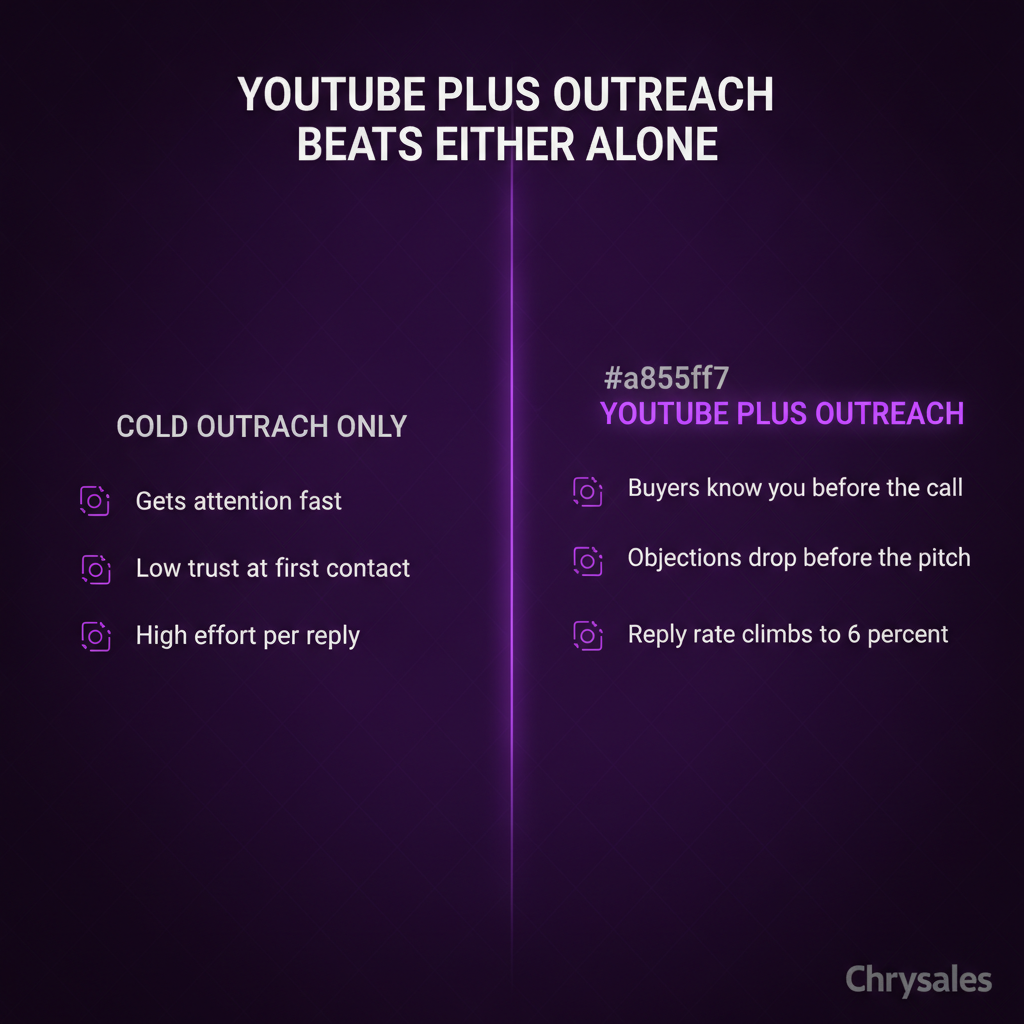
YouTube isn't a replacement for outreach or sales calls. It's the thing that makes both of those work better. Think of it like this: cold outreach gets someone's attention. YouTube gets their trust. A good sales call closes the deal. All three have to work together.
We see this all the time with clients who add video to their sales process. Reply rates go up because prospects recognize the name. Discovery calls get easier because the prospect already understands the problem. Objections drop because the video handled half of them before anyone picked up the phone.
Top of Funnel: Getting Found
YouTube works as lead generation when people search for answers and find your content. You're not chasing them. They're discovering you. That's the best kind of lead: someone who came looking.
A 25 person marketing agency made videos answering the five most common questions their clients asked during sales calls. Three months later, 30% of their inbound leads mentioned watching a video first. Those leads closed faster and asked fewer basic questions.
Middle of Funnel: Warming Cold Prospects
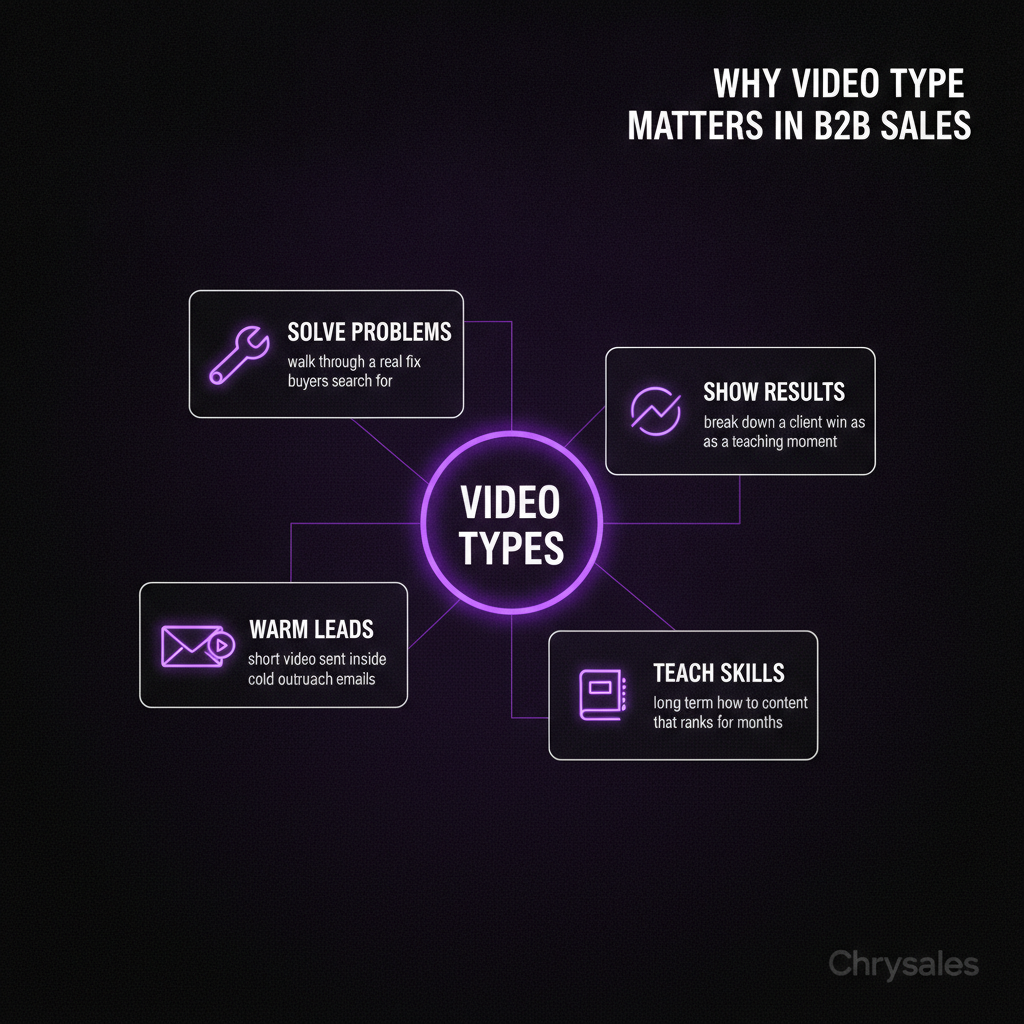
Here's where it gets interesting. You can send cold emails that link to a YouTube video instead of a landing page. The video answers their biggest objection or walks through a case study. If they watch it, they're warm. If they don't, they weren't going to reply anyway.
One client switched from "book a call" emails to "watch this 4 minute breakdown" emails. Reply rate jumped from 2% to 6%. The people who watched the video and then replied were already halfway sold, which is why having a YouTube warm-up strategy for B2B sales can transform your outreach effectiveness.
Watch out: Don't make the video a pitch. Make it useful. If someone clicks and it's just a sales pitch, they'll bounce and never trust your emails again.
What Kind of Videos Actually Work for B2B Lead Generation
Not every video is worth making. Some get views but don't move deals forward. Others might get 200 views but generate three high quality leads. The goal isn't going viral. It's attracting the right people and making them think, "This person gets it."
Problem-Solution Walkthroughs
Pick a problem your target audience has right now. Explain why it happens and how to fix it. Keep it under 10 minutes. Use screen recordings, simple slides, or just talk to the camera.
Example topics that work:
- How to score leads so your sales team calls the right people first
- The exact discovery questions we use to qualify $50k deals
- Why your cold emails aren't getting replies (and how to fix it in 20 minutes)
- How to build a sales call structure that handles objections before they come up
These videos do two things: they help someone solve a real problem, and they show you know what you're talking about. That's the whole game.
Case Study and Results Breakdowns
Walk through a real result you got for a client. Don't make it a commercial. Make it a teaching moment. "Here's what the client was struggling with, here's what we changed, here's what happened."
A 15 person tech consulting firm made a video breaking down how they took a SaaS client from 8 demos a month to 32 in 90 days. The video got 400 views. Four people who watched it booked calls. Two became clients. That's better ROI than most paid ads, and video case studies in B2B marketing provide strategic value that compounds over time.
Common mistake: Making the case study about you instead of the result. The client and the outcome are the stars. You're just the guide.
How-To and Training Content
If you teach people how to do something, even if they never hire you, some of them will come back later when they need help doing it at scale. These videos are long tail assets. They keep working for months.
Topics like "how to write a cold email that gets 5% reply rates" or "how to train a new salesperson in 30 days" get search traffic for years. Every month, a few people find the video, watch it, subscribe, and some of them eventually reach out.
Setting Up Your YouTube Channel for B2B Sales
A lot of people overthink this. You don't need a studio or a videographer. You need a decent microphone, clean lighting, and something useful to say. The tech matters less than the content.
Channel Basics That Matter
Your channel name should make it obvious what you do. If someone lands on your channel, they should know in five seconds whether it's for them.
The about section is where you explain who the channel is for and what they'll learn. One paragraph is enough. Add a link to book a call or download a resource. That's your call to action.
Playlists help organize content by topic. If someone watches one video on cold outreach, YouTube will suggest the next video in that playlist. That's how you turn a one time viewer into someone who binges three videos and then books a call.
Thumbnails and Titles for B2B Content
Thumbnails don't need to be flashy. They need to be clear. Use a simple image, bold text, and high contrast. The text should say what the video is about in four words or less: "Sales Call Structure," "Lead Scoring System," "Hiring Closers Fast."
Titles should match what people search. "How to [solve specific problem]" or "[Result] in [timeframe]" work well. Avoid clever titles that don't say what the video is about. SEO beats creativity here.
Pro Tip: YouTube auto generates a transcript. Edit it so it's accurate. Google indexes those words, which helps your video show up in search.
Using YouTube to Support Cold Outreach and Client Acquisition
Cold emails work better when the recipient has seen your face before. Even if they don't remember your name, the recognition helps. "Oh, I think I saw a video from this person." That's enough to get the email opened.
Link to Videos in Your Outreach
Instead of asking for a meeting in the first email, send a video that solves a problem they probably have. The email is short: "Saw you're hiring sales reps. Made a quick video on how to avoid the three biggest hiring mistakes. Thought it might help."
If they watch the video, you can follow up. If they don't, they weren't going to take the meeting anyway. The video is a filter that saves you time.
Video as a Follow Up Tool
When a prospect goes cold after a discovery call, send a video. Record a quick Loom or YouTube unlisted video walking through a custom idea for their situation. "Hey [name], recorded a quick walkthrough of what a lead gen system could look like for your team."
It's personal, it's helpful, and it's harder to ignore than another "just checking in" email. We've seen this re engage deals that were dead for weeks.
How to Measure if YouTube is Actually Working
Views are a vanity metric. What matters is whether people who watch your videos turn into leads and clients. Track that, and you'll know if it's worth the time.
Metrics That Matter
Watch time and average view duration tell you if people are sticking around. If 80% of viewers drop off in the first 30 seconds, your hook is weak or the topic isn't what they thought it would be.
Click through rate (CTR) on your thumbnail and title shows whether people are interested enough to click. For small B2B channels, 3 6% CTR is solid. Below 2%, rewrite the title or change the thumbnail.
Subscribers are nice but not the main goal. You want viewers who take action, not just a big subscriber count.
Connecting YouTube to Deals
Add UTM links to any resources you mention in videos. If someone clicks through and books a call, you know YouTube sent them.
Ask every lead on a discovery call: "How did you hear about us?" If they say YouTube, note which video. After a few months, you'll see patterns. Some videos generate way more leads than others. Make more videos like those.
A tech services company tracked this for six months. They found that 18% of their closed deals started with a YouTube video. That video content became a core part of their sales system, not just a side project, and learning how to track content impact on your sales funnel helps you make data-driven decisions about which videos to produce next.
Building a Repeatable Content System Around YouTube
Making one video is easy. Making 20 or 50 videos over a year is a system. Most people start strong and quit after video three because it feels like too much work. The fix is to build a simple repeatable process.
Pick a Posting Rhythm You Can Actually Keep
One video a week is great if you can do it. One video every two weeks is fine too. One video a month is the bare minimum to build momentum.
Pick the pace that fits your schedule and commit to it for six months. Consistency beats volume. Posting one video a week for 26 weeks will outperform posting five videos in month one and then nothing for five months.
Batch Your Recording
Record three or four videos in one sitting. Same setup, same energy, different topics. Batch recording saves time and makes it easier to stay consistent.
Pick four common questions your prospects ask. Answer each one in a separate video. That's a month of content from one afternoon of recording.
Watch out: Don't batch record ten videos. You'll burn out, and the last few will feel forced. Three to four at a time is the sweet spot.
Repurpose the Content
Every YouTube video can become:
- A blog post (transcript cleaned up and reformatted)
- Three LinkedIn posts (pull key points)
- Email content for your list
- A resource to send in cold outreach
One video becomes five pieces of content. That's how small teams can show up everywhere without hiring a content team, and you can even learn how to build a sales system that attracts inbound clients from content like YouTube to create predictable revenue from your efforts.
Frequently Asked Questions
Q: Do I need expensive video equipment to make B2B YouTube content work?
No. A $50 USB microphone, your phone camera or webcam, and natural light from a window are enough. People care about audio quality more than video quality. If they can hear you clearly and the video isn't blurry, you're fine. Most successful B2B YouTube channels use simple setups. What matters is whether the content is useful, not whether it looks like a TV production.
Q: How long should B2B videos be to keep people watching?
Most B2B videos should be between 5 and 12 minutes. That's long enough to go deep on a topic but short enough that busy people will finish it. If you're doing a detailed walkthrough or case study, 15 to 20 minutes is fine. Anything over 20 minutes needs to be really valuable or people will drop off. Check your YouTube analytics. If average view duration is under 40%, the video is probably too long or the hook is weak.
Q: Can YouTube replace cold outreach for lead generation?
Not completely, but it makes outreach way more effective. YouTube pulls in inbound leads from search, but that's usually not enough volume to hit big growth targets. The best setup is using YouTube to warm cold prospects before and after you reach out. Send a video in your outreach sequence, or use your channel to build credibility so when people get your email, they recognize your name. YouTube and outreach work better together than either one alone.
Q: How do I get my first 100 views on a B2B YouTube video when I have no subscribers?
Focus on search traffic, not subscribers. Pick a specific problem your audience searches for, use that exact phrase in your title, and make a video that answers it clearly. YouTube will show your video to people searching for that topic, even if you have zero subscribers. Share the video in LinkedIn posts, email it to your list, and link to it in outreach. Your first 100 views come from being useful and putting the video in front of the right people, not from going viral, and understanding YouTube marketing statistics for B2B helps set realistic expectations for growth timelines.
Q: How long does it take to see real results from YouTube in a B2B sales process?
Most people see the first inbound lead from YouTube within 60 to 90 days if they post consistently. Real momentum usually takes six months. That's about 12 to 24 videos if you're posting weekly or biweekly. The early videos build your library and train the algorithm. The later videos benefit from the ones you made before. If you're using YouTube to support cold outreach, you'll see results faster because you're actively sending people to watch. Either way, this is a long game, not a quick win.
YouTube for B2B is using video to reach buyers who research problems, compare options, and build trust before they talk to sales. Here's the thing nobody tells you about B2B sales: the person who signs the contract probably watched three of your competitors' YouTube videos before they ever opened your cold email.
YouTube isn't just a place for product reviews and how to tutorials anymore. It's where smart buyers do research before they talk to a single salesperson. If you're not showing up there, you're invisible during the part of the sales process that matters most.
The question isn't whether YouTube for B2B works. It's whether you're using it to shorten your sales cycle and win deals before the first call even happens.
Why B2B Buyers Are on YouTube (And What They're Looking For)
Most people think YouTube is for cats and makeup tutorials. The truth is simpler: YouTube is the second largest search engine in the world, and B2B buyers use it the same way they use Google. They have a problem, they search for answers, and they want someone to explain the solution in plain language.
Picture this: a 40 person consulting firm needs a better way to qualify leads. The head of sales isn't going to book five discovery calls with random vendors. They're going to Google "how to qualify B2B leads," find a YouTube video that breaks it down, and watch three more from the same channel. If your video is one of those three, you just became the trusted expert before they ever filled out a contact form.
What B2B Buyers Actually Search For
The searches aren't "buy sales software" or "hire sales coach." They're specific, problem focused questions:
- How to build a sales pipeline from scratch
- Best way to handle pricing objections on a sales call
- How to hire a closer without getting burned
- Cold email templates that actually get replies
- Sales automation tools that don't require a developer
If you make a video answering one of those questions, you're not interrupting their day. You're showing up exactly when they need help. That's the difference between cold outreach and content that pulls people toward you.
Video Beats Text for Trust
Reading a blog post is fine. Watching someone explain the same idea on video is better. You hear their voice. You see how they think. You get a sense of whether they actually know what they're talking about or if they're just repeating buzzwords.
A video does in three minutes what a cold email can't do in three weeks: it builds trust. When someone watches your YouTube content before a sales call, the call starts differently. They already believe you know your stuff. You're not proving credibility from zero. You're just confirming what they already think.
Pro Tip: If a prospect mentions they saw your video before the call, that's a buying signal. They did homework. They're serious.
How YouTube Fits Into a B2B Sales System
YouTube isn't a replacement for outreach or sales calls. It's the thing that makes both of those work better. Think of it like this: cold outreach gets someone's attention. YouTube gets their trust. A good sales call closes the deal. All three have to work together.
We see this all the time with clients who add video to their sales process. Reply rates go up because prospects recognize the name. Discovery calls get easier because the prospect already understands the problem. Objections drop because the video handled half of them before anyone picked up the phone.
Top of Funnel: Getting Found
YouTube works as lead generation when people search for answers and find your content. You're not chasing them. They're discovering you. That's the best kind of lead: someone who came looking.
A 25 person marketing agency made videos answering the five most common questions their clients asked during sales calls. Three months later, 30% of their inbound leads mentioned watching a video first. Those leads closed faster and asked fewer basic questions.
Middle of Funnel: Warming Cold Prospects
Here's where it gets interesting. You can send cold emails that link to a YouTube video instead of a landing page. The video answers their biggest objection or walks through a case study. If they watch it, they're warm. If they don't, they weren't going to reply anyway.
One client switched from "book a call" emails to "watch this 4 minute breakdown" emails. Reply rate jumped from 2% to 6%. The people who watched the video and then replied were already halfway sold, which is why having a YouTube warm-up strategy for B2B sales can transform your outreach effectiveness.
Watch out: Don't make the video a pitch. Make it useful. If someone clicks and it's just a sales pitch, they'll bounce and never trust your emails again.
What Kind of Videos Actually Work for B2B Lead Generation
Not every video is worth making. Some get views but don't move deals forward. Others might get 200 views but generate three high quality leads. The goal isn't going viral. It's attracting the right people and making them think, "This person gets it."
Problem-Solution Walkthroughs
Pick a problem your target audience has right now. Explain why it happens and how to fix it. Keep it under 10 minutes. Use screen recordings, simple slides, or just talk to the camera.
Example topics that work:
- How to score leads so your sales team calls the right people first
- The exact discovery questions we use to qualify $50k deals
- Why your cold emails aren't getting replies (and how to fix it in 20 minutes)
- How to build a sales call structure that handles objections before they come up
These videos do two things: they help someone solve a real problem, and they show you know what you're talking about. That's the whole game.
Case Study and Results Breakdowns
Walk through a real result you got for a client. Don't make it a commercial. Make it a teaching moment. "Here's what the client was struggling with, here's what we changed, here's what happened."
A 15 person tech consulting firm made a video breaking down how they took a SaaS client from 8 demos a month to 32 in 90 days. The video got 400 views. Four people who watched it booked calls. Two became clients. That's better ROI than most paid ads, and video case studies in B2B marketing provide strategic value that compounds over time.
Common mistake: Making the case study about you instead of the result. The client and the outcome are the stars. You're just the guide.
How-To and Training Content
If you teach people how to do something, even if they never hire you, some of them will come back later when they need help doing it at scale. These videos are long tail assets. They keep working for months.
Topics like "how to write a cold email that gets 5% reply rates" or "how to train a new salesperson in 30 days" get search traffic for years. Every month, a few people find the video, watch it, subscribe, and some of them eventually reach out.
Setting Up Your YouTube Channel for B2B Sales
A lot of people overthink this. You don't need a studio or a videographer. You need a decent microphone, clean lighting, and something useful to say. The tech matters less than the content.
Channel Basics That Matter
Your channel name should make it obvious what you do. If someone lands on your channel, they should know in five seconds whether it's for them.
The about section is where you explain who the channel is for and what they'll learn. One paragraph is enough. Add a link to book a call or download a resource. That's your call to action.
Playlists help organize content by topic. If someone watches one video on cold outreach, YouTube will suggest the next video in that playlist. That's how you turn a one time viewer into someone who binges three videos and then books a call.
Thumbnails and Titles for B2B Content
Thumbnails don't need to be flashy. They need to be clear. Use a simple image, bold text, and high contrast. The text should say what the video is about in four words or less: "Sales Call Structure," "Lead Scoring System," "Hiring Closers Fast."
Titles should match what people search. "How to [solve specific problem]" or "[Result] in [timeframe]" work well. Avoid clever titles that don't say what the video is about. SEO beats creativity here.
Pro Tip: YouTube auto generates a transcript. Edit it so it's accurate. Google indexes those words, which helps your video show up in search.
Using YouTube to Support Cold Outreach and Client Acquisition
Cold emails work better when the recipient has seen your face before. Even if they don't remember your name, the recognition helps. "Oh, I think I saw a video from this person." That's enough to get the email opened.
Link to Videos in Your Outreach
Instead of asking for a meeting in the first email, send a video that solves a problem they probably have. The email is short: "Saw you're hiring sales reps. Made a quick video on how to avoid the three biggest hiring mistakes. Thought it might help."
If they watch the video, you can follow up. If they don't, they weren't going to take the meeting anyway. The video is a filter that saves you time.
Video as a Follow Up Tool
When a prospect goes cold after a discovery call, send a video. Record a quick Loom or YouTube unlisted video walking through a custom idea for their situation. "Hey [name], recorded a quick walkthrough of what a lead gen system could look like for your team."
It's personal, it's helpful, and it's harder to ignore than another "just checking in" email. We've seen this re engage deals that were dead for weeks.
How to Measure if YouTube is Actually Working
Views are a vanity metric. What matters is whether people who watch your videos turn into leads and clients. Track that, and you'll know if it's worth the time.
Metrics That Matter
Watch time and average view duration tell you if people are sticking around. If 80% of viewers drop off in the first 30 seconds, your hook is weak or the topic isn't what they thought it would be.
Click through rate (CTR) on your thumbnail and title shows whether people are interested enough to click. For small B2B channels, 3 6% CTR is solid. Below 2%, rewrite the title or change the thumbnail.
Subscribers are nice but not the main goal. You want viewers who take action, not just a big subscriber count.
Connecting YouTube to Deals
Add UTM links to any resources you mention in videos. If someone clicks through and books a call, you know YouTube sent them.
Ask every lead on a discovery call: "How did you hear about us?" If they say YouTube, note which video. After a few months, you'll see patterns. Some videos generate way more leads than others. Make more videos like those.
A tech services company tracked this for six months. They found that 18% of their closed deals started with a YouTube video. That video content became a core part of their sales system, not just a side project, and learning how to track content impact on your sales funnel helps you make data-driven decisions about which videos to produce next.
Building a Repeatable Content System Around YouTube
Making one video is easy. Making 20 or 50 videos over a year is a system. Most people start strong and quit after video three because it feels like too much work. The fix is to build a simple repeatable process.
Pick a Posting Rhythm You Can Actually Keep
One video a week is great if you can do it. One video every two weeks is fine too. One video a month is the bare minimum to build momentum.
Pick the pace that fits your schedule and commit to it for six months. Consistency beats volume. Posting one video a week for 26 weeks will outperform posting five videos in month one and then nothing for five months.
Batch Your Recording
Record three or four videos in one sitting. Same setup, same energy, different topics. Batch recording saves time and makes it easier to stay consistent.
Pick four common questions your prospects ask. Answer each one in a separate video. That's a month of content from one afternoon of recording.
Watch out: Don't batch record ten videos. You'll burn out, and the last few will feel forced. Three to four at a time is the sweet spot.
Repurpose the Content
Every YouTube video can become:
- A blog post (transcript cleaned up and reformatted)
- Three LinkedIn posts (pull key points)
- Email content for your list
- A resource to send in cold outreach
One video becomes five pieces of content. That's how small teams can show up everywhere without hiring a content team, and you can even learn how to build a sales system that attracts inbound clients from content like YouTube to create predictable revenue from your efforts.
Frequently Asked Questions
Q: Do I need expensive video equipment to make B2B YouTube content work?
No. A $50 USB microphone, your phone camera or webcam, and natural light from a window are enough. People care about audio quality more than video quality. If they can hear you clearly and the video isn't blurry, you're fine. Most successful B2B YouTube channels use simple setups. What matters is whether the content is useful, not whether it looks like a TV production.
Q: How long should B2B videos be to keep people watching?
Most B2B videos should be between 5 and 12 minutes. That's long enough to go deep on a topic but short enough that busy people will finish it. If you're doing a detailed walkthrough or case study, 15 to 20 minutes is fine. Anything over 20 minutes needs to be really valuable or people will drop off. Check your YouTube analytics. If average view duration is under 40%, the video is probably too long or the hook is weak.
Q: Can YouTube replace cold outreach for lead generation?
Not completely, but it makes outreach way more effective. YouTube pulls in inbound leads from search, but that's usually not enough volume to hit big growth targets. The best setup is using YouTube to warm cold prospects before and after you reach out. Send a video in your outreach sequence, or use your channel to build credibility so when people get your email, they recognize your name. YouTube and outreach work better together than either one alone.
Q: How do I get my first 100 views on a B2B YouTube video when I have no subscribers?
Focus on search traffic, not subscribers. Pick a specific problem your audience searches for, use that exact phrase in your title, and make a video that answers it clearly. YouTube will show your video to people searching for that topic, even if you have zero subscribers. Share the video in LinkedIn posts, email it to your list, and link to it in outreach. Your first 100 views come from being useful and putting the video in front of the right people, not from going viral, and understanding YouTube marketing statistics for B2B helps set realistic expectations for growth timelines.
Q: How long does it take to see real results from YouTube in a B2B sales process?
Most people see the first inbound lead from YouTube within 60 to 90 days if they post consistently. Real momentum usually takes six months. That's about 12 to 24 videos if you're posting weekly or biweekly. The early videos build your library and train the algorithm. The later videos benefit from the ones you made before. If you're using YouTube to support cold outreach, you'll see results faster because you're actively sending people to watch. Either way, this is a long game, not a quick win.
Scaling Is Not Hard If You Have The Right Systems
If you’re serious about leveling up your scaling game, you need the right system, the right training, and the right team behind you. We're here to give you the exact tools and strategies top entrepreneurs use to dominate.

Discover the latest tips
View All.avif)
Chrysales was formed from the words "chrysalis" the stage where a caterpillar transforms into a butterfly and "sales".
It stands for one thing: sales transformation.Because scaling doesn’t happen by doing more of the same. Scaling only happens when you go through real transformation in your systems, your offer, team and the way you sell.
.avif)


