.avif)
Youtube Content Ideas for B2B That Shorten Sales Cycles
YouTube content ideas for B2B are video topics that help buyers learn, trust, and take action before a sales call. They support lead generation, b2b sales, and client acquisition by answering real questions.
Most B2B companies treat YouTube like a branding experiment. They post a few generic company videos, get 47 views, and call it a day. But here's the thing: YouTube is one of the most powerful lead generation tools you're probably ignoring.
When you create the right kind of content, people watch your videos before they ever get on a sales call with you. That shortens your sales cycle, warms up cold leads, and builds trust before you even send that first message.
The difference between YouTube content that wastes time and content that books meetings comes down to what you actually make.
Why YouTube Works for B2B Sales (Better Than You Think)
Most people assume YouTube is for influencers and product reviews. The truth is your potential clients are already there, searching for answers to problems you solve.
Think about what happens when someone needs to buy software, hire a consultant, or figure out a sales problem. They don't just read blog posts anymore. They search YouTube for walkthroughs, comparisons, and expert breakdowns.
A 10 minute video explaining exactly how to fix a specific issue builds more trust than 10 cold emails ever could.
YouTube Content Creates Pre-Qualified Leads
When someone watches your 15 minute video on building a sales pipeline, then visits your website and fills out a contact form, that's not a cold lead. That's someone who already knows what you do, trusts you can help, and wants to talk specifics.
We've seen this with clients who put out educational video content consistently. A tech company posted 8 videos over two months on sales automation mistakes. Three of those videos led directly to booked calls from people who mentioned the videos in their inquiry. No ads. No cold outreach. Just good content doing the heavy lifting.
Pro Tip: Track which videos get watched before someone books a call. That tells you exactly what topics are warming up your best leads.
The Compounding Effect of Video Content
A blog post gets most of its traffic in the first few weeks. A YouTube video keeps working for months, even years. As long as people search for the problem you're solving, they find your video.
That means the 12 videos you publish this quarter could still be generating sales calls two years from now. Most B2B content marketing examples don't show you this part because they focus on vanity metrics like views and likes.
The real metric is how many leads turned into closed deals.
The Best YouTube Content Ideas for B2B Lead Generation
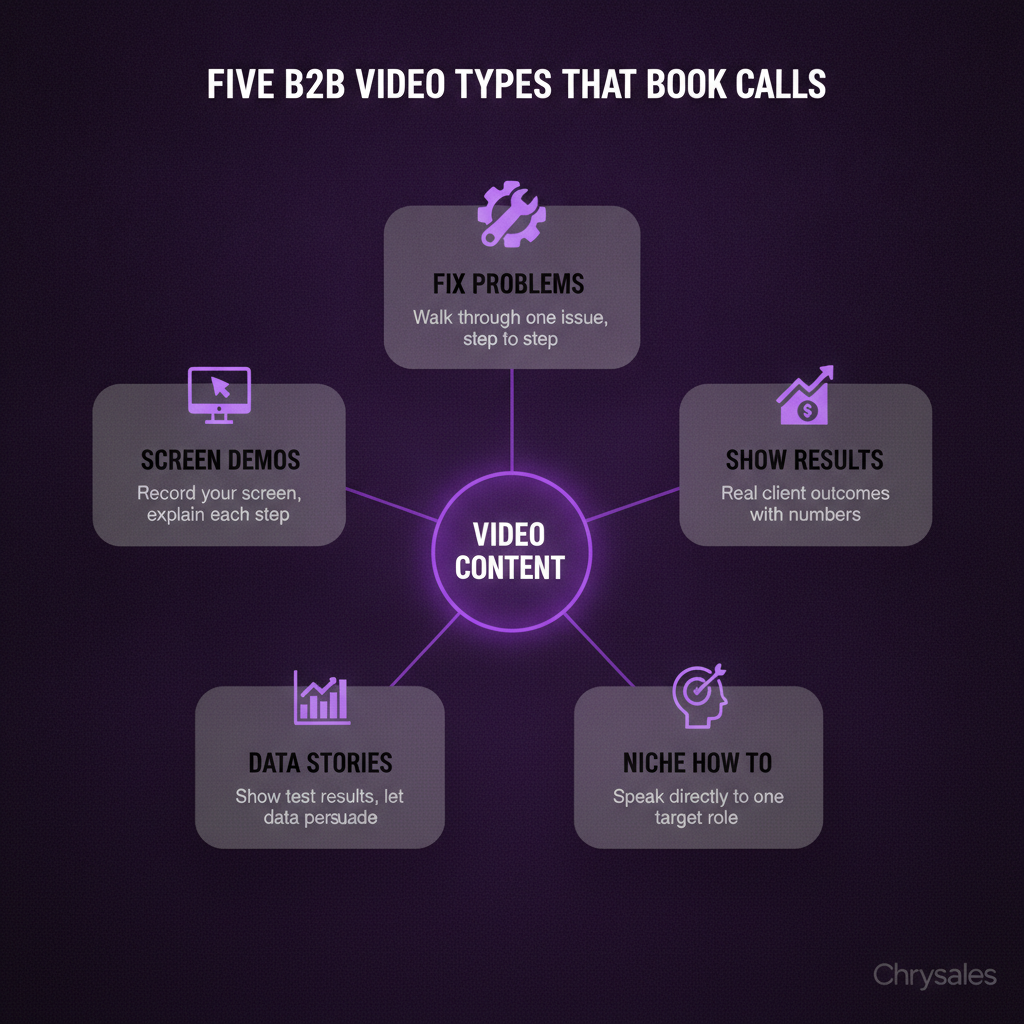
Not all video ideas work for B2B. Some get views but don't move the needle on client acquisition. Here are the types that actually drive results.
Problem-Solution Walkthroughs
Pick a specific problem your ideal client deals with. Show exactly how to solve it. Step by step. No fluff.
A 12 minute screen recording where you walk through how to clean a CRM contact list, score leads, or write a better cold email performs better than a polished brand video with motion graphics and music.
Picture this: someone at a 20 person marketing agency is struggling with low email reply rates. They search "how to improve cold email replies" and find your video. You show them three common mistakes and how to fix each one. They watch the whole thing. They check out two more of your videos. Then they book a call because you already proved you know what you're doing.
Case Study Breakdowns
People trust results more than promises. Walk through a real client outcome, step by step.
A good case study video doesn't need fancy production. You can do a slideshow with your voice over the top. Show the problem the client had, what you built for them, and the actual results. Include real numbers where possible.
One consulting firm made a 9 minute case study video about helping a software company close 18 deals in 90 days. That video brought in 6 inbound inquiries in the first month. No ads. Just the video ranking for "B2B sales case study" and related searches.
Common mistake: Making case study videos too vague. "We helped a client grow" doesn't hit the same as "We built a cold outreach system that booked 32 qualified calls in 60 days for a Series A SaaS company."
Industry-Specific How-To Content
The more specific your video, the better it performs for B2B video marketing strategy. Generic advice gets ignored. Hyper-specific walkthroughs get shared.
Instead of "How to generate leads," try "How consulting firms can generate enterprise leads using LinkedIn automation and email sequences." That targets exactly who you want watching.
A 15 person consulting firm that works with hospitals could make a video called "How to book meetings with hospital procurement teams without getting ignored." That video speaks directly to their ideal client profile and positions them as the expert in that exact niche.
No-Face Video Ideas for B2B
You don't need to be on camera to make great YouTube content. Screen recordings, slideshow presentations, and voiceover explainers work just as well.
Some of the best performing B2B thought leadership videos are just someone talking over slides or walking through a spreadsheet. A tutorial showing how to build a lead scoring model in a Google Sheet, with your voice explaining each step, is more useful than a talking head video with no substance.
Watch out: Don't hide behind no-face videos because you're scared. Use them when they make the content clearer. A screen recording tutorial teaches better than a webcam shot of you talking about the same thing.
Data-Driven Explainers
Show real data, break it down, and explain what it means for your audience. A video that walks through "What 500 B2B cold emails taught us about subject lines" gives people something concrete.
You show the open rates, the reply rates, the patterns you noticed, and what changed when you fixed the mistakes. This works because most B2B sales content is opinion based. Data cuts through the noise.
You're not just saying "personalize your emails." You're showing that personalized subject lines got 3x more replies in your test of 200 emails, which aligns with findings from recent B2B marketing statistics research.
How to Plan a B2B YouTube Content Strategy That Actually Gets Views
Posting random videos whenever you feel like it won't build momentum. You need a simple content plan that targets real search terms and matches what your audience is already looking for.
Start With Search Intent, Not Trends
Check what people search for related to your service. Use YouTube's search bar and see what auto completes. Those are real searches happening right now.
If you help with sales training, type "sales training for" and see what fills in. You might see "sales training for small teams," "sales training for SaaS," or "sales training for beginners." Each one is a video idea that matches what someone is actively looking for.
Most B2B YouTube channel growth happens from search traffic, not the algorithm pushing your videos to random people. Focus on answering the exact questions your ideal clients type into the search bar.
Build Content Pillars Around Your Services
Pick 3 to 5 core topics that connect to what you sell. Make multiple videos on each topic.
If you offer lead generation, closing deals, and sales hiring, those are your three pillars. Under lead generation, you could make 10 videos on list building, cold email, LinkedIn outreach, lead scoring, and CRM setup.
Under closing deals, you make videos on discovery calls, objection handling, pricing conversations, and closing scripts.
This does two things. First, it makes you look like the go to expert in those areas. Second, when someone watches one video, YouTube suggests your other videos on the same topic. That keeps them in your content ecosystem longer.
Pro Tip: Every video should connect back to a service you offer, even if you never pitch in the video itself. The content proves you know how to solve the problem. The call to action at the end is just "if you want help with this, book a call."
Optimize Titles and Descriptions for SEO
Your video title needs to include the exact phrase people search for. "How to generate B2B leads using cold email" is better than "Lead generation tips."
In the description, include the primary keyword in the first two sentences. Add a few related terms naturally. Link to a relevant landing page or contact form. YouTube's algorithm reads your description to understand what the video is about, so make it clear.
Most people skip this part and wonder why their videos don't rank. You're competing with thousands of other videos. Clear, keyword focused titles and descriptions give you a shot at showing up in search results, and you can learn more about optimizing YouTube titles and descriptions for better performance.
Using YouTube Content to Shorten Your Sales Cycle
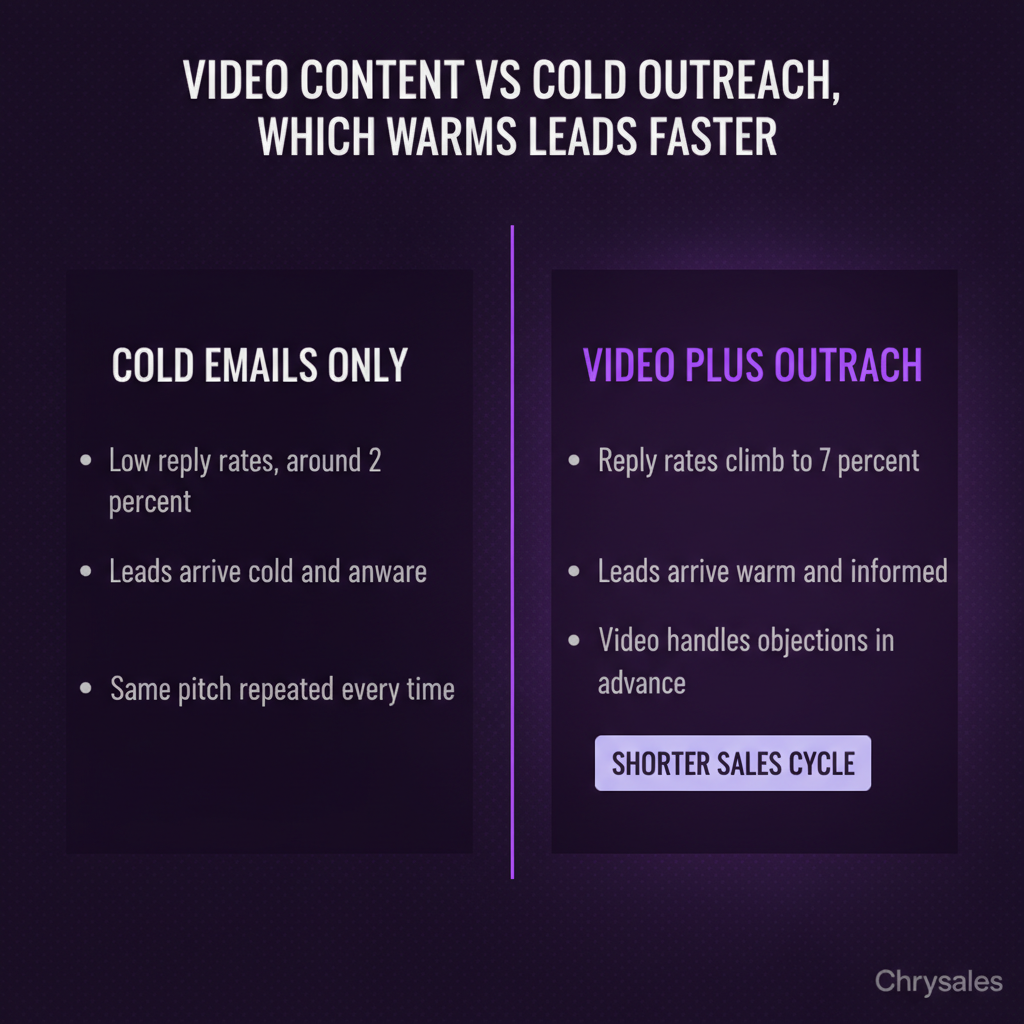
Here's where most B2B companies miss the opportunity. They make videos, get views, and stop there. The real power is connecting your video content back to your sales process.
Video Content as a Sales Enablement Tool
When a lead books a call, check if they watched any of your videos first. If they did, you already know what problems they care about.
A lead who watched your video on hiring salespeople is probably thinking about scaling their team. You don't need to spend 20 minutes on discovery. You can jump straight into how you help with that exact problem.
One agency we worked with started sending video links in their cold outreach. Instead of a wall of text, they'd say "Saw you're hiring sales reps. Made a quick video on the 3 biggest mistakes teams make when hiring closers. Thought it might help." Then link to a 6 minute YouTube video.
Their reply rate jumped from 2% to 7% in one month. This approach is a core part of using YouTube as a warm-up strategy for B2B sales.
Build a Library That Handles Objections
Record videos that answer every common objection you hear on sales calls. When a prospect says "we're not sure this will work for our industry," send them a 4 minute video of a case study in their exact industry.
This removes friction from your sales process. You're not typing out the same explanation for the fifth time this week. You're sending a video that does it better, with examples and proof.
Common mistake: Treating YouTube as a top of funnel only channel. Video content can close deals, not just generate awareness. Use it throughout your entire sales process.
Track Which Videos Lead to Revenue
Set up tracking so you know which videos are actually driving client acquisition. Use UTM links in your video descriptions. Ask new clients how they found you. Check your CRM to see which content people consumed before booking.
Most companies guess at what content works. The ones who track it know exactly which 5 videos are responsible for 80% of their inbound leads. Then they make more videos like those.
Understanding the full impact of YouTube for B2B lead generation requires measuring these metrics consistently.
What Great B2B Video Content Actually Looks Like
Good B2B video isn't about production quality. It's about clarity, usefulness, and specificity.
A shaky screen recording with clear audio and a helpful walkthrough beats a professionally shot video that says nothing useful. Your audience wants answers, not cinematography.
Keep It Focused and Actionable
Each video should teach one thing well. Don't try to cover "everything about sales" in 20 minutes. Cover "how to write a cold email subject line that gets opened" in 8 minutes.
The more focused the video, the easier it is to watch, remember, and share. A lead generation video that walks through exactly how to pull a list of decision makers from LinkedIn, step by step, is way more valuable than a general video on "modern lead generation tactics."
Show, Don't Just Tell
Walk people through the process on screen. Show the tool you're using. Show the email you wrote. Show the CRM dashboard. Show the spreadsheet.
Talking head videos where you just explain concepts work sometimes, but videos where you actually show how to do the thing perform better for B2B sales content strategy. People want to see the "how," not just hear about it.
Pro Tip: Record your screen while you do the thing you're teaching. Then add your voiceover explaining each step. This takes less time than scripting a talking head video and gives people something concrete to follow.
Add Clear Next Steps
Every video should end with one simple action. Visit this page. Download this template. Book a call. Don't give people five options. Give them one.
Most videos end with a vague "let me know what you think in the comments." That's fine for engagement, but it doesn't move people toward becoming clients.
A clear call to action like "if you want help building this exact system for your team, link to book a call is in the description" works better. If you're looking to find clients who need your services right now, watch this breakdown of four proven methods.
Chrysales' Approach to Using Video in Sales Systems
At Chrysales, we build complete sales systems that include video content as part of the client acquisition process. It's not about making viral videos. It's about creating content that pre qualifies leads, answers objections, and shortens the time from first contact to closed deal.
We've trained over 500 sales teams and helped generate over €10M in client revenue. A big part of that comes from showing clients how to build content that works as a sales asset, not just a marketing experiment.
When you combine strong educational video content with a solid outbound system, automation, and proper follow up, you build a sales process that compounds over time. The videos keep working. The leads keep coming in. The sales cycle keeps getting shorter.
If you're serious about using YouTube content to drive real B2B lead generation and close more deals, the content has to tie directly into your sales process. It's not a separate marketing channel. It's part of how you sell.
To see how this works in practice, you can learn how to build a sales system that attracts clients to you through strategic content and process design.
Frequently Asked Questions
Q: How often should I post YouTube videos for B2B lead generation?
Consistency matters more than frequency. One high quality video per week is better than four rushed videos. The key is picking a schedule you can maintain for at least six months. Most B2B YouTube channel growth happens after you've published 15 to 20 solid videos, so think long term. If you can only do two videos a month, do those well and stick with it.
Q: Do I need expensive equipment to create B2B video content?
No. Most successful B2B videos use a decent microphone and simple screen recording software. Your phone camera works fine for talking head shots if you have good lighting. People care way more about whether your content helps them solve a problem than whether it's shot in 4K. Focus on clear audio and useful content first. Upgrade equipment later if it makes sense.
Q: How long should my B2B YouTube videos be?
As long as they need to be to fully answer the question or solve the problem. Some topics need 5 minutes. Others need 20. Most B2B video marketing strategy content performs well in the 8 to 15 minute range because that's enough time to go deep without losing attention. Don't artificially stretch or cut content to hit a specific length. Just teach the thing completely.
Q: What if my competitors are already making YouTube content on the same topics?
Good. That means there's an audience for it. Your job is to make your version more specific, more useful, or more tailored to a particular niche. Instead of "how to do cold outreach," make "how consulting firms can do cold outreach to enterprise clients without getting blocked." The more specific you get, the less competition matters. You're not trying to out produce everyone. You're trying to be the best answer for your specific audience.
Q: How do I measure if my YouTube content is actually driving sales?
Track three things: which videos people watch before booking a call, which videos get mentioned in sales conversations, and which video topics correlate with closed deals. Use UTM links in your descriptions so you can see traffic sources in your analytics. Ask new clients how they found you during onboarding. Most CRMs let you tag leads with a source. If you're not tracking this, you're guessing. Start simple with a spreadsheet if you need to, but measure it.
YouTube content ideas for B2B are video topics that help buyers learn, trust, and take action before a sales call. They support lead generation, b2b sales, and client acquisition by answering real questions.
Most B2B companies treat YouTube like a branding experiment. They post a few generic company videos, get 47 views, and call it a day. But here's the thing: YouTube is one of the most powerful lead generation tools you're probably ignoring.
When you create the right kind of content, people watch your videos before they ever get on a sales call with you. That shortens your sales cycle, warms up cold leads, and builds trust before you even send that first message.
The difference between YouTube content that wastes time and content that books meetings comes down to what you actually make.
Why YouTube Works for B2B Sales (Better Than You Think)
Most people assume YouTube is for influencers and product reviews. The truth is your potential clients are already there, searching for answers to problems you solve.
Think about what happens when someone needs to buy software, hire a consultant, or figure out a sales problem. They don't just read blog posts anymore. They search YouTube for walkthroughs, comparisons, and expert breakdowns.
A 10 minute video explaining exactly how to fix a specific issue builds more trust than 10 cold emails ever could.
YouTube Content Creates Pre-Qualified Leads
When someone watches your 15 minute video on building a sales pipeline, then visits your website and fills out a contact form, that's not a cold lead. That's someone who already knows what you do, trusts you can help, and wants to talk specifics.
We've seen this with clients who put out educational video content consistently. A tech company posted 8 videos over two months on sales automation mistakes. Three of those videos led directly to booked calls from people who mentioned the videos in their inquiry. No ads. No cold outreach. Just good content doing the heavy lifting.
Pro Tip: Track which videos get watched before someone books a call. That tells you exactly what topics are warming up your best leads.
The Compounding Effect of Video Content
A blog post gets most of its traffic in the first few weeks. A YouTube video keeps working for months, even years. As long as people search for the problem you're solving, they find your video.
That means the 12 videos you publish this quarter could still be generating sales calls two years from now. Most B2B content marketing examples don't show you this part because they focus on vanity metrics like views and likes.
The real metric is how many leads turned into closed deals.
The Best YouTube Content Ideas for B2B Lead Generation
Not all video ideas work for B2B. Some get views but don't move the needle on client acquisition. Here are the types that actually drive results.
Problem-Solution Walkthroughs
Pick a specific problem your ideal client deals with. Show exactly how to solve it. Step by step. No fluff.
A 12 minute screen recording where you walk through how to clean a CRM contact list, score leads, or write a better cold email performs better than a polished brand video with motion graphics and music.
Picture this: someone at a 20 person marketing agency is struggling with low email reply rates. They search "how to improve cold email replies" and find your video. You show them three common mistakes and how to fix each one. They watch the whole thing. They check out two more of your videos. Then they book a call because you already proved you know what you're doing.
Case Study Breakdowns
People trust results more than promises. Walk through a real client outcome, step by step.
A good case study video doesn't need fancy production. You can do a slideshow with your voice over the top. Show the problem the client had, what you built for them, and the actual results. Include real numbers where possible.
One consulting firm made a 9 minute case study video about helping a software company close 18 deals in 90 days. That video brought in 6 inbound inquiries in the first month. No ads. Just the video ranking for "B2B sales case study" and related searches.
Common mistake: Making case study videos too vague. "We helped a client grow" doesn't hit the same as "We built a cold outreach system that booked 32 qualified calls in 60 days for a Series A SaaS company."
Industry-Specific How-To Content
The more specific your video, the better it performs for B2B video marketing strategy. Generic advice gets ignored. Hyper-specific walkthroughs get shared.
Instead of "How to generate leads," try "How consulting firms can generate enterprise leads using LinkedIn automation and email sequences." That targets exactly who you want watching.
A 15 person consulting firm that works with hospitals could make a video called "How to book meetings with hospital procurement teams without getting ignored." That video speaks directly to their ideal client profile and positions them as the expert in that exact niche.
No-Face Video Ideas for B2B
You don't need to be on camera to make great YouTube content. Screen recordings, slideshow presentations, and voiceover explainers work just as well.
Some of the best performing B2B thought leadership videos are just someone talking over slides or walking through a spreadsheet. A tutorial showing how to build a lead scoring model in a Google Sheet, with your voice explaining each step, is more useful than a talking head video with no substance.
Watch out: Don't hide behind no-face videos because you're scared. Use them when they make the content clearer. A screen recording tutorial teaches better than a webcam shot of you talking about the same thing.
Data-Driven Explainers
Show real data, break it down, and explain what it means for your audience. A video that walks through "What 500 B2B cold emails taught us about subject lines" gives people something concrete.
You show the open rates, the reply rates, the patterns you noticed, and what changed when you fixed the mistakes. This works because most B2B sales content is opinion based. Data cuts through the noise.
You're not just saying "personalize your emails." You're showing that personalized subject lines got 3x more replies in your test of 200 emails, which aligns with findings from recent B2B marketing statistics research.
How to Plan a B2B YouTube Content Strategy That Actually Gets Views
Posting random videos whenever you feel like it won't build momentum. You need a simple content plan that targets real search terms and matches what your audience is already looking for.
Start With Search Intent, Not Trends
Check what people search for related to your service. Use YouTube's search bar and see what auto completes. Those are real searches happening right now.
If you help with sales training, type "sales training for" and see what fills in. You might see "sales training for small teams," "sales training for SaaS," or "sales training for beginners." Each one is a video idea that matches what someone is actively looking for.
Most B2B YouTube channel growth happens from search traffic, not the algorithm pushing your videos to random people. Focus on answering the exact questions your ideal clients type into the search bar.
Build Content Pillars Around Your Services
Pick 3 to 5 core topics that connect to what you sell. Make multiple videos on each topic.
If you offer lead generation, closing deals, and sales hiring, those are your three pillars. Under lead generation, you could make 10 videos on list building, cold email, LinkedIn outreach, lead scoring, and CRM setup.
Under closing deals, you make videos on discovery calls, objection handling, pricing conversations, and closing scripts.
This does two things. First, it makes you look like the go to expert in those areas. Second, when someone watches one video, YouTube suggests your other videos on the same topic. That keeps them in your content ecosystem longer.
Pro Tip: Every video should connect back to a service you offer, even if you never pitch in the video itself. The content proves you know how to solve the problem. The call to action at the end is just "if you want help with this, book a call."
Optimize Titles and Descriptions for SEO
Your video title needs to include the exact phrase people search for. "How to generate B2B leads using cold email" is better than "Lead generation tips."
In the description, include the primary keyword in the first two sentences. Add a few related terms naturally. Link to a relevant landing page or contact form. YouTube's algorithm reads your description to understand what the video is about, so make it clear.
Most people skip this part and wonder why their videos don't rank. You're competing with thousands of other videos. Clear, keyword focused titles and descriptions give you a shot at showing up in search results, and you can learn more about optimizing YouTube titles and descriptions for better performance.
Using YouTube Content to Shorten Your Sales Cycle
Here's where most B2B companies miss the opportunity. They make videos, get views, and stop there. The real power is connecting your video content back to your sales process.
Video Content as a Sales Enablement Tool
When a lead books a call, check if they watched any of your videos first. If they did, you already know what problems they care about.
A lead who watched your video on hiring salespeople is probably thinking about scaling their team. You don't need to spend 20 minutes on discovery. You can jump straight into how you help with that exact problem.
One agency we worked with started sending video links in their cold outreach. Instead of a wall of text, they'd say "Saw you're hiring sales reps. Made a quick video on the 3 biggest mistakes teams make when hiring closers. Thought it might help." Then link to a 6 minute YouTube video.
Their reply rate jumped from 2% to 7% in one month. This approach is a core part of using YouTube as a warm-up strategy for B2B sales.
Build a Library That Handles Objections
Record videos that answer every common objection you hear on sales calls. When a prospect says "we're not sure this will work for our industry," send them a 4 minute video of a case study in their exact industry.
This removes friction from your sales process. You're not typing out the same explanation for the fifth time this week. You're sending a video that does it better, with examples and proof.
Common mistake: Treating YouTube as a top of funnel only channel. Video content can close deals, not just generate awareness. Use it throughout your entire sales process.
Track Which Videos Lead to Revenue
Set up tracking so you know which videos are actually driving client acquisition. Use UTM links in your video descriptions. Ask new clients how they found you. Check your CRM to see which content people consumed before booking.
Most companies guess at what content works. The ones who track it know exactly which 5 videos are responsible for 80% of their inbound leads. Then they make more videos like those.
Understanding the full impact of YouTube for B2B lead generation requires measuring these metrics consistently.
What Great B2B Video Content Actually Looks Like
Good B2B video isn't about production quality. It's about clarity, usefulness, and specificity.
A shaky screen recording with clear audio and a helpful walkthrough beats a professionally shot video that says nothing useful. Your audience wants answers, not cinematography.
Keep It Focused and Actionable
Each video should teach one thing well. Don't try to cover "everything about sales" in 20 minutes. Cover "how to write a cold email subject line that gets opened" in 8 minutes.
The more focused the video, the easier it is to watch, remember, and share. A lead generation video that walks through exactly how to pull a list of decision makers from LinkedIn, step by step, is way more valuable than a general video on "modern lead generation tactics."
Show, Don't Just Tell
Walk people through the process on screen. Show the tool you're using. Show the email you wrote. Show the CRM dashboard. Show the spreadsheet.
Talking head videos where you just explain concepts work sometimes, but videos where you actually show how to do the thing perform better for B2B sales content strategy. People want to see the "how," not just hear about it.
Pro Tip: Record your screen while you do the thing you're teaching. Then add your voiceover explaining each step. This takes less time than scripting a talking head video and gives people something concrete to follow.
Add Clear Next Steps
Every video should end with one simple action. Visit this page. Download this template. Book a call. Don't give people five options. Give them one.
Most videos end with a vague "let me know what you think in the comments." That's fine for engagement, but it doesn't move people toward becoming clients.
A clear call to action like "if you want help building this exact system for your team, link to book a call is in the description" works better. If you're looking to find clients who need your services right now, watch this breakdown of four proven methods.
Chrysales' Approach to Using Video in Sales Systems
At Chrysales, we build complete sales systems that include video content as part of the client acquisition process. It's not about making viral videos. It's about creating content that pre qualifies leads, answers objections, and shortens the time from first contact to closed deal.
We've trained over 500 sales teams and helped generate over €10M in client revenue. A big part of that comes from showing clients how to build content that works as a sales asset, not just a marketing experiment.
When you combine strong educational video content with a solid outbound system, automation, and proper follow up, you build a sales process that compounds over time. The videos keep working. The leads keep coming in. The sales cycle keeps getting shorter.
If you're serious about using YouTube content to drive real B2B lead generation and close more deals, the content has to tie directly into your sales process. It's not a separate marketing channel. It's part of how you sell.
To see how this works in practice, you can learn how to build a sales system that attracts clients to you through strategic content and process design.
Frequently Asked Questions
Q: How often should I post YouTube videos for B2B lead generation?
Consistency matters more than frequency. One high quality video per week is better than four rushed videos. The key is picking a schedule you can maintain for at least six months. Most B2B YouTube channel growth happens after you've published 15 to 20 solid videos, so think long term. If you can only do two videos a month, do those well and stick with it.
Q: Do I need expensive equipment to create B2B video content?
No. Most successful B2B videos use a decent microphone and simple screen recording software. Your phone camera works fine for talking head shots if you have good lighting. People care way more about whether your content helps them solve a problem than whether it's shot in 4K. Focus on clear audio and useful content first. Upgrade equipment later if it makes sense.
Q: How long should my B2B YouTube videos be?
As long as they need to be to fully answer the question or solve the problem. Some topics need 5 minutes. Others need 20. Most B2B video marketing strategy content performs well in the 8 to 15 minute range because that's enough time to go deep without losing attention. Don't artificially stretch or cut content to hit a specific length. Just teach the thing completely.
Q: What if my competitors are already making YouTube content on the same topics?
Good. That means there's an audience for it. Your job is to make your version more specific, more useful, or more tailored to a particular niche. Instead of "how to do cold outreach," make "how consulting firms can do cold outreach to enterprise clients without getting blocked." The more specific you get, the less competition matters. You're not trying to out produce everyone. You're trying to be the best answer for your specific audience.
Q: How do I measure if my YouTube content is actually driving sales?
Track three things: which videos people watch before booking a call, which videos get mentioned in sales conversations, and which video topics correlate with closed deals. Use UTM links in your descriptions so you can see traffic sources in your analytics. Ask new clients how they found you during onboarding. Most CRMs let you tag leads with a source. If you're not tracking this, you're guessing. Start simple with a spreadsheet if you need to, but measure it.
Scaling Is Not Hard If You Have The Right Systems
If you’re serious about leveling up your scaling game, you need the right system, the right training, and the right team behind you. We're here to give you the exact tools and strategies top entrepreneurs use to dominate.

Discover the latest tips
View All.avif)
Chrysales was formed from the words "chrysalis" the stage where a caterpillar transforms into a butterfly and "sales".
It stands for one thing: sales transformation.Because scaling doesn’t happen by doing more of the same. Scaling only happens when you go through real transformation in your systems, your offer, team and the way you sell.
.avif)


