.avif)
5 Qualities Great Sales Closers Have and How to Test Them

A great closer is a sales hire who listens well, asks the right questions, handles rejection, and follows a clear process without losing a simple, human style. Picture this: you post a sales closer job opening and get 50 applications. The resumes look good. Everyone says they can close deals. You pick three people to interview. Two of them sound confident. You hire one. Three months later, they've closed two deals and your pipeline is stuck. Sound familiar?
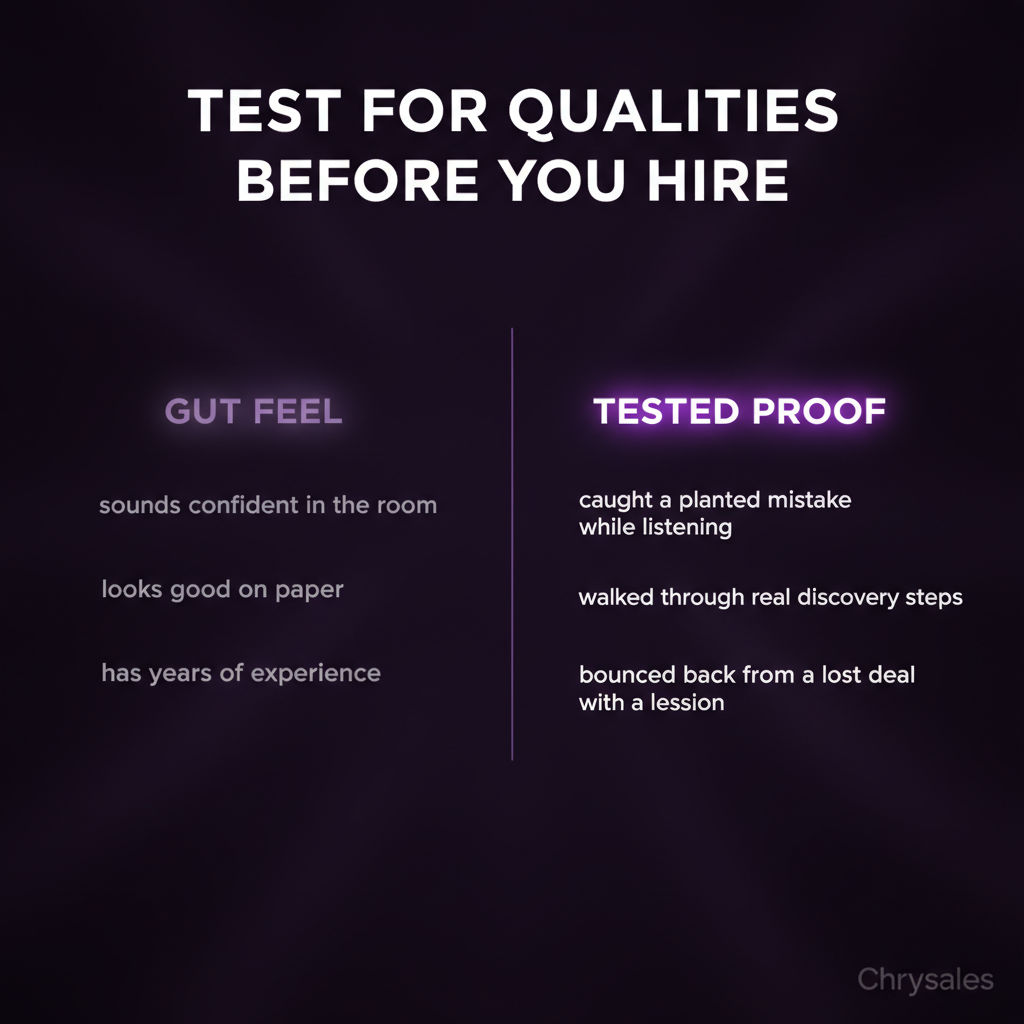
Here's the thing nobody tells you: most teams hire closers based on gut feel or resume polish, not the actual qualities that make someone great at closing. This blog breaks down the five real qualities that separate high performers from people who just talk a good game, plus the exact interview questions that reveal who has them.
The Real Cost of Hiring the Wrong Closer
Before we dig into what to look for, let's talk about what happens when you get it wrong. Hiring a bad closer isn't just a wasted salary. It's lost deals, burned leads, and months of scrambling to fix what should have been working.
A 15-person consulting firm we worked with hired three closers in six months. All three looked great on paper. Two quit within 60 days. The third stayed but closed 1 out of every 20 calls. The problem wasn't the people. It was that nobody tested for the qualities that actually matter in B2B sales.
The Hidden Costs Add Up Fast
When a closer underperforms, you lose more than their base plus commission. You lose the time your sales team spent training them. You lose the leads they burned through. You lose momentum.
One marketing agency told us they spent €40,000 on a closer who generated €12,000 in revenue before leaving. Research shows that sales hiring failure rates often exceed 50%, making this scenario far more common than most leaders admit. That's not just a bad hire. That's a business setback.
Why Most Hiring Processes Miss the Mark
Most interviews test for confidence and communication skills. Those matter, but they're not enough. A closer can sound great in an interview and still freeze when a prospect pushes back on price. They can have five years of experience and still lack the curiosity to ask the right discovery questions.
The closer compensation you offer won't fix a hiring mistake. You need to test for the real qualities before you extend an offer.
Pro Tip: If you're hiring your first closer, don't base the decision on whether they "feel" like a good fit. Base it on whether they demonstrate the five qualities below.
Quality 1: Active Listening (Not Just Waiting to Talk)

Most people think great closers are great talkers. That's wrong. Great closers are great listeners. They hear what the prospect says, what they don't say, and what's underneath both.
A high-ticket sales closer who talks too much will miss the real objection. A prospect might say "the price is too high," but what they really mean is "I don't see how this solves my problem yet." If your closer is too busy pitching to hear that, the deal dies.
How to Test for Active Listening in Interviews
Here's a simple test: halfway through the interview, say something that contradicts what you said earlier. Then wait. A good closer will catch it and ask a clarifying question. A bad closer will nod and keep going.
Another test: ask them to repeat back the main challenge you described at the start of the interview. If they can't do it accurately, they weren't listening. They were thinking about what to say next.
Watch out: Closers who interrupt you mid sentence during the interview will do the same thing to prospects. That's a red flag.
What Good Listening Sounds Like in Practice
A tech company we worked with had a closer who would pause for three seconds after every prospect answer. It felt long. But it worked. Prospects kept talking and revealed information they wouldn't have shared otherwise. That closer had a 35% close rate because they listened more than they spoke.
Quality 2: Curiosity About Problems (Not Just Features and Benefits)
Here's the difference: bad closers memorize a pitch. Good closers ask questions until they understand the problem better than the prospect does. If your closer can't explain why a prospect's current situation isn't working, they won't be able to sell a solution.
B2B sales isn't about listing features. It's about showing someone that you get their problem so deeply that your solution becomes obvious. You can explore closing techniques for discovery calls to see how curiosity drives better outcomes.
The Interview Question That Reveals Curiosity
Ask this: "Tell me about a deal you closed. What was the prospect's biggest problem, and how did you figure that out?"
A great answer will walk you through the discovery questions they asked, the patterns they noticed, and how they connected the dots. Understanding which discovery questions bring the best insights can help you evaluate whether a candidate truly knows how to uncover prospect pain points. A weak answer will focus on what they said to close the deal. The close matters, but curiosity about the problem comes first.
Why This Quality Matters for Sales Training
If someone isn't naturally curious, sales training can't fix that. You can teach objection scripts. You can teach closing techniques. But you can't teach someone to care about understanding a prospect's world.
One marketing agency hired a closer who had zero curiosity. Every call followed the same script. When a prospect brought up something unexpected, the closer froze. They left after two months.
Common mistake: Assuming experience means curiosity. A closer who's done 500 calls but never adapted their approach has experience, not curiosity.
Quality 3: Resilience (The Ability to Hear "No" and Keep Going)
Sales is rejection. Even the best closers hear "no" more than "yes." If someone crumbles after a bad day or a rough call, they won't last.
Resilience isn't about being upbeat all the time. It's about hearing "no," processing it, and showing up ready for the next call. A 30-person consulting firm told us their top closer had a 25% close rate. That means 75% of their calls didn't convert. But they never slowed down.
How to Test for Resilience Without Guessing
Ask this in the interview: "Tell me about a time you lost a deal you thought was locked in. What happened next?"
Listen for how they talk about it. Do they blame the prospect? Do they blame their old company? Or do they explain what they learned and what they changed? Resilience isn't about pretending failure doesn't sting. It's about what you do after.
Spotting Weak Resilience Early
If a candidate seems overly defensive when you ask about a lost deal, that's a flag. If they have no stories about bouncing back from setbacks, that's a bigger flag. Sales is full of setbacks. You need someone who sees rejection as part of the process, not a personal attack.
Pro Tip: During the interview, give them constructive feedback on one of their answers. Watch how they respond. Do they get defensive, or do they adjust? That's resilience in real time.
Quality 4: Coachability (Willingness to Learn and Adapt)
No closer is perfect on day one. Even elite salespeople need to learn your offer, your process, your ideal client profile. If someone thinks they already know everything, they won't improve.
Coachability matters more than experience. A closer with two years of experience and a growth mindset will outperform a closer with eight years who won't take feedback. We've seen this with client acquisition systems across dozens of businesses. The closers who ask questions and tweak their approach always win.
The Question That Reveals Coachability
Ask this: "What's the last piece of sales advice you got that changed how you work?"
A coachable closer will have a real example. They'll explain what they learned, who taught them, and how they applied it. An uncoachable closer will struggle to answer or give a vague response like "I've always just done what works for me." Learning how to recruit a sales rep candidate for coachability can help you refine your interview approach.
Why This Quality Impacts Your Sales System
If you're building a repeatable sales system, your closer needs to follow it. That doesn't mean they can't suggest improvements. It means they need to be willing to try your approach before they decide it doesn't work.
One IT company hired a closer who insisted on doing discovery calls their own way. It didn't match the rest of the system. Deals fell apart at the proposal stage because the information wasn't there. The closer refused to adjust. They were gone in 90 days.
Watch out: Closers who name drop famous sales books but can't explain what they learned aren't coachable. They're just good at sounding smart.
Quality 5: Structured Thinking (The Ability to Follow a Process)
Great closers don't wing it. They follow a process. They know what questions to ask in discovery. They know how to structure a pitch. They know when to push and when to back off.
Structured thinking is what makes sales predictable. If your closer treats every call like a freestyle conversation, your results will be all over the place. B2B lead generation feeds your pipeline. Your closer's process turns those leads into revenue. Without structure, even great leads die.
How to Test for Structured Thinking
Ask this: "Walk me through your ideal sales call from start to finish."
A structured closer will describe clear stages. Introduction. Discovery. Presenting the solution. Handling objections. Closing. They'll explain what they do at each stage and why. An unstructured closer will give a vague answer like "I just feel out the conversation and go with the flow."
Why Process Matters More Than Personality
One remote sales closer we worked with had a quiet personality. They weren't flashy. But they followed the process perfectly. Discovery questions in order. Objection scripts ready. Close at the right moment. They closed 40% of their calls because the process did the heavy lifting. Personality helps, but process wins.
Common mistake: Thinking "process" means robotic. It doesn't. A good process gives you structure so you can be flexible when it matters.
Building Your Interview Process Around These Five Qualities
Now that you know what to look for, here's how to build an interview process that actually tests for these qualities instead of relying on gut feel. If you want a comprehensive framework, check out our guide on how to hire sales people.
Stage 1: The Screening Call
This is where you test for active listening and curiosity. Don't just ask about their background. Describe a challenge your business is facing. See if they ask follow-up questions. A closer who's curious will want to know more. A closer who's just trying to impress you will jump straight to "I can help with that."
Stage 2: The Role-Play Call
Set up a mock sales call. You play the prospect. Give them a real objection halfway through. Watch how they handle it. Do they listen and adapt, or do they bulldoze through with a canned response? This tests resilience, coachability, and structured thinking all at once.
Stage 3: The Debrief
After the role-play, ask them what went well and what they'd change. A coachable closer will spot their own mistakes. An uncoachable one will either say everything was perfect or blame you for being a "tough prospect."
Pro Tip: Record the role-play (with permission). Watch it after the interview. You'll catch things you missed in the moment.
How Closer Compensation Fits Into the Hiring Decision
Once you've found someone with these five qualities, the next question is how to structure their closer compensation. Most B2B sales environments use base plus commission, though some high-ticket sales closers prefer commission-only if the deal sizes are big enough.
Matching Compensation to the Role
If you're hiring a closer for a long sales cycle (30 to 90 days), a base salary helps keep them stable while deals close. If you're hiring for short cycle, high volume sales, commission only or a smaller base with higher commission percentages works better. The structure should match your sales model, not just what's trendy.
Using Compensation as a Retention Tool
Great closers stay where the money is good and the system works. If your closer compensation structure rewards performance but your sales system is broken, you'll lose them. Fix the system first. Then build a fair commission structure that scales with results.
Watch out: Don't lowball base salary to "test" someone. If they have the five qualities, other companies will pay them fairly. You should too.
What Happens After You Hire the Right Closer
Hiring someone with these five qualities is step one. Training them on your offer, your process, and your ideal clients is step two. Even the best closer needs onboarding.
Build a 30 day ramp plan. Week one: product and offer training. Week two: shadow calls with your existing team. Week three: their first solo calls with live feedback. Week four: full pipeline, with check ins. A solid onboarding process turns a great hire into a revenue driver fast.
How We Help Teams Hire and Train Elite Closers
At Chrysales, we don't just help you hire. We help you build the system around the hire so they succeed. That means refining your offer, your discovery questions, your objection scripts, and your follow up process. You can also learn how to build a sales system so powerful clients come to you for a deeper walkthrough of our approach.
We've trained over 500 sales teams, and one pattern shows up every time: great closers perform best inside great systems. You can't have one without the other. For a broader understanding of the 8 skills needed to excel in sales, you can explore how these qualities connect to a larger skill framework.
Frequently Asked Questions
Q: How long should I expect a new closer to take before they're fully productive?
Most closers need 30 to 60 days to ramp up, depending on your sales cycle and offer complexity. If your product is straightforward and your sales process is clear, expect productivity by week four. If your sales cycle is long or your offer needs deep understanding, give them 60 to 90 days. Don't judge performance in the first two weeks. They're still learning. Focus on whether they're asking good questions, following the process, and improving call by call.
Q: Should I hire a closer with industry experience or focus on these five qualities?
Focus on the five qualities first. Industry experience helps, but it's not a dealbreaker. A curious, coachable closer with no industry experience will outperform someone who has experience but lacks resilience or structured thinking. You can teach product knowledge and industry context. You can't teach curiosity or resilience. If you find someone with both the qualities and industry experience, great. But don't pass on a strong candidate just because they haven't worked in your exact space before.
Q: What's a reasonable close rate to expect from a great closer?
It depends on your offer, your leads, and your sales cycle. In B2B sales, a close rate between 20% and 40% is solid for qualified leads. If your closer is converting under 15%, either the leads are bad, the offer isn't clear, or the closer isn't the right fit. If they're converting over 50%, your leads are extremely qualified or your offer is a no brainer. Don't compare your close rate to another company unless your lead sources and offers are nearly identical. Focus on improving your own baseline.
Q: How do I know if low performance is a system problem or a closer problem?
Ask yourself this: is every closer struggling, or just this one? If your last three closers all underperformed, it's a system problem. Your leads, your offer, or your sales process need work. If this closer is struggling but your last one succeeded with the same setup, it's probably a fit problem. Another test: sit in on their calls. If they're following the process but still losing deals, the process might be broken. If they're ignoring the process or missing basics, it's a coaching or hiring issue.
Q: Can I test for these five qualities with a take home assignment instead of multiple interviews?
Take home assignments can work, but they're not a replacement for live conversation. You can ask a candidate to outline how they'd approach a discovery call or handle a specific objection in writing. That tests structured thinking. But you won't see active listening, resilience, or coachability on paper. Use a take home as a filter before interviews, not instead of them. The role play call is still your best tool for seeing how someone actually operates under pressure.
A great closer is a sales hire who listens well, asks the right questions, handles rejection, and follows a clear process without losing a simple, human style. Picture this: you post a sales closer job opening and get 50 applications. The resumes look good. Everyone says they can close deals. You pick three people to interview. Two of them sound confident. You hire one. Three months later, they've closed two deals and your pipeline is stuck. Sound familiar?
Here's the thing nobody tells you: most teams hire closers based on gut feel or resume polish, not the actual qualities that make someone great at closing. This blog breaks down the five real qualities that separate high performers from people who just talk a good game, plus the exact interview questions that reveal who has them.
The Real Cost of Hiring the Wrong Closer
Before we dig into what to look for, let's talk about what happens when you get it wrong. Hiring a bad closer isn't just a wasted salary. It's lost deals, burned leads, and months of scrambling to fix what should have been working.
A 15-person consulting firm we worked with hired three closers in six months. All three looked great on paper. Two quit within 60 days. The third stayed but closed 1 out of every 20 calls. The problem wasn't the people. It was that nobody tested for the qualities that actually matter in B2B sales.
The Hidden Costs Add Up Fast
When a closer underperforms, you lose more than their base plus commission. You lose the time your sales team spent training them. You lose the leads they burned through. You lose momentum.
One marketing agency told us they spent €40,000 on a closer who generated €12,000 in revenue before leaving. Research shows that sales hiring failure rates often exceed 50%, making this scenario far more common than most leaders admit. That's not just a bad hire. That's a business setback.
Why Most Hiring Processes Miss the Mark
Most interviews test for confidence and communication skills. Those matter, but they're not enough. A closer can sound great in an interview and still freeze when a prospect pushes back on price. They can have five years of experience and still lack the curiosity to ask the right discovery questions.
The closer compensation you offer won't fix a hiring mistake. You need to test for the real qualities before you extend an offer.
Pro Tip: If you're hiring your first closer, don't base the decision on whether they "feel" like a good fit. Base it on whether they demonstrate the five qualities below.
Quality 1: Active Listening (Not Just Waiting to Talk)
Most people think great closers are great talkers. That's wrong. Great closers are great listeners. They hear what the prospect says, what they don't say, and what's underneath both.
A high-ticket sales closer who talks too much will miss the real objection. A prospect might say "the price is too high," but what they really mean is "I don't see how this solves my problem yet." If your closer is too busy pitching to hear that, the deal dies.
How to Test for Active Listening in Interviews
Here's a simple test: halfway through the interview, say something that contradicts what you said earlier. Then wait. A good closer will catch it and ask a clarifying question. A bad closer will nod and keep going.
Another test: ask them to repeat back the main challenge you described at the start of the interview. If they can't do it accurately, they weren't listening. They were thinking about what to say next.
Watch out: Closers who interrupt you mid sentence during the interview will do the same thing to prospects. That's a red flag.
What Good Listening Sounds Like in Practice
A tech company we worked with had a closer who would pause for three seconds after every prospect answer. It felt long. But it worked. Prospects kept talking and revealed information they wouldn't have shared otherwise. That closer had a 35% close rate because they listened more than they spoke.
Quality 2: Curiosity About Problems (Not Just Features and Benefits)
Here's the difference: bad closers memorize a pitch. Good closers ask questions until they understand the problem better than the prospect does. If your closer can't explain why a prospect's current situation isn't working, they won't be able to sell a solution.
B2B sales isn't about listing features. It's about showing someone that you get their problem so deeply that your solution becomes obvious. You can explore closing techniques for discovery calls to see how curiosity drives better outcomes.
The Interview Question That Reveals Curiosity
Ask this: "Tell me about a deal you closed. What was the prospect's biggest problem, and how did you figure that out?"
A great answer will walk you through the discovery questions they asked, the patterns they noticed, and how they connected the dots. Understanding which discovery questions bring the best insights can help you evaluate whether a candidate truly knows how to uncover prospect pain points. A weak answer will focus on what they said to close the deal. The close matters, but curiosity about the problem comes first.
Why This Quality Matters for Sales Training
If someone isn't naturally curious, sales training can't fix that. You can teach objection scripts. You can teach closing techniques. But you can't teach someone to care about understanding a prospect's world.
One marketing agency hired a closer who had zero curiosity. Every call followed the same script. When a prospect brought up something unexpected, the closer froze. They left after two months.
Common mistake: Assuming experience means curiosity. A closer who's done 500 calls but never adapted their approach has experience, not curiosity.
Quality 3: Resilience (The Ability to Hear "No" and Keep Going)
Sales is rejection. Even the best closers hear "no" more than "yes." If someone crumbles after a bad day or a rough call, they won't last.
Resilience isn't about being upbeat all the time. It's about hearing "no," processing it, and showing up ready for the next call. A 30-person consulting firm told us their top closer had a 25% close rate. That means 75% of their calls didn't convert. But they never slowed down.
How to Test for Resilience Without Guessing
Ask this in the interview: "Tell me about a time you lost a deal you thought was locked in. What happened next?"
Listen for how they talk about it. Do they blame the prospect? Do they blame their old company? Or do they explain what they learned and what they changed? Resilience isn't about pretending failure doesn't sting. It's about what you do after.
Spotting Weak Resilience Early
If a candidate seems overly defensive when you ask about a lost deal, that's a flag. If they have no stories about bouncing back from setbacks, that's a bigger flag. Sales is full of setbacks. You need someone who sees rejection as part of the process, not a personal attack.
Pro Tip: During the interview, give them constructive feedback on one of their answers. Watch how they respond. Do they get defensive, or do they adjust? That's resilience in real time.
Quality 4: Coachability (Willingness to Learn and Adapt)
No closer is perfect on day one. Even elite salespeople need to learn your offer, your process, your ideal client profile. If someone thinks they already know everything, they won't improve.
Coachability matters more than experience. A closer with two years of experience and a growth mindset will outperform a closer with eight years who won't take feedback. We've seen this with client acquisition systems across dozens of businesses. The closers who ask questions and tweak their approach always win.
The Question That Reveals Coachability
Ask this: "What's the last piece of sales advice you got that changed how you work?"
A coachable closer will have a real example. They'll explain what they learned, who taught them, and how they applied it. An uncoachable closer will struggle to answer or give a vague response like "I've always just done what works for me." Learning how to recruit a sales rep candidate for coachability can help you refine your interview approach.
Why This Quality Impacts Your Sales System
If you're building a repeatable sales system, your closer needs to follow it. That doesn't mean they can't suggest improvements. It means they need to be willing to try your approach before they decide it doesn't work.
One IT company hired a closer who insisted on doing discovery calls their own way. It didn't match the rest of the system. Deals fell apart at the proposal stage because the information wasn't there. The closer refused to adjust. They were gone in 90 days.
Watch out: Closers who name drop famous sales books but can't explain what they learned aren't coachable. They're just good at sounding smart.
Quality 5: Structured Thinking (The Ability to Follow a Process)
Great closers don't wing it. They follow a process. They know what questions to ask in discovery. They know how to structure a pitch. They know when to push and when to back off.
Structured thinking is what makes sales predictable. If your closer treats every call like a freestyle conversation, your results will be all over the place. B2B lead generation feeds your pipeline. Your closer's process turns those leads into revenue. Without structure, even great leads die.
How to Test for Structured Thinking
Ask this: "Walk me through your ideal sales call from start to finish."
A structured closer will describe clear stages. Introduction. Discovery. Presenting the solution. Handling objections. Closing. They'll explain what they do at each stage and why. An unstructured closer will give a vague answer like "I just feel out the conversation and go with the flow."
Why Process Matters More Than Personality
One remote sales closer we worked with had a quiet personality. They weren't flashy. But they followed the process perfectly. Discovery questions in order. Objection scripts ready. Close at the right moment. They closed 40% of their calls because the process did the heavy lifting. Personality helps, but process wins.
Common mistake: Thinking "process" means robotic. It doesn't. A good process gives you structure so you can be flexible when it matters.
Building Your Interview Process Around These Five Qualities
Now that you know what to look for, here's how to build an interview process that actually tests for these qualities instead of relying on gut feel. If you want a comprehensive framework, check out our guide on how to hire sales people.
Stage 1: The Screening Call
This is where you test for active listening and curiosity. Don't just ask about their background. Describe a challenge your business is facing. See if they ask follow-up questions. A closer who's curious will want to know more. A closer who's just trying to impress you will jump straight to "I can help with that."
Stage 2: The Role-Play Call
Set up a mock sales call. You play the prospect. Give them a real objection halfway through. Watch how they handle it. Do they listen and adapt, or do they bulldoze through with a canned response? This tests resilience, coachability, and structured thinking all at once.
Stage 3: The Debrief
After the role-play, ask them what went well and what they'd change. A coachable closer will spot their own mistakes. An uncoachable one will either say everything was perfect or blame you for being a "tough prospect."
Pro Tip: Record the role-play (with permission). Watch it after the interview. You'll catch things you missed in the moment.
How Closer Compensation Fits Into the Hiring Decision
Once you've found someone with these five qualities, the next question is how to structure their closer compensation. Most B2B sales environments use base plus commission, though some high-ticket sales closers prefer commission-only if the deal sizes are big enough.
Matching Compensation to the Role
If you're hiring a closer for a long sales cycle (30 to 90 days), a base salary helps keep them stable while deals close. If you're hiring for short cycle, high volume sales, commission only or a smaller base with higher commission percentages works better. The structure should match your sales model, not just what's trendy.
Using Compensation as a Retention Tool
Great closers stay where the money is good and the system works. If your closer compensation structure rewards performance but your sales system is broken, you'll lose them. Fix the system first. Then build a fair commission structure that scales with results.
Watch out: Don't lowball base salary to "test" someone. If they have the five qualities, other companies will pay them fairly. You should too.
What Happens After You Hire the Right Closer
Hiring someone with these five qualities is step one. Training them on your offer, your process, and your ideal clients is step two. Even the best closer needs onboarding.
Build a 30 day ramp plan. Week one: product and offer training. Week two: shadow calls with your existing team. Week three: their first solo calls with live feedback. Week four: full pipeline, with check ins. A solid onboarding process turns a great hire into a revenue driver fast.
How We Help Teams Hire and Train Elite Closers
At Chrysales, we don't just help you hire. We help you build the system around the hire so they succeed. That means refining your offer, your discovery questions, your objection scripts, and your follow up process. You can also learn how to build a sales system so powerful clients come to you for a deeper walkthrough of our approach.
We've trained over 500 sales teams, and one pattern shows up every time: great closers perform best inside great systems. You can't have one without the other. For a broader understanding of the 8 skills needed to excel in sales, you can explore how these qualities connect to a larger skill framework.
Frequently Asked Questions
Q: How long should I expect a new closer to take before they're fully productive?
Most closers need 30 to 60 days to ramp up, depending on your sales cycle and offer complexity. If your product is straightforward and your sales process is clear, expect productivity by week four. If your sales cycle is long or your offer needs deep understanding, give them 60 to 90 days. Don't judge performance in the first two weeks. They're still learning. Focus on whether they're asking good questions, following the process, and improving call by call.
Q: Should I hire a closer with industry experience or focus on these five qualities?
Focus on the five qualities first. Industry experience helps, but it's not a dealbreaker. A curious, coachable closer with no industry experience will outperform someone who has experience but lacks resilience or structured thinking. You can teach product knowledge and industry context. You can't teach curiosity or resilience. If you find someone with both the qualities and industry experience, great. But don't pass on a strong candidate just because they haven't worked in your exact space before.
Q: What's a reasonable close rate to expect from a great closer?
It depends on your offer, your leads, and your sales cycle. In B2B sales, a close rate between 20% and 40% is solid for qualified leads. If your closer is converting under 15%, either the leads are bad, the offer isn't clear, or the closer isn't the right fit. If they're converting over 50%, your leads are extremely qualified or your offer is a no brainer. Don't compare your close rate to another company unless your lead sources and offers are nearly identical. Focus on improving your own baseline.
Q: How do I know if low performance is a system problem or a closer problem?
Ask yourself this: is every closer struggling, or just this one? If your last three closers all underperformed, it's a system problem. Your leads, your offer, or your sales process need work. If this closer is struggling but your last one succeeded with the same setup, it's probably a fit problem. Another test: sit in on their calls. If they're following the process but still losing deals, the process might be broken. If they're ignoring the process or missing basics, it's a coaching or hiring issue.
Q: Can I test for these five qualities with a take home assignment instead of multiple interviews?
Take home assignments can work, but they're not a replacement for live conversation. You can ask a candidate to outline how they'd approach a discovery call or handle a specific objection in writing. That tests structured thinking. But you won't see active listening, resilience, or coachability on paper. Use a take home as a filter before interviews, not instead of them. The role play call is still your best tool for seeing how someone actually operates under pressure.
Scaling Is Not Hard If You Have The Right Systems
If you’re serious about leveling up your scaling game, you need the right system, the right training, and the right team behind you. We're here to give you the exact tools and strategies top entrepreneurs use to dominate.

Discover the latest tips
View All.avif)
Chrysales was formed from the words "chrysalis" the stage where a caterpillar transforms into a butterfly and "sales".
It stands for one thing: sales transformation.Because scaling doesn’t happen by doing more of the same. Scaling only happens when you go through real transformation in your systems, your offer, team and the way you sell.
.avif)


