.avif)
How to Get Clients on Instagram with B2B Intent
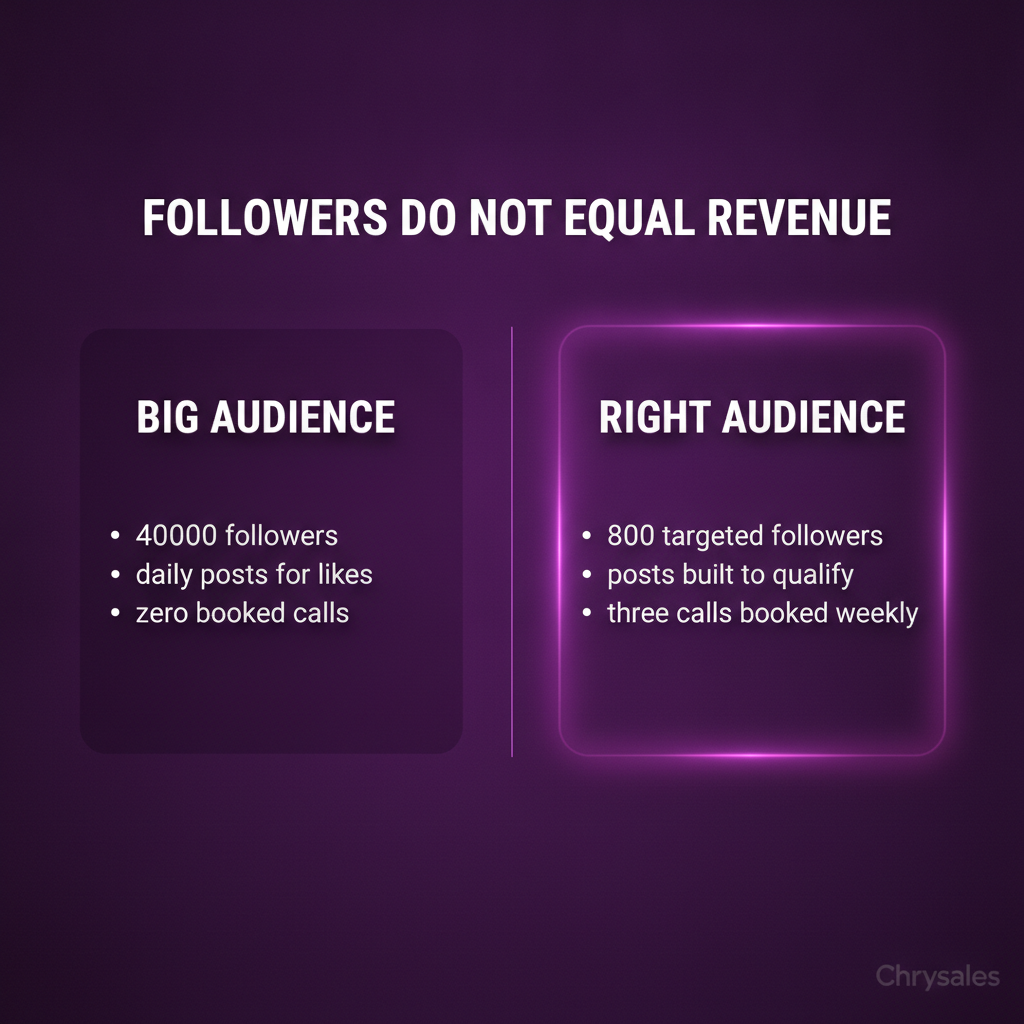
How to get clients on Instagram means using your profile, posts, and DMs to turn attention into real leads and booked calls for B2B sales. Picture this: you scroll through Instagram and see someone with 40,000 followers posting daily. They get hundreds of likes. But they never talk about clients or revenue. Meanwhile, a small consulting firm with 800 followers books three discovery calls a week from Instagram alone. What's the difference? The second one treats Instagram like a sales tool, not a vanity scoreboard. This guide shows you how to get clients on Instagram by turning your profile into a real lead generation engine, not just a content gallery.
Instagram Is a Top-of-Funnel Lead Source, Not a Magic Conversion Button
Most people think Instagram works like this: post good content, get followers, followers become clients. That's not how B2B sales actually works. Instagram sits at the top of your sales funnel. It's where people first find you, get curious, and decide if they should pay attention. The real client acquisition happens after they leave Instagram, through a call, a pitch, or a discovery session. Here's the thing: Instagram is great for visibility and initial trust. But closing a deal still needs structure, a strong offer, and a real conversation. If your Instagram strategy doesn't connect to a sales system, you're just building an audience that never buys.
Connect Instagram to a Real Sales Pipeline
Think of Instagram as the first touchpoint. Someone sees your post, checks your profile, maybe sends a DM. That's the start. The rest of the B2B lead generation process looks like this:
- They engage with your content or send a message
- You qualify them (do they actually need what you sell?)
- You move them off Instagram to a call or email
- You pitch, handle objections, and close
Instagram doesn't replace your sales process. It feeds it. A 15-person consulting firm can post all day, but if they don't have a way to move interested people into a structured conversation, nothing converts. You can also build a powerful sales system so Instagram leads turn into inbound clients for a complete framework on designing that underlying system.
Pro Tip: Set a simple rule for yourself. If someone engages three times in a week, send them a DM. If they reply positively, move them to a short call within 48 hours.
Set Up Your Profile to Filter Out Tire Kickers and Attract Real Buyers
Your Instagram profile is the first thing people see after they click your name. If it's unclear, vague, or generic, they bounce. You have about five seconds to show someone you can solve their problem.
Write a Bio That Says Exactly What You Do
Don't write "helping businesses grow" or "sales expert." That could mean anything. Be specific. Good bio example: "Custom sales systems for B2B teams. We build pipelines, train closers, automate outreach. 99.4% client satisfaction. DM 'system' to start." This tells you:
- What they do (sales systems)
- Who it's for (B2B teams)
- What they deliver (pipelines, training, automation)
- Social proof (99.4%)
- How to start (DM keyword)
Instagram profile optimization for business means making your bio work like a qualifying filter. If someone reads it and they're not a fit, they leave. That's good. You want the right people to stay.
Use Highlights to Show Proof and Process
Instagram highlights sit right under your bio. Most people waste them on random posts. Instead, use them like a portfolio. Create highlights for:
- Client Results: screenshots of wins, testimonials, before and after metrics
- How It Works: a quick 3 to 5 story walkthrough of your process
- Who We Work With: examples of industries or company sizes you serve
- FAQ: answers to the top 3 questions people ask before booking a call
A marketing agency we worked with added a "Results" highlight with 8 client wins. Their DM requests went up 40% in two weeks. People trust what they can see.
Watch out: Don't put 15 highlights on your profile. It looks cluttered. Stick to 4 to 6 max.
Post Content That Starts Conversations, Not Just Collects Likes
Instagram content for B2B isn't about going viral. It's about attracting the right people and making them think, "this person knows what they're talking about."
Focus on Problem-Solution Posts
The best posts for lead generation follow this structure:
- State a problem your ideal client has
- Explain why it happens
- Give one clear action to fix it
Example post: "Most outbound campaigns get ignored because the list is bad, not the message. If you're emailing people who don't have budget or authority, perfect copy won't save you. Fix: spend 10 minutes per lead researching before you add them to your list. Check LinkedIn for job changes, funding news, team growth. A smaller, cleaner list beats a big messy one every time." That post does three things:
- Identifies with a real frustration (ignored campaigns)
- Teaches something useful (list quality matters more than copy)
- Gives a concrete next step (research before adding)
People who read that and think "yeah, that's my problem" are warm leads. They'll check your profile. Some will DM.
Use Reels to Show Your Face and Process
Reels get more reach than static posts right now. You don't need fancy editing. Just talk to the camera for 30 to 60 seconds. Good Reel ideas:
- Walk through one step of your sales process
- Show a mistake you see often and how to avoid it
- Answer a question a client asked this week
- Share a quick win or case study in 45 seconds
One tech consulting firm posted a Reel showing their lead scoring method. It got 4,000 views (their average was 300). They booked two calls directly from people who saw it. Instagram DM outreach works better when people already recognize your face.
Pro Tip: Post 3 to 5 times a week. Mix Reels, carousels, and single image posts. Consistency beats perfection.
Use DMs as a Qualifying Tool, Not a Pitch Cannon
Cold DM strategy on Instagram gets a bad reputation because most people do it wrong. They blast 100 strangers with "Hey! I help businesses like yours..." and wonder why no one replies. Instagram DMs for sales work when you treat them like the start of a conversation, not the entire sales process.
Warm Up Before You Pitch
If you're reaching out cold, engage with their content first. Like a post. Leave a real comment (not "great post!"). Then send a DM a day or two later. Your first message should feel like a natural follow up, not a sales script. Example: "Hey [name], saw your post about hiring challenges. We work with teams dealing with that exact issue. Mind if I ask what you've tried so far?" That's not a pitch. It's a question. If they reply, you're in a conversation. From there, you can qualify them and suggest a quick call. For a detailed tactical guide, check out our breakdown of Instagram outreach via DMs for B2B lead generation.
Move to a Call Fast
Instagram DM conversion happens when you get people off Instagram. Don't try to close a deal in messages. Use DMs to:
- Confirm they have the problem you solve
- Check if they're actively looking for a solution
- Suggest a 15 minute call to see if you're a fit
If someone replies positively to two messages, send a Calendly link or ask when they're free this week. The longer you stay in DMs, the colder the lead gets.
Common mistake: Sending a 10 message pitch over three days. If they're interested, they'll take a call. If they won't jump on a call, they won't buy.
Pair Instagram with Outbound for Predictable Client Acquisition
Instagram alone won't fill your pipeline. It's too inconsistent. Some weeks you get five DMs. Other weeks, nothing. The teams that actually get clients on Instagram for B2B pair it with direct outreach. They use Instagram to build trust and authority, then layer cold email, LinkedIn outreach, or phone calls on top. You can also find clients who need your services right now through multi-channel prospecting strategies beyond Instagram.
Use Instagram as Social Proof in Your Cold Outreach
When you send a cold email or LinkedIn message, people check you out. If your Instagram has 40 posts about sales systems, client wins, and how you work, it backs up your email. You look real. A small sales team tried this: they sent cold emails to 200 leads, and in the PS they wrote, "We post daily sales tips on Instagram if you want a preview of how we think. @[handle]." Their reply rate jumped from 2.1% to 4.8%, a jump consistent with cold outbound reply rate benchmarks when personalization and social proof are added. People clicked the Instagram link, saw proof, then replied to the email.
Post Before and After Big Outreach Campaigns
If you're launching a cold email or LinkedIn campaign this week, post related content on Instagram at the same time. It reinforces your message. Running an email campaign about sales hiring? Post three Instagram stories this week showing how you train closers or what to look for in interviews. When people Google you or check your profile, they see you're talking about the exact thing you emailed them about. This is how you turn social media client acquisition into a system instead of hoping people randomly find you.
Watch out: Don't just repost the same content everywhere. Tailor the format. Instagram likes quick visuals and short captions. Email likes depth and specifics. LinkedIn likes professional case studies.
Build a Simple Instagram Sales Funnel That Actually Converts
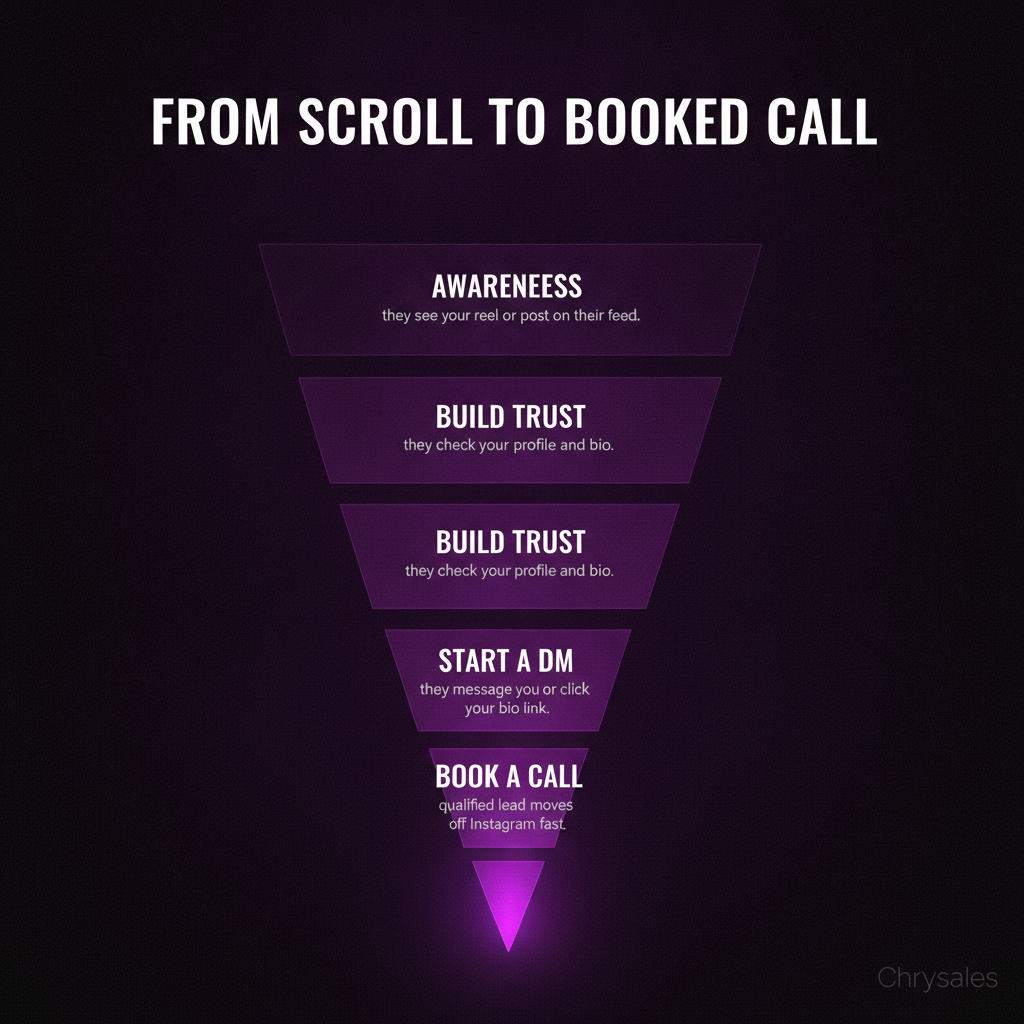
An Instagram sales funnel sounds complicated, but it's just a path people follow from "who is this?" to "let's talk." Here's a simple version:
- Awareness: They see your Reel, post, or Story
- Interest: They check your profile and read your bio
- Consideration: They look at your highlights, maybe follow you, engage with another post
- Action: They DM you, reply to a Story, or click a link in your bio
Most people stop at step 2. They get awareness but don't give people a clear next step.
Add a Lead Magnet or Call Link to Your Bio
Your bio should have one clear call to action. Either:
- A link to book a free 15 minute call
- A lead magnet (free guide, checklist, template) that captures their email
- A DM keyword they can send to start a conversation
Example: "Want our 5 step lead gen checklist? DM 'checklist' or click the link." When someone clicks or DMs, you've moved them from passive follower to active lead. Now you can follow up, qualify, and close. One consulting firm added a Calendly link to their bio with the text "Book a free pipeline audit." They got 9 calls booked in the first month, no ads, just organic Instagram traffic.
Track What's Actually Working
Most people post on Instagram and never check what drives leads. You should know:
- Which posts get the most profile visits
- Which Stories get the most DM replies
- How many people book calls from your bio link
Instagram gives you basic analytics in the app. Check them weekly. If a certain type of post (like process breakdowns or client wins) drives more engagement, make more of that. For a systematic approach to measurement, learn more about tracking content impact across your sales funnel to connect Instagram activity to actual revenue. You can also review key Instagram metrics to understand which numbers matter most for B2B lead generation.
A 30-person consulting firm noticed their "mistakes to avoid" posts got 3x more saves than other content. They doubled down. In two months, their follower growth went up 60%, and they started getting 2 to 3 qualified DMs a week.
Pro Tip: Run a simple A/B test. Try two different bio CTAs for a month each. See which one books more calls. Small tweaks add up.
Train Your Team to Handle Instagram Leads the Same Way Every Time
If you're the only one checking Instagram, you'll miss leads. If three people check it but everyone replies differently, you'll confuse people. Set up a simple process:
- Who checks DMs and when (daily minimum)
- What questions to ask in the first reply (qualify the lead)
- When to move someone to a call (after 2 to 3 positive replies)
- Where to track Instagram leads (CRM, spreadsheet, whatever you use)
Sales training for your team should include Instagram lead handling. It's not just cold calls and email anymore. A good chunk of inbound interest comes through social now. One tech company had an intern checking Instagram DMs. The intern replied fast but never moved people to calls. They were getting 10+ DMs a month and closing zero. After training the intern on qualifying questions and call booking, they closed two clients in six weeks from Instagram leads.
Use AI to Speed Up Response Time
You can't reply instantly to every DM, but you can set up quick replies or chatbot flows for common questions. Instagram lets you create saved replies for FAQs. If someone asks "What do you charge?" or "Do you work with [industry]?", you can click a shortcut and send a pre written answer in two seconds. That buys you time to personalize the follow up. Some teams use AI tools to draft DM replies or flag high intent messages. This isn't about replacing humans. It's about making sure your team can handle volume without dropping leads.
Common mistake: Ignoring DMs for 3 to 4 days because you're busy. If someone reaches out and waits 96 hours for a reply, they've already moved on or forgotten why they messaged you.
Frequently Asked Questions
Q: How long does it take to get clients on Instagram if you're starting from scratch?
If your profile is new and you have under 100 followers, expect 2 to 3 months of consistent posting before you see real traction. You need enough content for people to scroll through and enough proof that you know what you're doing. But you can speed it up by pairing Instagram with direct outreach like cold email or LinkedIn. Use Instagram as your portfolio while you actively reach out. Some teams book their first Instagram call within 4 to 6 weeks by doing both at once.
Q: Do I need thousands of followers to generate B2B leads on Instagram?
No. Follower count doesn't equal revenue. A 15-person consulting firm with 600 followers and a clear niche can book more calls than someone with 10,000 random followers. Focus on attracting the right people, not the most people. Post content that speaks to your ideal client's exact problems. When 80% of your followers fit your target profile, even a small audience converts. For more data and examples on small, targeted audiences converting, explore our guide on Instagram B2B lead generation strategy.
Q: What's the best way to handle Instagram DM outreach without sounding spammy?
Warm up first. Engage with their content before you send a message. When you DM, ask a question instead of pitching. Example: "Saw your post about scaling your sales team. What's been the biggest challenge so far?" If they reply, you're in a real conversation. From there, you can suggest a call. Never pitch in the first message. If someone won't reply to a question, they definitely won't reply to a sales pitch.
Q: Should I use Instagram ads or stick to organic content for client acquisition?
Organic content works if you're willing to post consistently and engage daily. Ads work if you have a clear offer and a landing page or call funnel ready. For most B2B sales, organic builds more trust because people see your expertise over time. Ads can speed up awareness, but they won't replace the need for real conversations and a solid sales process. Start organic. Add ads later if you want to scale faster.
Q: How do I know if someone from Instagram is a qualified lead or just browsing?
Ask simple qualifying questions in your first 1 to 2 DM replies. Examples: "Are you actively looking for help with this?" or "What's your timeline for solving this?" or "What have you tried so far?" If they give vague answers or ghost after two messages, they're not ready. If they answer with detail and ask follow up questions, they're worth a call. Move qualified leads to a call within 48 hours. Everyone else goes into a nurture list for later follow up.
How to get clients on Instagram means using your profile, posts, and DMs to turn attention into real leads and booked calls for B2B sales. Picture this: you scroll through Instagram and see someone with 40,000 followers posting daily. They get hundreds of likes. But they never talk about clients or revenue. Meanwhile, a small consulting firm with 800 followers books three discovery calls a week from Instagram alone. What's the difference? The second one treats Instagram like a sales tool, not a vanity scoreboard. This guide shows you how to get clients on Instagram by turning your profile into a real lead generation engine, not just a content gallery.
Instagram Is a Top-of-Funnel Lead Source, Not a Magic Conversion Button
Most people think Instagram works like this: post good content, get followers, followers become clients. That's not how B2B sales actually works. Instagram sits at the top of your sales funnel. It's where people first find you, get curious, and decide if they should pay attention. The real client acquisition happens after they leave Instagram, through a call, a pitch, or a discovery session. Here's the thing: Instagram is great for visibility and initial trust. But closing a deal still needs structure, a strong offer, and a real conversation. If your Instagram strategy doesn't connect to a sales system, you're just building an audience that never buys.
Connect Instagram to a Real Sales Pipeline
Think of Instagram as the first touchpoint. Someone sees your post, checks your profile, maybe sends a DM. That's the start. The rest of the B2B lead generation process looks like this:
- They engage with your content or send a message
- You qualify them (do they actually need what you sell?)
- You move them off Instagram to a call or email
- You pitch, handle objections, and close
Instagram doesn't replace your sales process. It feeds it. A 15-person consulting firm can post all day, but if they don't have a way to move interested people into a structured conversation, nothing converts. You can also build a powerful sales system so Instagram leads turn into inbound clients for a complete framework on designing that underlying system.
Pro Tip: Set a simple rule for yourself. If someone engages three times in a week, send them a DM. If they reply positively, move them to a short call within 48 hours.
Set Up Your Profile to Filter Out Tire Kickers and Attract Real Buyers
Your Instagram profile is the first thing people see after they click your name. If it's unclear, vague, or generic, they bounce. You have about five seconds to show someone you can solve their problem.
Write a Bio That Says Exactly What You Do
Don't write "helping businesses grow" or "sales expert." That could mean anything. Be specific. Good bio example: "Custom sales systems for B2B teams. We build pipelines, train closers, automate outreach. 99.4% client satisfaction. DM 'system' to start." This tells you:
- What they do (sales systems)
- Who it's for (B2B teams)
- What they deliver (pipelines, training, automation)
- Social proof (99.4%)
- How to start (DM keyword)
Instagram profile optimization for business means making your bio work like a qualifying filter. If someone reads it and they're not a fit, they leave. That's good. You want the right people to stay.
Use Highlights to Show Proof and Process
Instagram highlights sit right under your bio. Most people waste them on random posts. Instead, use them like a portfolio. Create highlights for:
- Client Results: screenshots of wins, testimonials, before and after metrics
- How It Works: a quick 3 to 5 story walkthrough of your process
- Who We Work With: examples of industries or company sizes you serve
- FAQ: answers to the top 3 questions people ask before booking a call
A marketing agency we worked with added a "Results" highlight with 8 client wins. Their DM requests went up 40% in two weeks. People trust what they can see.
Watch out: Don't put 15 highlights on your profile. It looks cluttered. Stick to 4 to 6 max.
Post Content That Starts Conversations, Not Just Collects Likes
Instagram content for B2B isn't about going viral. It's about attracting the right people and making them think, "this person knows what they're talking about."
Focus on Problem-Solution Posts
The best posts for lead generation follow this structure:
- State a problem your ideal client has
- Explain why it happens
- Give one clear action to fix it
Example post: "Most outbound campaigns get ignored because the list is bad, not the message. If you're emailing people who don't have budget or authority, perfect copy won't save you. Fix: spend 10 minutes per lead researching before you add them to your list. Check LinkedIn for job changes, funding news, team growth. A smaller, cleaner list beats a big messy one every time." That post does three things:
- Identifies with a real frustration (ignored campaigns)
- Teaches something useful (list quality matters more than copy)
- Gives a concrete next step (research before adding)
People who read that and think "yeah, that's my problem" are warm leads. They'll check your profile. Some will DM.
Use Reels to Show Your Face and Process
Reels get more reach than static posts right now. You don't need fancy editing. Just talk to the camera for 30 to 60 seconds. Good Reel ideas:
- Walk through one step of your sales process
- Show a mistake you see often and how to avoid it
- Answer a question a client asked this week
- Share a quick win or case study in 45 seconds
One tech consulting firm posted a Reel showing their lead scoring method. It got 4,000 views (their average was 300). They booked two calls directly from people who saw it. Instagram DM outreach works better when people already recognize your face.
Pro Tip: Post 3 to 5 times a week. Mix Reels, carousels, and single image posts. Consistency beats perfection.
Use DMs as a Qualifying Tool, Not a Pitch Cannon
Cold DM strategy on Instagram gets a bad reputation because most people do it wrong. They blast 100 strangers with "Hey! I help businesses like yours..." and wonder why no one replies. Instagram DMs for sales work when you treat them like the start of a conversation, not the entire sales process.
Warm Up Before You Pitch
If you're reaching out cold, engage with their content first. Like a post. Leave a real comment (not "great post!"). Then send a DM a day or two later. Your first message should feel like a natural follow up, not a sales script. Example: "Hey [name], saw your post about hiring challenges. We work with teams dealing with that exact issue. Mind if I ask what you've tried so far?" That's not a pitch. It's a question. If they reply, you're in a conversation. From there, you can qualify them and suggest a quick call. For a detailed tactical guide, check out our breakdown of Instagram outreach via DMs for B2B lead generation.
Move to a Call Fast
Instagram DM conversion happens when you get people off Instagram. Don't try to close a deal in messages. Use DMs to:
- Confirm they have the problem you solve
- Check if they're actively looking for a solution
- Suggest a 15 minute call to see if you're a fit
If someone replies positively to two messages, send a Calendly link or ask when they're free this week. The longer you stay in DMs, the colder the lead gets.
Common mistake: Sending a 10 message pitch over three days. If they're interested, they'll take a call. If they won't jump on a call, they won't buy.
Pair Instagram with Outbound for Predictable Client Acquisition
Instagram alone won't fill your pipeline. It's too inconsistent. Some weeks you get five DMs. Other weeks, nothing. The teams that actually get clients on Instagram for B2B pair it with direct outreach. They use Instagram to build trust and authority, then layer cold email, LinkedIn outreach, or phone calls on top. You can also find clients who need your services right now through multi-channel prospecting strategies beyond Instagram.
Use Instagram as Social Proof in Your Cold Outreach
When you send a cold email or LinkedIn message, people check you out. If your Instagram has 40 posts about sales systems, client wins, and how you work, it backs up your email. You look real. A small sales team tried this: they sent cold emails to 200 leads, and in the PS they wrote, "We post daily sales tips on Instagram if you want a preview of how we think. @[handle]." Their reply rate jumped from 2.1% to 4.8%, a jump consistent with cold outbound reply rate benchmarks when personalization and social proof are added. People clicked the Instagram link, saw proof, then replied to the email.
Post Before and After Big Outreach Campaigns
If you're launching a cold email or LinkedIn campaign this week, post related content on Instagram at the same time. It reinforces your message. Running an email campaign about sales hiring? Post three Instagram stories this week showing how you train closers or what to look for in interviews. When people Google you or check your profile, they see you're talking about the exact thing you emailed them about. This is how you turn social media client acquisition into a system instead of hoping people randomly find you.
Watch out: Don't just repost the same content everywhere. Tailor the format. Instagram likes quick visuals and short captions. Email likes depth and specifics. LinkedIn likes professional case studies.
Build a Simple Instagram Sales Funnel That Actually Converts
An Instagram sales funnel sounds complicated, but it's just a path people follow from "who is this?" to "let's talk." Here's a simple version:
- Awareness: They see your Reel, post, or Story
- Interest: They check your profile and read your bio
- Consideration: They look at your highlights, maybe follow you, engage with another post
- Action: They DM you, reply to a Story, or click a link in your bio
Most people stop at step 2. They get awareness but don't give people a clear next step.
Add a Lead Magnet or Call Link to Your Bio
Your bio should have one clear call to action. Either:
- A link to book a free 15 minute call
- A lead magnet (free guide, checklist, template) that captures their email
- A DM keyword they can send to start a conversation
Example: "Want our 5 step lead gen checklist? DM 'checklist' or click the link." When someone clicks or DMs, you've moved them from passive follower to active lead. Now you can follow up, qualify, and close. One consulting firm added a Calendly link to their bio with the text "Book a free pipeline audit." They got 9 calls booked in the first month, no ads, just organic Instagram traffic.
Track What's Actually Working
Most people post on Instagram and never check what drives leads. You should know:
- Which posts get the most profile visits
- Which Stories get the most DM replies
- How many people book calls from your bio link
Instagram gives you basic analytics in the app. Check them weekly. If a certain type of post (like process breakdowns or client wins) drives more engagement, make more of that. For a systematic approach to measurement, learn more about tracking content impact across your sales funnel to connect Instagram activity to actual revenue. You can also review key Instagram metrics to understand which numbers matter most for B2B lead generation.
A 30-person consulting firm noticed their "mistakes to avoid" posts got 3x more saves than other content. They doubled down. In two months, their follower growth went up 60%, and they started getting 2 to 3 qualified DMs a week.
Pro Tip: Run a simple A/B test. Try two different bio CTAs for a month each. See which one books more calls. Small tweaks add up.
Train Your Team to Handle Instagram Leads the Same Way Every Time
If you're the only one checking Instagram, you'll miss leads. If three people check it but everyone replies differently, you'll confuse people. Set up a simple process:
- Who checks DMs and when (daily minimum)
- What questions to ask in the first reply (qualify the lead)
- When to move someone to a call (after 2 to 3 positive replies)
- Where to track Instagram leads (CRM, spreadsheet, whatever you use)
Sales training for your team should include Instagram lead handling. It's not just cold calls and email anymore. A good chunk of inbound interest comes through social now. One tech company had an intern checking Instagram DMs. The intern replied fast but never moved people to calls. They were getting 10+ DMs a month and closing zero. After training the intern on qualifying questions and call booking, they closed two clients in six weeks from Instagram leads.
Use AI to Speed Up Response Time
You can't reply instantly to every DM, but you can set up quick replies or chatbot flows for common questions. Instagram lets you create saved replies for FAQs. If someone asks "What do you charge?" or "Do you work with [industry]?", you can click a shortcut and send a pre written answer in two seconds. That buys you time to personalize the follow up. Some teams use AI tools to draft DM replies or flag high intent messages. This isn't about replacing humans. It's about making sure your team can handle volume without dropping leads.
Common mistake: Ignoring DMs for 3 to 4 days because you're busy. If someone reaches out and waits 96 hours for a reply, they've already moved on or forgotten why they messaged you.
Frequently Asked Questions
Q: How long does it take to get clients on Instagram if you're starting from scratch?
If your profile is new and you have under 100 followers, expect 2 to 3 months of consistent posting before you see real traction. You need enough content for people to scroll through and enough proof that you know what you're doing. But you can speed it up by pairing Instagram with direct outreach like cold email or LinkedIn. Use Instagram as your portfolio while you actively reach out. Some teams book their first Instagram call within 4 to 6 weeks by doing both at once.
Q: Do I need thousands of followers to generate B2B leads on Instagram?
No. Follower count doesn't equal revenue. A 15-person consulting firm with 600 followers and a clear niche can book more calls than someone with 10,000 random followers. Focus on attracting the right people, not the most people. Post content that speaks to your ideal client's exact problems. When 80% of your followers fit your target profile, even a small audience converts. For more data and examples on small, targeted audiences converting, explore our guide on Instagram B2B lead generation strategy.
Q: What's the best way to handle Instagram DM outreach without sounding spammy?
Warm up first. Engage with their content before you send a message. When you DM, ask a question instead of pitching. Example: "Saw your post about scaling your sales team. What's been the biggest challenge so far?" If they reply, you're in a real conversation. From there, you can suggest a call. Never pitch in the first message. If someone won't reply to a question, they definitely won't reply to a sales pitch.
Q: Should I use Instagram ads or stick to organic content for client acquisition?
Organic content works if you're willing to post consistently and engage daily. Ads work if you have a clear offer and a landing page or call funnel ready. For most B2B sales, organic builds more trust because people see your expertise over time. Ads can speed up awareness, but they won't replace the need for real conversations and a solid sales process. Start organic. Add ads later if you want to scale faster.
Q: How do I know if someone from Instagram is a qualified lead or just browsing?
Ask simple qualifying questions in your first 1 to 2 DM replies. Examples: "Are you actively looking for help with this?" or "What's your timeline for solving this?" or "What have you tried so far?" If they give vague answers or ghost after two messages, they're not ready. If they answer with detail and ask follow up questions, they're worth a call. Move qualified leads to a call within 48 hours. Everyone else goes into a nurture list for later follow up.
Scaling Is Not Hard If You Have The Right Systems
If you’re serious about leveling up your scaling game, you need the right system, the right training, and the right team behind you. We're here to give you the exact tools and strategies top entrepreneurs use to dominate.

Discover the latest tips
View All.avif)
Chrysales was formed from the words "chrysalis" the stage where a caterpillar transforms into a butterfly and "sales".
It stands for one thing: sales transformation.Because scaling doesn’t happen by doing more of the same. Scaling only happens when you go through real transformation in your systems, your offer, team and the way you sell.
.avif)


