
Franchise or existing business: which should you buy?
When you weigh a franchise vs buying an existing business, one question decides most of it: who brings the clients after you take over? A franchise gives you a known brand and a system, for fees on your sales and rules you must follow. An existing business usually comes with clients and sales already in place, but those clients may be loyal to the old owner.
The rules named here are mostly US rules. This isn't legal, tax or financial advice, so check your deal with a lawyer where you buy.
Franchise vs existing business: what you buy
A franchise sells you the right to use someone else's name and way of working. Buy an existing business and you get a company that already runs, with its clients and staff in place.
The US Small Business Administration (SBA) puts it simply. A franchise "gives you more guidance but less control". With a company you buy outright, you "typically get complete control over its direction."
| What you compare | Franchise | Existing business |
|---|---|---|
| Who brings clients | The brand, plus your own selling | The old owner, at first |
| Cost after you buy | Fees on your sales, for years | No franchisor fees |
| Control | The franchisor's rules | Mostly yours |
| Selling it later | Needs the franchisor's approval | Your own sale |
Who brings the clients after you buy
In a franchise, the brand helps people find you. In an existing business, the clients often know the old owner, not the company.
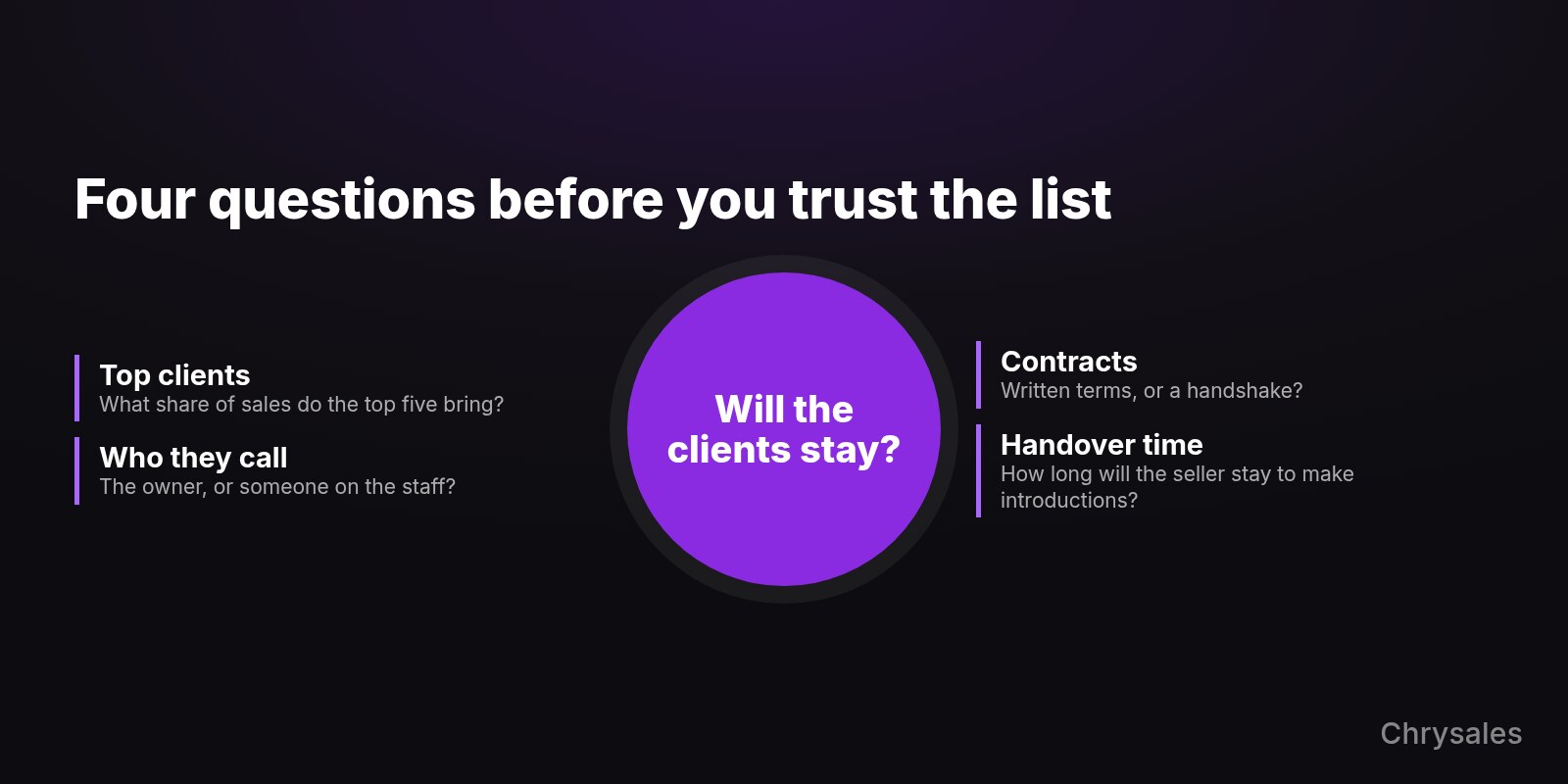
Before you trust a seller's client list, we suggest four questions. Each one tests whether the clients belong to the company or to the person selling it.
Watch for customer concentration too, where a few clients make up most of the sales. When new owners bought Jo's Candies, one customer was about 55% of revenue, according to Kellogg Insight.
They then won a national retailer, and the largest customer fell to about 35% of revenue.
A franchise doesn't remove the selling job. Franchisees often pay into a shared marketing fund. How that money gets spent was among their top concerns in a Federal Trade Commission (FTC) staff report.
We see this as the founder problem from the buyer's side. When every deal runs through one person, the business is hard to hand over. Our about page calls that founder trap "a job with more stress."
What each path costs over time
A franchise costs an upfront fee, then a share of your sales for as long as you run it. Buying outright costs the price, often paid partly over time, but nothing to a franchisor.
That share of sales is called a royalty: the fee for using the franchisor's name and system. The FTC's buyer guide warns that you typically owe royalties "even if you are losing money." You may also pay into an advertising fund.
In its 2025 annual report, Domino's says each US franchisee is generally required to pay a 5.5% royalty on sales. Its franchisees also put a further share of retail sales toward national marketing.
The big cost of an existing business is the price itself. A seller may agree to carry part of it through a seller note, a loan from the old owner. Before you agree a price, check what a business valuation number really means.
Why a franchise isn't automatically safer
The data doesn't clearly show that franchises fail less than independent businesses. The risk sits in the specific brand or company you buy.
FTC staff compared SBA loans to franchise buyers and to other small businesses. Franchise loans went unpaid, or defaulted, 3.9% of the time, against 3.5% for other borrowers.
FTC staff call the gap statistically significant. Still, they "cannot say with certainty that franchise loans are necessarily riskier."
A known brand doesn't settle the question either. In March 2026, Xponential Fitness agreed to pay $17 million to franchisees to settle an FTC case.
What to read before you sign
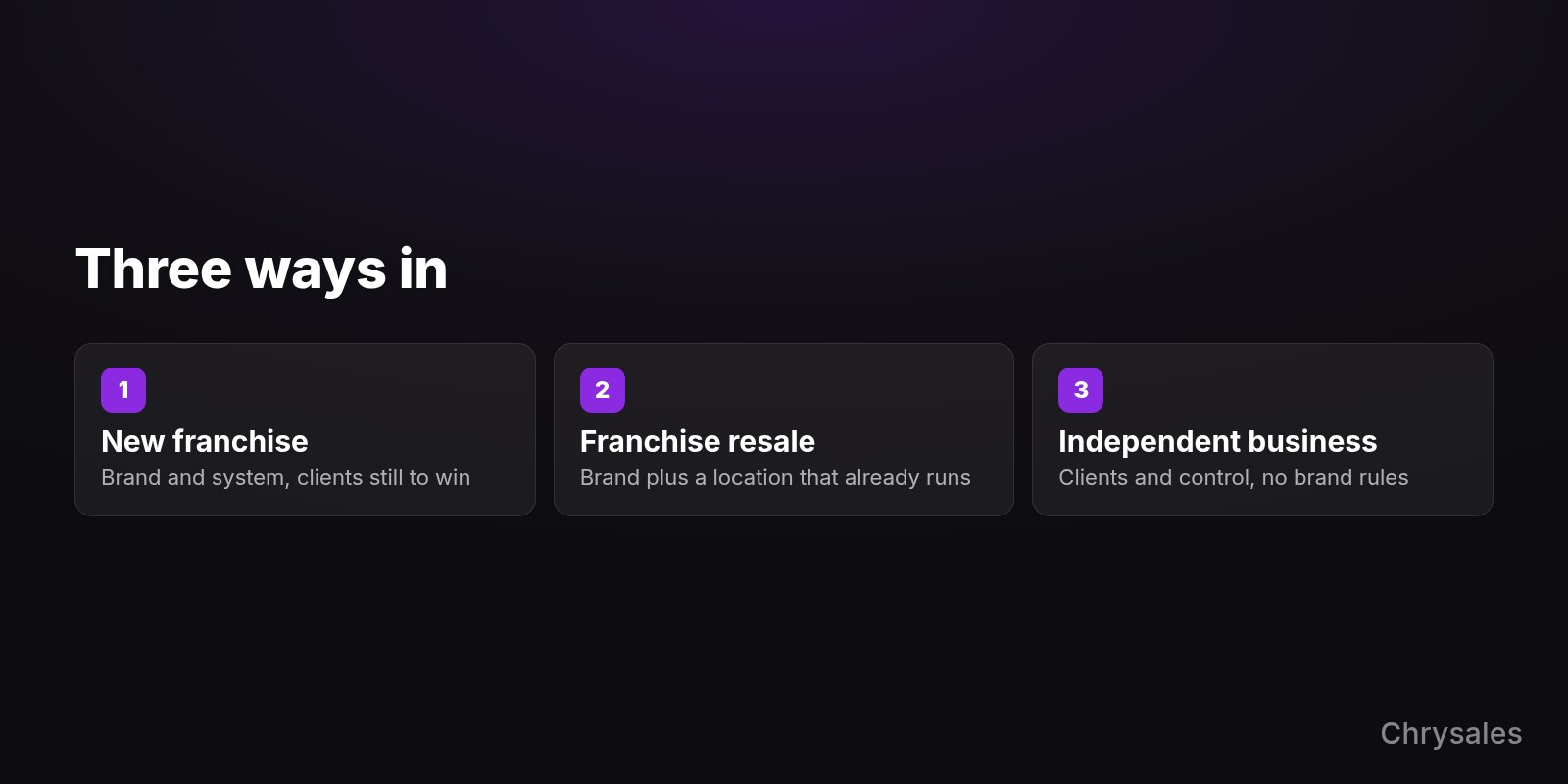
For a franchise, read the disclosure document. For an existing business, read the books and the client list. A resale, meaning a franchise location bought from its current owner, sits between the two.
The franchise disclosure document (FDD) is a long file from the franchisor. Under the federal FTC rule, as of November 2026, it must reach you at least 14 calendar days before you sign or pay the franchisor. Some states add their own rules.
The FDD has 23 numbered sections called Items. Check these four things first:
- Read Items 5, 6 and 7: the first fees, every other fee including royalties, and the estimated cost to open.
- Look at Item 17. It covers renewal, ending the deal and selling, which needs the franchisor's approval.
- Item 19 is where a franchisor may show what its locations earn. It's optional, but any claim about sales or profit must be there.
- Call the current and former franchisees listed in Item 20. The FTC says talking to them may be the most reliable check.
In a resale, the franchisor may give you that location's actual records, and you deal with both the franchisor and the seller.
Planning an SBA loan for a franchise? The SBA Franchise Directory lists the brands eligible for SBA financing. A listing is not an endorsement of the brand.
On the independent side, ask for the financial statements and tax returns, plus the key contracts. If you haven't found a company yet, you can find owners who might sell before it is listed.
Outside the US, rules differ. The UK has no franchise-specific law and no required FDD. Germany has no franchise-specific law either, and the duty to share key facts before signing comes from its civil code.
Conclusion: Start with who wins the clients
We suggest one simple test. Can you win clients on your own, from first contact to a signed deal?
If you can't yet, a franchise brand may bring people to you, but you pay for it on every sale. If you can, an existing business with clients spread across many accounts may suit you better.
This week, write down where the clients would come from in month one for each option. If the answer is "the brand" or "the old owner", read the documents with that in mind.
In this video, Sabir talks about building a sales system so clients come to you without you doing it all by hand.
Want the business you buy to win clients without leaning on the brand or the old owner? On a free strategy call, Chrysales can look at how that company wins clients today and what sales system to build. Plan how your new company wins clients, on a free call
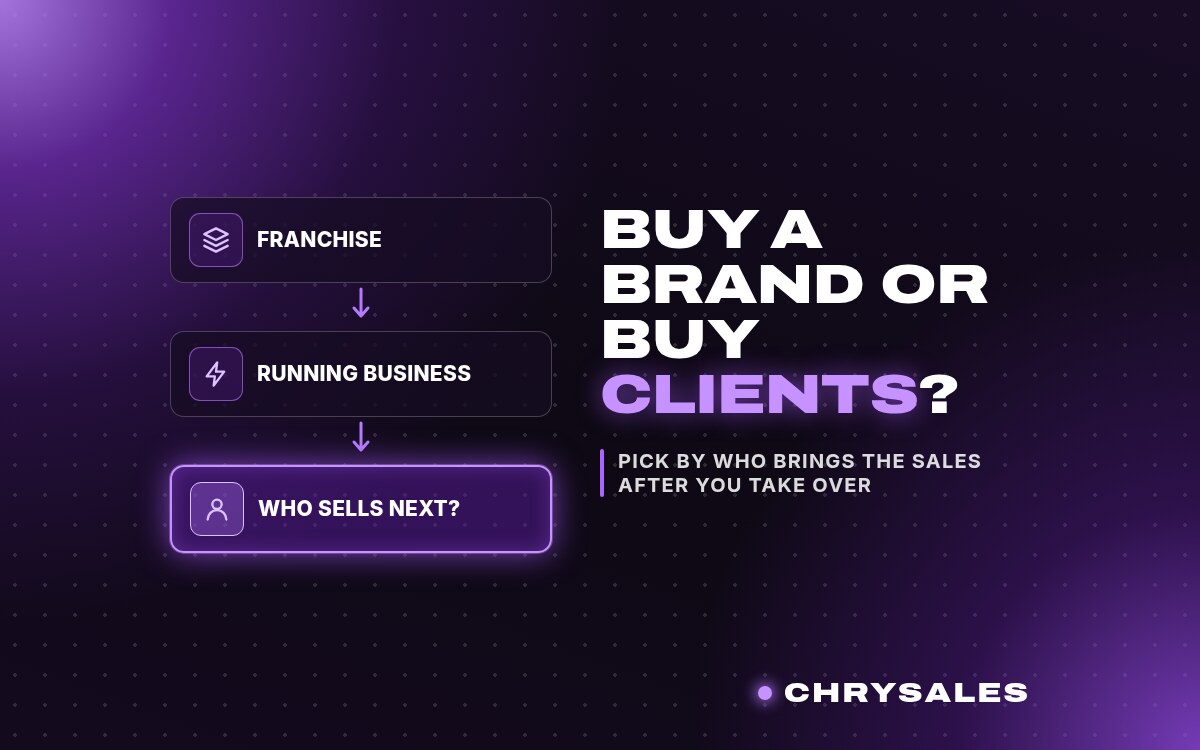
When you weigh a franchise vs buying an existing business, one question decides most of it: who brings the clients after you take over? A franchise gives you a known brand and a system, for fees on your sales and rules you must follow. An existing business usually comes with clients and sales already in place, but those clients may be loyal to the old owner.
The rules named here are mostly US rules. This isn't legal, tax or financial advice, so check your deal with a lawyer where you buy.
Franchise vs existing business: what you buy
A franchise sells you the right to use someone else's name and way of working. Buy an existing business and you get a company that already runs, with its clients and staff in place.
The US Small Business Administration (SBA) puts it simply. A franchise "gives you more guidance but less control". With a company you buy outright, you "typically get complete control over its direction."
| What you compare | Franchise | Existing business |
|---|---|---|
| Who brings clients | The brand, plus your own selling | The old owner, at first |
| Cost after you buy | Fees on your sales, for years | No franchisor fees |
| Control | The franchisor's rules | Mostly yours |
| Selling it later | Needs the franchisor's approval | Your own sale |
Who brings the clients after you buy
In a franchise, the brand helps people find you. In an existing business, the clients often know the old owner, not the company.
Before you trust a seller's client list, we suggest four questions. Each one tests whether the clients belong to the company or to the person selling it.
Watch for customer concentration too, where a few clients make up most of the sales. When new owners bought Jo's Candies, one customer was about 55% of revenue, according to Kellogg Insight.
They then won a national retailer, and the largest customer fell to about 35% of revenue.
A franchise doesn't remove the selling job. Franchisees often pay into a shared marketing fund. How that money gets spent was among their top concerns in a Federal Trade Commission (FTC) staff report.
We see this as the founder problem from the buyer's side. When every deal runs through one person, the business is hard to hand over. Our about page calls that founder trap "a job with more stress."
What each path costs over time
A franchise costs an upfront fee, then a share of your sales for as long as you run it. Buying outright costs the price, often paid partly over time, but nothing to a franchisor.
That share of sales is called a royalty: the fee for using the franchisor's name and system. The FTC's buyer guide warns that you typically owe royalties "even if you are losing money." You may also pay into an advertising fund.
In its 2025 annual report, Domino's says each US franchisee is generally required to pay a 5.5% royalty on sales. Its franchisees also put a further share of retail sales toward national marketing.
The big cost of an existing business is the price itself. A seller may agree to carry part of it through a seller note, a loan from the old owner. Before you agree a price, check what a business valuation number really means.
Why a franchise isn't automatically safer
The data doesn't clearly show that franchises fail less than independent businesses. The risk sits in the specific brand or company you buy.
FTC staff compared SBA loans to franchise buyers and to other small businesses. Franchise loans went unpaid, or defaulted, 3.9% of the time, against 3.5% for other borrowers.
FTC staff call the gap statistically significant. Still, they "cannot say with certainty that franchise loans are necessarily riskier."
A known brand doesn't settle the question either. In March 2026, Xponential Fitness agreed to pay $17 million to franchisees to settle an FTC case.
What to read before you sign
For a franchise, read the disclosure document. For an existing business, read the books and the client list. A resale, meaning a franchise location bought from its current owner, sits between the two.
The franchise disclosure document (FDD) is a long file from the franchisor. Under the federal FTC rule, as of November 2026, it must reach you at least 14 calendar days before you sign or pay the franchisor. Some states add their own rules.
The FDD has 23 numbered sections called Items. Check these four things first:
- Read Items 5, 6 and 7: the first fees, every other fee including royalties, and the estimated cost to open.
- Look at Item 17. It covers renewal, ending the deal and selling, which needs the franchisor's approval.
- Item 19 is where a franchisor may show what its locations earn. It's optional, but any claim about sales or profit must be there.
- Call the current and former franchisees listed in Item 20. The FTC says talking to them may be the most reliable check.
In a resale, the franchisor may give you that location's actual records, and you deal with both the franchisor and the seller.
Planning an SBA loan for a franchise? The SBA Franchise Directory lists the brands eligible for SBA financing. A listing is not an endorsement of the brand.
On the independent side, ask for the financial statements and tax returns, plus the key contracts. If you haven't found a company yet, you can find owners who might sell before it is listed.
Outside the US, rules differ. The UK has no franchise-specific law and no required FDD. Germany has no franchise-specific law either, and the duty to share key facts before signing comes from its civil code.
Conclusion: Start with who wins the clients
We suggest one simple test. Can you win clients on your own, from first contact to a signed deal?
If you can't yet, a franchise brand may bring people to you, but you pay for it on every sale. If you can, an existing business with clients spread across many accounts may suit you better.
This week, write down where the clients would come from in month one for each option. If the answer is "the brand" or "the old owner", read the documents with that in mind.
In this video, Sabir talks about building a sales system so clients come to you without you doing it all by hand.
Want the business you buy to win clients without leaning on the brand or the old owner? On a free strategy call, Chrysales can look at how that company wins clients today and what sales system to build. Plan how your new company wins clients, on a free call
Scaling Is Not Hard If You Have The Right Systems
If you’re serious about leveling up your scaling game, you need the right system, the right training, and the right team behind you. We're here to give you the exact tools and strategies top entrepreneurs use to dominate.

Discover the latest tips
View All
Chrysales was formed from the words "chrysalis" the stage where a caterpillar transforms into a butterfly and "sales".
It stands for one thing: sales transformation.Because scaling doesn’t happen by doing more of the same. Scaling only happens when you go through real transformation in your systems, your offer, team and the way you sell.


