.avif)
How to Find and Keep Top Performing Sales Reps
A top performing sales rep is someone who sells well, learns fast, and stays strong in a system that supports b2b sales, lead generation, and growth. They need the right process, training, and support to keep winning.
Here's the thing nobody tells you: most teams spend all their energy looking for great salespeople, then wonder why those reps leave or flop after three months. A top performing sales rep doesn't just appear out of nowhere and start closing deals. They need a system that lets them do what they do best. Without that, even the best hire will underperform.
This blog walks you through exactly how to find the right people, bring them on board the right way, and build an environment where they actually want to stay and win.
What Actually Makes Someone a Top Performing Sales Rep
Most people think great salespeople are born with some magic gene. They picture someone who walks into a room, flashes a smile, and closes deals by pure charisma. That's not how it works.
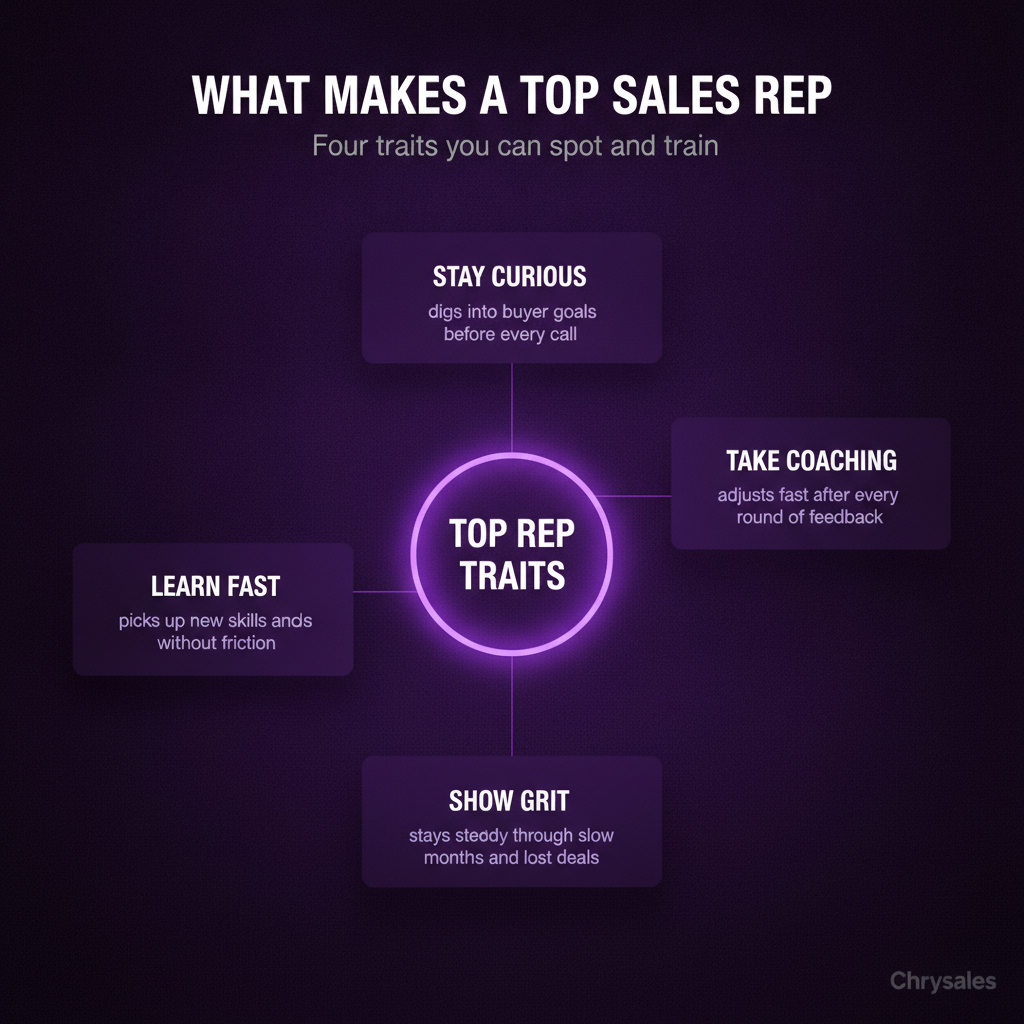
Real high performers share a few traits that you can spot and teach, including the 8 skills that you need to excel to become great in sales. They stay curious about the customer's business. They don't just pitch, they ask questions until they understand the real problem. They're coachable, meaning they take feedback and adjust fast. They don't get emotional when a deal falls through. And they show up every day with the same energy, whether they closed three deals last week or zero.
Curiosity Over Charisma
A top performing sales rep treats every call like a research project. Before they talk to anyone, they dig into the company's website, recent news, LinkedIn profiles, and any public info they can find. They don't wing it.
When they get on the call, they ask about the business, not just the pain point. They want to know how decisions get made, who else is involved, what's worked before, and what hasn't. Curiosity builds trust faster than any smooth pitch ever could.
Coachability Is Non-Negotiable
If someone can't take feedback without getting defensive, they won't last. The best reps ask for call recordings, review their own pitches, and request coaching sessions. They see every loss as a chance to get better, not a personal failure.
Pro Tip: During interviews, ask candidates to describe a time they changed their approach based on feedback. If they can't give a clear example, that's a red flag.
Where to Find Top Performing Sales Reps (And Where Not to Look)
You can't hire great salespeople if you're fishing in the wrong pond. Most companies post a job on Indeed, get 200 applications, and hire someone who sounds good on the phone. That's a gamble, not a process.
Look in Communities Where Sales Reps Actually Hang Out
Top performers don't usually scroll job boards. They're active in communities, taking courses, or already employed and happy. You need to go where they are.
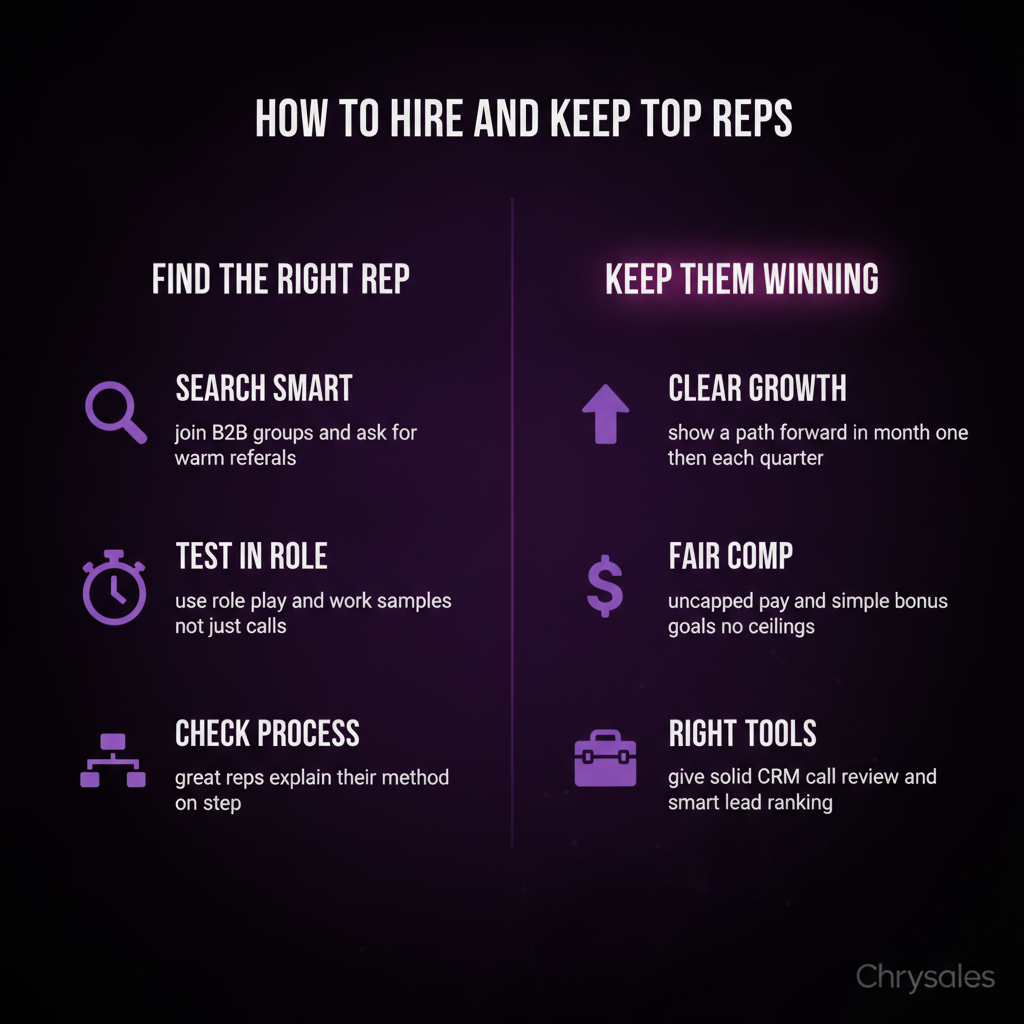
Check LinkedIn groups focused on B2B sales, join communities like Pavilion or RevGenius, and ask for referrals from people in your network who work in sales. A warm intro from someone credible beats a cold job post every time. You can also watch how to find clients who need your services right now for a deeper understanding of how to approach prospecting strategically.
Common mistake: Posting a generic "Sales Rep Needed" ad with no details about the system, training, or growth path. Great reps want to know what they're walking into, not just the base salary.
Avoid Hiring Only Based on Past Title or Company
Someone who worked at a big name company might sound impressive, but that doesn't mean they'll thrive in your setup. A rep who crushed it with a 50 person sales team, full CRM automation, and inbound leads might struggle in a smaller environment where they need to do their own prospecting and build the process as they go.
Focus on the skills and behaviors, not just the resume logo. Ask what systems they used, how much they built themselves, and how they handled rejection or slow months.
How to Hire a Sales Rep Who Will Actually Perform
Hiring the wrong person costs you more than just their salary. You lose time, momentum, and sometimes deals that slip through the cracks while they ramp up and fail. Here's how to get it right.
Build a Real Interview Process (Not Just Two Calls)
Most teams do a quick chat, a second call with the manager, and then make an offer. That's not enough to spot a top performing sales rep. A solid process looks like this:
- First call: Culture fit and basic qualifications. Can they communicate clearly? Are they asking good questions about the role?
- Role play: Give them a real scenario. Pretend you're a prospect with a common objection. See how they handle it. Don't tell them ahead of time. You want to see them think on their feet.
- Work sample: Ask them to research your ideal customer profile, pick three companies, and explain why they'd be a good fit. This shows research skills and initiative.
- Final interview: Dig into their process. How do they manage their day? How do they prioritize leads? What does their follow-up cadence look like?
Watch out: Candidates who talk a big game but can't walk you through a clear process probably don't have one. Process beats personality every time.
Test for Coachability and Resilience
During the interview, give feedback on their role play. Something like, "That was solid, but here's one thing you could try differently." Then do another quick scenario and see if they adjust. If they get defensive or ignore the feedback, move on. You don't want someone who can't take coaching.
A 15 person consulting firm we worked with used to hire based on "gut feel." They brought on three reps in two months. Two quit within 60 days because they couldn't handle the rejection or didn't fit the process. After switching to a structured interview with role plays and work samples, their next three hires stayed past a year and hit quota within 90 days.
The System That Turns a Good Hire Into a Top Performing Sales Rep
Here's where most teams mess up. They hire someone great, hand them a list of leads, and say "go close deals." No training. No playbook. No support. Then they're shocked when the rep doesn't perform.
A top performing sales rep needs a system. Think of it like handing someone a car and keys. If they don't know how to drive, they're going to crash. The system is the driving lesson.
Onboarding Is Not Optional
Your first 30 days with a new rep set the tone for everything. A real onboarding process includes:
- Product training: They need to know what you sell, who it's for, and why it matters. Not just features, but outcomes.
- ICP deep dive: Walk them through your ideal customer profile. Show them past deals that closed and why. Show them deals that didn't close and what went wrong.
- Sales process breakdown: Step by step. How do leads come in? How do you qualify them? What's the call structure? What objections come up most? What are the answers?
- Shadowing and practice: Let them listen to real calls. Then do mock calls with them before they talk to a real prospect.
Pro Tip: Record every call and review one per week with the rep. Pick one thing to improve each time. Small, consistent tweaks beat big vague feedback.
Give Them a Playbook, Not Just a Target
A playbook is a simple doc that answers the most common questions they'll face. It's not a script. It's a guide. Include things like:
- Top five objections and how to handle them
- Discovery questions that uncover real pain
- Qualifying criteria (when to move forward, when to walk away)
- Follow-up cadence (how many touches, what channels, how long to wait)
One marketing agency handed their new reps a 60 page manual full of company history and values. The reps never read it. When they switched to a 10 page playbook with real questions and answers, reps started closing deals in week three instead of week eight.
How to Keep Top Performing Sales Reps From Leaving
Most companies lose their best reps because they get a better offer somewhere else. But the money isn't always the real reason. Great salespeople leave when they feel stuck, unsupported, or bored.
Create a Clear Growth Path
Top performers want to know where they're going. If the only path is "keep doing the same thing and maybe get a raise," they'll leave.
Show them what's next. Can they move into a senior closer role? Lead a small team? Take on bigger accounts? Help build the sales process for a new product?
Have that conversation in the first month, then check in every quarter. If someone knows they can grow with you, they're way less likely to jump ship for an extra 10k somewhere else.
Comp Plans That Actually Motivate
Base salary matters, but commission structure matters more. If your comp plan is confusing or caps earnings, you're telling top performers to go somewhere else. According to recent B2B sales and marketing statistics, compensation structure directly impacts retention and performance metrics.
A good comp plan is simple:
- Clear base salary that covers living costs
- Uncapped commission that rewards over-performance
- Bonuses for hitting stretch goals, not just quota
Common mistake: Changing the comp plan mid year. That kills trust fast. Lock it in for at least 12 months unless you're increasing payouts.
Give Them Tools and Support, Not Just Leads
A top performing sales rep can't work magic with a broken CRM, no sales automation, and a list of bad leads. Invest in the tools they need:
- A CRM that actually works (not one they have to fight with every day)
- Lead enrichment so they're not spending three hours a day on manual research
- Call recording and analytics so they can review and improve
- AI powered lead scoring so they know who to call first
At Chrysales, we've helped over 500 sales teams set up systems that support their reps instead of slowing them down. When a rep has the right tools, they close more deals and stick around longer. It's that simple.
Building a Sales Team That Consistently Produces High Performers
Once you've hired and trained one great rep, the next step is doing it again and again. The goal isn't to get lucky with one superstar. It's to build a system that creates top performing sales reps every time.
Standardize the Process
Every rep should go through the same onboarding, use the same playbook, and follow the same sales process. That doesn't mean they can't add their own style. It means everyone starts from the same foundation.
When you standardize, you can measure what works. If one rep is closing 20% more deals, you can look at what they're doing differently and teach it to the rest of the team. Understanding the difference between sales system vs sales process helps you build both the structure and the execution that drive consistent results.
Hire in Small Batches, Not All at Once
Bringing on five reps at the same time sounds efficient, but it's risky. If your onboarding process has gaps, you just trained five people the wrong way.
Hire one or two, get them ramped, see what works, then refine the process. Once it's solid, scale up.
Watch out: Scaling too fast before your system is proven. We see this all the time with growing B2B companies. They hire a team, the team underperforms, and then they assume "sales isn't working" when really the system wasn't ready.
Keep Coaching, Even After Ramp
The best teams don't stop coaching after month three. They keep doing weekly call reviews, quarterly deep dives, and ongoing training. Research shows that consistent coaching correlates with higher close rates and team retention across B2B organizations.
Sales skills aren't "learn once and done." The market changes, buyers change, objections evolve. A top performing sales rep today might be average in six months if they stop learning. Keep the coaching going.
Why Most Sales Hiring Fails (And How to Avoid It)
Here's the reality: most sales hiring fails because companies treat it like a lottery. They hope the next person will be great, but they don't have a system to make sure of it.
A top performing sales rep isn't someone who magically shows up and closes deals on day one. They're someone with the right traits (curiosity, coachability, resilience) who gets plugged into a system that supports them, trains them, and gives them the tools to win.
If you're hiring reps and they keep flaming out, the problem isn't the people. It's the system around them. Fix the system first, then hire into it. That's how you build a sales team that actually performs. Many businesses learn this the hard way when their first sales hire fails due to lack of support infrastructure.
At Chrysales, we've trained over 1,000 business owners and 500 sales teams to do exactly this. We help you build the hiring process, the onboarding playbook, the sales system, and the coaching cadence. Then we help you hire and train the right people to run it. You can learn how to build a sales system so powerful clients come to you instead of relying solely on individual rep performance.
If you're serious about scaling your sales team the right way, learning how to build a sales system that actually scales is the foundation for sustainable growth.
Frequently Asked Questions
Q: How long does it take for a new sales rep to start closing deals?
Most reps need 60 to 90 days to ramp up if you have a solid onboarding process. The first 30 days should be training, shadowing, and practice. The next 30 days are when they start taking real calls and working deals. By month three, they should be hitting at least 50% of quota if the system is right. If it's taking longer, look at your onboarding and support, not just the rep.
Q: What's the biggest red flag during a sales interview?
When a candidate can't walk you through their process. If they can't explain how they prioritize leads, handle objections, or structure a discovery call, they probably don't have a repeatable approach. Great reps can break down their method step by step. If someone just says "I'm really good with people" or "I close deals," dig deeper. Vague answers usually mean no real process.
Q: Should I hire a junior rep or an experienced closer?
It depends on your system. If you have a solid playbook, strong onboarding, and time to coach, a junior rep can work great. They're often more coachable and hungry. If your sales process is still messy or you don't have time to train, hire someone with experience who can fill gaps and help you build. Just make sure they're not set in bad habits from their last job.
Q: How much should I pay a B2B sales rep?
Base salary usually ranges from 40k to 70k depending on experience and market, with on-target earnings (base plus commission) landing between 80k and 150k for solid B2B sales roles. The key is making commission uncapped and easy to understand. If your comp plan is confusing or limits upside, top performers won't take the job or they'll leave once they hit the ceiling.
Q: What should I do if a top performing sales rep wants to leave?
First, ask why. If it's just money, you might be able to match or beat the offer. If it's lack of growth, show them a clear path forward. If it's frustration with tools, leads, or support, fix those problems fast. Sometimes a great rep leaving is a wake up call that your system needs work. If they're leaving because they're bored or feel stuck, you waited too long to have the growth conversation.
A top performing sales rep is someone who sells well, learns fast, and stays strong in a system that supports b2b sales, lead generation, and growth. They need the right process, training, and support to keep winning.
Here's the thing nobody tells you: most teams spend all their energy looking for great salespeople, then wonder why those reps leave or flop after three months. A top performing sales rep doesn't just appear out of nowhere and start closing deals. They need a system that lets them do what they do best. Without that, even the best hire will underperform.
This blog walks you through exactly how to find the right people, bring them on board the right way, and build an environment where they actually want to stay and win.
What Actually Makes Someone a Top Performing Sales Rep
Most people think great salespeople are born with some magic gene. They picture someone who walks into a room, flashes a smile, and closes deals by pure charisma. That's not how it works.
Real high performers share a few traits that you can spot and teach, including the 8 skills that you need to excel to become great in sales. They stay curious about the customer's business. They don't just pitch, they ask questions until they understand the real problem. They're coachable, meaning they take feedback and adjust fast. They don't get emotional when a deal falls through. And they show up every day with the same energy, whether they closed three deals last week or zero.
Curiosity Over Charisma
A top performing sales rep treats every call like a research project. Before they talk to anyone, they dig into the company's website, recent news, LinkedIn profiles, and any public info they can find. They don't wing it.
When they get on the call, they ask about the business, not just the pain point. They want to know how decisions get made, who else is involved, what's worked before, and what hasn't. Curiosity builds trust faster than any smooth pitch ever could.
Coachability Is Non-Negotiable
If someone can't take feedback without getting defensive, they won't last. The best reps ask for call recordings, review their own pitches, and request coaching sessions. They see every loss as a chance to get better, not a personal failure.
Pro Tip: During interviews, ask candidates to describe a time they changed their approach based on feedback. If they can't give a clear example, that's a red flag.
Where to Find Top Performing Sales Reps (And Where Not to Look)
You can't hire great salespeople if you're fishing in the wrong pond. Most companies post a job on Indeed, get 200 applications, and hire someone who sounds good on the phone. That's a gamble, not a process.
Look in Communities Where Sales Reps Actually Hang Out
Top performers don't usually scroll job boards. They're active in communities, taking courses, or already employed and happy. You need to go where they are.
Check LinkedIn groups focused on B2B sales, join communities like Pavilion or RevGenius, and ask for referrals from people in your network who work in sales. A warm intro from someone credible beats a cold job post every time. You can also watch how to find clients who need your services right now for a deeper understanding of how to approach prospecting strategically.
Common mistake: Posting a generic "Sales Rep Needed" ad with no details about the system, training, or growth path. Great reps want to know what they're walking into, not just the base salary.
Avoid Hiring Only Based on Past Title or Company
Someone who worked at a big name company might sound impressive, but that doesn't mean they'll thrive in your setup. A rep who crushed it with a 50 person sales team, full CRM automation, and inbound leads might struggle in a smaller environment where they need to do their own prospecting and build the process as they go.
Focus on the skills and behaviors, not just the resume logo. Ask what systems they used, how much they built themselves, and how they handled rejection or slow months.
How to Hire a Sales Rep Who Will Actually Perform
Hiring the wrong person costs you more than just their salary. You lose time, momentum, and sometimes deals that slip through the cracks while they ramp up and fail. Here's how to get it right.
Build a Real Interview Process (Not Just Two Calls)
Most teams do a quick chat, a second call with the manager, and then make an offer. That's not enough to spot a top performing sales rep. A solid process looks like this:
- First call: Culture fit and basic qualifications. Can they communicate clearly? Are they asking good questions about the role?
- Role play: Give them a real scenario. Pretend you're a prospect with a common objection. See how they handle it. Don't tell them ahead of time. You want to see them think on their feet.
- Work sample: Ask them to research your ideal customer profile, pick three companies, and explain why they'd be a good fit. This shows research skills and initiative.
- Final interview: Dig into their process. How do they manage their day? How do they prioritize leads? What does their follow-up cadence look like?
Watch out: Candidates who talk a big game but can't walk you through a clear process probably don't have one. Process beats personality every time.
Test for Coachability and Resilience
During the interview, give feedback on their role play. Something like, "That was solid, but here's one thing you could try differently." Then do another quick scenario and see if they adjust. If they get defensive or ignore the feedback, move on. You don't want someone who can't take coaching.
A 15 person consulting firm we worked with used to hire based on "gut feel." They brought on three reps in two months. Two quit within 60 days because they couldn't handle the rejection or didn't fit the process. After switching to a structured interview with role plays and work samples, their next three hires stayed past a year and hit quota within 90 days.
The System That Turns a Good Hire Into a Top Performing Sales Rep
Here's where most teams mess up. They hire someone great, hand them a list of leads, and say "go close deals." No training. No playbook. No support. Then they're shocked when the rep doesn't perform.
A top performing sales rep needs a system. Think of it like handing someone a car and keys. If they don't know how to drive, they're going to crash. The system is the driving lesson.
Onboarding Is Not Optional
Your first 30 days with a new rep set the tone for everything. A real onboarding process includes:
- Product training: They need to know what you sell, who it's for, and why it matters. Not just features, but outcomes.
- ICP deep dive: Walk them through your ideal customer profile. Show them past deals that closed and why. Show them deals that didn't close and what went wrong.
- Sales process breakdown: Step by step. How do leads come in? How do you qualify them? What's the call structure? What objections come up most? What are the answers?
- Shadowing and practice: Let them listen to real calls. Then do mock calls with them before they talk to a real prospect.
Pro Tip: Record every call and review one per week with the rep. Pick one thing to improve each time. Small, consistent tweaks beat big vague feedback.
Give Them a Playbook, Not Just a Target
A playbook is a simple doc that answers the most common questions they'll face. It's not a script. It's a guide. Include things like:
- Top five objections and how to handle them
- Discovery questions that uncover real pain
- Qualifying criteria (when to move forward, when to walk away)
- Follow-up cadence (how many touches, what channels, how long to wait)
One marketing agency handed their new reps a 60 page manual full of company history and values. The reps never read it. When they switched to a 10 page playbook with real questions and answers, reps started closing deals in week three instead of week eight.
How to Keep Top Performing Sales Reps From Leaving
Most companies lose their best reps because they get a better offer somewhere else. But the money isn't always the real reason. Great salespeople leave when they feel stuck, unsupported, or bored.
Create a Clear Growth Path
Top performers want to know where they're going. If the only path is "keep doing the same thing and maybe get a raise," they'll leave.
Show them what's next. Can they move into a senior closer role? Lead a small team? Take on bigger accounts? Help build the sales process for a new product?
Have that conversation in the first month, then check in every quarter. If someone knows they can grow with you, they're way less likely to jump ship for an extra 10k somewhere else.
Comp Plans That Actually Motivate
Base salary matters, but commission structure matters more. If your comp plan is confusing or caps earnings, you're telling top performers to go somewhere else. According to recent B2B sales and marketing statistics, compensation structure directly impacts retention and performance metrics.
A good comp plan is simple:
- Clear base salary that covers living costs
- Uncapped commission that rewards over-performance
- Bonuses for hitting stretch goals, not just quota
Common mistake: Changing the comp plan mid year. That kills trust fast. Lock it in for at least 12 months unless you're increasing payouts.
Give Them Tools and Support, Not Just Leads
A top performing sales rep can't work magic with a broken CRM, no sales automation, and a list of bad leads. Invest in the tools they need:
- A CRM that actually works (not one they have to fight with every day)
- Lead enrichment so they're not spending three hours a day on manual research
- Call recording and analytics so they can review and improve
- AI powered lead scoring so they know who to call first
At Chrysales, we've helped over 500 sales teams set up systems that support their reps instead of slowing them down. When a rep has the right tools, they close more deals and stick around longer. It's that simple.
Building a Sales Team That Consistently Produces High Performers
Once you've hired and trained one great rep, the next step is doing it again and again. The goal isn't to get lucky with one superstar. It's to build a system that creates top performing sales reps every time.
Standardize the Process
Every rep should go through the same onboarding, use the same playbook, and follow the same sales process. That doesn't mean they can't add their own style. It means everyone starts from the same foundation.
When you standardize, you can measure what works. If one rep is closing 20% more deals, you can look at what they're doing differently and teach it to the rest of the team. Understanding the difference between sales system vs sales process helps you build both the structure and the execution that drive consistent results.
Hire in Small Batches, Not All at Once
Bringing on five reps at the same time sounds efficient, but it's risky. If your onboarding process has gaps, you just trained five people the wrong way.
Hire one or two, get them ramped, see what works, then refine the process. Once it's solid, scale up.
Watch out: Scaling too fast before your system is proven. We see this all the time with growing B2B companies. They hire a team, the team underperforms, and then they assume "sales isn't working" when really the system wasn't ready.
Keep Coaching, Even After Ramp
The best teams don't stop coaching after month three. They keep doing weekly call reviews, quarterly deep dives, and ongoing training. Research shows that consistent coaching correlates with higher close rates and team retention across B2B organizations.
Sales skills aren't "learn once and done." The market changes, buyers change, objections evolve. A top performing sales rep today might be average in six months if they stop learning. Keep the coaching going.
Why Most Sales Hiring Fails (And How to Avoid It)
Here's the reality: most sales hiring fails because companies treat it like a lottery. They hope the next person will be great, but they don't have a system to make sure of it.
A top performing sales rep isn't someone who magically shows up and closes deals on day one. They're someone with the right traits (curiosity, coachability, resilience) who gets plugged into a system that supports them, trains them, and gives them the tools to win.
If you're hiring reps and they keep flaming out, the problem isn't the people. It's the system around them. Fix the system first, then hire into it. That's how you build a sales team that actually performs. Many businesses learn this the hard way when their first sales hire fails due to lack of support infrastructure.
At Chrysales, we've trained over 1,000 business owners and 500 sales teams to do exactly this. We help you build the hiring process, the onboarding playbook, the sales system, and the coaching cadence. Then we help you hire and train the right people to run it. You can learn how to build a sales system so powerful clients come to you instead of relying solely on individual rep performance.
If you're serious about scaling your sales team the right way, learning how to build a sales system that actually scales is the foundation for sustainable growth.
Frequently Asked Questions
Q: How long does it take for a new sales rep to start closing deals?
Most reps need 60 to 90 days to ramp up if you have a solid onboarding process. The first 30 days should be training, shadowing, and practice. The next 30 days are when they start taking real calls and working deals. By month three, they should be hitting at least 50% of quota if the system is right. If it's taking longer, look at your onboarding and support, not just the rep.
Q: What's the biggest red flag during a sales interview?
When a candidate can't walk you through their process. If they can't explain how they prioritize leads, handle objections, or structure a discovery call, they probably don't have a repeatable approach. Great reps can break down their method step by step. If someone just says "I'm really good with people" or "I close deals," dig deeper. Vague answers usually mean no real process.
Q: Should I hire a junior rep or an experienced closer?
It depends on your system. If you have a solid playbook, strong onboarding, and time to coach, a junior rep can work great. They're often more coachable and hungry. If your sales process is still messy or you don't have time to train, hire someone with experience who can fill gaps and help you build. Just make sure they're not set in bad habits from their last job.
Q: How much should I pay a B2B sales rep?
Base salary usually ranges from 40k to 70k depending on experience and market, with on-target earnings (base plus commission) landing between 80k and 150k for solid B2B sales roles. The key is making commission uncapped and easy to understand. If your comp plan is confusing or limits upside, top performers won't take the job or they'll leave once they hit the ceiling.
Q: What should I do if a top performing sales rep wants to leave?
First, ask why. If it's just money, you might be able to match or beat the offer. If it's lack of growth, show them a clear path forward. If it's frustration with tools, leads, or support, fix those problems fast. Sometimes a great rep leaving is a wake up call that your system needs work. If they're leaving because they're bored or feel stuck, you waited too long to have the growth conversation.
Scaling Is Not Hard If You Have The Right Systems
If you’re serious about leveling up your scaling game, you need the right system, the right training, and the right team behind you. We're here to give you the exact tools and strategies top entrepreneurs use to dominate.

Discover the latest tips
View All.avif)
Chrysales was formed from the words "chrysalis" the stage where a caterpillar transforms into a butterfly and "sales".
It stands for one thing: sales transformation.Because scaling doesn’t happen by doing more of the same. Scaling only happens when you go through real transformation in your systems, your offer, team and the way you sell.
.avif)


