
Business broker fees: who pays and what a buyer should ask
Business broker fees are usually paid by the seller, not by you as the buyer. The broker mostly earns a success fee, a share of the sale price usually paid when the deal closes. Published ranges for smaller businesses run from about 4% to 15%, depending on the source.
In most deals, you pay a broker only if you hire your own adviser, under a contract you sign. Either way, the seller's broker works for the seller, and the fee sits inside the price you pay.
Who pays the business broker
In most small-business sales, the seller pays the broker. The fee usually comes out of the sale price at closing, so you get no separate bill.
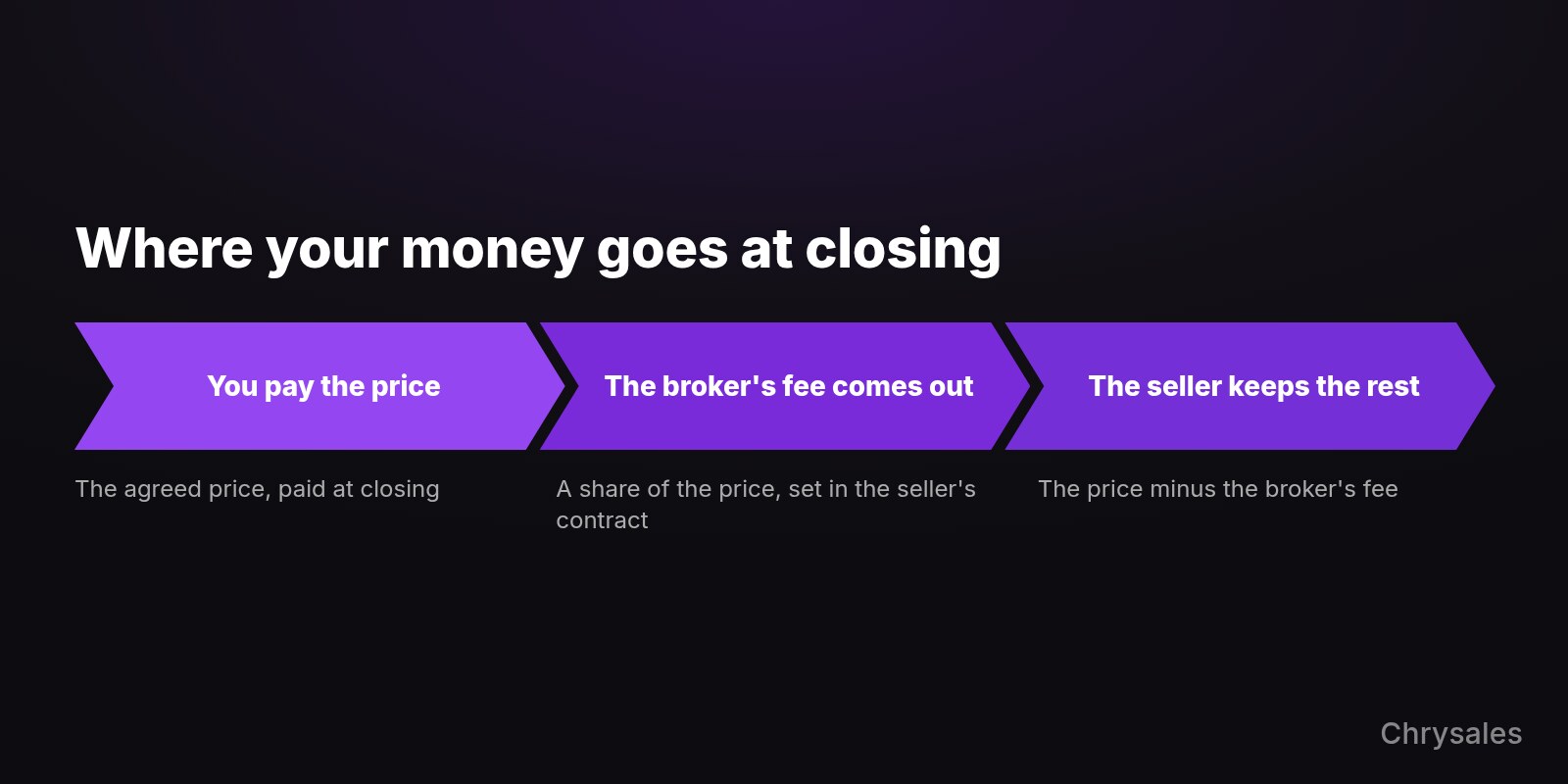
On closing day the broker is usually paid out of your money, even though only the seller signed the broker's contract.
The reason is how brokers make a living. The IBBA's guide to the profession says most brokers represent the business owner. They earn most of their money from commissions on their seller-client's sale.
Some firms put this in writing. IBA is a US brokerage. Its buyer FAQ says, "All of IBA's fees are paid by our sell side clients." You pay nothing to look at a business IBA represents.
Some online marketplaces work the same way. Acquire.com charges the seller a 6-8% closing fee, due when the sale closes (as of November 2026).
Typical business broker fees by source
There is no single rate, and the share usually drops as deals get bigger.
Here is what three sources say, as of November 2026:
| Source | Range | What it covers |
|---|---|---|
| IBBA guide (2021) | 8-15% | Businesses under $2 million |
| Robinson & Henry, law firm | 7-15% | Small and mid-size businesses |
| Website Closers, broker | About 4-10% | Its sale-price estimate |
The ranges come from the IBBA guide, the Colorado law firm Robinson & Henry and the broker Website Closers. They don't agree, so treat any single number as one firm's terms.
The IBBA guide says fees may come with an agreed minimum, a fixed amount the broker gets even on a small sale. That floor can push the real percentage up on a cheap business.
On larger deals the percentage is usually smaller, often on a sliding scale where each slice of the price gets a lower rate.
What the fee means for your price
The seller sets the asking price knowing part of it goes to the broker. So the fee is already inside the number you see, and that number is open to negotiation.
Take a made-up example. A business sells for $800,000 and the broker's fee is 10%. Then $80,000 of what you pay goes to the broker.
The fee also leaves the seller with less cash at closing. Keep that in mind if you plan to ask the seller to finance part of the price with a seller note.
Asking prices are a starting point. In the IBBA and M&A Source Market Pulse survey of deals closed in late 2022, final prices averaged 93% of the asking price. For businesses under $500,000, the average was 89%.
So judge the price by what the business earns. Our guide on what a valuation number tells you explains how to read one.
When the buyer pays a broker
You pay a broker when you hire your own. A buy-side adviser works for you, and you pay them with a retainer, a success fee, or both.
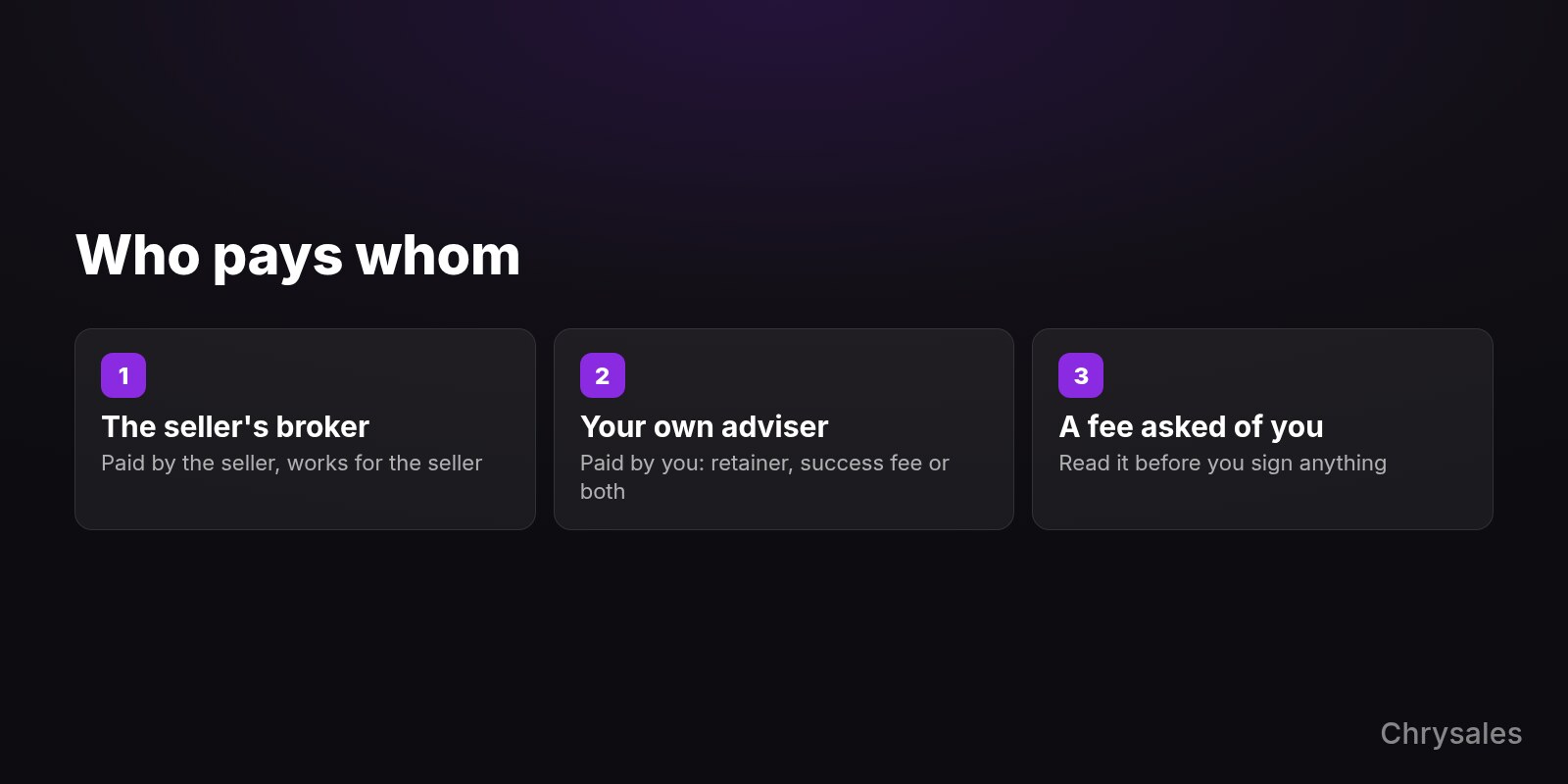
Of the three set-ups in the image, the third is where buyers get surprised.
CT Acquisitions sells buy-side help, and it says the listing broker represents the seller, not you. It also says the buyer pays their own adviser.
A retainer is money paid before or during the work. A success fee is usually paid at closing.
Sometimes the seller's broker shares its fee with your adviser, which Website Closers calls co-brokering. If it won't, you usually pay your adviser yourself.
Searchfunder is a forum for company buyers. There, one practitioner said that a serious adviser is unlikely to work for a first-time buyer on a success fee alone.
Some buyers meet a fee they didn't plan for. Members of the same forum have discussed a seller's broker asking the buyer for a fee at closing. So read every document that mentions a fee before you sign.
Upfront fees need the same care. Sprintlaw, a UK consultancy, notes they may be non-refundable and warns against trusting verbal promises of refunds or fee waivers.
Questions to ask a broker first
Before you share your finances or sign anything, ask a broker these five questions and get every answer in writing.
- Who do you work for in this sale, the seller or me?
- Who pays your fee, and when is it paid?
- Will you ask me to sign anything that includes a fee?
- Are you licensed where this business is located?
- Will you confirm in writing that your fee is paid at closing?
In 2021 the IBBA guide said only Nevada and Illinois required a business broker license. About 17 states also required a real estate license when a lease or property was part of the sale.
Laws change and differ by state and country, so check with a local lawyer.
Question 5 protects you after the sale. Permanent Equity, a US firm that buys companies, asks the broker for a statement after closing that its fee is paid in full. It warns that an unpaid fee "can result in a lien on the Business".
In the US, a lien is a legal claim against the company you just bought.
Conclusion: Ask who pays before anything else
Before you talk price, ask the broker who they work for and who pays them. In most deals the answer is the seller, and that tells you whose side the broker is on.
Then compare the asking price with what the business earns, and get every fee term in writing. Want no listing broker in the middle? Finding owners who never listed is the other route, though it takes more of your time.
Found a business worth buying and want its sales to run without the seller? On a free strategy call, Chrysales can talk through the sales system for that company with you. Plan sales for the business you're buying
Business broker fees are usually paid by the seller, not by you as the buyer. The broker mostly earns a success fee, a share of the sale price usually paid when the deal closes. Published ranges for smaller businesses run from about 4% to 15%, depending on the source.
In most deals, you pay a broker only if you hire your own adviser, under a contract you sign. Either way, the seller's broker works for the seller, and the fee sits inside the price you pay.
Who pays the business broker
In most small-business sales, the seller pays the broker. The fee usually comes out of the sale price at closing, so you get no separate bill.
On closing day the broker is usually paid out of your money, even though only the seller signed the broker's contract.
The reason is how brokers make a living. The IBBA's guide to the profession says most brokers represent the business owner. They earn most of their money from commissions on their seller-client's sale.
Some firms put this in writing. IBA is a US brokerage. Its buyer FAQ says, "All of IBA's fees are paid by our sell side clients." You pay nothing to look at a business IBA represents.
Some online marketplaces work the same way. Acquire.com charges the seller a 6-8% closing fee, due when the sale closes (as of November 2026).
Typical business broker fees by source
There is no single rate, and the share usually drops as deals get bigger.
Here is what three sources say, as of November 2026:
| Source | Range | What it covers |
|---|---|---|
| IBBA guide (2021) | 8-15% | Businesses under $2 million |
| Robinson & Henry, law firm | 7-15% | Small and mid-size businesses |
| Website Closers, broker | About 4-10% | Its sale-price estimate |
The ranges come from the IBBA guide, the Colorado law firm Robinson & Henry and the broker Website Closers. They don't agree, so treat any single number as one firm's terms.
The IBBA guide says fees may come with an agreed minimum, a fixed amount the broker gets even on a small sale. That floor can push the real percentage up on a cheap business.
On larger deals the percentage is usually smaller, often on a sliding scale where each slice of the price gets a lower rate.
What the fee means for your price
The seller sets the asking price knowing part of it goes to the broker. So the fee is already inside the number you see, and that number is open to negotiation.
Take a made-up example. A business sells for $800,000 and the broker's fee is 10%. Then $80,000 of what you pay goes to the broker.
The fee also leaves the seller with less cash at closing. Keep that in mind if you plan to ask the seller to finance part of the price with a seller note.
Asking prices are a starting point. In the IBBA and M&A Source Market Pulse survey of deals closed in late 2022, final prices averaged 93% of the asking price. For businesses under $500,000, the average was 89%.
So judge the price by what the business earns. Our guide on what a valuation number tells you explains how to read one.
When the buyer pays a broker
You pay a broker when you hire your own. A buy-side adviser works for you, and you pay them with a retainer, a success fee, or both.
Of the three set-ups in the image, the third is where buyers get surprised.
CT Acquisitions sells buy-side help, and it says the listing broker represents the seller, not you. It also says the buyer pays their own adviser.
A retainer is money paid before or during the work. A success fee is usually paid at closing.
Sometimes the seller's broker shares its fee with your adviser, which Website Closers calls co-brokering. If it won't, you usually pay your adviser yourself.
Searchfunder is a forum for company buyers. There, one practitioner said that a serious adviser is unlikely to work for a first-time buyer on a success fee alone.
Some buyers meet a fee they didn't plan for. Members of the same forum have discussed a seller's broker asking the buyer for a fee at closing. So read every document that mentions a fee before you sign.
Upfront fees need the same care. Sprintlaw, a UK consultancy, notes they may be non-refundable and warns against trusting verbal promises of refunds or fee waivers.
Questions to ask a broker first
Before you share your finances or sign anything, ask a broker these five questions and get every answer in writing.
- Who do you work for in this sale, the seller or me?
- Who pays your fee, and when is it paid?
- Will you ask me to sign anything that includes a fee?
- Are you licensed where this business is located?
- Will you confirm in writing that your fee is paid at closing?
In 2021 the IBBA guide said only Nevada and Illinois required a business broker license. About 17 states also required a real estate license when a lease or property was part of the sale.
Laws change and differ by state and country, so check with a local lawyer.
Question 5 protects you after the sale. Permanent Equity, a US firm that buys companies, asks the broker for a statement after closing that its fee is paid in full. It warns that an unpaid fee "can result in a lien on the Business".
In the US, a lien is a legal claim against the company you just bought.
Conclusion: Ask who pays before anything else
Before you talk price, ask the broker who they work for and who pays them. In most deals the answer is the seller, and that tells you whose side the broker is on.
Then compare the asking price with what the business earns, and get every fee term in writing. Want no listing broker in the middle? Finding owners who never listed is the other route, though it takes more of your time.
Found a business worth buying and want its sales to run without the seller? On a free strategy call, Chrysales can talk through the sales system for that company with you. Plan sales for the business you're buying
Scaling Is Not Hard If You Have The Right Systems
If you’re serious about leveling up your scaling game, you need the right system, the right training, and the right team behind you. We're here to give you the exact tools and strategies top entrepreneurs use to dominate.

Discover the latest tips
View All
Chrysales was formed from the words "chrysalis" the stage where a caterpillar transforms into a butterfly and "sales".
It stands for one thing: sales transformation.Because scaling doesn’t happen by doing more of the same. Scaling only happens when you go through real transformation in your systems, your offer, team and the way you sell.


