
How to pay an appointment setter: hourly, per meeting or a mix
An appointment setter finds likely buyers and books sales calls for you or your closer. The closer is the person who runs the call and asks for the deal. The simple answer to how to pay an appointment setter: a fixed base for their hours, plus a bonus for each good call.
For a small team, we suggest this mix as the first setup. Pay the bonus only when the call happens with a buyer who fits rules you wrote down.
Commission-only pay costs less up front. In our view it attracts fewer good people and rewards booking anyone who says yes. If you'd rather buy meetings from an outside firm, compare agency pricing models instead.
What appointment setters usually earn
Job ads in the US show setter base pay of about $17-20 an hour, with bonuses on top. In the UK, reported pay is about £27,000 a year.
Indeed shows an average setter base of $20.07 an hour in the US, from job postings. Indeed UK shows an average of £27,357 a year. Both figures are as of November 2026.
There is no official US job called "appointment setter". The closest group in government data is telemarketers. The US Bureau of Labor Statistics puts their median at $17.04 an hour in May 2025, with commissions and bonuses already included.
These figures cover all industries. Full-time SDRs (sales development reps who book calls, mostly at larger firms) earn more. The Bridge Group's 2025 survey puts their median at $80,000 a year when they hit target.
Weighing a bigger hire? Check the full cost of a sales hire.
How to pay an appointment setter
Give a fixed base for the hours, then add a bonus for each good call. Hourly-only pay can fund busy days with no good calls. Commission-only pay can leave a good setter unpaid for weeks, so they leave.
| Pay model | What it rewards | Main risk |
|---|---|---|
| Hourly or salary only | Time spent | Few good calls |
| Per meeting only | Any call it can book | Weak calls |
| Base plus bonus per good call | Real buyers who show up | Needs written rules first |
Salesforce's blog puts the usual SDR split between 50/50 and 70/30, base to bonus. The Bridge Group median is 68:32.
One real example is SalesRoads, a US appointment-setting company. Its own B2B setter job ad offers $17 an hour base plus an uncapped bonus per qualified appointment. The bonus is worth about $5.50 an hour when targets are met (as of November 2026).
SalesRoads says programs with senior buyers may pay more per appointment, and high-volume programs less. The ad adds: "This is not a commission-only role."
Still deciding on the role itself? Read whether to hire a setter or a closer first.
Pay for held, qualified meetings
Before day one, write down what earns the bonus. In the setup we suggest, a call counts only if the buyer showed up (held) and fits your written rules (qualified).
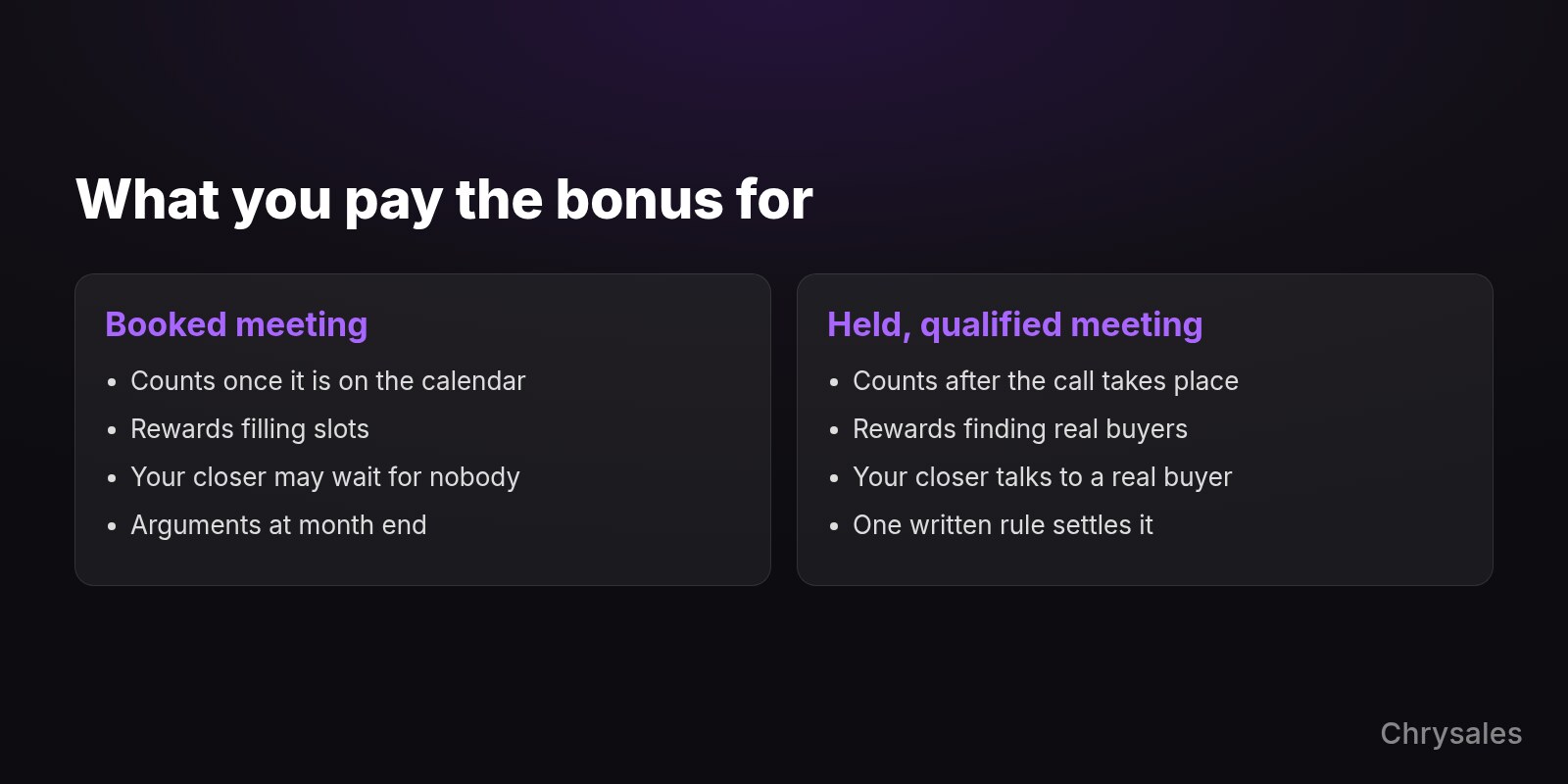
"Compensating on activities alone can lead to a quantity over quality mindset," Molly Clarke warns on the Salesforce blog.
Jason Lemkin, founder of SaaStr, writes that "the most efficient sales teams tend to comp SDRs on Accepted Meetings, one way or another." Put simply, pay for calls your closer accepts as a good fit, so the setter goes straight back to booking.
We suggest the closer (or you) checks each call against the rules soon after it happens. A no-show, where the buyer doesn't turn up, earns nothing. If the setter rebooks it and the call happens, it counts.
Here is a one-line rule to copy. The criteria are made up, so change them to fit your buyers.
Paid meeting = the call took place, the buyer is a decision maker at a company of 20-200 people with a problem we solve, and stayed 15+ minutes. Not held: no bonus. Rebooked and held: bonus.Set the bonus from your numbers
Start from what one held, qualified call is worth to you, then pay a small share of it. Here is an example with round numbers, not market data.
- A new client leaves you $8,000 in gross profit (what's left after direct costs).
- One in four of these calls becomes a client.
- So each call is worth about $2,000 to you.
- Pay 5% of that as the bonus, which is $100 per call.
The 5% share is our suggestion, not a market rate.
Don't tie the main bonus to closed deals when your sales cycle is long. The setter can't control the close, and waiting months for pay pulls them away from booking. Paying the person who closes is a different question: see how to structure sales rep commission.
Run a trial, then check one number
In the trial we suggest, keep the base fixed for the first 4-6 weeks. Then judge the setup on one number: what you paid per held, qualified call, against what a call is worth to you.
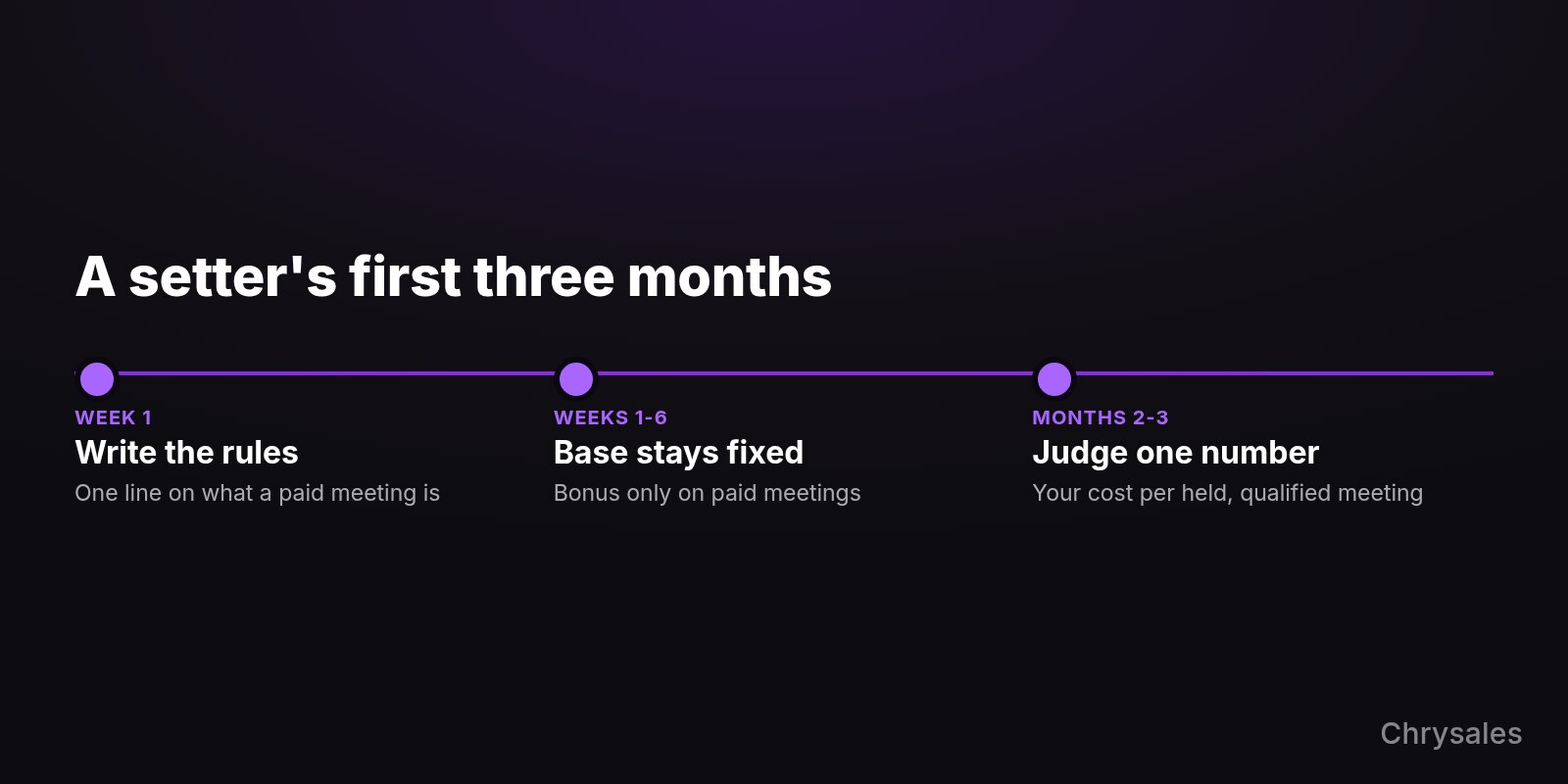
Don't judge too early. In the Bridge Group survey, a new SDR takes about 3 months on average to work at full speed. The median target there is 10 meetings held a month, and only 60% of SDRs reach their quota.
Here is the same check with round numbers. Say the base is about $2,700 for the month, roughly $17 an hour full time. Add 12 calls at $100, and you paid $3,900, or about $325 per call against $2,000 of value.
If that cost creeps toward the value, fix the list or the message before you change the pay.
One legal pointer, not advice. If your setter is legally an employee, their pay for the hours worked must reach the minimum wage, even with a bonus. That is £12.71 an hour in the UK for workers 21 and over from April 2026, where sales commission can count toward it.
In Germany it is €13.90 an hour since January 2026. The US federal minimum is $7.25 an hour, and some states set higher rates.
Whether a freelancer counts as an employee differs by country, and a new US rule on this takes effect on January 22, 2027. Check with a lawyer or employment adviser in your country before you sign.
Conclusion: Define a paid meeting first
Start this week with one line: what a paid meeting is. Share it with your setter and your closer.
Then pick a base and a bonus per paid call, set from what a call is worth to you. When the trial ends, check your cost per held, qualified call. One warning: no pay plan fixes a weak list or an offer buyers don't want.
Want a second opinion on your setter's pay rules? On a free strategy call, Chrysales can map the setter role with you, from the paid-meeting rules to the process they follow. Plan your setter setup on a free call
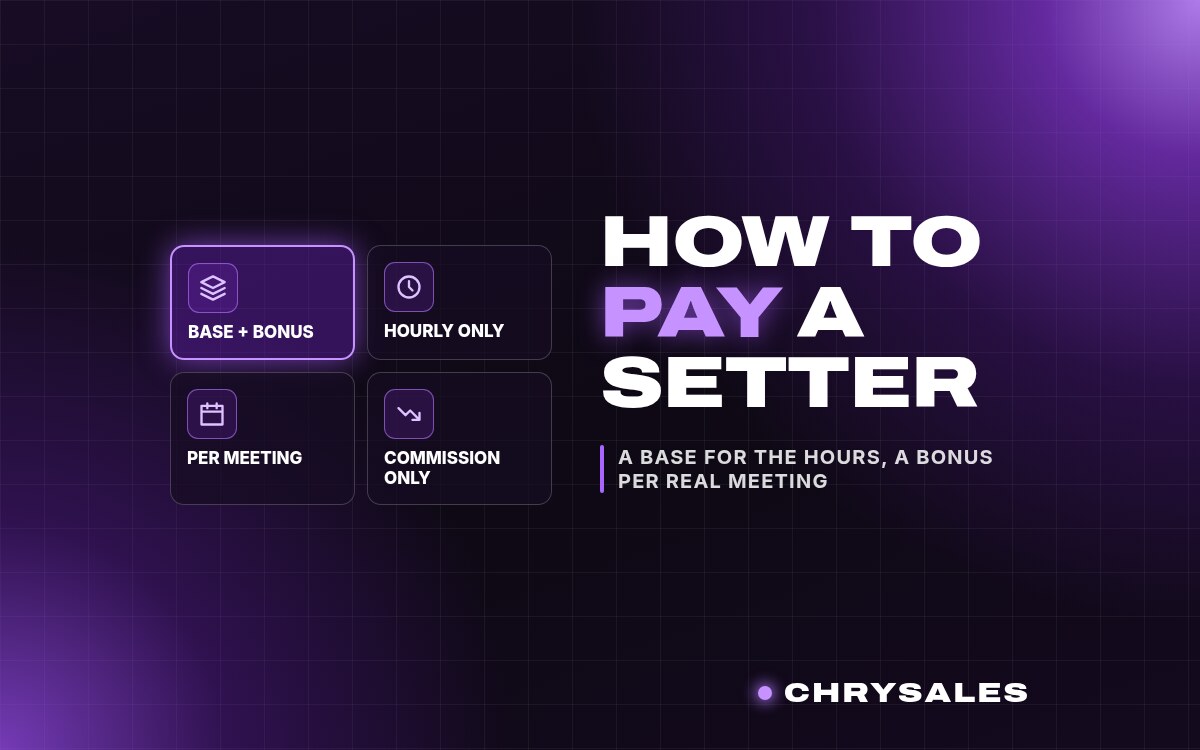
An appointment setter finds likely buyers and books sales calls for you or your closer. The closer is the person who runs the call and asks for the deal. The simple answer to how to pay an appointment setter: a fixed base for their hours, plus a bonus for each good call.
For a small team, we suggest this mix as the first setup. Pay the bonus only when the call happens with a buyer who fits rules you wrote down.
Commission-only pay costs less up front. In our view it attracts fewer good people and rewards booking anyone who says yes. If you'd rather buy meetings from an outside firm, compare agency pricing models instead.
What appointment setters usually earn
Job ads in the US show setter base pay of about $17-20 an hour, with bonuses on top. In the UK, reported pay is about £27,000 a year.
Indeed shows an average setter base of $20.07 an hour in the US, from job postings. Indeed UK shows an average of £27,357 a year. Both figures are as of November 2026.
There is no official US job called "appointment setter". The closest group in government data is telemarketers. The US Bureau of Labor Statistics puts their median at $17.04 an hour in May 2025, with commissions and bonuses already included.
These figures cover all industries. Full-time SDRs (sales development reps who book calls, mostly at larger firms) earn more. The Bridge Group's 2025 survey puts their median at $80,000 a year when they hit target.
Weighing a bigger hire? Check the full cost of a sales hire.
How to pay an appointment setter
Give a fixed base for the hours, then add a bonus for each good call. Hourly-only pay can fund busy days with no good calls. Commission-only pay can leave a good setter unpaid for weeks, so they leave.
| Pay model | What it rewards | Main risk |
|---|---|---|
| Hourly or salary only | Time spent | Few good calls |
| Per meeting only | Any call it can book | Weak calls |
| Base plus bonus per good call | Real buyers who show up | Needs written rules first |
Salesforce's blog puts the usual SDR split between 50/50 and 70/30, base to bonus. The Bridge Group median is 68:32.
One real example is SalesRoads, a US appointment-setting company. Its own B2B setter job ad offers $17 an hour base plus an uncapped bonus per qualified appointment. The bonus is worth about $5.50 an hour when targets are met (as of November 2026).
SalesRoads says programs with senior buyers may pay more per appointment, and high-volume programs less. The ad adds: "This is not a commission-only role."
Still deciding on the role itself? Read whether to hire a setter or a closer first.
Pay for held, qualified meetings
Before day one, write down what earns the bonus. In the setup we suggest, a call counts only if the buyer showed up (held) and fits your written rules (qualified).
"Compensating on activities alone can lead to a quantity over quality mindset," Molly Clarke warns on the Salesforce blog.
Jason Lemkin, founder of SaaStr, writes that "the most efficient sales teams tend to comp SDRs on Accepted Meetings, one way or another." Put simply, pay for calls your closer accepts as a good fit, so the setter goes straight back to booking.
We suggest the closer (or you) checks each call against the rules soon after it happens. A no-show, where the buyer doesn't turn up, earns nothing. If the setter rebooks it and the call happens, it counts.
Here is a one-line rule to copy. The criteria are made up, so change them to fit your buyers.
Paid meeting = the call took place, the buyer is a decision maker at a company of 20-200 people with a problem we solve, and stayed 15+ minutes. Not held: no bonus. Rebooked and held: bonus.Set the bonus from your numbers
Start from what one held, qualified call is worth to you, then pay a small share of it. Here is an example with round numbers, not market data.
- A new client leaves you $8,000 in gross profit (what's left after direct costs).
- One in four of these calls becomes a client.
- So each call is worth about $2,000 to you.
- Pay 5% of that as the bonus, which is $100 per call.
The 5% share is our suggestion, not a market rate.
Don't tie the main bonus to closed deals when your sales cycle is long. The setter can't control the close, and waiting months for pay pulls them away from booking. Paying the person who closes is a different question: see how to structure sales rep commission.
Run a trial, then check one number
In the trial we suggest, keep the base fixed for the first 4-6 weeks. Then judge the setup on one number: what you paid per held, qualified call, against what a call is worth to you.
Don't judge too early. In the Bridge Group survey, a new SDR takes about 3 months on average to work at full speed. The median target there is 10 meetings held a month, and only 60% of SDRs reach their quota.
Here is the same check with round numbers. Say the base is about $2,700 for the month, roughly $17 an hour full time. Add 12 calls at $100, and you paid $3,900, or about $325 per call against $2,000 of value.
If that cost creeps toward the value, fix the list or the message before you change the pay.
One legal pointer, not advice. If your setter is legally an employee, their pay for the hours worked must reach the minimum wage, even with a bonus. That is £12.71 an hour in the UK for workers 21 and over from April 2026, where sales commission can count toward it.
In Germany it is €13.90 an hour since January 2026. The US federal minimum is $7.25 an hour, and some states set higher rates.
Whether a freelancer counts as an employee differs by country, and a new US rule on this takes effect on January 22, 2027. Check with a lawyer or employment adviser in your country before you sign.
Conclusion: Define a paid meeting first
Start this week with one line: what a paid meeting is. Share it with your setter and your closer.
Then pick a base and a bonus per paid call, set from what a call is worth to you. When the trial ends, check your cost per held, qualified call. One warning: no pay plan fixes a weak list or an offer buyers don't want.
Want a second opinion on your setter's pay rules? On a free strategy call, Chrysales can map the setter role with you, from the paid-meeting rules to the process they follow. Plan your setter setup on a free call
Scaling Is Not Hard If You Have The Right Systems
If you’re serious about leveling up your scaling game, you need the right system, the right training, and the right team behind you. We're here to give you the exact tools and strategies top entrepreneurs use to dominate.

Discover the latest tips
View All
Chrysales was formed from the words "chrysalis" the stage where a caterpillar transforms into a butterfly and "sales".
It stands for one thing: sales transformation.Because scaling doesn’t happen by doing more of the same. Scaling only happens when you go through real transformation in your systems, your offer, team and the way you sell.


